We earn a commission if you make a purchase, at no additional cost to you.
09/22/2026 04:39 pm GMT
🍊 Dehydrated Food Info Finder — Temperatures & Drying Times
Choose a category, then pick a food to see its drying temperature and time.
⚠️ Safety Disclaimer: Drying times are estimates and vary based on slice thickness, food moisture content, humidity, and your dehydrator model. Always check for doneness before storing — food should feel dry, leathery, or brittle with no moist spots. Improperly dried food can harbour mould and bacteria. For meat and poultry, follow USDA safe internal temperature guidelines: beef and pork to 160°F (71°C), poultry to 165°F (74°C). Use a food thermometer when in doubt. Store all dehydrated foods in airtight containers in a cool, dark place and discard anything showing moisture, mould, or off odours.
How to Make Dehydrated Potato Flakes (for Instant Mashed Potatoes)
Making your own dehydrated potato flakes at home is easier than most people expect. All you need are simple ingredients, a dehydrator or oven, and a free afternoon. The result is a lightweight, shelf-stable pantry staple that rehydrates into delicious mashed potatoes in minutes.
Key Takeaways
Dehydrated potato flakes are simply cooked, mashed potatoes that have been dried into brittle sheets and broken into flakes for long-term storage. Avoid adding milk or butter to potatoes before dehydrating to improve shelf life – fats cause rancidity during storage.
Dehydrate mashed potatoes at 135°F (58°C) for 8–10 hours until the sheets snap without bending. The average drying window is 8–12 hours depending on thickness and humidity.
Correctly stored homemade potato flakes last 6–12 months in an airtight container kept in a cool, dry, dark place. Use them within one year for best quality.
To re hydrate, combine roughly equal parts boiling water and dried potato flakes (about 1/2 cup each per serving), let them soak for 10 minutes, then add butter and milk for creaminess along with salt, pepper, and seasonings to taste.
1 cup dried potato flakes equals about 3 cups when reconstituted – enough for a family side dish.
Why Make Your Own Dehydrated Potato Flakes?
Potato flakes are exactly what they sound like: cooked, mashed, and dried potatoes broken into flat pieces that dissolve quickly in hot water. Store bought flakes – the instant mashed potatoes you find on grocery shelves – work the same way, but they often contain preservatives, anti-caking agents, and artificial flavors.
Homemade dehydrated potato flakes differ from commercial varieties that use rapid drum drying at extremely high temperatures. Your home version uses gentler heat over a longer period, which means you control every ingredient and can keep the taste fresh.
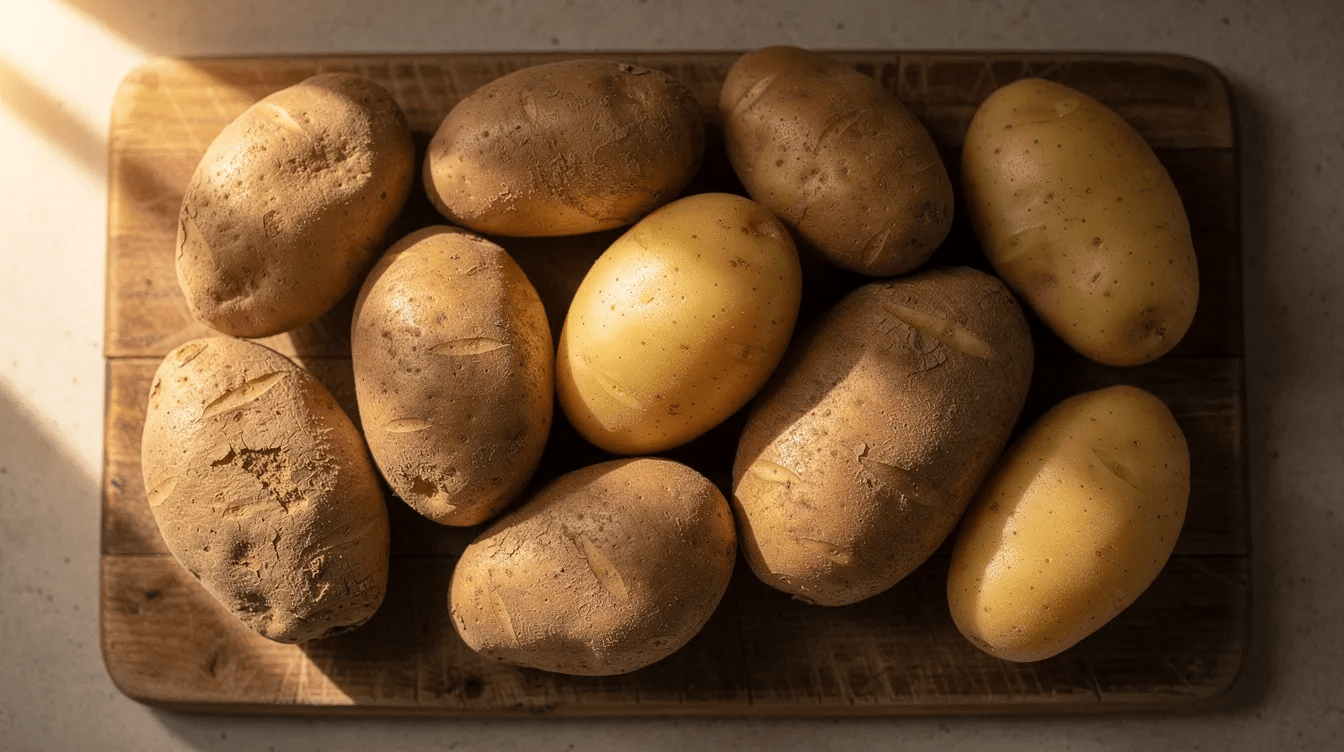
Cost matters too. Raw potatoes – especially Russets bought in bulk – typically cost far less per serving than branded instant potatoes. High-starch varieties of potatoes yield a fluffy texture when cooked, making Russets ideal. A 50/50 blend with Yukon Golds adds a naturally buttery flavor.
Beyond a quick side dish cuisine staple, homemade flakes are perfect for:
| Parchment paper or silicone liners | Prevents sticking on each dehydrator tray and pair well with other top dehydrator accessories |
| Blender or food processor | For turning dried sheets into flakes or powder | No dehydrator? Use your oven on its lowest setting (often 170–200°F), spread the mash on parchment-lined baking sheets, and prop the door open slightly with a wooden spoon to release moisture. A hand mixer can substitute for a masher if needed.
Base recipe (one batch):
About 2 1/2 lb raw potatoes (Russet or Russet/Yukon Gold blend) – this will yield roughly 2 cups dried mash
1–2 teaspoons fine salt for the cooking water
Enough water (cold water to cover pieces by 1–2 inches)
Do NOT add butter, oil, cream, or milk before dehydrating. Fats shorten shelf life and produce off flavors. Save the rich stuff for rehydration.
After you re hydrate, you can enrich with butter, cream, sour cream, garlic powder, chives, parsley, pepper, cheese, and any spices you like.
Preparing the Mashed Potatoes for Dehydration
Smooth, slightly loose mashed potatoes dry more evenly and produce better flakes. Here is the process:
Peel potatoes and cut into even 1/2-inch cubes so they cook uniformly. You can also use sliced potatoes cut to similar thickness.
Immediately place pieces into a bowl of cold water to prevent browning.
Drain, rinse, and transfer to a pot. Cover with fresh cold water by 1–2 inches.
Cook:
Adding salt to the cooking water helps evenly season the potatoes before mixing – use 1–2 teaspoons.
Bring to a boil over medium-high heat, then reduce heat to a gentle simmer.
Cook about 10–15 minutes until potatoes are fork-tender but not falling apart.
Handle the cooking water:
Ladle out and reserve 1–2 cups of starchy cooking water before you drain.
Drain potatoes well, then return them to the warm pot to steam off excess moisture for 1–2 minutes.
Mash:
Mash with a masher or press through a ricer, adding reserved cooking water a little at a time.
Aim for a smooth, lump-free consistency slightly thinner than you would serve – like thick pancake batter.
Overmixing potato flakes during preparation can lead to a gummy texture, so stop as soon as lumps disappear.
Do not add any fats or dairy at this stage. A pinch of garlic powder or extra salt is fine if desired.
How to Dehydrate Mashed Potatoes into Flakes
This is the core step in learning how to make dehydrated potato flakes: turning your cooked mash into dry, brittle sheets ready for long storage.
Prepare the trays:
Line dehydrator trays with nonstick sheets, silicone liners, or parchment paper.
Lightly mist liners with neutral oil only if sticking is a problem – any added oil can slightly reduce shelf life.
Spread the mash:
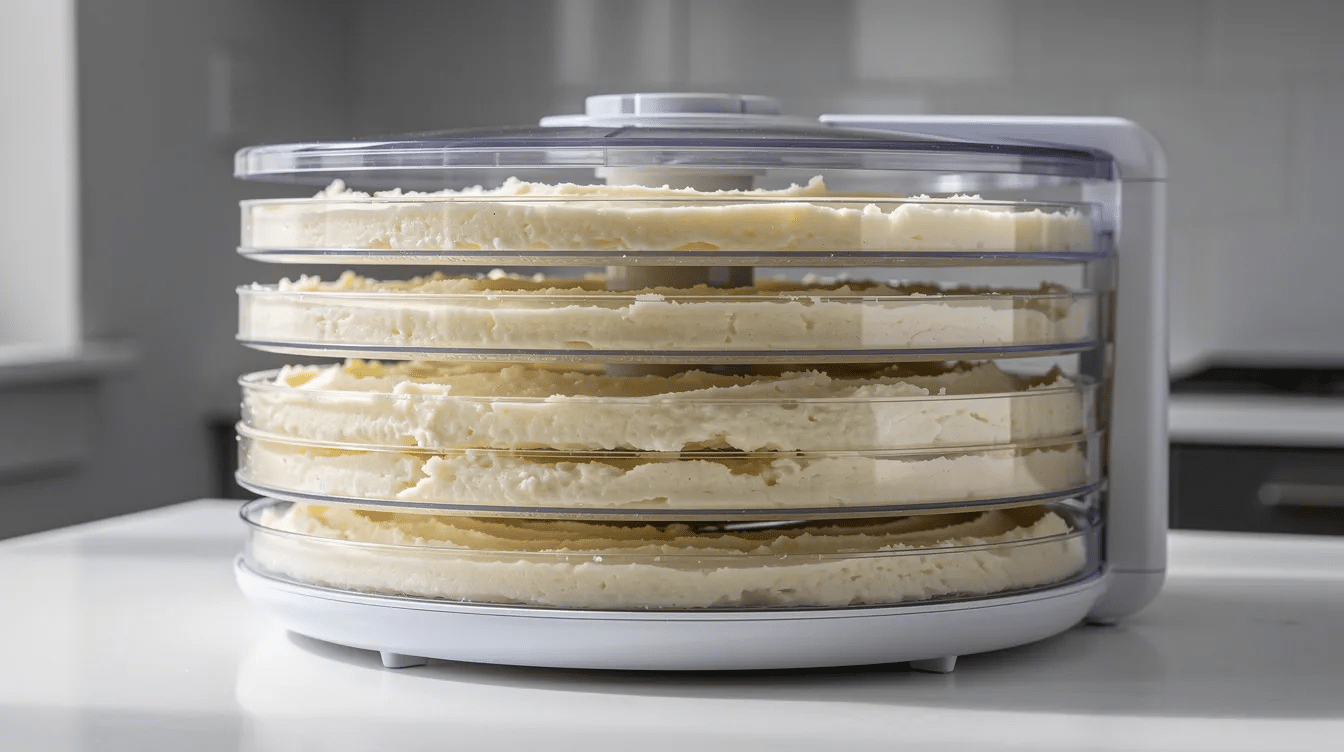
Spread mashed potatoes thinly on dehydrator trays for even drying – aim for about 1/8 inch (3 mm) thick.
Smooth with a spatula all the way to the edges. Thicker spots dry slower and can harbor moisture.
Dehydrator settings:
Set the dehydrator to 135°F (58°C).
Dry for about 8–10 hours, rotating trays halfway through if your dehydrator has hot spots.
How to tell when done:
Sheets feel completely dry, hard, and brittle
Dehydrated potatoes should snap without bending when done
No cool or tacky spots when you touch the center
Oven alternative:
Set your oven to its lowest setting (170–200°F) and prop the door slightly open. Spread mash on parchment-lined baking sheets and dry 6–8 hours or more, flipping once if possible. Dehydrating potatoes in an oven takes a bit more attention, but the results are the same once sheets are brittle.
Turning Dried Sheets into Potato Flakes (and How to Rehydrate)
The difference between potato flakes and potato powder comes down to how long you process the dried sheets. Both start from the same brittle mash.
Break up the dried mash:
Allow trays to cool to room temperature.
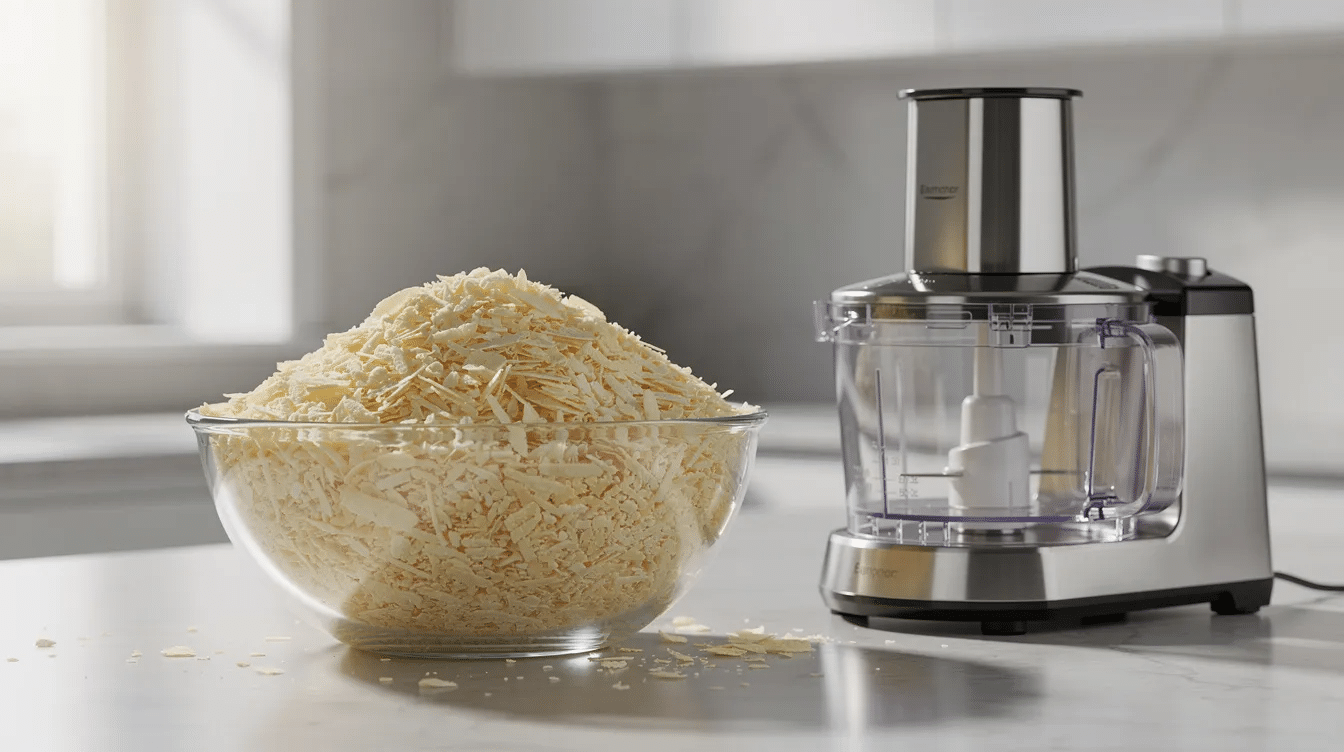
Peel off dried sheets and break into small chips by hand into a bowl.
Make flakes:
Pulse dried chips in a food processor just until you get irregular flakes.
Stop before everything becomes fine powder if you want classic instant mashed potatoes texture.
Blend dried potatoes into powder for quicker rehydration if you prefer a smoother result.
Home rehydration recipe (serves 4, about 3 cups finished):
Bring 2 cups (480 ml) water and 2 tablespoons butter to a boil in a pot.
Remove from heat. Stir in 1/3 cup milk and 1 cup dried potato flakes.
Let stand 3–5 minutes, then fluff with a fork. Adjust with more milk, butter, salt, and pepper.
Increasing the fat content with milk or butter enhances the richness of mashed potatoes – add milk and add butter after rehydration, not before drying.
Trail / backpacking method (single serving):
Use 1/2 cup dried potato flakes per serving. Cover 1/2 cup potato flakes with 1/2 cup boiling water.
Let potato flakes soak for 10 minutes before serving. Stir, cover, and wait.
Add powdered milk, bouillon, or an olive oil packet for extra richness.
Hydrating dehydrated potato flakes requires hot liquid to prevent them from becoming gummy – never use cold water for rehydration. You can also use broth for more flavor, or use rehydrated mash as a topping for shepherd’s pie. Review recipe quantities and adjust to taste each time, since homemade batches can vary.
Safe Storage and Shelf Life of Homemade Potato Flakes
Store cooled flakes in clean, dry mason jar containers, mylar bags, or airtight plastic containers to reduce the risk that dehydrated food will go bad.
Keep in a cool, dark place – a cupboard away from the stove and sunlight works well.
Store powdered potatoes in a mason jar with air removed for best freshness.
Off flavors after rehydration, or flakes that fail to soften
Label each batch with the date and quantity (e.g., “1 cup flakes ≈ 3 cups mashed when rehydrated”). Use dehydrated potatoes within one year for best quality. Because these flakes are very low in moisture and made without added fat, they commonly stay high-quality for 6–12 months under proper conditions.
Creative Ways to Use Dehydrated Potato Flakes
Potato flakes are more than just a side dish – they can upgrade many dishes across your weekly meal plan.
Savory uses:
Classic instant mashed potatoes as a quick side dish cuisine option for weeknight dinners – just add enough water and season
Thickening stews, chowders, and gravies without changing the flavor
Binding meatloaf or veggie patties in place of breadcrumbs – potato flakes can be used to thicken soups and gravies just as easily
Baking ideas:
Adding a small amount to bread dough for softer, moister loaves
Using rehydrated mash in potato rolls or gnocchi for a tender texture
Pre-mix dehydrated mash with dried vegetables and bouillon for easy one-pot trail dinners
Pack individual serving bags that re hydrate with boiling water and a drizzle of oil – a hot, filling meal in minutes
Flavor variations after rehydration:
Garlic and herb with chives, parsley, or dill
Cheesy mashed potatoes with shredded cheddar
Tangy mash using sour cream or Greek yogurt
Treat homemade potato flakes as a pantry staple alongside rice and pasta for quick, delicious meals. They store compactly, taste fresh when rehydrated, and work in everything from a simple snack to an elaborate dish cuisine centerpiece.
Much like how website security verification protects online platforms from malicious bots – where a security service might confirm verification successful before you can respond ray id and access a page – proper storage protects your food investment from spoilage. It’s a small step that pays off for months.
FAQ: Dehydrated Potato Flakes and Instant Mashed Potatoes
Below are common questions not fully covered in the step-by-step sections above.
Can I dehydrate mashed potatoes that already have butter or milk added?
You technically can dehydrate leftover mashed potatoes with butter or milk, but the added fats significantly shorten shelf life and can cause rancidity. These batches are best used within a few weeks and stored in the freezer rather than at room temperature. For any batch you intend to store for months, use plain, fat-free mash.
What type of potato makes the best flakes for instant mashed potatoes?
High-starch varieties like Russet potatoes yield the fluffiest flakes. A 50/50 mix of Russet and Yukon Gold gives both good fluffiness and a naturally buttery flavor – even before you add dairy when you re hydrate.
How fine should I grind the dried potatoes – flakes or powder?
Larger flakes rehydrate into a more traditional mashed potato texture, while fine powder dissolves faster into soups and sauces. Consider making some of each: flakes for mashed potatoes and a jar of powder for thickening and baking. Use a blender for finer results.
Do I need to blanch potatoes before cooking and mashing them for dehydration?
Boiling the pieces until tender effectively cooks and blanches them simultaneously, so a separate blanching step is unnecessary. The key for good color and flavor is to avoid overcooking and to dry the mash thoroughly so no moisture remains.
How can I tell if my homemade potato flakes still rehydrate well after several months?
Test a small spoonful in hot water. If flakes fully re hydrate within a few minutes and taste normal, they are still good. Discard the batch if they fail to soften, taste stale or rancid, or show any sign of moisture, clumping, or mold.
DannyContent Writer
Hey there, since 2016, my mission has been to provide you with the information and guides you need to make food dehydrating simple and fun. Whether you're a newbie or a seasoned pro, my site offers helpful guides, reviews, and recipes to enhance your dehydrating experience. I take pride in only recommending products I believe in, ensuring my readers' trust. As an affiliate of various programs, including Amazon Associates, your support helps me continue providing quality content. Thanks for stopping by, and happy dehydrating!