We earn a commission if you make a purchase, at no additional cost to you.
09/22/2026 04:39 pm GMT
🍊 Dehydrated Food Info Finder — Temperatures & Drying Times
Choose a category, then pick a food to see its drying temperature and time.
⚠️ Safety Disclaimer: Drying times are estimates and vary based on slice thickness, food moisture content, humidity, and your dehydrator model. Always check for doneness before storing — food should feel dry, leathery, or brittle with no moist spots. Improperly dried food can harbour mould and bacteria. For meat and poultry, follow USDA safe internal temperature guidelines: beef and pork to 160°F (71°C), poultry to 165°F (74°C). Use a food thermometer when in doubt. Store all dehydrated foods in airtight containers in a cool, dark place and discard anything showing moisture, mould, or off odours.
Hey! So you’re reading this because you’re wondering, does dehydrated food go bad? Yes, it can—but removing moisture helps it last much longer than fresh food, and proper storage and handling make the biggest difference in how long it stays safe and good to eat.
Whether you’re a health nut adding whole, nutrient-dense foods to your diet, an adventure seeker packing lightweight meals, a home cook, or a food preservation enthusiast, knowing the real shelf life of dehydrated food helps you protect its nutritional benefits, avoid spoilage, reduce waste, and make smarter buying and storage decisions. In this post, I’ll break down the science of dehydration, the factors that affect shelf life, the signs of spoilage to watch for, best practices for storage and safety, and why dehydrated food is such a convenient, sustainable option. Let’s get into it!
Key Takeaways
Dehydrated food is a popular choice among health-conscious individuals and adventure enthusiasts.
The process of dehydration preserves food by removing moisture and extending .
Proper storage conditions are crucial for maintaining the longevity of dehydrated food.
Spoilage signs include changes in appearance, smell, and taste.
Follow safety practices and handle dehydrated food with care to maximize its shelf life.
The Science of Dehydration
How Dehydration Works and Moisture Content
Dehydration is one of the oldest forms of food preservation. By removing water from the food it prevents microorganisms like bacteria, yeast, and mold from growing. In contrast, to preserve food for even longer, methods that freeze ingredients before drying remove moisture more effectively than dehydration. It involves exposing food to low heat and air flow which evaporates the water content without cooking the food, while freeze dried products use a different process. This reduces the moisture and creates an environment that’s not conducive to spoilage causing microbes, extending the shelf life of the food.
Dehydration
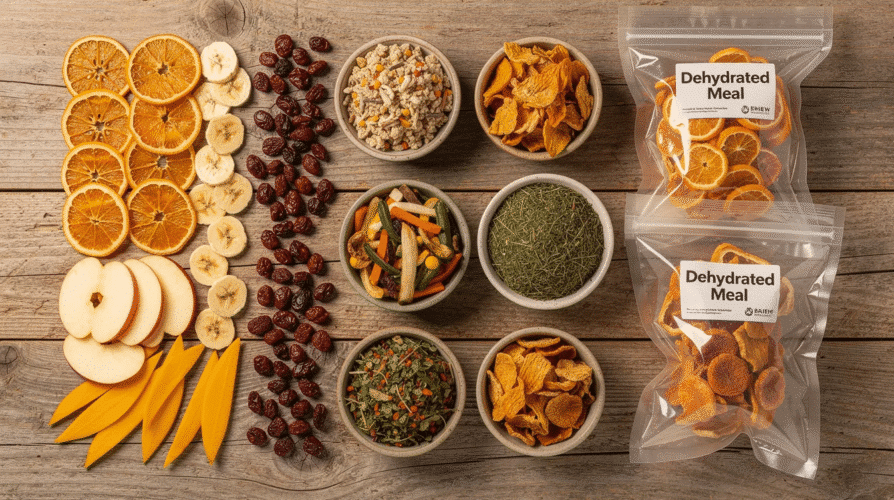
The dehydration process can be done using different methods, including air drying, sun drying, oven drying, and a food dehydrator, and dehydrated foods are generally easier and cheaper to make at home than freeze-dried options, though freeze-drying is slightly better at preserving texture and extending shelf life. Here’s a quick rundown of each:
Air Drying: Food is placed in a well-ventilated area at room temperature and the air removes the moisture over time.
Sun Drying: Food is placed in direct sunlight, usually on racks or trays, to dry out. This works best in hot dry climates.
Oven Drying: Food is spread out on baking sheets and placed in the oven at a low temperature (usually around 140°F or 60°C). The oven’s heat and airflow helps speed up the dehydration process.
food dehydrator: A food dehydrator is a specialized appliance that dries food efficiently and evenly. It uses heat and airflow to remove moisture from the food.
After drying, conditioning can help redistribute any residual moisture before long-term storage.
Nutrients
Dehydration can affect the nutritional content of food but the extent of nutrient loss depends on the method used and the type of food being dehydrated. Dehydration results in the loss of water-soluble vitamins (like vitamin C and B vitamins) and antioxidants. But dehydrated food retains most of its fiber, minerals, and other essential nutrients making it a nutritious option for long-term storage.
Shelf Life of Dehydrated Food
Factors That Affect
Type of Food: Different foods have different shelf lives when dehydrated. For example, fruits and vegetables last 6-12 months, and meats up to a year or more if stored properly. Foods with higher fat content have a shorter long shelf life because fats can turn rancid, which affects flavor and safety.
Moisture Content: The lower the moisture content in the dehydrated food the longer it will last. Aim for 10% or less moisture content for optimal preservation.
Storage: Proper storage is key to maintaining dehydrated food’s shelf life. Store it in a cool, dry, and dark place to prevent moisture and light exposure. Dehydrated food can spoil over time due to moisture reabsorption, and moisture reabsorption, oxidation, and inadequate drying are major reasons food stored in poor conditions goes bad. Using airtight containers or vacuum-sealed bags can also extend shelf life.
Packaging: The packaging material also affects the shelf life of dehydrated food. Use high-quality, food-grade materials that provide a good barrier against moisture and oxygen. For long-term food storage, commercial freeze dried food can last 20 to 30 years in optimal conditions when sealed well.
Shelf Life of Dehydrated Foods
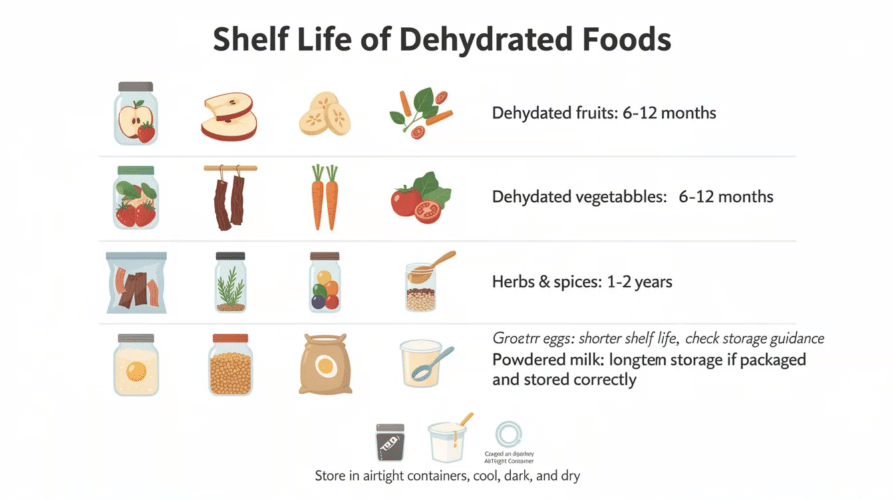
Here’s a rough estimate of the shelf life of common dehydrated foods when stored properly:
Dehydrated fruits (e.g. apples, bananas, strawberries) typically last about 6-12 months when stored properly.
Vegetables (e.g. carrots, tomatoes, spinach): 6-12 months, similar to many other dried foods.
Powdered eggs: often shorter-lived than other pantry staples, so check storage guidance carefully.
Milk: powdered versions can last well in long-term storage if packaged and stored correctly.
Spoilage Signs
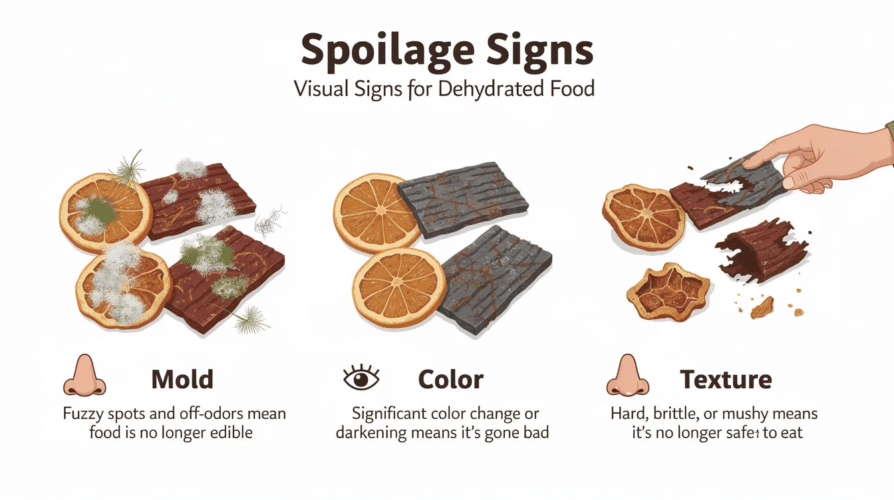
Visual Signs
Mold: The presence of visible mold, fuzzy spots, or off-odors is a clear sign of spoilage, and the food is no longer edible.
Color: Significant color change or darkening of the food means it’s gone bad.
Texture: If the food becomes hard, brittle, or mushy it’s no longer safe to eat.
Olfactory Signs
Off Smell: Any sour, rancid, or musty smell is a strong indication it’s spoiled.
Taste Signs
Off Taste: If it tastes sour, off, or different from its usual taste, discard it.
Safety and Best Practices
Consumption Tips
Inspect Before Use: Always inspect dehydrated food for signs of spoilage before consuming.
Rehydrate Properly: Rehydrate food in clean, safe water by soaking it first, or add it directly to soups; if prepared for a meal, cook it thoroughly to kill any pathogens.
Store at Optimal: Store dehydrated food in a cool, dry, and dark place to extend shelf life.
Handling and Food Storage Best Practices
Airtight Containers: Store dehydrated food in an airtight container or vacuum-sealed bag; for extra security, a mylar bag with an oxygen absorber helps limit oxygen exposure.
No Temperature Fluctuations: Keep the storage area at a consistent storage temperature and away from extreme temperatures to prevent condensation.
Rotate Stock: Follow FIFO (first in, first out) and rotate your stock of preserved foods every six months to ensure you’re using the oldest stock first and keeping your supply fresh.
Sustainability and Convenience
Environmental Impact
Dehydrated food has a smaller environmental footprint than fresh or frozen food. It requires less energy for storage and transportation and generates less food waste due to its longer shelf life.
Health Conscious: A convenient way to add nutrient-dense food into your daily meals without worrying about spoilage.
Adventure Seekers: Lightweight and easy to pack, dehydrated food is perfect for camping, hiking, and other outdoor activities. You can even mix dried vegetables in jars for quick soup bases, turning dried produce into easy camp meals on backpacking trips.
Final Thoughts
In summary, while dehydrated food can go bad, proper handling and storage can extend its shelf life. By understanding the science of dehydration, knowing the signs of spoilage and following best practices you can enjoy dehydrated food safely and sustainably. Whether you’re health conscious or an adventure seeker, dehydrated food can bring convenience, nutrition, and peace of mind. Ready to get started with dehydrated foods? Now’s the time!
I hope you found this guide helpful! Feel free to share your experiences or ask any questions in the comments below. Happy dehydrating!
FAQ
How long does dehydrated food last?
Dehydrated food shelf life varies depending on the type of food, moisture content, and storage conditions. Fruits and veggies last 6-12 months, and meat jerky up to a year if stored properly. To maximize shelf life store dehydrated foods in a cool, dry, dark place in airtight containers or vacuum-sealed bags to prevent moisture and oxygen exposure.
How do I know dehydrated food has gone bad?
Dehydrated food can go bad, and spoilage can occur over time even if it first looks fine, especially with poor storage conditions; signs include mold growth, significant color change, and texture change like becoming hard or mushy. Off odors like sour or musty smells and unusual tastes are big indicators that it’s no longer good to eat. Always check dehydrated food for these signs before use, and for packaged foods compare what you notice with any expiration date on the label.
DannyContent Writer
Hey there, since 2016, my mission has been to provide you with the information and guides you need to make food dehydrating simple and fun. Whether you're a newbie or a seasoned pro, my site offers helpful guides, reviews, and recipes to enhance your dehydrating experience. I take pride in only recommending products I believe in, ensuring my readers' trust. As an affiliate of various programs, including Amazon Associates, your support helps me continue providing quality content. Thanks for stopping by, and happy dehydrating!