We earn a commission if you make a purchase, at no additional cost to you.
09/22/2026 04:39 pm GMT
🍊 Dehydrated Food Info Finder — Temperatures & Drying Times
Choose a category, then pick a food to see its drying temperature and time.
⚠️ Safety Disclaimer: Drying times are estimates and vary based on slice thickness, food moisture content, humidity, and your dehydrator model. Always check for doneness before storing — food should feel dry, leathery, or brittle with no moist spots. Improperly dried food can harbour mould and bacteria. For meat and poultry, follow USDA safe internal temperature guidelines: beef and pork to 160°F (71°C), poultry to 165°F (74°C). Use a food thermometer when in doubt. Store all dehydrated foods in airtight containers in a cool, dark place and discard anything showing moisture, mould, or off odours.
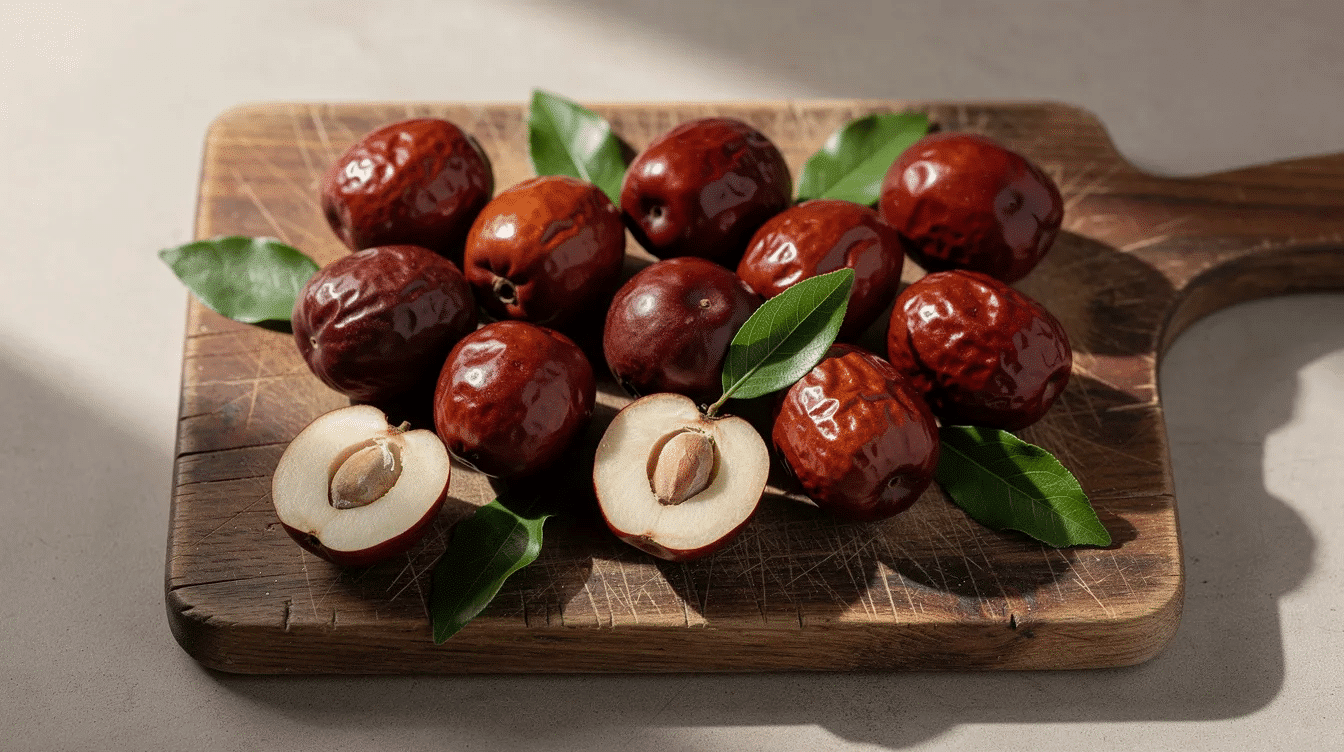
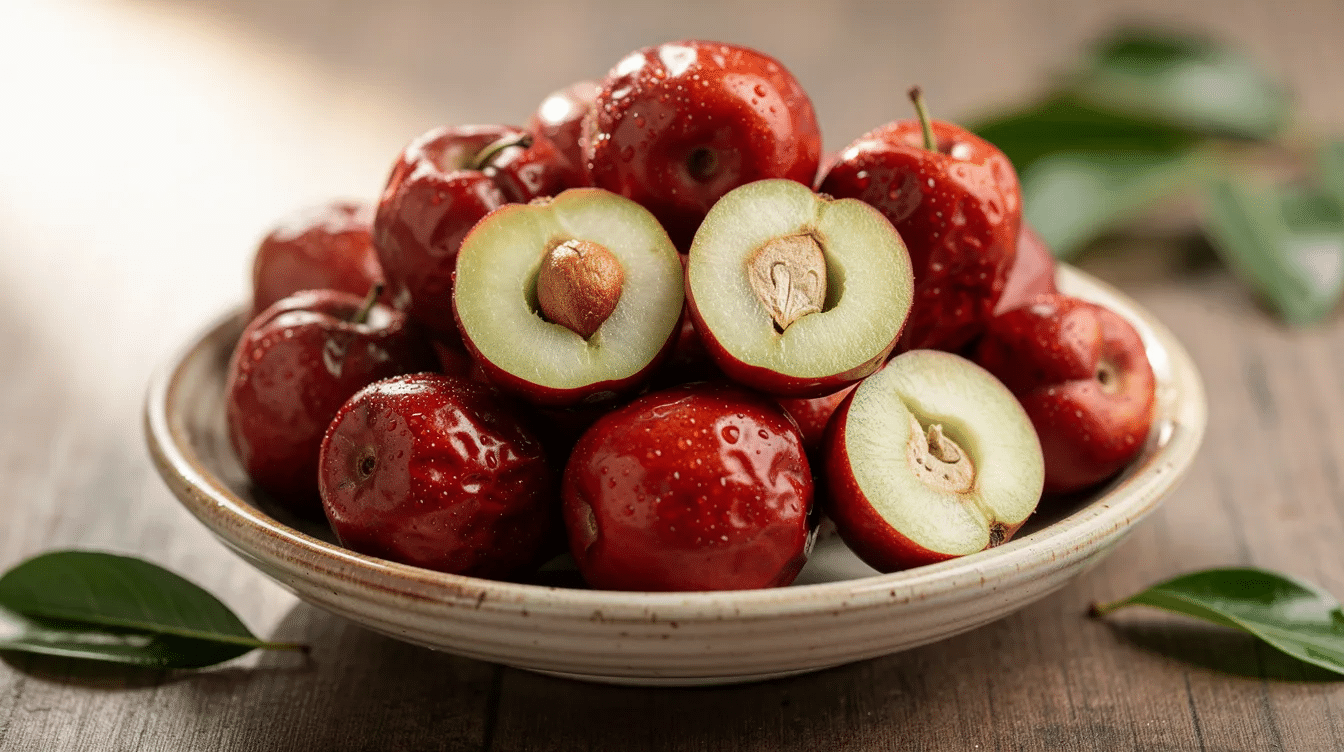
Jujube fruit, scientifically known as Ziziphus jujuba and commonly called Chinese dates or red dates, has been cultivated in China for over 4,000 years. Fresh jujubes taste crisp and apple-like, but the real magic happens when you dry them. The drying process transforms these fruits into chewy, caramel-toffee flavored snacks that store for 12 months or more without refrigeration.
Home-drying concentrates the fruit’s natural sugars dramatically. Fresh mature jujubes contain about 20-30% sugar, but dried jujube rises to 60-70%. This concentration creates a sweet taste that’s less cloying than raisins—roughly half the sugar intensity—with unique apple-caramel notes and toasty undertones from Maillard reactions during low-heat drying. Unlike store-bought dried fruits, your home-dried version retains superior nutrients, including vitamin C and antioxidants valued in traditional Chinese medicine.
Harvest timing typically falls in late summer to early autumn, specifically August through October in warm-temperate climates like USDA zones 6-10 where the jujube tree thrives. The fruits reach peak maturity when their skin shifts from green to deep red-brown and wrinkles begin forming. This article covers safe, easy kitchen methods—oven, dehydrator, and air/sun-drying—suitable for small home harvests rather than industrial machines.
Key benefits of drying jujube at home:
Extends shelf life from weeks to 6-12+ months
Creates versatile ingredients for teas, baking, porridges, and snacking
Saves money since a single mature tree yields 50-200 pounds annually
Preserves more nutrients than commercial high-heat processing
Allows you to control texture from chewy to firm based on preference
The best jujubes for drying are fully mature with red-brown skin, firm but not rock-hard flesh, and harvested on dry days. Optimal sugar content at this stage reaches 25-35% Brix, ensuring superior flavor concentration after dehydration. Immature green fruits dry poorly, yielding lower sweetness and higher astringency from tannins.
Visual cues tell you when fruit is ready. Look for smooth, glossy skin transitioning from yellow-green to tan, then to deep mahogany red-brown with fine wrinkles. The flesh should yield slightly to thumb pressure. Avoid anything bright green, showing mold spots, soft rot, or insect punctures—these introduce spoilage risks during drying.
Harvest guidance:
Pick jujubes by hand for premium quality
For high-volume collection, lay a tarp under the tree and shake branches to collect fallen but sound fruit
Harvest in late season when natural wrinkles have begun
Process within 1-2 days to prevent fermentation
Washing and preparation steps:
Rinse fruit in cool water with gentle swishing to remove dust and debris
Drain thoroughly and pat dry on clean kitchen towels for 1-2 hours
Air-dry in shade to prevent sun-scalding before processing
Eliminate all surface moisture to prevent bacterial growth during drying
When to pit your jujubes:
Remove pits for snacking and baking—they’re sharp and slow internal drying by blocking moisture escape
Leave whole (unpitted) only for tea decoctions where pits contribute minerals like potassium during simmering
Cherry pitters work efficiently on small cultivars, processing 1 pound in under 5 minutes versus 15-20 with a knife
Tools and Equipment You’ll Need
You likely own most of what you need for jujube drying already. Here’s what to gather before you start.
Basic tools:
Sharp paring knife for precise pitting and slicing around the single stone
Stable cutting board to handle the fruit’s firm texture
Large bowls for washing batches of 5-10 pounds
Clean kitchen towels for absorbing moisture post-wash
Rimmed baking sheets to prevent drips during oven drying
Parchment paper or reusable silicone mats for non-stick surfaces
Optional tools that speed up the process:
Cherry pitter or olive pitter for efficient stone removal
Mandoline for uniform 3-5mm slices ensuring even drying rates
Box grater or food processor for alternative cuts like shredded flesh
Food mill for creating jujube paste or puree
Appliances for different methods:
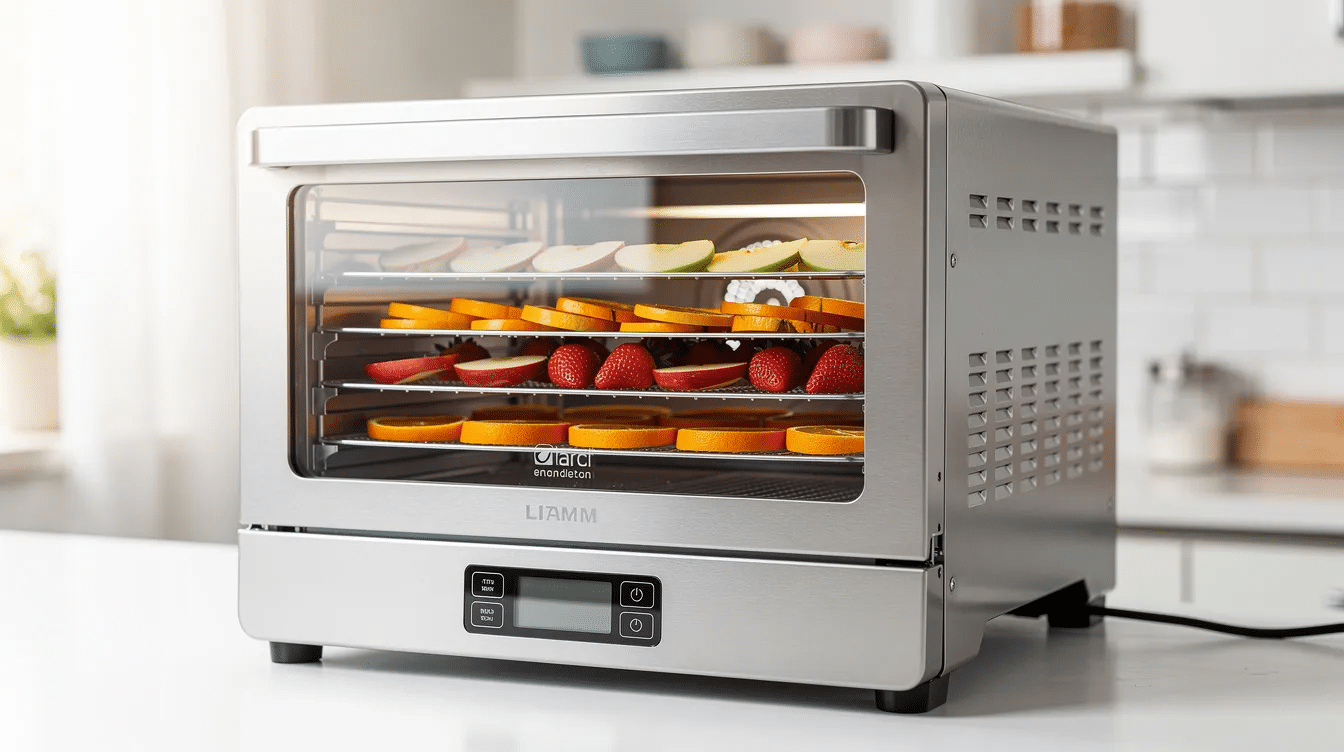
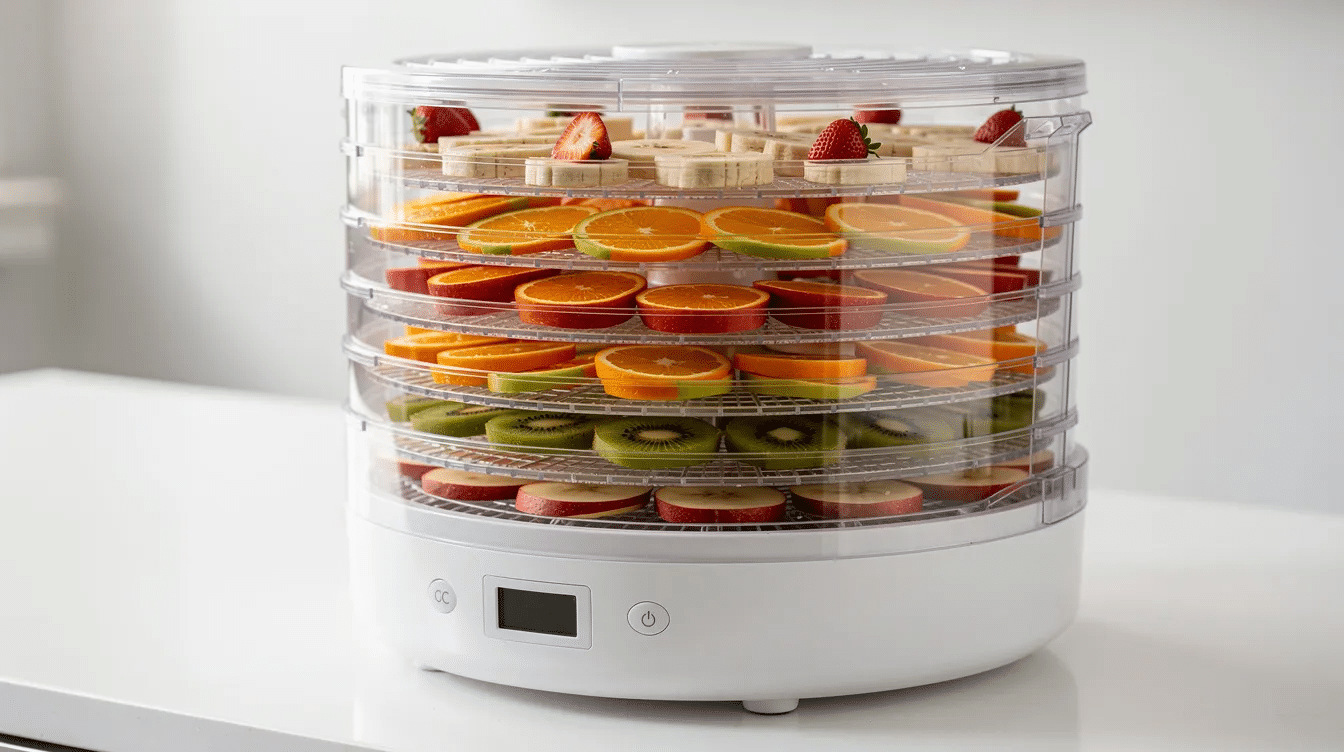
Electric dehydrator with 35-70°C thermostat and fans (500-1000W models handle 10 pounds in 12-24 hours), similar to setups described in detailed guides to using Nesco-style food dehydrators
Standard oven adjustable to 50-70°C via door-propping for convection simulation
Mesh screens or elevated racks for air/sun methods with 1-2mm apertures allowing airflow while blocking insects
Storage materials to prepare in advance:
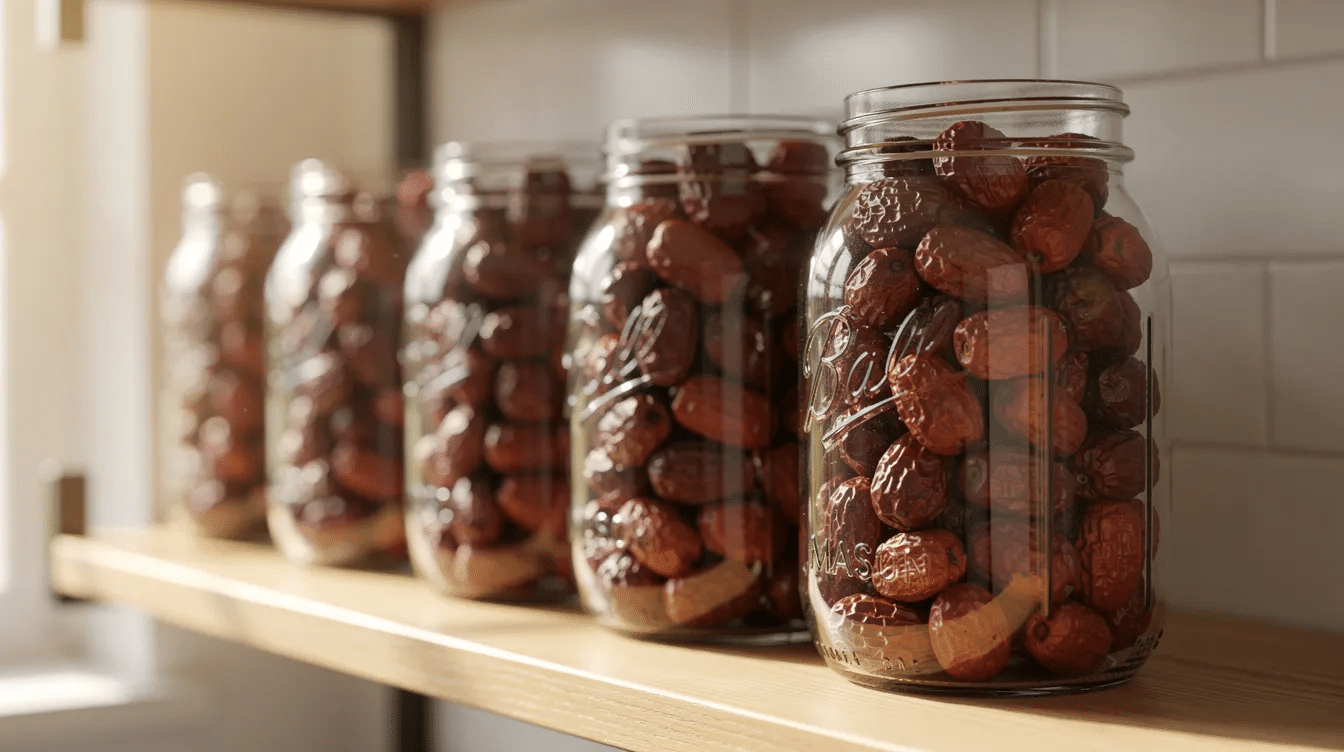
Glass jars with rubber-gasket lids for airtight seals
Zip-top freezer bags with air evacuation capability
Vacuum-seal bags for extending storage to 2+ years
Food-safe labels tracking drying date, method, and variety
Method 1: Drying Jujube in a Food Dehydrator
A food dehydrator is the most reliable home method for drying jujube fruit. The consistent low heat (57-63°C optimal) and steady hot air circulation prevent case-hardening—where outer skins seal before interiors dry—while preserving nutrients, much like general guides to dehydrating fruit in a food dehydrator. Vitamin C loss stays under 20% compared to 50%+ in higher-heat methods.
The temperature range works well for jujube’s 70-80% initial moisture content, evaporating water gently without degrading heat-labile compounds. Most stackable dehydrators compensate for minor top-bottom heat gradients when you rotate trays periodically.
Preparation:
Wash fruit, pat dry completely
Pit and slice vertically into halves or 5-8mm pieces for uniformity
For small cultivars, slit skins lengthwise 2-3 times after pitting to accelerate moisture release
Keep all pieces the same size for even drying
Dehydrator settings:
Set temperature to 57-63°C (135-145°F)
Plan for 10-18 hours for slices and halves
Extend to 20-24 hours for small whole fruits
Adjust timing based on initial moisture content and slice thickness
Tray setup:
Arrange pieces in a single layer without overlap
Place skin-side down for halves to expose cut flesh
Rotate trays every 3-4 hours to compensate for heat gradients
Doneness tests:
Fruit should feel leathery and pliable, bendable without cracking
No stickiness on the surface
Cut a piece open—no moisture beads should appear
Thick pieces should be firm but not spongy
Target final moisture content of 15-20% for chewy results
Optional pre-treatments:
Dip slices 1-2 minutes in lemon juice solution (1 tbsp per cup water) to inhibit enzymatic browning
Brief blanching (30-60 seconds in boiling water) softens tough skins on late-harvest wrinkled varieties
Pre-treatments can reduce drying time by 10-20%
Safety and Quality Tips for Dehydrator Drying
Maintaining temperatures above 52°C (125°F) inhibits pathogens like Staphylococcus and molds. This is critical for thicker or semi-whole pieces that retain core moisture around where pits were removed, and it mirrors general food dehydration temperature safety guidelines.
Pack loosely into glass jars, filling about 2/3 full
Store at 20-25°C for 7-10 days
Shake jars daily to redistribute residual moisture to the surface for evaporation
Watch carefully for condensation on jar walls
If water droplets form inside the jar, the batch is under-dried. Return fruit to the dehydrator immediately.
Signs of spoilage to watch for:
Off-odors with ferment or yeast notes
Visible mold (white or green fuzz)
Sticky clumping from sugars not fully crystallized
Batch logging for improvement:
Record these details for each batch:
Variety (e.g., Li is sweeter, Lang is hardier)
Slice thickness in millimeters
Temperature setting
Total hours dried
Data tracking shows that 6mm slices at 60°C typically yield optimal results in about 12 hours, versus 20+ hours for 10mm slices, closely matching recommendations you’ll see in a detailed food dehydration time and temperature chart.
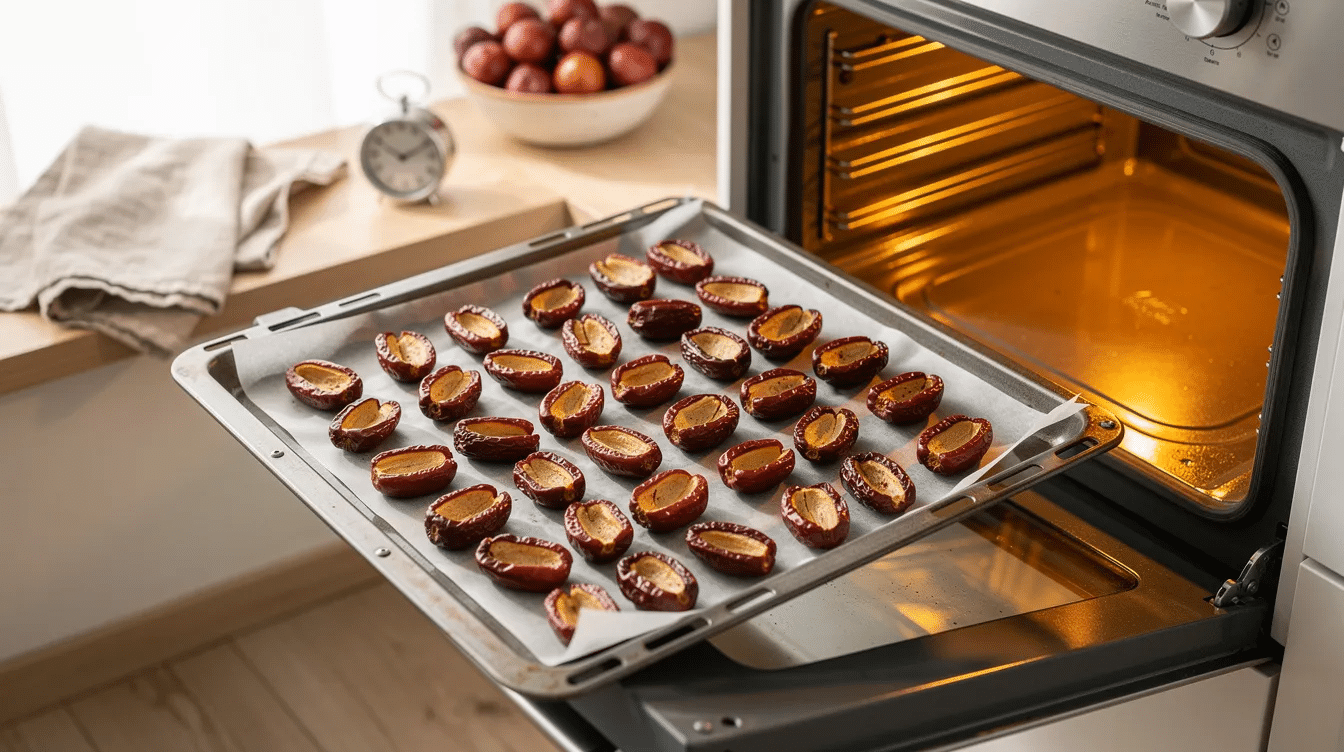
Method 2: Oven-Drying Jujube Fruit
Ovens run hotter than dehydrators, but they work well when set to low temperatures and monitored closely. The key is maintaining that 50-70°C range despite most ovens having higher minimum settings, which aligns with broader guidelines on ideal food dehydration temperatures.
Temperature management:
Set your oven to its lowest setting, ideally 50-70°C (120-160°F)
If minimum is higher, prop the door open 2-4 inches with a wooden spoon
Use an oven thermometer—temperature can fluctuate 10-15°C from the dial setting
Monitor throughout the process since unattended ovens risk scorching
Preparation:
Pit and slice or halve jujubes following the same guidance as the dehydrator method
For very tough skin on late-season fruit, score with a fork (4-6 pricks per half) to create vapor escape paths
Thin slices of 3-6mm dry most efficiently
Pan setup:
Use rimmed baking sheets lined with parchment or silicone
Spread fruit in a single layer, spacing pieces 1cm apart for airflow
Place trays on middle racks for even heat distribution
Time ranges:
4-8 hours for thin slices (flip hourly)
8-14 hours for halves (rotate pans every 1-2 hours, flip pieces)
Total energy use is lower than dehydrators for small batches
Doneness indicators:
Edges appear slightly darker
Centers feel leathery and chewy
No beads of moisture on cut surfaces
Target 18% moisture content
Never exceed 80°C (175°F). Rapid Maillard browning hardens exteriors, traps moisture inside, and degrades vitamin C by 40-60%.
Finishing and Cooling Oven-Dried Jujube
Turn the oven off and leave trays inside with the door cracked about 5cm for 30-60 minutes. This allows residual heat to evaporate final moisture without the condensation risks that come from moving warm fruit to cooler air.
Cooling guidelines:
Allow 1-2 hours at room temperature before packing
Warm fruit above 30°C can raise jar humidity to dew point, fostering mold
Never pack fruit that still feels warm to the touch
Final quality check:
Test a few pieces by cutting them open after cooling
Look for any wet pockets remaining around where the pit used to be
If moisture appears, return to the oven for 1-2 additional hours at low heat
Method 3: Air- and Sun-Drying Jujube
Air and sun-drying is a traditional method used across Asia for millennia. It’s energy-free but climate-dependent—ideal for hot, dry regions with relative humidity under 60%. If your area regularly exceeds 70% humidity, diffusion slows dramatically and mold risk triples, just as with other fruits that are well-suited to sun-drying.
Best conditions:
Optimal temperatures of 30-40°C during the day
Relative humidity below 60%
Good breeze for evaporative drying
Late summer in arid regions like the American Southwest
Preparing fruit for outdoor drying:
Wash, dry, pit, and slice into quarters or thin rounds (2-4mm)
Avoid whole fruits—they take twice as long due to pit barriers and carry higher spoilage risk
Thinner pieces are safer for outdoor methods
Setting up drying racks:
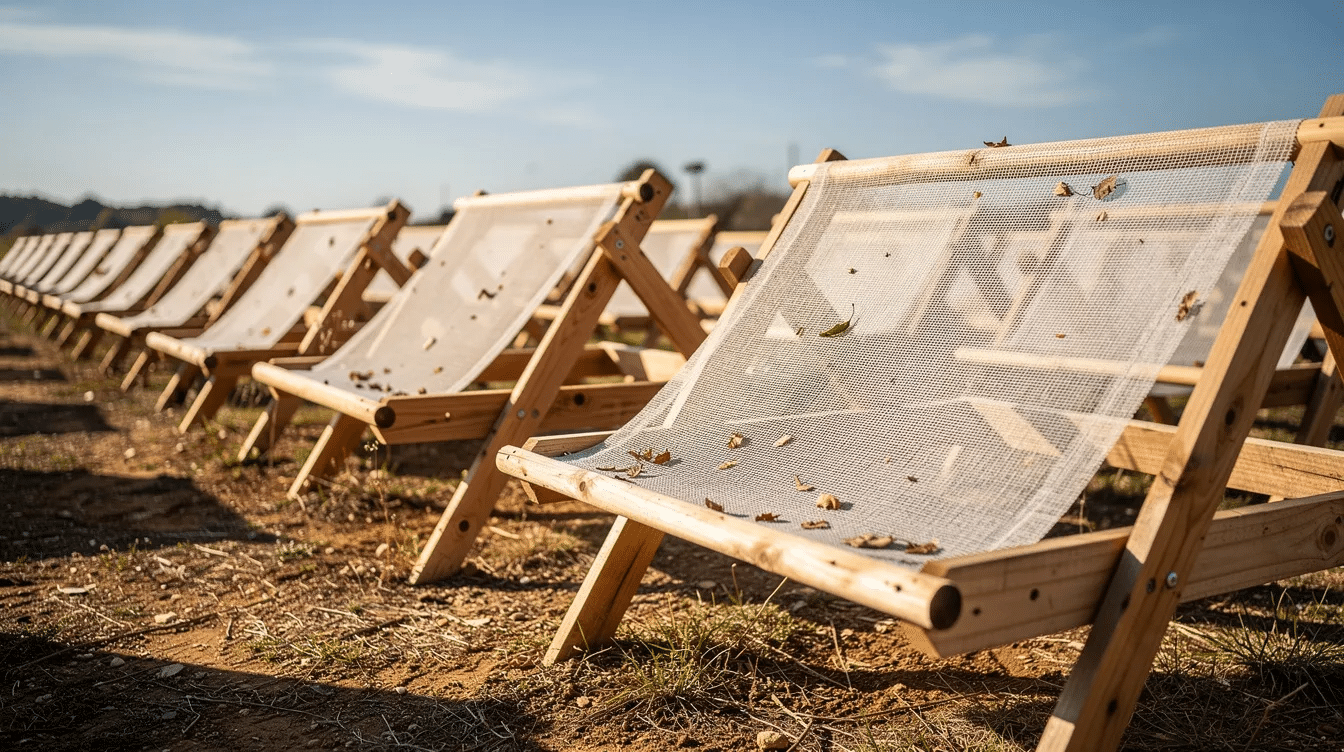
Use food-safe stainless steel mesh or nylon screens
Elevate racks 30-50cm on frames for airflow underneath
Cover with cheesecloth netting (1mm mesh) to deter insects while allowing 80% airflow
Ensure materials are clean and food-safe
Placement and timing:
Choose a full sun location (6-10 hours of direct sunlight daily)
Shelter from dust and animals
Bring trays indoors every night to avoid dew absorption
Turn pieces at least once daily to expose all surfaces
Typical time frames:
2-5 days in strong sun and dry air
Daily turning is essential for even results
Very humid or cool weather (nights above 20°C with high humidity) makes this method unsuitable
If fruit still feels soft and humid after several days, finish in an oven or dehydrator. Sun methods retain 25% more volatiles for flavor, but incomplete drying risks aflatoxin development.
Traditional Asian-Style Whole Dried Jujubes
In parts of China and Central Asia, whole jujubes are dried for teas and soups. The process typically involves brief blanching or steaming to loosen the skin and kill surface microbes before extended drying.
Simple home adaptation:
Select fully ripe, red-brown Li or Honey Jar varieties
Blanch whole fruits for 1-2 minutes in boiling water, or steam for 5 minutes
Drain well on clean towels
Sun-dry for 3-7 days or oven-dry at 50°C for 20-30 hours
Check pit-area dryness by probing with a toothpick
Characteristics of whole dried jujubes:
Firmer, more date-like texture
Intact pits contribute alkaloids and minerals during cooking
Intended primarily for simmering in water, porridges, or herbal broths
Not ideal as soft snacks—too firm when eaten fresh from storage
Storage considerations:
Store initially in breathable paper bags to catch hidden moisture
Transfer to airtight containers after confirming complete dryness
Use in goji-ginger decoctions where polysaccharides from traditional Chinese medicine applications are preserved
Alternative Cuts: Grated and Puréed Jujube for Drying
The tough skin on jujubes can slow traditional drying methods. Home experimenters have found that grating or puréeing bypasses this challenge entirely, creating different foods with unique textures and faster drying times.
Grated jujube method:
Peel the thin exterior if desired (optional)
Grate flesh away from the pit using the coarse side of a box grater
Spread shreds thinly (1-2mm) on parchment-lined trays
Dry at 50-60°C in oven or dehydrator for 4-8 hours
Result: crumbly, coconut-like texture with intensified toastiness
Uses for grated dried jujube:
Sprinkle in granola and oatmeal
Mix into yogurt as a toasty, mildly sweet topping
Add to energy bars for natural sweetness
Mimics dehydrated apple flakes but with deeper, nuttier flavor
Puréed jujube method:
Cook pitted fruit with a small amount of water (1:0.1 ratio) until soft (20-30 minutes simmering)
Pass through a food mill to remove any remaining skin bits, creating jujube paste
Blend to smooth consistency—this becomes your base for jujube butter or leather, similar in process to making perfectly dehydrated citrus slices
Making jujube leather:
Spread purée 3-5mm thick on lined trays
Dry at 55°C for 6-12 hours until bendable and non-sticky
Cut into strips and roll for portable snacking
Stores 9-12 months when vacuum-sealed
Both grated and leather-style products dry 40-60% faster than slices, making them ideal for small kitchens with limited dehydrator space or time constraints, especially if you also experiment with dehydrating a wide variety of fruits.
Texture and Flavor Adjustments
The thickness of your layers directly affects the final texture. Thinner layers (<3mm) promote chewy, sweeter profiles through faster sugar crystallization. Thicker spreads (8mm+) yield firmer nuggets more like commercial dates.
Optional mix-ins for purée:
1% cinnamon or ginger powder enhances volatile aromatics
Small amounts of honey add complexity
Note: added sugars raise water activity and halve shelf life
Finding your preference:
Test small batches first
Chewy results: target 18-20% moisture content
Firm results: target 12-15% moisture content
Very chewy: dry until just barely non-sticky
Quite firm: extend drying time by 20-30%
Record your preferred settings so you can replicate delicious results across multiple harvest seasons.
How to Store and Use Dried Jujube Fruit
Proper storage protects your drying effort. Dried jujubes keep 6-12 months in a cool, dark cupboard when packed in airtight containers at under 15% moisture content. For very long storage extending to 24+ months, vacuum-sealing or freezing at -18°C preserves antioxidants and prevents degradation.
Storage guidelines:
Use glass jars with tight lids or zip-top freezer bags with air removed
Store in locations staying between 10-20°C
Keep away from direct light which degrades nutrients
Label with drying date, method, and variety for quality tracking
Conditioning reminder:
First week after drying, check jars daily
Watch for condensation or clumping
If present, return fruit to low heat for further drying
Discard any batch showing signs of mold—mycotoxin risks aren’t worth saving a few jujubes
Ways to use dried jujube:
Simmer 10-20g per liter in herbal teas, often combined with goji berries and fresh ginger
Add to rice porridge (congee) or oatmeal as a natural sweetener
Chop and fold into bread doughs, muffins, and energy bars
Include in granola for chewy, sweet clusters
Use dried red dates in soup broths following Chinese medicine traditions
Rehydration tips:
Soak in hot water or tea for 15-30 minutes before cooking
Softens older, firmer batches for better texture in cooked dishes
Works well for porridges where you prefer soften fruit rather than chewy pieces
Nutrition notes:
Dried jujubes concentrate natural sugars to 65-75% while retaining 50-70% of vitamin C and antioxidants compared to fresh. They’re a good source of minerals and offer health benefits including traditional uses for supporting blood pressure and immune function. Like prunes and other dried fruits, moderation matters—30g daily avoids GI overload from fiber and sorbitol. Dried jujube is rich in nutrients but shouldn’t be eaten as freely as fresh fruit given the sugar concentration.
Troubleshooting Common Drying Problems
Sticky or overly soft results:
This usually means under-drying (moisture content above 20%) or packaging while still warm. The fix is simple:
Return fruit to dehydrator or oven at 60°C
Extend drying time by 2-4 hours
Test again before re-packaging
Overly hard fruit:
Slightly overdried jujubes can be rescued:
Brief soaking in warm water for 15-30 minutes softens texture
Store with a small piece of apple for 1-2 days (humidity transfer)
Check frequently to avoid over-softening or introducing too much moisture
Mold issues:
Visible mold or musty smell means the batch must be discarded entirely. Prevent future problems by:
Reducing slice thickness to under 5mm
Increasing temperature or airflow
Ensuring fruit is completely dry before packaging
Never storing warm fruit
Simple record-keeping:
Keep a drying log noting:
Slice thickness (mm)
Method used (dehydrator, oven, sun)
Temperature setting
Total drying time
Final texture assessment
This data helps you quickly identify and fix issues when your garden produces the next harvest season.
Key Takeaways
Drying jujube fruit at home transforms a short-lived fresh harvest into a versatile pantry staple lasting 12 months or more. Whether you use a food dehydrator for reliability, your oven for accessibility, or sun-drying for tradition, the core principles remain consistent: start with fully mature red-brown fruit, maintain low temperatures, ensure complete dryness, and store properly.
The drying process concentrates natural sugars while preserving nutrients that make jujubes valued in Chinese medicine traditions. Home-dried results surpass what you’ll find at grocery stores in both flavor complexity and nutrient retention.
Start with a small batch from your jujube tree or a trip to an Asian market. Experiment with slices, grated shreds, or even jujube leather. Keep notes on what works in your kitchen and your climate. By next harvest season, you’ll have dialed in a process that produces consistently delicious results—and likely more dried jujubes than you can eat yourself.
DannyContent Writer
Hey there, since 2016, my mission has been to provide you with the information and guides you need to make food dehydrating simple and fun. Whether you're a newbie or a seasoned pro, my site offers helpful guides, reviews, and recipes to enhance your dehydrating experience. I take pride in only recommending products I believe in, ensuring my readers' trust. As an affiliate of various programs, including Amazon Associates, your support helps me continue providing quality content. Thanks for stopping by, and happy dehydrating!