We earn a commission if you make a purchase, at no additional cost to you.
09/22/2026 04:39 pm GMT
🍊 Dehydrated Food Info Finder — Temperatures & Drying Times
Choose a category, then pick a food to see its drying temperature and time.
⚠️ Safety Disclaimer: Drying times are estimates and vary based on slice thickness, food moisture content, humidity, and your dehydrator model. Always check for doneness before storing — food should feel dry, leathery, or brittle with no moist spots. Improperly dried food can harbour mould and bacteria. For meat and poultry, follow USDA safe internal temperature guidelines: beef and pork to 160°F (71°C), poultry to 165°F (74°C). Use a food thermometer when in doubt. Store all dehydrated foods in airtight containers in a cool, dark place and discard anything showing moisture, mould, or off odours.
How Do You Freeze Dry Fruit? (Step‑by‑Step Guide for Long Shelf Life)
If your family loves preserved fruit that stays crunchy, colorful, and packed with nutrients for years, freeze drying is the best method to get there. This guide walks you through the entire freeze drying process so you can start turning fresh fruit into shelf stable snacks with confidence.
Key Takeaways
Freeze drying (lyophilization) is a dehydration technique based on sublimation: fruit is frozen solid, then ice is converted directly from a solid to a gaseous state under vacuum, skipping the liquid state entirely. This removes up to 90% of a food’s water content.
True freeze drying requires specialized equipment-a dedicated home freeze dryer with a vacuum chamber, refrigerated shelves, and a vacuum pump. A standard kitchen freezer alone cannot replicate the process.
Proper freeze drying preserves flavor, color, texture, and nutritional value far better than conventional drying. Freeze dried fruit can last up to 25 years when packaged correctly in moisture-proof containers with oxygen absorbers.
Preparation matters: cut fruit into small, evenly sized pieces, arrange in a single layer, and test for full dryness (crisp, brittle, no soft center) before packaging.
This guide covers both how to home freeze dry fruit with a dedicated machine and what to expect from “DIY” methods using only a freezer plus oven or dehydrator.
What Does It Mean to Freeze Dry Fruit?
Freeze drying is a food preservation method that first freezes fruit solid, then removes the ice as vapor under very low pressure. The product’s water content transitions directly from ice to gas-a sublimation step that bypasses the liquid phase entirely. The result is ultra-light dried fruit that retains its original shape, color, and most nutrients.
Compare that with conventional dehydrated fruit. Traditional air-drying uses heat (often above 120°F), which causes shrinkage, darkening, and significant reduction of vitamins. Dehydrated food typically lasts up to 4 years, while properly sealed freeze dried fruits for healthy and easy snacking are shelf stable for decades.
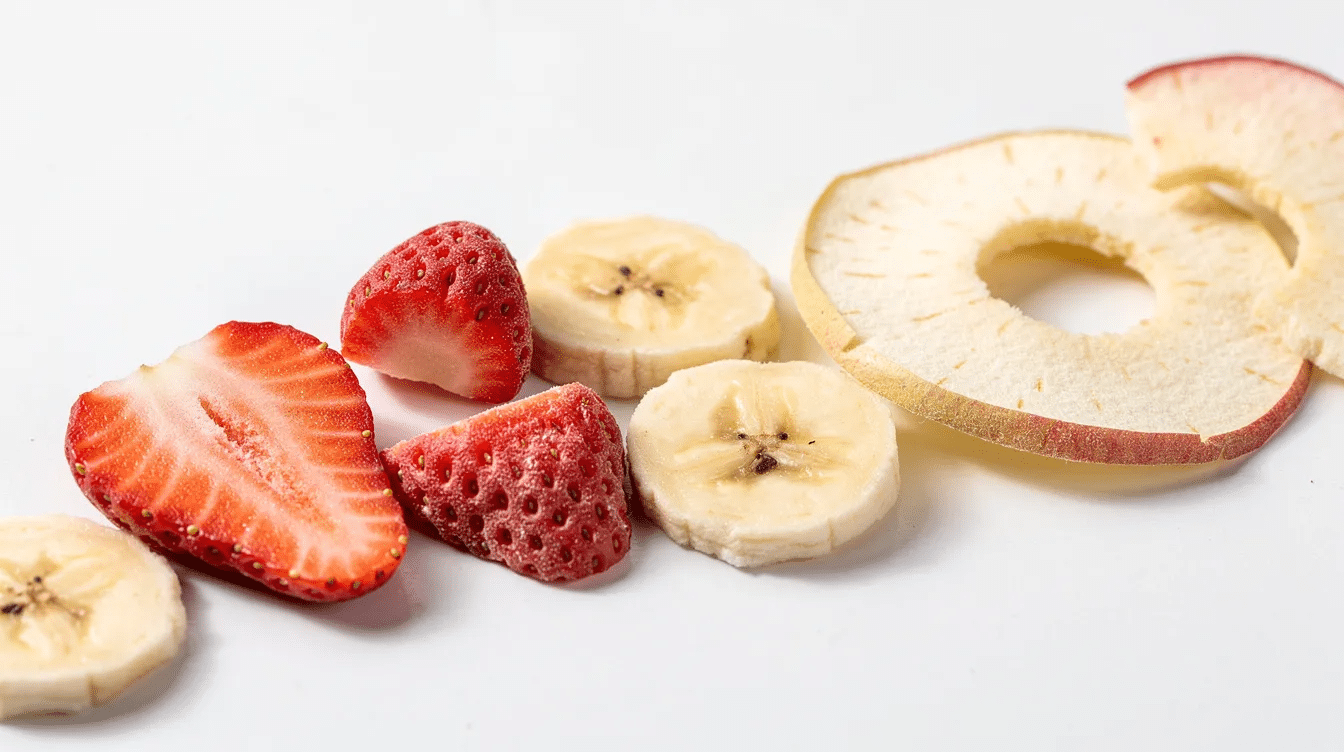
Freeze dried foods retain nearly all original vitamins and minerals, and freeze drying maintains food’s original flavor, color, and nutrients. Common fruits that respond well include apples, bananas, strawberries, mango, and raspberries. Firm fruits like these hold up best during the process.
The key metric is water activity (A_w). Reducing water activity to roughly 0.08–0.33 makes freeze dried products resistant to microbial growth. Most bacteria need A_w above 0.85 to thrive, so properly freeze dried foods sit well below the danger zone.
How Freeze Drying Works (The Science in Simple Terms)
Understanding the freeze drying process helps you troubleshoot batches and dial in settings. Here is the science, simplified.
Three conditions work together: very low temperatures (typically −30°F to −50°F), very low atmospheric pressure (vacuum), and time. Under these conditions, water molecules in ice skip the liquid state and escape as vapor-this is sublimation.
The process has three stages:
Freezing – Fruit is chilled until solid. Ice crystal size depends on freezing speed; the goal is thorough freezing below the fruit’s collapse temperature.
Primary drying – Vacuum is applied and gentle shelf heat drives the sublimation step. Free water (about 80–95% of total moisture) leaves as vapor and collects on a cold condenser. Freeze drying removes up to 90% of water content during this phase.
Secondary drying – Also called desorption drying, this stage raises shelf temperature slightly under continued vacuum to pull out remaining bound moisture, targeting final moisture content below 2–5%.
Because fruit stays frozen while water leaves, cell structures remain intact-so freeze dried strawberries or apple slices stay plump and retain their original appearance. Freeze drying preserves antioxidants better than other drying methods and helps retain beneficial phytochemicals in foods, because low temperatures and reduced oxygen exposure limit degradation of heat-sensitive compounds.
Important: freeze drying does not sterilize food. Bacteria, mold spores, and other organisms can survive in a dormant state and reactivate when moisture returns during rehydration.
Equipment You Need: Choosing the Right Freeze Dryer
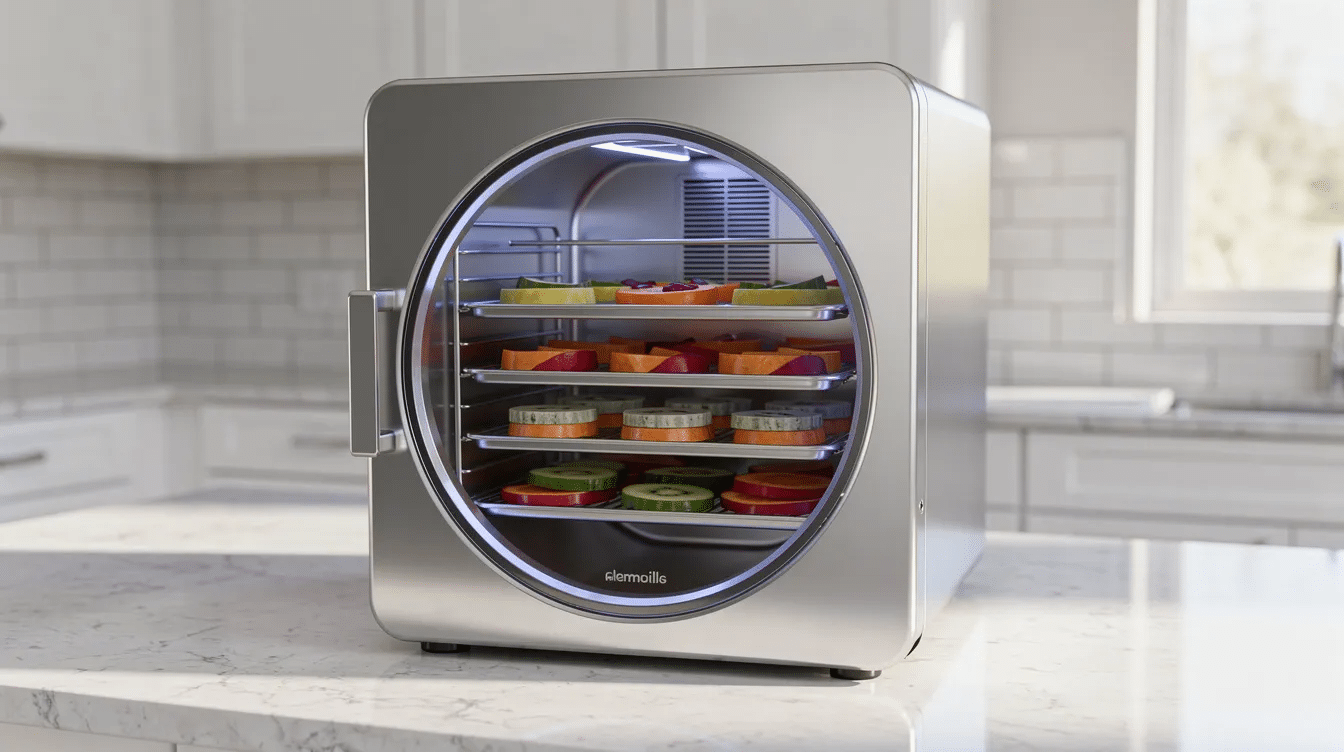
Freeze drying fruit at home requires a dedicated home freeze drying machine. True freeze drying relies on a specialized vacuum chamber and sublimation-conditions a standard kitchen freezer cannot produce. Freeze drying also requires specialized equipment for temperature control across all stages.
A typical home freeze dryer setup includes:
Component
Purpose
Vacuum chamber
Holds trays; maintains low pressure
Refrigerated shelves
Freeze fruit to −30°F to −50°F
Heated shelf plates
Supply energy for sublimation
Vacuum pump
Pulls pressure down to ~500–1,200 mTorr
Control panel
Monitors temperature, pressure, and cycle time
When picking the right freeze dryer, match capacity to your needs. Small units suit occasional users; medium and large models (like those from Harvest Right) handle garden-scale batches and make sense for homesteaders who regularly preserve vegetables, meats, raw foods, and cooked foods alongside fruit. Home freeze dryers can preserve food for up to 25 years, making them a serious investment in home food preservation; many users also turn to top freeze drying cookbooks to get the most from their machines.
Freeze drying operates at temperatures between −30°F and −50°F during freezing, with shelf heat climbing to roughly 86–125°F during drying. Energy costs run 4–10× higher than a standard dehydrator, so the machine pays for itself best with regular use.
Before your first batch, gather a digital scale, permanent marker, parchment paper for lining trays, mylar bags, a glass jar or two for shorter-term storage, and an oxygen absorber supply. Follow the manufacturer’s instructions for initial setup and oil changes on the vacuum pump.
How to Prepare Fruit for Freeze Drying
Start with ripe but firm, high-quality fresh fruit. Freeze drying cannot improve poor flavor or fix spoilage-what goes in is what comes out, minus the water.
It’s recommended to wash and dry fruit thoroughly before freeze drying. Home wash steps are simple: rinse under cool running water, remove stems and cores, peel if desired (kiwi, mango, peaches), and pat dry with a clean towel. Excess surface moisture creates unwanted ice buildup in the chamber.
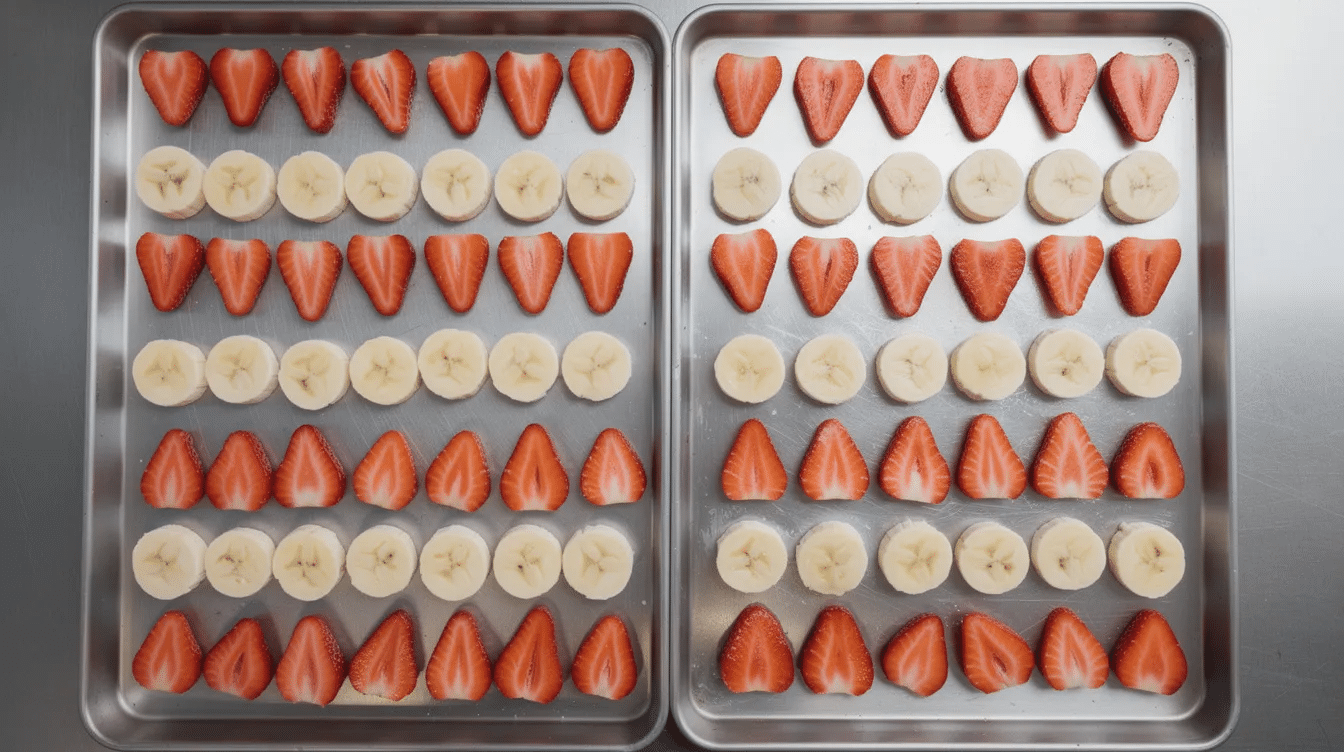
Uniform slicing of various fruits helps avoid uneven drying. Slicing fruit into uniform pieces ensures even drying rates across all the trays, and if you focus on berries you can follow a dedicated guide to freeze dried strawberries at home for more detail. General guidelines:
Apples and bananas – ¼ to ½ inch slices, or smaller chunks for faster dry time
Strawberries – halved or quartered depending on size
Blueberries – whole, but pierce skins with a toothpick (thick-skinned fruits should be pierced to prevent bursting during drying)
Mango – peeled, sliced into thin strips
Avoid overloading trays to allow proper moisture escape during freeze drying. Arrange fruit in a single layer; slight touching is fine, but never stack pieces. High-sugar fruits like mango and pineapple often require longer drying times, so keep that in mind when mixing trays of bananas, strawberries, and berries.
A quick dip in lemon water or dilute ascorbic acid before loading reduces browning on apples and bananas but is optional for most fruits.
Step‑by‑Step: How to Freeze Dry Fruit in a Home Freeze Dryer
This is the core walkthrough. The freeze drying cycle typically takes between 24 to 48 hours-roughly 1–2 days depending on fruit type, slice thickness, and machine model, though some people experiment with freeze drying food without a machine using slower DIY methods.
1. Pre freeze (optional but recommended) Place prepared fruit on trays and freeze in a household freezer at 0°F or lower for 24–48 hours. Pre-freezing fruit can shorten the freeze drying process by reducing the machine’s built-in freezing stage and saving energy.
2. Load the machine Insert cold trays, close and latch the door, and verify the gasket seal and vacuum hose are secure. Select the fruit cycle or enter custom settings per manufacturer’s instructions.
3. Freeze stage The machine chills shelves to around −30°F to −50°F. Fruit must be frozen completely through before vacuum starts.
4. Primary drying (sublimation) Vacuum drops pressure well below normal atmospheric pressure. Shelf heaters pulse gentle heat, and ice sublimates-turning from solid directly to gaseous state. This stage removes the bulk of moisture and may last 12–20 hours.
5. Secondary drying (desorption) Shelf temperature increases modestly while vacuum holds. This desorption drying phase strips out remaining bound water molecules, which is crucial for achieving a long shelf life. Expect several additional hours here.
6. Cycle complete The machine signals completion. Total run times: small sliced-fruit loads often finish in 20–30 hours; whole strawberries or very sugary fruit loads may need 36–48 hours of more dry time.
How to Tell When Freeze Dried Fruit Is Done
Do not rely solely on the machine’s “complete” message. Manual testing ensures proper freeze drying and protects food safety.
Pick the largest or thickest piece-a big dried strawberry or a thick banana round-and snap it in half. A fully dried piece is crisp, brittle, and shatters cleanly. There should be no coolness, chewiness, or gummy center remaining. If any piece feels cold, leathery, or slightly moist when pressed, return all the trays for 2–3 hours of more dry time and retest.
An advanced method: weigh trays before and after the cycle. Let them sit at room temperature for an hour, then weigh again. If weight increases (moisture reabsorbed from ambient air) or if further drying drops the weight more, the batch wasn’t fully dry.
Fully dried fruit is critical not just for crunch but for preserving food safely. Even a single under-dried piece can harbor enough residual moisture to encourage mold during long term storage.
Packaging, Storage, and Shelf Life of Freeze Dried Fruits
Freeze dried fruit absorbs moisture from ambient air quickly after the cycle ends, so pack immediately once trays are cool to room temperature.
Best packaging options:
Mylar bags – heat-sealed with an oxygen absorber inside; this is the gold standard for long term storage
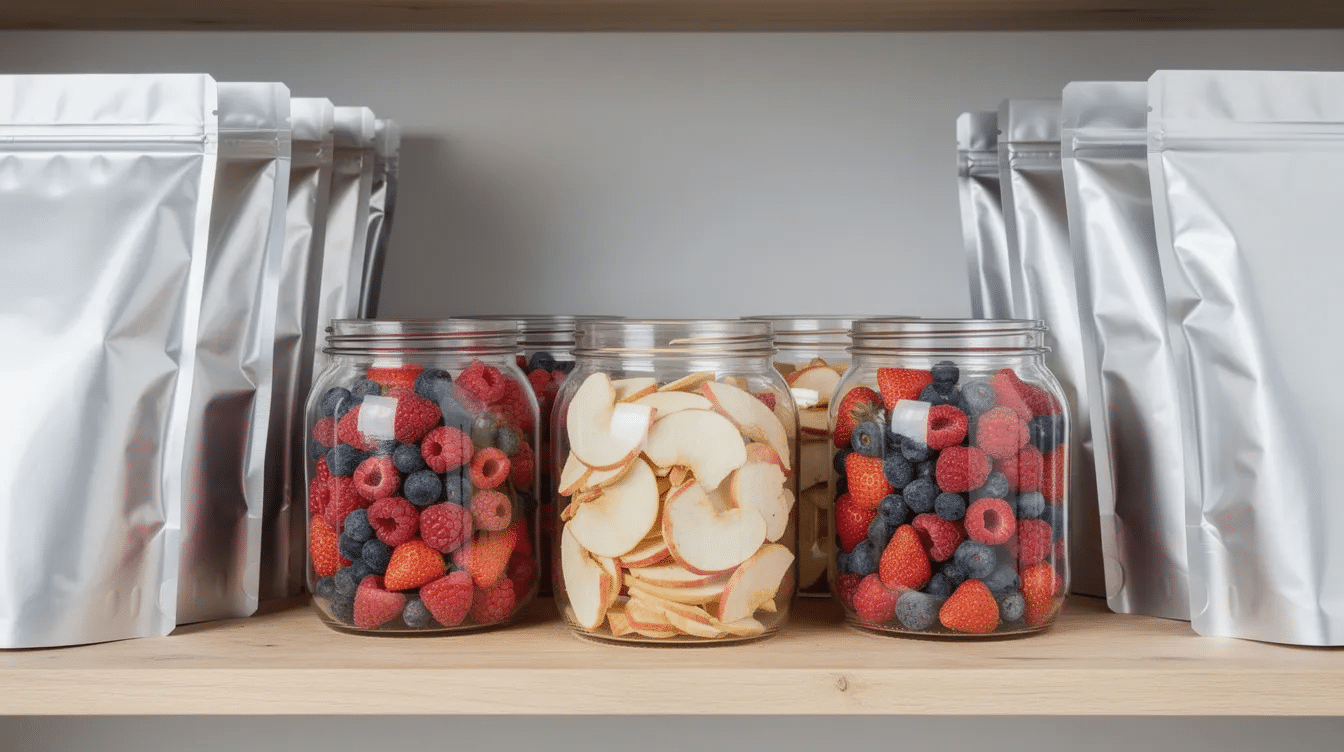
Glass jar – sealed with a two-piece metal lid and oxygen absorber; great for pantry items you access regularly and pairs well with top airtight containers for dried fruits when organizing larger batches
Vacuum-sealed bags – acceptable but less durable than Mylar over decades
Pack freeze dried fruit immediately in mylar bags with oxygen absorbers for long-term storage. Store freeze dried fruit in moisture-proof containers, and use oxygen absorbers to prolong shelf life. Label containers with the food type and date prepared-for example, “Freeze dried strawberries – raw – March 2026.”
Freeze dried fruit can last up to 25 years when stored properly, making it one of the best dried fruits for long term storage in an emergency pantry. Keep freeze dried fruit in a cool, dark, dry place (50–70°F ideal), away from heat sources and direct sunlight. Containers opened periodically for snacking are best used within 1–2 years for peak quality.
Check stored containers occasionally for signs of moisture ingress: condensation inside the bag, clumping, softened texture, or off smells.
Using and Rehydrating Freeze Dried Fruit
Many people eat freeze dried fruit straight from the jar-it is an ultra-crunchy snack the whole family loves, just like simple dehydrated fruit recipes for delicious snacks. But freeze dried products are also remarkably versatile in everyday cooking.
Dry uses: for more inspiration, you can adapt many ideas from ultimate dehydrator fruit recipes to work with freeze dried ingredients.
Trail mix with nuts and chocolate
Cereal, oatmeal, or yogurt toppings
Crushed into powder for decorating baked goods, cocktails, or homemade ice cream
Lunchbox snacks that stay crisp all day
Rehydration: Combine roughly 1 part fruit with 1–2 parts water. Room-temperature water works; warm water speeds the process and suits sauces or pie fillings where softer texture is desired. Rehydrated fruit returns close to the same amount of volume and flavor as the original fresh fruit.
Specific ideas: rehydrated freeze dried strawberries in shortcake, freeze dried banana powder blended into pancake batter, or mixed berry powder folded into meringues; most recipes that use a wide variety of dehydrated fruits can be adapted by swapping in freeze dried versions.
Any rehydrated fruit is more perishable than the preserved version-use it within a day and refrigerate leftovers to reduce the risk of foodborne illness.
Food Safety Tips and Common Mistakes to Avoid
Freeze drying improves shelf life dramatically but does not make unsafe fruit safe. Good food safety practices run from start to finish.
Only use sound, fresh fruit. Discard any pieces with mold, fermented-smelling bruises, or visible decay before they ever reach the machine. Proper freeze drying starts with proper ingredients.
Hygiene basics: wash hands, sanitize cutting boards and knives, and keep raw meats or eggs far from trays of fruit. Cross-contamination is a real risk when preserving food in a shared kitchen.
Freeze drying is not a validated kill step. Pathogenic bacteria can remain dormant in very dry conditions and reactivate upon rehydration-so never freeze dry fruit that was already spoiled or contaminated.
Common beginner mistakes:
Cutting pieces too thick → undried centers
Overloading trays → blocked vapor flow
Stopping the cycle early → hidden moisture
Leaving finished fruit exposed to humid air → reabsorption before packaging
Keep a simple batch log: fruit type, slice size, sugar content notes, cycle time, and results. This helps you refine settings and avoid repeating mistakes across future batches. Check back for more posts on home food preservation as we continue adding guides through 2026.
FAQ: Freeze Drying Fruit at Home
These questions come up frequently after someone runs their first batch of freeze dried fruits. If you are exploring this dehydration technique for the first time, the answers below will save you trial and error.
Can I freeze dry frozen fruit from the store?
Yes. You can place commercially frozen fruit-bags of frozen strawberries, mango chunks, or mixed berries-directly on trays. Break up clumps and spread pieces in a single layer to avoid ice pockets and uneven drying. Expect a slightly longer cycle because surface frost must sublimate off first, and store-bought frozen fruit may have been blanched, which can soften texture slightly.
Can I freeze dry fruit without a freeze dryer?
A household freezer plus oven or dehydrator can produce good dried fruit, but not true freeze dried foods with the same airy crunch and decades-long shelf life. The result is more like conventional dehydrated fruit-chewy, denser, and best used within weeks to months. Label any DIY batches clearly and consume within a year for best quality and safety. A freeze dryer remains the best method for achieving the signature crisp texture and a shelf life of up to 25 years.
Which fruits do not freeze dry well?
High water content fruits like watermelon, very ripe peaches, and certain melons can collapse, stick to trays, or demand extremely long cycles. Start with easier options-apples, bananas, blueberries (with pierced skins), raspberries, and strawberries-before experimenting, or explore the best fruits for sun-drying if you want to try more traditional methods. Even with a good machine, delicate or very sugary fruits may need lower shelf temperatures and extended secondary drying.
How do I know if my freeze dried fruit has gone bad in storage?
Look for clumping, soft or leathery patches, visible mold, off smells, or unusual darkening. If a jar or bag shows condensation on the inside or fruit no longer feels crisp, discard the batch rather than attempting to re-dry it. Properly sealed, fully dried fruit stored in a cool, dark, dry place should remain light, crisp, and pleasantly fragrant for many years.
Do I need to worry about sugar content when freeze drying fruit?
Natural fruit sugars do not prevent freeze drying, but they act as humectants-binding moisture and slowing the process. Very sweet fruits like ripe bananas or grapes may need longer cycles. High-sugar slices can feel slightly less brittle even when technically dry, so always test the thickest pieces. Cutting very sweet fruits into smaller chunks reduces dry time and improves final texture in the finished freeze dried fruits.
DannyContent Writer
Hey there, since 2016, my mission has been to provide you with the information and guides you need to make food dehydrating simple and fun. Whether you're a newbie or a seasoned pro, my site offers helpful guides, reviews, and recipes to enhance your dehydrating experience. I take pride in only recommending products I believe in, ensuring my readers' trust. As an affiliate of various programs, including Amazon Associates, your support helps me continue providing quality content. Thanks for stopping by, and happy dehydrating!