We earn a commission if you make a purchase, at no additional cost to you.
09/22/2026 04:39 pm GMT
🍊 Dehydrated Food Info Finder — Temperatures & Drying Times
Choose a category, then pick a food to see its drying temperature and time.
⚠️ Safety Disclaimer: Drying times are estimates and vary based on slice thickness, food moisture content, humidity, and your dehydrator model. Always check for doneness before storing — food should feel dry, leathery, or brittle with no moist spots. Improperly dried food can harbour mould and bacteria. For meat and poultry, follow USDA safe internal temperature guidelines: beef and pork to 160°F (71°C), poultry to 165°F (74°C). Use a food thermometer when in doubt. Store all dehydrated foods in airtight containers in a cool, dark place and discard anything showing moisture, mould, or off odours.
The gummy market has transformed. What was once a category dominated by corn syrup and artificial colors now includes a growing selection of fruit-forward, low-sugar alternatives that actually taste good. Whether you’re managing your own sweet tooth or looking for better options for kids, 2026 offers more choices than ever before.
This guide breaks down everything you need to know about healthy gummy sweets—from ingredients and DIY recipes to the best store-bought picks and proper storage techniques.
Quick answer: what are “healthy gummy sweets” in 2026?
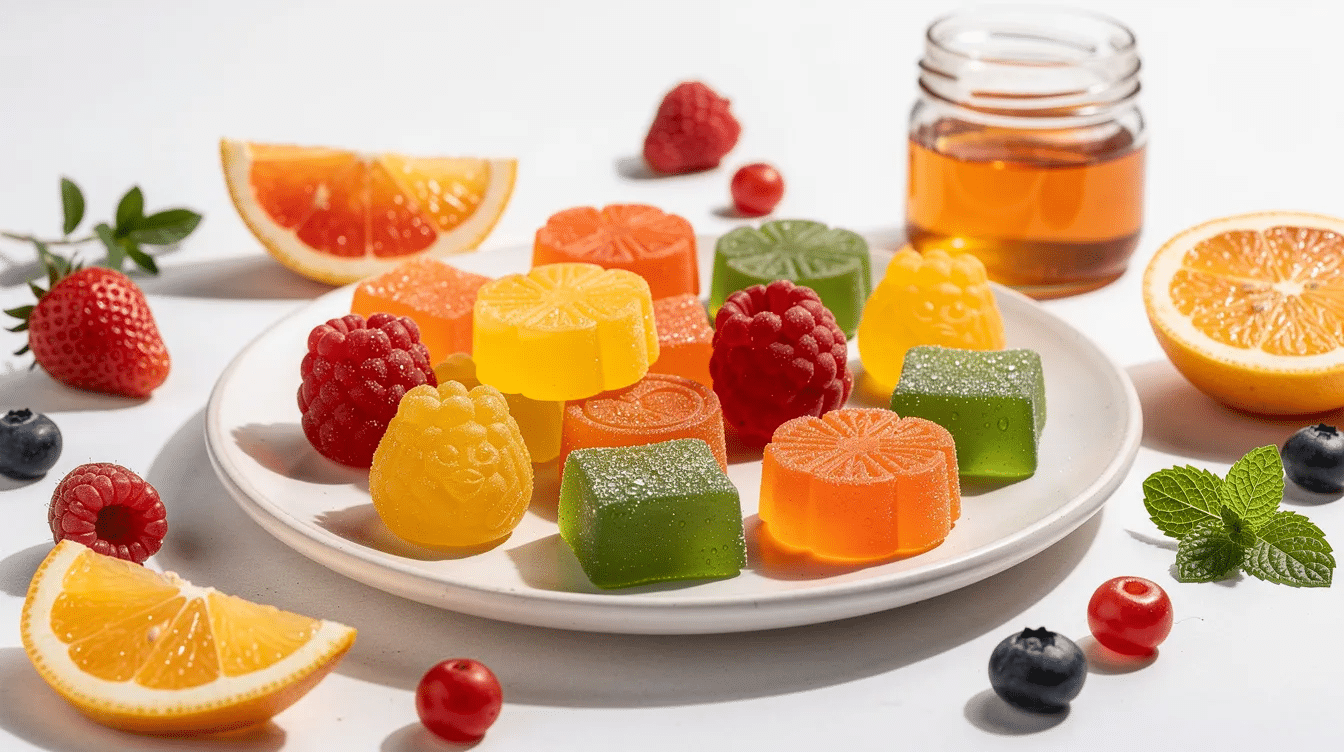
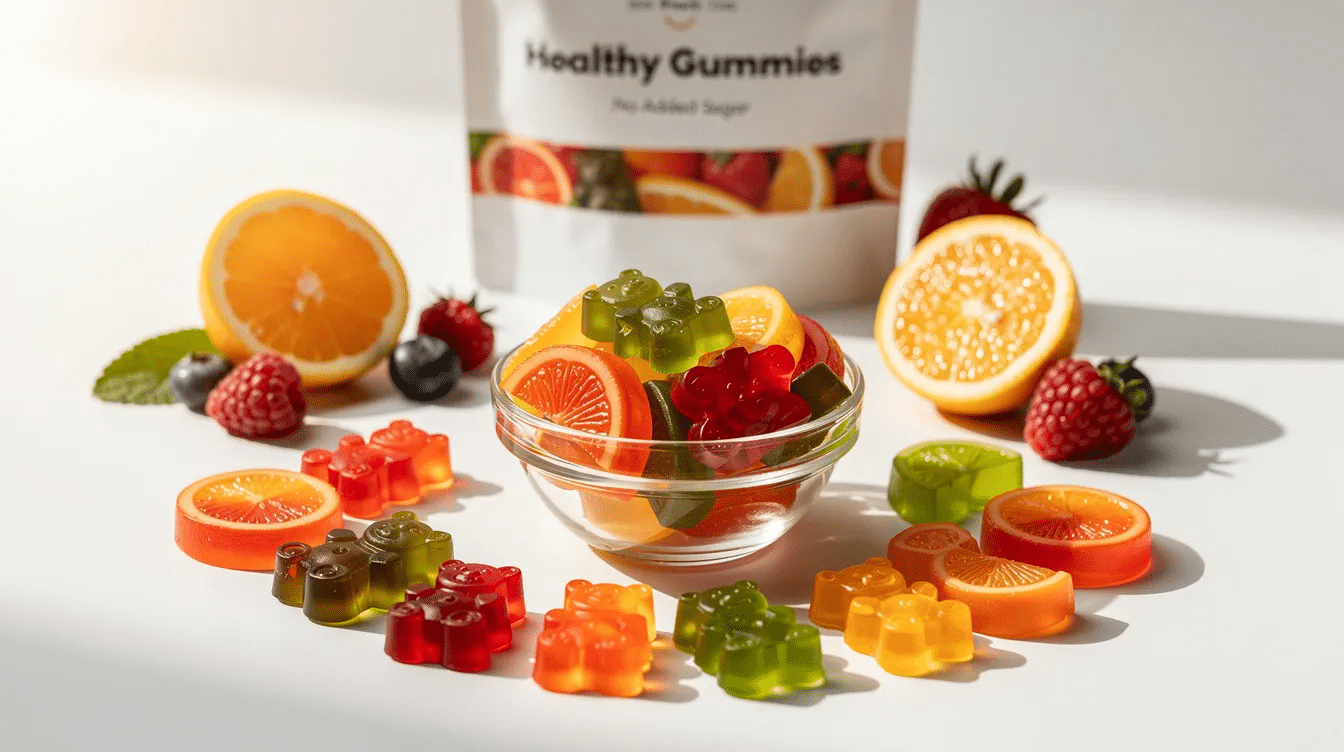
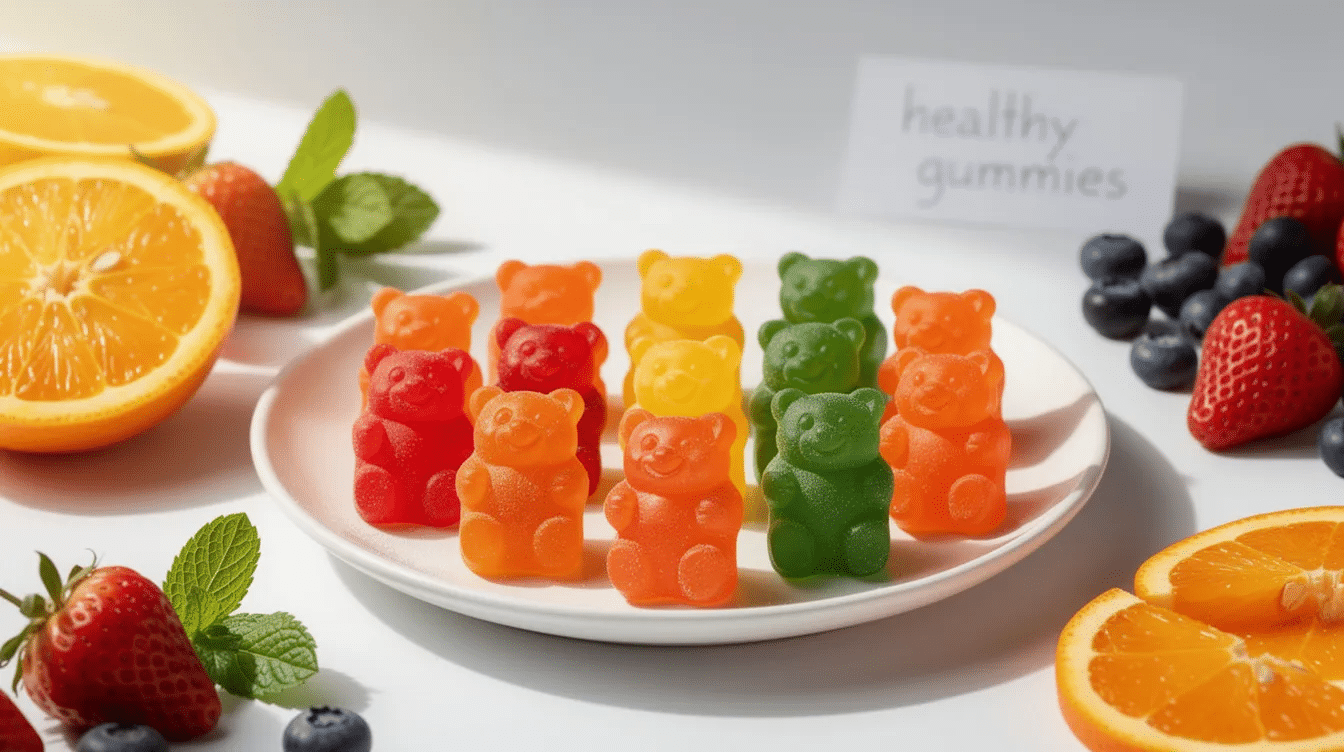
Healthy gummy sweets are gummies made with real fruit, quality gelatin or plant-based gelling agents, and low or no refined sugar. Instead of relying on glucose syrup and synthetic dyes, these treats use ingredients like grass fed gelatin, fruit juice, monk fruit, and allulose to deliver that chewy texture without the blood sugar spike.
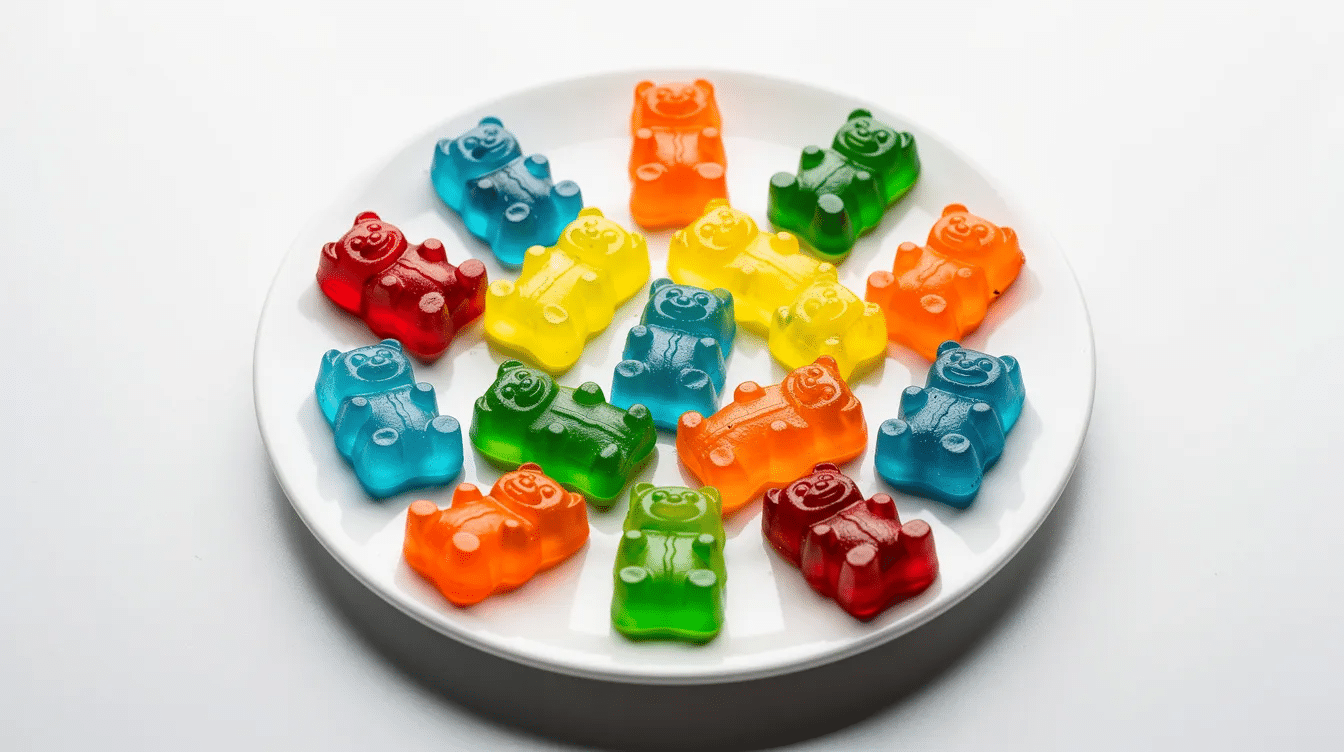
The difference from mainstream options is stark. A standard 8 oz bag of HARIBO Goldbears contains roughly 80-100 grams of sugar, primarily from glucose syrup and sugar, alongside artificial colors like Yellow 5 and Red 40. A 17-bear serving delivers about 25 grams of sugar with negligible nutritional value. Great Value Gummy Worms pack around 40 grams of total sugars per 4 oz bag from corn syrup and high fructose corn syrup, plus carnauba wax coating and artificial dyes.
Compare that to SmartSweets Sweet Fish, which offers just 3 grams of sugar and 13 grams of fiber per pouch through soluble tapioca fiber and allulose—no artificial additives, natural flavors only. Solely Organic Mango Fruit Gummies contain whole fruit puree with 60 calories per pouch and one full fruit serving. That’s the gap we’re talking about.
The healthiest options remain homemade gummies, where you control every ingredient. After that, carefully chosen brands like SmartSweets, Shameless Snacks, YumEarth, and Solely deliver the closest thing to a healthy gummy candy you can grab off a shelf. This article covers the core ingredients, health benefits, simple recipes, vetted store-bought selections, and storage tips you need to make informed choices.
What makes a gummy sweet “healthy” (and what to avoid)
A typical 2024-2026 mainstream gummy relies on corn syrup (sometimes up to 50% of total weight), high fructose corn syrup, and synthetic dyes like Red 40 or Blue 1. These contribute to blood sugar spikes and, according to FDA reviews, potential hyperactivity in children. A healthier gummy flips this formula entirely—prioritizing fruit, quality protein sources, and fiber over cheap fillers.
Lower added sugar and real nutrients define healthy in this context. Look for gummies with under 5 grams of added sugar per serving, no artificial colors (beet juice and turmeric work as natural alternatives), minimal preservatives, and some nutritional contribution. That might be protein from gelatin, antioxidants from real berries, or fiber from tapioca.
Grass-fed beef gelatin adds 3-5 grams of protein per ounce and supplies glycine (up to 20% of its amino profile), proline, and glutamine. These amino acids support gut lining integrity without imparting any beefy flavor. Sourced from pasture-raised cattle, grass-fed options also offer higher omega-3 content compared to conventional pork-derived gelatin.
Healthier sweeteners prevalent in 2026 formulations include monk fruit (mogroside V with zero glycemic index), allulose (a rare sugar naturally occurring in figs and raisins with just 0.4 calories per gram and no insulin response), and modest amounts of honey or maple syrup for nuanced flavor. Brands like Better Sour and TiDBiTS rely heavily on allulose.
What to avoid: corn syrup, high fructose corn syrup (linked to liver fat accumulation), artificial flavors, bright synthetic dyes, and large amounts of sugar alcohols like maltitol (20-50% malabsorption causing bloating) or sorbitol (laxative effects above 10-20 grams daily).
For dietary alignments, the market offers gluten free options via pectin or agar, paleo-friendly versions with honey-gelatin bases, and keto formulations exemplified by Shameless Snacks (1-2g net carbs, allulose-heavy), Kiss My Keto rings (maltitol-free, stevia-sweetened), and Albanese zero-sugar bears (erythritol blend).
Core ingredients for healthy homemade gummy sweets
Most DIY healthy homemade gummies can be made in under 15 minutes of active time with 3-5 ingredients. Once you understand the core components, customization becomes intuitive.
Unflavored gelatin forms the chewy matrix. Bovine or grass-fed options like Knox or Vital Proteins work well, with grass-fed variants adding about 9 grams of protein per tablespoon while supporting joint health via type I collagen precursors. For traditional gummy bears texture, use 2-4 tablespoons per 1.5 cups liquid.
Real fruit and fruit juice provide natural sweetness, color, and flavor without synthetic additives. Berries, mango, pomegranate, or cold-pressed juices like Lakewood Organic Cranberry deliver pectin-like thickness and natural tartness. Note that very acidic fruits like lemon (pH 2-3) can weaken the set if not balanced with sweetener—100% orange, grape, or cranberry juice work more reliably.
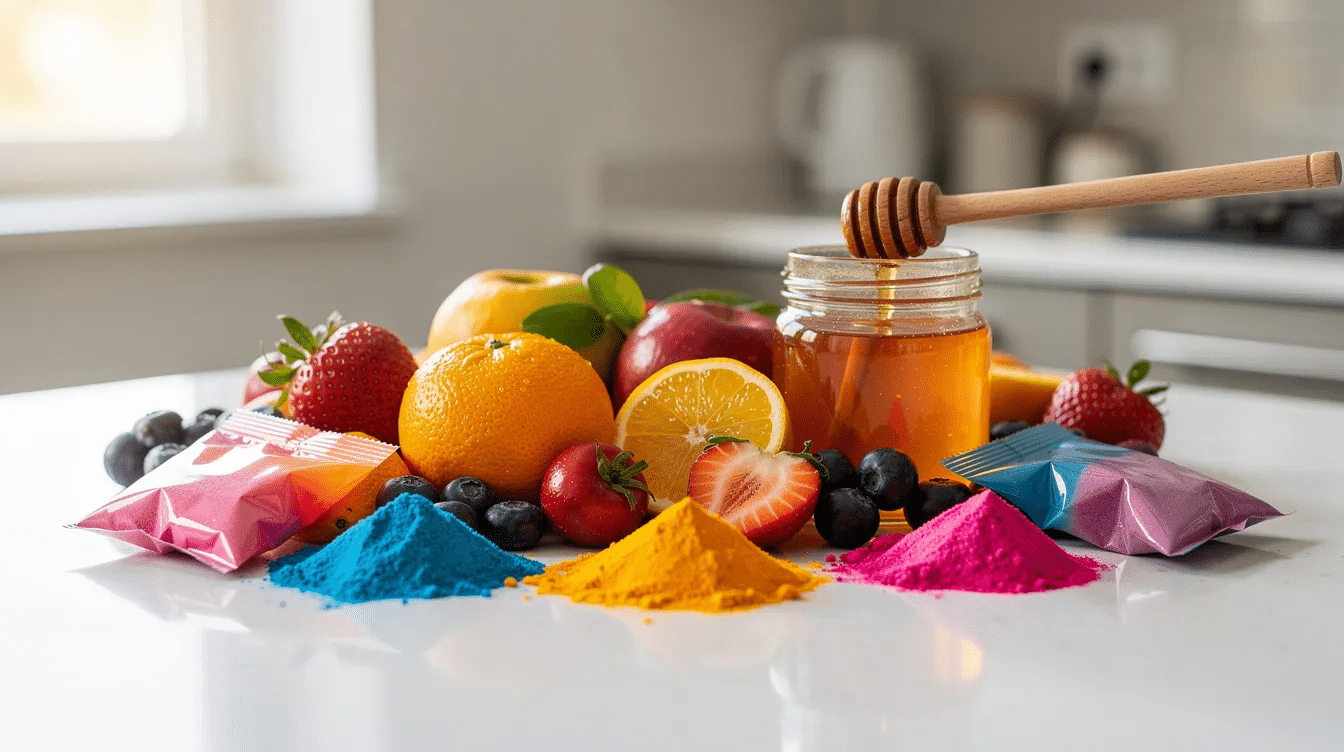
Sweeteners cap at 1-4 tablespoons per batch for glycemic control, a fraction of what traditional recipes demand. Raw honey (GI 50-60), maple syrup (GI 54), monk fruit drops (300x sweeter than sugar, zero calories), or stevia all work. Each influences flavor differently—honey adds floral notes, maple provides caramel undertones.
Coconut milk appears in Clean program-style healthy recipes for gut-friendly treats. Full-fat versions contain lauric acid for antimicrobial gut benefits, yielding 4-6 grams of fat per serving for added satiety while masking gelatin’s subtle flavor.
Vegan gelling alternatives include agar-agar (seaweed-derived, 1:500 ratio to liquid) and pectin. Agar sets firmly at room temperature unlike gelatin’s fridge dependency, producing a snappier texture ideal for mango-agar cubes. Both deliver 80-90% fewer calories than gelatin but less elasticity—expect more of a jello-like bite than a springy chew.
Flavor boosters like fresh lemon juice (0.5-1 tsp for brightness), pure vanilla extract, or food-grade citric acid (0.25% for mild sourness) elevate taste without synthetics. Note that achieving true candy-shop sour gummy intensity is difficult without sugar coatings.
How to make healthy gummy sweets step by step
This basic method works for most fruit-based gelatin gummies, requiring about 10 minutes of active work plus chill time. Master this technique, and you can adapt it endlessly.
Start by blooming the gelatin. Sprinkle 3 tablespoons of unflavored gelatin evenly over 1.5 cups of cold juice or coconut milk in a small saucepan. Let it sit undisturbed for 5 minutes—the granules will swell and absorb liquid, preventing lumps later.
Heat the mixture gently over low heat, stirring until the gelatin dissolves completely and the liquid turns translucent. Keep the temperature under 180°F; boiling denatures the helices that create that chewy texture. If using fruit puree and sweetener, incorporate them now while stirring continuously.
For a cleaner look, strain the mixture through a fine mesh sieve if you’ve used seedy berries, then skim any foam from the surface. This step is optional but gives store-bought quality results.
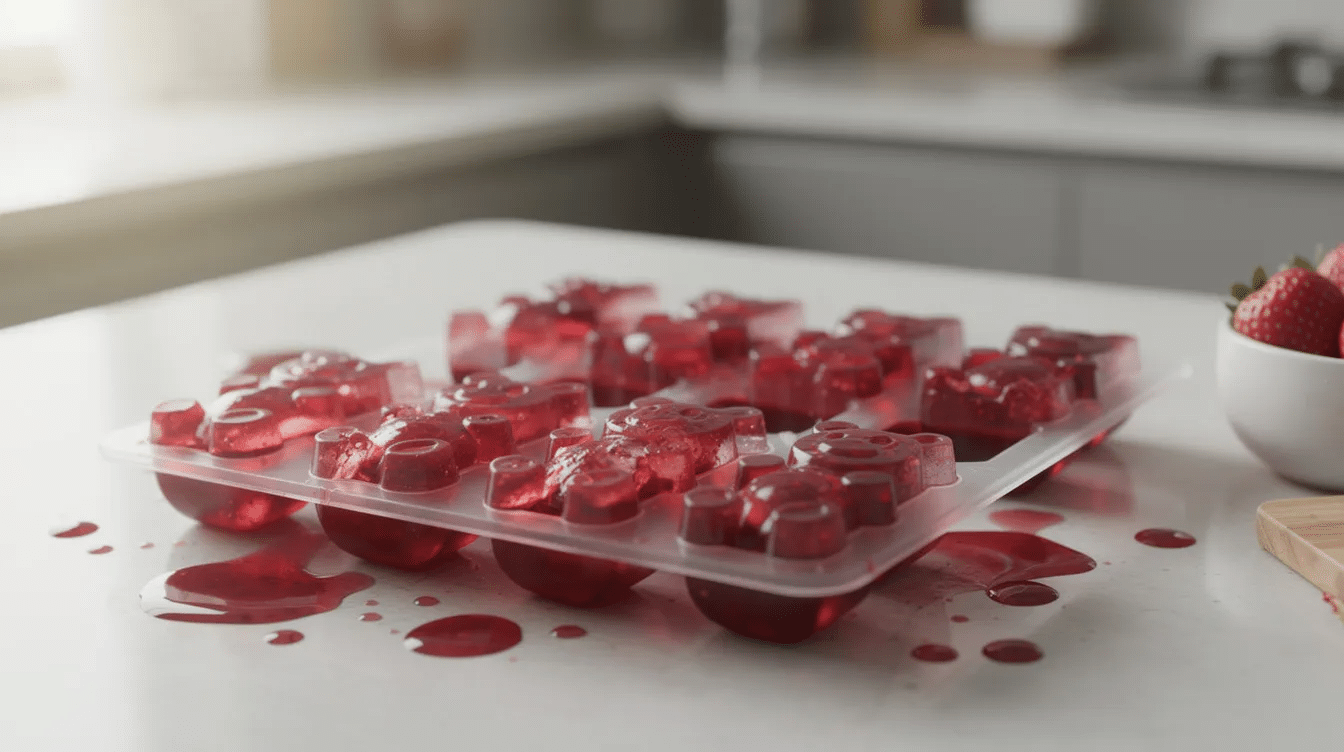
Pour into molds—silicone bear, worm, or ring shapes work perfectly. These are widely available on Amazon in packs of 50-100 cavities. Alternatively, use a small glass baking sheet lined with parchment for cutting into cubes later. Work quickly as the mixture begins setting around 100°F.
Chill in the fridge for at least 1-2 hours until firm. Thicker pieces (over 1cm) may need 2-3 hours. Test by pressing gently—properly set gummies should hold their shape without sticking to your finger.
For a less sticky finish, dust set gummies lightly with powdered freeze-dried fruit or a touch of allulose crystals. This sour powder alternative cuts surface tackiness by about 50% while adding flavor rather than empty calories.
Substitutions, variations, and troubleshooting
Healthy gummies are highly customizable, but certain swaps—particularly the wrong fruit—can completely prevent gelatin from setting. Understanding these variables saves wasted batches.
Fruit swaps offer endless variety. Pomegranate, orange, grape, or mixed berry juice all work beautifully. However, pineapple, papaya, mango, kiwi, guava, and figs contain protease enzymes (bromelain, papain, actinidin) that break down gelatin’s protein structure. These fruits must be boiled for 10-15 minutes to denature the enzymes before use—cooked mango puree works fine, raw does not.
Sweetener swaps allow dietary customization. Switch honey to maple syrup for a smoother fructose profile, date syrup (GI 42) for added fiber, or monk fruit for zero-calorie sweetness stable up to 400°F. Reducing sweetener shortens shelf life slightly; increasing it extends storage by lowering water activity.
Texture tweaks depend on gelatin ratio. Add 1-2 extra tablespoons for firmer homemade gummy bears with that classic bounce. Reduce gelatin slightly for softer, fruit-snack-style bites similar to TiDBiTS or YumEarth organic fruit snacks. Coconut milk softens texture further.
Vegan options require replacing gelatin with agar agar flakes or powder. Use approximately 1 teaspoon powder per cup of liquid, dissolving in boiling liquid rather than cold. Agar sets at room temperature (convenient for warm climates) but produces a more brittle, jello-like bite with less elasticity.
Sour gummies layer tartness through 1/8 teaspoon citric acid mixed into the batter plus a post-set dusting of monk fruit sugar blend. Achieving the intense sour punch of Better Sour or commercial sour gummy products requires sugar coatings that healthy versions typically avoid.
Troubleshooting quick guide: Gummies not setting? Check for too little gelatin (under 2% weight-to-volume), protease-rich fruit that wasn’t cooked, or mixture boiled above 212°F. Too rubbery? That’s excess gelatin (over 5% w/v) or insufficient liquid—reheat with additional juice to fix.
Store-bought healthy gummy sweets: how to choose in 2024-2026
Not everyone wants to cook, and the 2024-2026 market delivers legitimate “better-for-you” options sold at Whole Foods, Amazon, Walmart, and most major retailers. Market growth projects at 12% CAGR according to Glanbia Nutritionals, reflecting genuine demand.
Reading labels effectively means prioritizing organic fruit juice concentrates as the first ingredient, natural pigments (annatto, spirulina, beet juice), and minimal ingredient lists. If you can’t pronounce half the ingredients, it’s probably not the healthier option you’re looking for.
Low-sugar and keto options dominate the premium segment. SmartSweets Sweet Fish delivers 100 calories, 3g sugar, and 13g fiber per 1.8oz pouch using stevia-allulose blends. Shameless Snacks Green Apple Blast offers just 1g net carb. Kiss My Keto rings eliminate maltitol entirely with stevia sweetening. Atkins Endulge gummy bears use erythritol for 1g net carb per serving.
Organic and allergy-friendly brands include YumEarth Organic Fruit Snacks (80 calories per 11 pieces, 6g added sugar from organic cane, top-8 allergen free, vegan, pectin-based with 4.6 stars), and Solely Organic Mango Fruit Gummies (whole fruit puree, 60 calories, no additives). These work for kids with sensitivities or families avoiding common allergens, and can pair well alongside dehydrated low carb fruits for healthy snacking.
Price reality check: SmartSweets pouches run $5-6 for 1.8-3.5oz versus Great Value gummy worms at under $1 for 4oz—roughly a 5-6x markup for 80% sugar reduction. The health premium is real but so are the benefits.
Taste and texture expectations differ from classics. Allulose-heavy formulations produce a cooler mouthfeel and less hygroscopic surface than HARIBO’s sorbitol shine or Albanese’s pectin snap. Some find them less delicious initially; taste preferences often adjust within a few weeks.
Start with a single pouch or variety pack before committing to a 16 or 32-pack. Check sugar alcohol warnings if you’re sensitive. Focus on grams of added sugar per serving rather than per bag marketing claims.
Health benefits beyond “less sugar”
Well-designed gummies deliver functional benefits like gut support, skin health, and better sleep—not just empty sweetness. This explains why wellness protocols from 2023-2025 increasingly incorporated specific gummy recipes and other guilt-free snack ideas.
Gut health benefits from gelatin’s amino acid profile. Glycine, proline, and glutamine (comprising 25-30% of gelatin’s amino acids) support intestinal lining integrity and may ease digestion. Studies in the Nutrients journal suggest 15g daily reduces IBS symptoms by 20-30%. Blueberry-gelatin-coconut milk combinations appear in gut reset programs specifically for this reason.
Skin, hair, and nails improve with regular collagen-rich gelatin intake. Randomized trials show 2-5g daily boosts skin elasticity by approximately 10%. This drove the 2024 popularity of homemade lemon-blueberry collagen bites among beauty-focused consumers.
Sleep and stress management connects to glycine’s function as an inhibitory neurotransmitter. Research in Sleep Medicine Reviews demonstrates that 3g before bed improves sleep latency by about 25% and reduces daytime fatigue—making evening gelatin gummies a functional choice.
Blood sugar management improves dramatically versus standard candy. Monk fruit, allulose, and fiber-rich formulations like Behave Gummy Stars or Small Wins Candy can reduce blood sugar spikes compared with conventional gummy worms. Allulose specifically inhibits sucrase with 90% excreted unmetabolized.
Kids’ nutrition benefits when real-fruit gummies replace dyed, corn-syrup-based options. A homemade strawberry-orange gummy delivers vitamin C and antioxidants; a conventional worm delivers zero nutrients beyond calories. It’s an easy swap for picky eaters.
Important caveat: these remain treats. A serving still contains 150-200 calories. Gummies should complement whole fruits, balanced meals, and other protein sources—not replace them. Dental erosion from acidity remains a consideration.
Best molds, storage, and food safety for homemade gummies
Choosing appropriate molds and storing gummies correctly matters significantly because homemade versions lack the preservatives that extend commercial shelf life.
Silicone molds in bear, worm, ring, and fruit snack shapes have been widely available on Amazon since the early 2020s, typically $10-15 for multi-packs. Their flexibility (50-60 Shore A durometer) makes unmolding effortless compared to rigid plastic alternatives.
Alternative containers work fine if you don’t have molds. Any shallow glass dish like an 8×8-inch pan lined with parchment produces uniform cubes or strips when cut. Less Instagram-worthy but equally delicious.
Refrigeration is mandatory. Store fruit and gelatin-based gummies in an airtight container in the fridge where they typically last 7-14 days depending on sugar content and preparation cleanliness. Very low-sugar, fresh juice batches risk mold by day 7; slightly sweeter versions hold closer to 14 days.
Freezing changes texture significantly. Gummies become rock-hard when frozen and weep moisture after thawing, losing 30-50% of their original texture quality. Generally not recommended except for experimental purposes.
Practical tips: Separate sticky layers with parchment paper. Avoid storing at room temperature like commercial HARIBO bags—spoilage risk doubles above 70°F. Label containers with preparation dates (e.g., “Batch made 18-04-2026”) so you know when the two-week window closes.
Sample healthy gummy sweets ideas to try
These flavor combinations provide starting points for immediate experimentation. Each uses the basic technique covered earlier with specific ingredient variations.
3-ingredient pomegranate-orange bears: Combine 3/4 cup pomegranate juice, 3/4 cup orange juice, and 3 tablespoons grass-fed gelatin. The natural anthocyanins create a ruby red color without any dyes, delivering about 4g protein per serving. Naturally tart with subtle sweetness.
Blueberry-lemon coconut bites: Blend 1 cup full-fat coconut milk, 1/2 cup blueberries, 1 teaspoon lemon juice, monk fruit to taste, and 2.5 tablespoons gelatin. This Clean-program-style combination supports gut health while delivering a creamy, antioxidant-rich treat.
Mango-passion agar gummies (vegan): Cook 1 cup mango puree with passion fruit juice and 1 teaspoon agar agar powder, lightly sweetened with maple syrup. Pour into a flat pan and cut into cubes once set. Snappier texture than gelatin versions but works at room temperature.
Collagen-boost citrus gummies: Use orange juice, a little lemon, honey, and 4 tablespoons gelatin for extra protein (approximately 10g per batch). Chewier than standard versions, suitable as a midday snack or post-workout treat.
Kid-friendly strawberry fruit snack bars: Blend strawberries with apple juice, mix with gelatin, pour into a flat mold, and slice into rectangles. Similar to soft fruit snacks like TiDBiTS but with ingredients you control. Most kids eat these without complaint.
Start with one recipe. Adjust sweetness and texture based on your preferences. Then branch into seasonal variations—peach in summer, pomegranate in fall—through 2026 and beyond.
Whether you prefer making healthy gummies from scratch or grabbing a vetted bag from the store, you can satisfy cravings without the sugar overload. Review recipe results, comment something if you try these ideas, and explore the comments navigation on your favorite food blogs for more inspiration. The healthier gummy revolution is well underway—you might as well enjoy it.
DannyContent Writer
Hey there, since 2016, my mission has been to provide you with the information and guides you need to make food dehydrating simple and fun. Whether you're a newbie or a seasoned pro, my site offers helpful guides, reviews, and recipes to enhance your dehydrating experience. I take pride in only recommending products I believe in, ensuring my readers' trust. As an affiliate of various programs, including Amazon Associates, your support helps me continue providing quality content. Thanks for stopping by, and happy dehydrating!