We earn a commission if you make a purchase, at no additional cost to you.
09/22/2026 04:39 pm GMT
🍊 Dehydrated Food Info Finder — Temperatures & Drying Times
Choose a category, then pick a food to see its drying temperature and time.
⚠️ Safety Disclaimer: Drying times are estimates and vary based on slice thickness, food moisture content, humidity, and your dehydrator model. Always check for doneness before storing — food should feel dry, leathery, or brittle with no moist spots. Improperly dried food can harbour mould and bacteria. For meat and poultry, follow USDA safe internal temperature guidelines: beef and pork to 160°F (71°C), poultry to 165°F (74°C). Use a food thermometer when in doubt. Store all dehydrated foods in airtight containers in a cool, dark place and discard anything showing moisture, mould, or off odours.
Dried Fruits for Wreaths: How to Make Fragrant, Natural Christmas Wreaths
If you’ve ever walked past a front door adorned with dried oranges and cinnamon sticks and felt an instant wave of warmth, you already understand the appeal. Making a wreath with dried fruits is one of the most rewarding DIY projects for the holiday season, and the results are as beautiful as they are fragrant. This post walks you through everything from choosing and drying your fruit to assembling a lovely finished piece you’ll love for years.
Key Takeaways
Dried fruits like orange slices, apples, lemons, and whole oranges make long-lasting, fragrant, and eco-friendly decorations for a christmas wreath or year-round door decor. Dried fruit can last 1 to 2 years when stored properly, making them a smart investment.
You can either buy ready-made dried fruit slices and cinnamon sticks from craft supplies shops or dry your own at home using a low oven or a dehydrator for consistent drying results.
The best dried fruit wreaths combine fruit slices, pine cones, cinnamon sticks, star anise, and evergreen greenery for striking color, texture, and scent.
Properly dried and stored wreath elements can be reused for up to two holiday seasons, then composted or simmered as stovetop potpourri.
Why Use Dried Fruit for Wreaths?
Between 2020 and 2026, dried fruit wreaths have surged back into popularity as people decided to move away from plastic-free christmas decorations and embrace traditional, handmade alternatives. Major design outlets like Homes & Gardens have featured dried fruit prominently in their seasonal trend round-ups, and it’s easy to see why.
The sensory appeal is hard to beat. Bright citrus colors, the subtle natural scent of dried oranges and star anise, and rustic textures that pair with fir or eucalyptus greenery create something no mass-produced PVC wreath can replicate. Unlike plastic decorations, dried fruit, pine cones, and natural foliage are fully biodegradable, and you can compost them when they’ve run their course.
From a price perspective, buying supermarket oranges, apples, and lemons in November and drying them at home costs a fraction of a fully decorated store-bought wreath. Common uses include a christmas wreath, an Advent wreath, winter wedding decor, kitchen garlands, and even country-style mantel displays. Dried fruit decorations are economical and aromatic, which is a combination that’s hard to argue with.
Best Dried Fruits and Natural Materials for Wreaths
Choosing the right fruits and accents will determine how long your wreath lasts and how striking it looks. The best fruits for drying include apples and citrus, and dried fruits that retain their shape and color are best for wreaths.
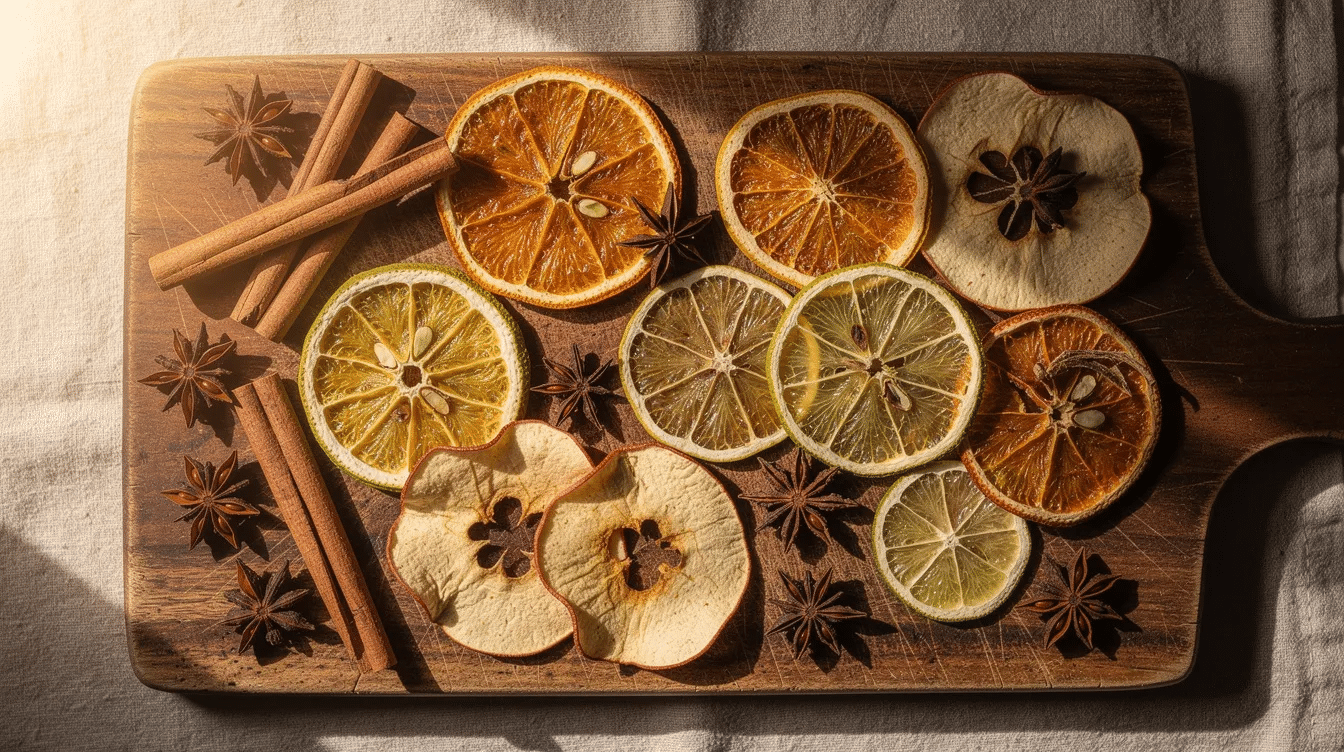
Citrus slices. Navel oranges are ideal for drying due to their thick rinds, which hold up well and keep vibrant color. Blood oranges, lemons, and limes also work beautifully. For more detail on technique, you can explore how to dehydrate citrus with easy step-by-step instructions. Citrus slices add vibrant colors to decorative wreaths. Slice oranges 1–1.5 cm thick (about 1/4 inch) for best results. Citrus should be sliced 1/8 to 1/4 inch thick for even drying. Thinner slices can become too brittle when wired onto a wreath. Dried grapefruit provides large, bold elements for wreath designs, giving you a wonderful stained-glass effect.
Whole oranges and small fruits. Whole oranges, clementines, and small crab apples can be dried intact or studded with cloves to create mini pomanders. Clementines can be dried but are more challenging than other fruits due to their thinner skin. Whole fruits work best on sturdy door wreaths rather than delicate indoor garlands.
Other fruit slices. Apple rings offer a rustic star-like appearance when sliced thin, especially varieties like Gala, Braeburn, and Granny Smith with their pretty core patterns. If you’re new to drying apples, a guide on how long it takes to dehydrate apple slices can help you plan ahead. Pears give elongated slices for variety. Whole dried berries can fill gaps in decorative wreaths and add color. Whole pomegranates add dramatic texture as focal points. Choosing a dominant fruit can simplify wreath design while you balance larger slices with smaller elements like pinecones and seed pods.
Supporting botanicals. Pine cones, cinnamon sticks, star anise, bay leaves, and dried chillies bring texture and fragrance. Nuts in shells and seed pods add extra rustic detail. Combining dried fruits with natural accents creates a visually appealing wreath.
Once items have been wired, glued, or sprayed, treat all pieces as decorations only-not food safe for humans or animals.
How to Dry Fruit Slices and Whole Oranges for Wreaths
Both oven and dehydrator methods work well, but fully drying the fruit is key to preventing mold on a christmas wreath hung from late November through early January. If you’re using a dedicated machine, a detailed guide on how to dehydrate fruit in a food dehydrator can help you get consistently good results. Rush this step and you’ll wonder why your slices turned fuzzy by mid-December.
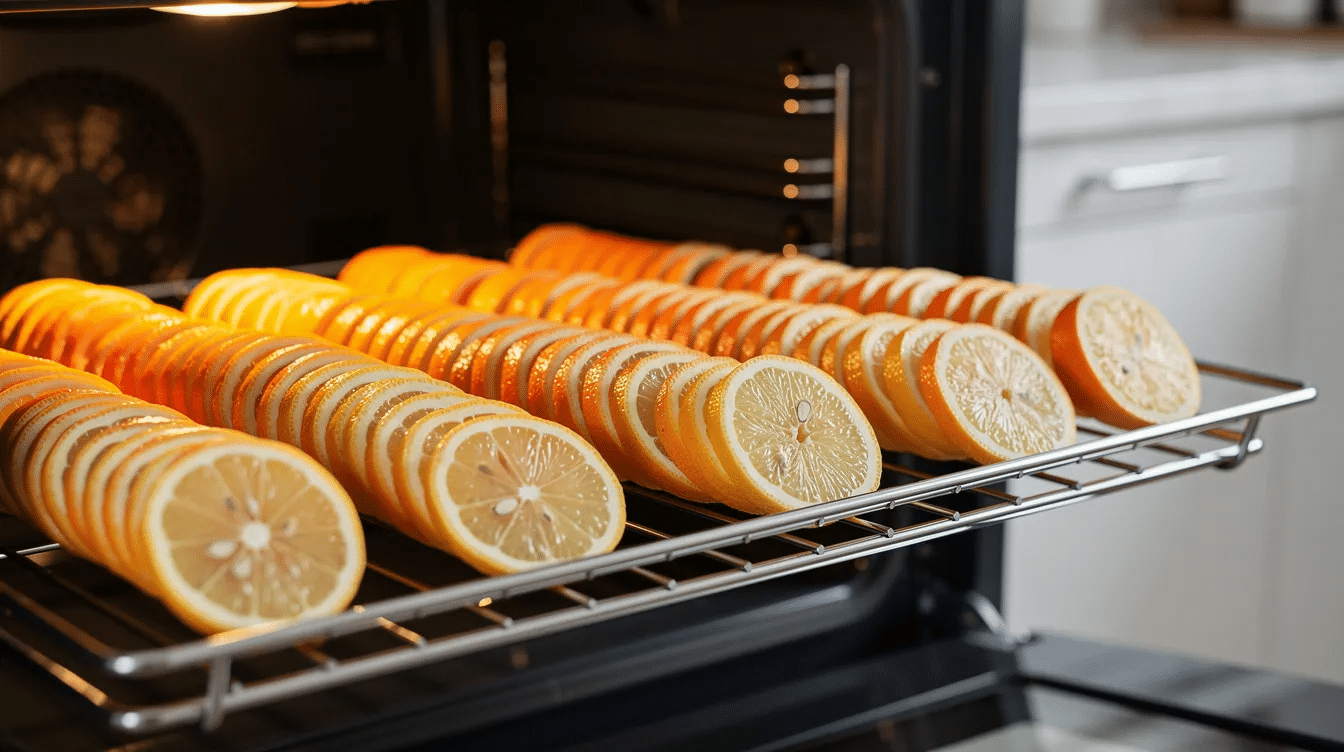
Preparation. Wash and dry fruit thoroughly. Slice oranges, lemons, limes, and apples into even 5–7 mm (1/4 inch) slices. Slice fruit about 1/4 inch thick for optimal drying. Blot juicy fruits with paper towels before drying to remove excess juice and minimise sticky surfaces. Thin slices dry faster than thicker ones, so keep your cuts consistent.
Oven drying. Preheat a conventional oven to 200°F (about 90–95°C fan). Arrange fruit slices on a baking rack set over a tray so air can circulate beneath them. Turn slices every 30–45 minutes and leave the door slightly ajar with a wooden spoon if safe to do so. Dry fruit slices at 200°F for 2–3 hours for standard slices. Small whole oranges may need 4–6 hours or more depending on thickness.
Dehydrator drying. Set your dehydrator to 125–135°F (50–57°C). Spread slices in a single layer without overlap. For more ideas on using your machine beyond wreath projects, explore ultimate dehydrator fruit recipes. Use a dehydrator for consistent drying results, checking after 6–10 hours for a leathery, fully dry texture.
Signs the fruit is ready. No visible moisture or sticky juice. Slices feel firm, slightly leathery, and do not bend easily. For whole oranges, skin should be wrinkled and light with no soft spots. You can remove a piece, let it cool completely, and check by cutting into the centre.
Optional finish: dust apple slices with cinnamon before drying for extra warmth, or leave citrus plain for a brighter look.
Step-by-Step: Making a Dried Fruit Christmas Wreath
This section gives you a simple method for a classic round dried fruit christmas wreath that a beginner can finish in an afternoon. It’s easy to adapt once you’ve nailed the basics.
Step 1: Gather materials. You’ll need a wreath base (a plain wreath of grapevine, straw, or a fresh fir ring, 25–40 cm), your dried orange slices, dried lemons, dried apples, and optional whole oranges or clementines. Stock up on pine cones, cinnamon sticks, star anise, and sprigs of fir, eucalyptus, or ivy. Grab florist wire, a hot glue gun, scissors, and ribbon or twine for hanging.
Step 2: Prepare the base. If using fresh greenery, wire bunches of fir around the ring first, all facing the same direction, to create a full green base. If using a plain grapevine ring, you can leave some vine visible for a rustic touch.
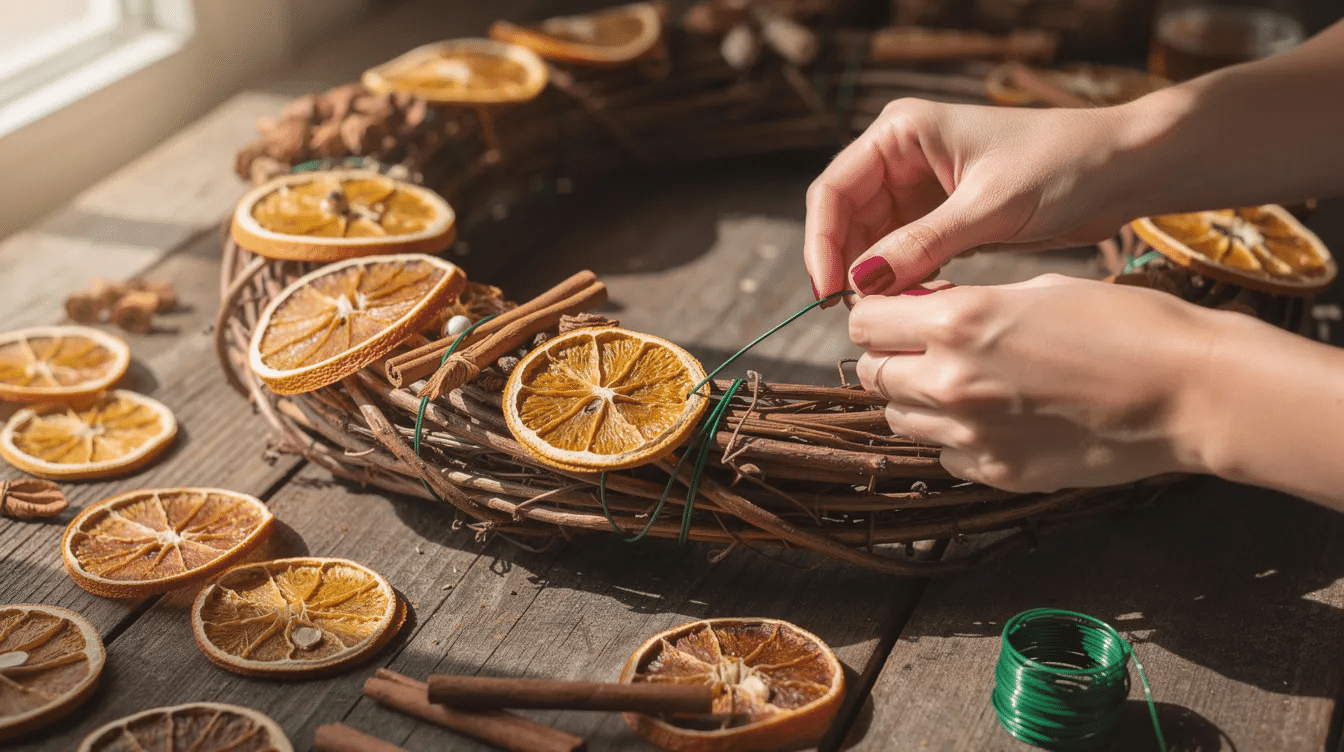
Step 3: Wire fruit slices. Pierce each dried fruit slice near the rind with florist wire. Twist the wire tightly behind the slice to create a short stem. Use floral wire for secure attachment of heavier fruit pieces in wreaths. Attach to the frame in clusters of two or three slices for greater impact.
Step 4: Place accents. Add clusters of pine cones and bundles of 2–3 cinnamon sticks, wired or glued in place. Tuck in star anise, bay leaves, and small sprigs of greenery to fill any holes and hide mechanics. Keep overall shape balanced by mirroring clusters or creating an asymmetric focal point.
Step 5: Finish. Tie a wide velvet or linen ribbon bow at the top or bottom. Add optional warm white battery fairy lights, hiding the battery pack at the back. Take a quick photo when finished so you can recreate or update the design next year.
Use cinnamon sticks and pine cones to decorate the wreath in pairs or trios-single pieces tend to get lost visually.
Design Ideas and Variations for Dried Fruit Wreaths
Once you’ve mastered the basic technique, you can experiment freely. Dried fruit can be used in garlands, wreaths, and potpourri, so your dried pieces are never wasted. A simple project like a dried orange and cranberry garland can coordinate beautifully with your wreath. Here are a few directions to hope for inspiration.
Traditional christmas wreath. Focus on oranges, red apples, cinnamon sticks, fir branches, and pine cones. Pair with deep red velvet ribbon for a classic December look. The natural elements practically decorate themselves against dark green fir.
Scandi-inspired minimalist wreath. Use a slim metal hoop with just a crescent of eucalyptus, white-fleshed dried apples, and pale lemon slices. Keep colors restrained-greens, creams, soft golds-and finish with natural twine. The beauty of this style is in its restraint.
Citrus-sunburst kitchen wreath. Mix blood orange, navel orange, grapefruit, and lime slices for a bright, almost stained-glass effect. Hang in a sunny kitchen window so light shines through the fruit, creating a warm glow.
Outdoor-ready variation. While dried fruit lasts longer indoors, it can live on a sheltered porch if protected from rain. A quick mist of matte clear spray on both sides of slices adds weather resistance.
Zero-waste variation. Combine imperfect or older dried fruit with foraged pine cones, seed heads, and ivy from your garden for a basket-of-nature aesthetic. You can also turn leftover slices into DIY dried fruit potpourri for fragrant bowlfuls around the house. All natural pieces can be dismantled and composted after the season.
Care, Storage, and Safety for Dried Fruit Wreaths
Proper care helps dried fruit decorations continue looking glad and fresh through the whole christmas season and often into the next year. Citrus fruits were considered luxuries in early history, so it’s fitting to treat your pieces with a little respect.
Display conditions. Keep wreaths indoors to prevent moisture damage, or place them on a sheltered porch away from rain and heavy condensation. Avoid putting them directly above a radiator or fireplace-excessive heat causes cracking.
Lifespan. Dried fruit can last 1 to 2 years if stored properly. Colors will fade and deepen over time, moving from bright orange to amber and brown, but many people find the aged tones equally charming. Keeping pieces dry is the single most important factor.
Storage after the holidays. Carefully remove fragile pieces or store the whole wreath intact. Wrap dried fruit and natural decorations in tissue paper. Place in a rigid cardboard box and store in a cool, dry cupboard through spring and summer. Check for any sign of mold before storing and discard anything suspect immediately. Add a muslin bag of dried lavender or a bay leaf to the box to deter insects.
Safety. Once dried fruit has been wired, glued, or sprayed, it should not be eaten. Keep wreaths out of reach of small children and animals who might try to chew on pieces.
Eco-friendly disposal. At the end of their life, break up uncoated fruit, foliage, and pine cones for the compost heap or use in a stovetop simmer pot. If you’ve enjoyed working with oranges and apples, you might like to explore what other fruit you can dehydrate for future projects. Dispose of wired or varnished pieces in general waste.
FAQ About Dried Fruits for Wreaths
These questions cover the practical details that often come up when people try dried fruit wreaths for the first time.
How far in advance can I make a dried fruit Christmas wreath?
If the fruit has been properly dried, you can assemble a wreath as early as late November and it will hold its beauty through early January. Colors will be brightest in the first 3–4 weeks, so for a specific event like a winter wedding or holiday party, aim to create it about 7–10 days beforehand.
Can I use store-bought dried fruit instead of drying it myself?
Most packaged dried fruit sold as food-like soft apricots or raisins-is too moist and flexible for wreaths and may attract pests. Instead, look for purpose-made decorative dried orange slices and whole oranges from craft suppliers, or dry firm, fresh supermarket fruit at home for the ideal result. Any surplus fruit can be turned into treats like apple fruit leather made in a dehydrator for snacking. If you enjoy natural decor, dried Christmas floral arrangements for holiday decor pair beautifully with dried fruit wreaths around the house. Feel free to leave a comment on this blog if you’ve found a great source in your area, whether that’s in florida or any other country.
Why did my dried fruit go mouldy on the wreath?
Mold usually appears when slices were not fully dried-still slightly sticky or wet in the centre-or when wreaths hang in very humid spots like over a steamy cooker. Slice thinner, extend drying time by at least an hour, and store finished decorations somewhere dry. Leftover fruit purée can also be turned into apricot fruit leather in a food dehydrator so nothing goes to waste. Discard any mouldy pieces immediately so spores don’t spread.
Can I refresh the scent of an older dried fruit wreath?
The natural citrus scent fades as fruit ages, but you can refresh the atmosphere by adding a few drops of orange, clove, or cinnamon essential oil onto the back of pine cones or cinnamon sticks. Use oils sparingly and keep them away from painted doors, as concentrated oils can stain delicate surfaces. A touch goes a long way.
Is it safe to add candles to a dried fruit wreath?
Dried fruit, pine cones, and greenery are all flammable, so never place them close to naked flames without proper glass holders and generous clearance. LED pillar candles or micro fairy lights offer a similar warm glow with much lower fire risk, making them the kind of safe, pretty alternative that works on doors, mantels, and shelves alike.
DannyContent Writer
Hey there, since 2016, my mission has been to provide you with the information and guides you need to make food dehydrating simple and fun. Whether you're a newbie or a seasoned pro, my site offers helpful guides, reviews, and recipes to enhance your dehydrating experience. I take pride in only recommending products I believe in, ensuring my readers' trust. As an affiliate of various programs, including Amazon Associates, your support helps me continue providing quality content. Thanks for stopping by, and happy dehydrating!