We earn a commission if you make a purchase, at no additional cost to you.
09/22/2026 04:39 pm GMT
🍊 Dehydrated Food Info Finder — Temperatures & Drying Times
Choose a category, then pick a food to see its drying temperature and time.
⚠️ Safety Disclaimer: Drying times are estimates and vary based on slice thickness, food moisture content, humidity, and your dehydrator model. Always check for doneness before storing — food should feel dry, leathery, or brittle with no moist spots. Improperly dried food can harbour mould and bacteria. For meat and poultry, follow USDA safe internal temperature guidelines: beef and pork to 160°F (71°C), poultry to 165°F (74°C). Use a food thermometer when in doubt. Store all dehydrated foods in airtight containers in a cool, dark place and discard anything showing moisture, mould, or off odours.
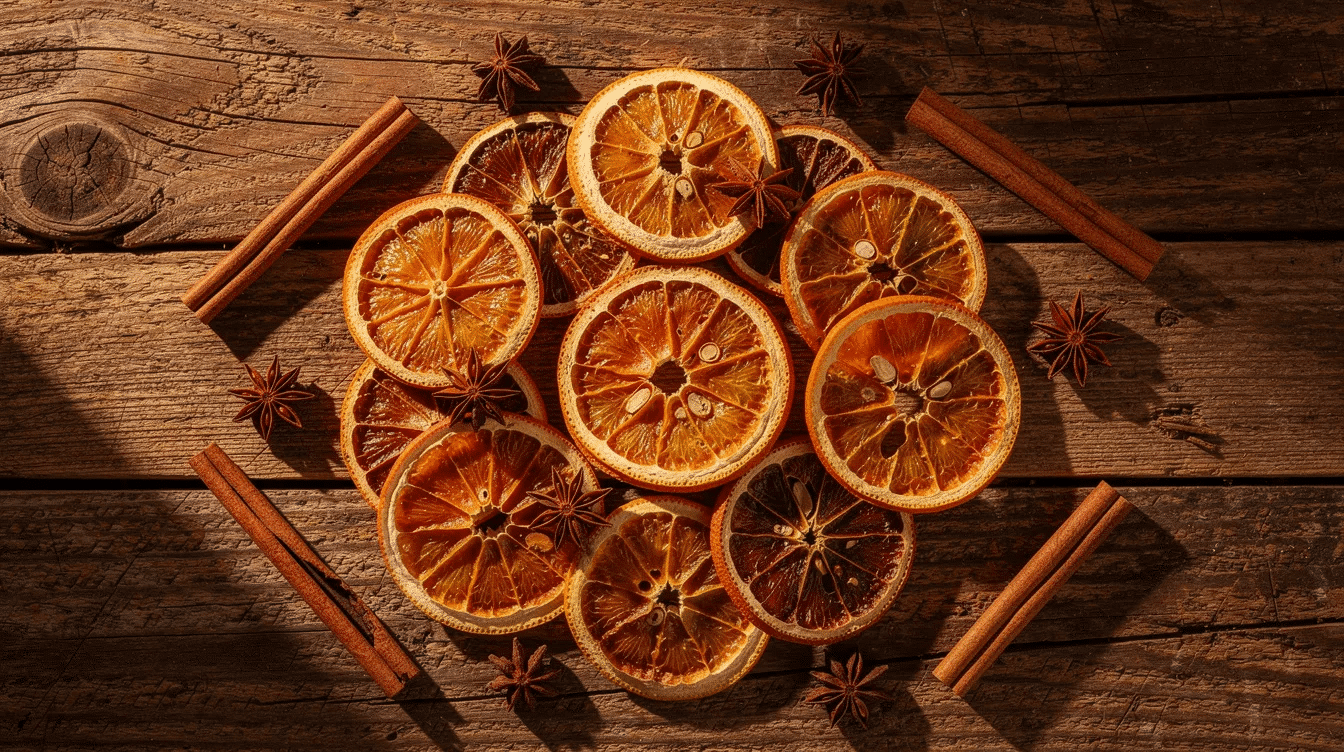
There’s something magical about a christmas tree adorned with real oranges and cinnamon sticks—the warm glow of lights shining through translucent citrus slices, the subtle fragrance of spices drifting through the room. Dried fruit ornaments bring that nostalgic, handmade charm to your holiday season without the plastic waste. This guide walks you through everything from selecting the best fruit to storing your creations for years to come.
Dried fruit ornaments are simple, affordable DIY christmas decorations made from real citrus slices, apples, and spices like cinnamon sticks and star anise—yielding roughly 25 ornaments from about $15 in ingredients.
Most fruit slices dry in a home oven at 150–200°F (65–95°C) in about 3–4 hours, with flipping every 30–60 minutes to prevent burning.
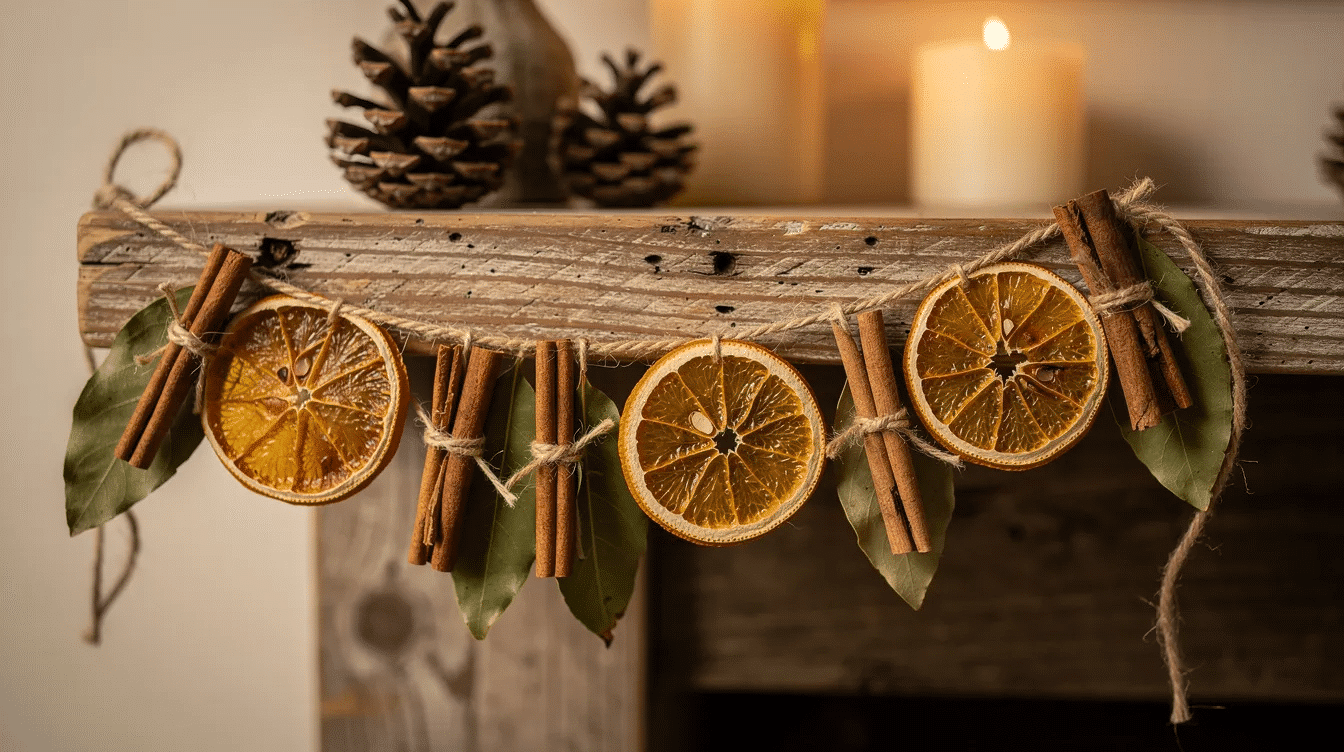
Ornaments can be strung with ribbon, raffia, or twine and combined with bay leaves and cinnamon to create garlands, gift toppers, and tree decorations.
Essential oils (orange, cinnamon, clove) can refresh the scent, and properly dried ornaments store well in sealed boxes between christmas seasons.
Imperfections—uneven slices, rustic bows, darkened edges—add to the natural, handmade charm of these ornaments.
Why Make Dried Fruit Ornaments?
Picture thin orange slices catching the glow of tree lights on a December evening, their centers glowing like stained glass while the scent of cinnamon and cloves fills the air. That cozy, nostalgic atmosphere is exactly why dried fruit ornaments have become a favorite among crafters seeking something more meaningful than store-bought decor.
The appeal starts with sustainability. Unlike mass-produced plastic ornaments contributing to the estimated 20 million tons of holiday waste generated annually in the U.S., these natural ornaments are fully biodegradable and compostable. When the season ends, they return to the earth rather than a landfill.
Beyond eco-friendliness, citrus fruits create a genuine stained-glass effect when backlit. As slices dry, their water content (about 85-90%) evaporates, concentrating natural sugars and fibers into semi-translucent “windows.” Blood oranges add magenta streaks, lemons yield pale golden tones, and standard oranges glow deep amber.
These fruit crafts also deliver a multi-sensory experience—visual beauty, natural colors, and gentle fragrance from citrus, cinnamon, and cloves. They’re ideal for family crafting sessions, classroom projects, or handmade gifts that smell amazing and carry genuine personal meaning, and you can echo that same cozy feel in a DIY dried fruit potpourri displayed in bowls or jars.
Best Fruits and Materials to Use
Thin-skinned citrus and firm fruits dry best while maintaining their shape. Choosing the right ingredients upfront saves time and ensures gorgeous results, especially if you plan to use these techniques beyond ornaments and explore how to dehydrate citrus slices for year-round use.
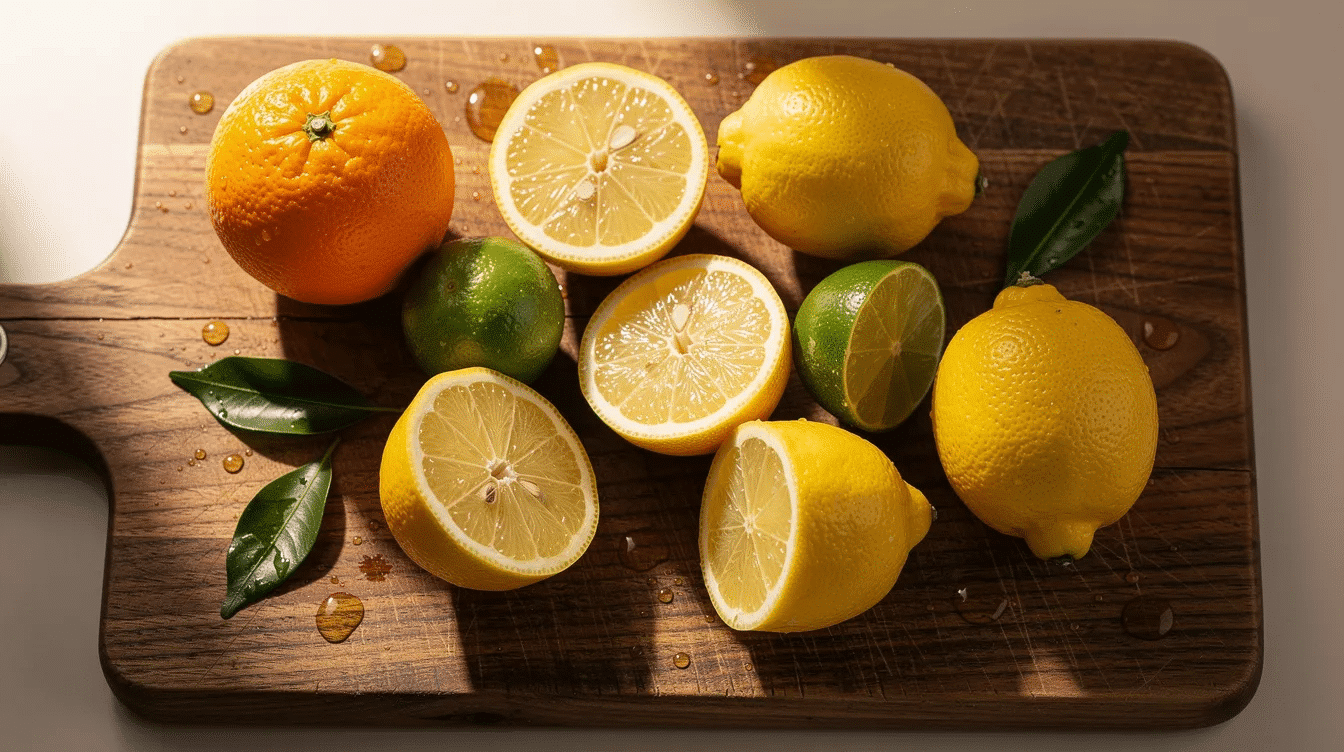
Recommended Citrus Fruits
Fruit
Color/Notes
Navel oranges
Deep amber, thick rind prevents curling
Blood oranges
Magenta streaks from anthocyanins
Lemons
Pale, uniform slices
Limes
Bright green fading to translucent
Tangerines
Petite 1.5-2 inch diameter, ideal for clusters
Small grapefruits
Bold yellow contrast
Other Fruit Options
Firm apples like Granny Smith or Honeycrisp work beautifully when sliced crosswise to reveal their star-shaped cores. Pears hold their shape well due to higher pectin content. Note that apples darken faster—a quick dip in diluted lemon juice (1:10 ratio) helps minimize browning, and those same slices can be set aside for dehydrated lemon projects if you want edible pantry staples as well as decor.
Aromatic Extras
Whole cinnamon sticks (about 3 inches long)
Star anise for centered accents
Bay leaves for texture and subtle fragrance
Whole cloves
Fresh or dried rosemary or small fir sprigs
Optional herbs like mint, which can be prepared using dried mint in a dehydrator for long-lasting fragrance
Basic Tools and Supplies
Sharp wide-blade knife and cutting board
Parchment paper and baking sheets
Paper towels
Oven or food dehydrator
Toothpick or skewer for piercing
Thin ribbon, raffia, or twine
Optional items include jute cord for rustic style, red ribbon for classic christmas vibes, and a hot glue gun for attaching star anise or small accents.
How to Make Dried Fruit Slices
Oven-drying at low temperature is the quickest and most reliable method for most home crafters. Here’s the process from start to finish.
Preparation
Wash thoroughly – Scrub fruit under running water or use a diluted vinegar solution (1:4) to strip commercial wax coatings present on roughly 90% of store-bought citrus.
Dry completely – Pat with paper towels to remove surface moisture.
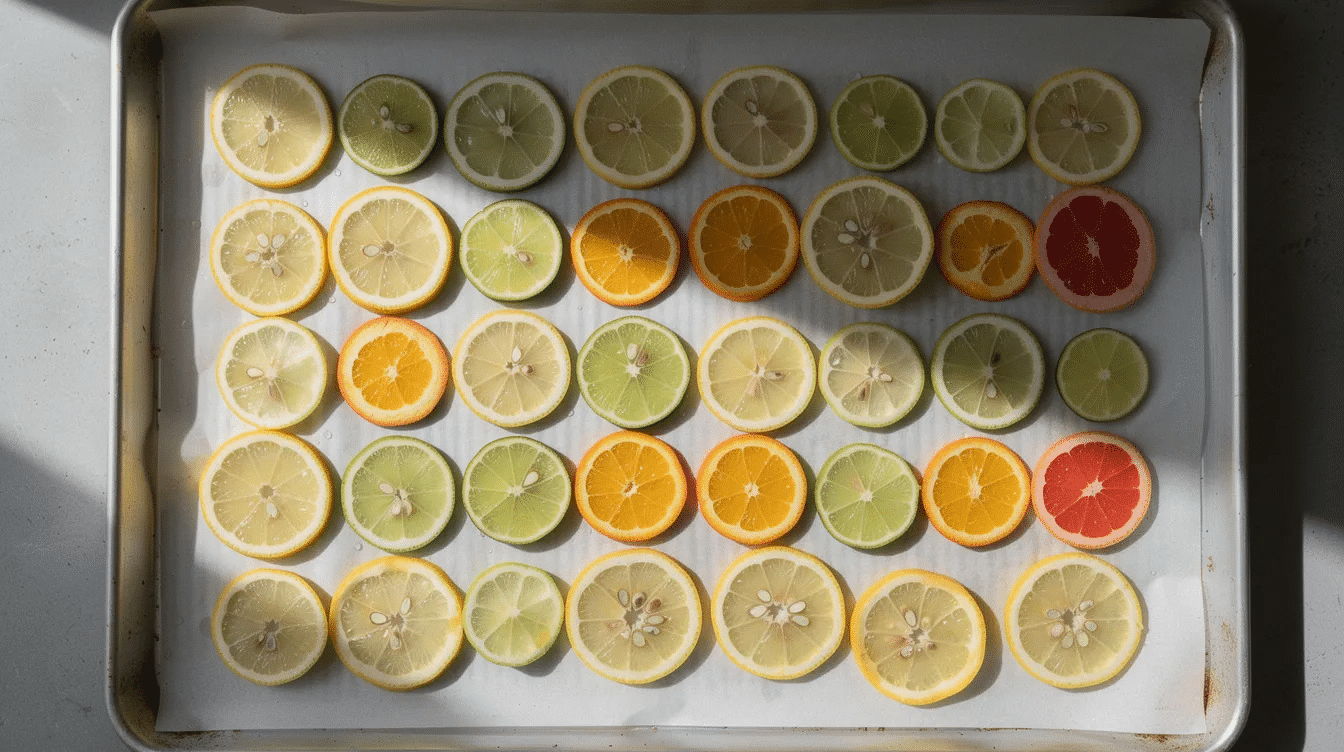
Slice uniformly – Cut crosswise into roughly 1/4 inch (about 0.5–0.6 cm) slices using a sharp knife. Thickness deviations over 1/16 inch can cause 40-60 minute drying disparities.
Remove seeds – Use the tip of your knife or a skewer to pop out seeds while keeping flesh intact for neat “window” centers.
Pat dry again – Press citrus slices and apple rings between paper towels to remove excess juice. This step helps them dry faster and more evenly.
Oven Setup and Drying
Line baking sheets with parchment paper—not foil, which causes 20-30% more sticking. Arrange slices in a single layer without overlap.
Temperature
Time
Notes
150–170°F (65–75°C)
3–4 hours
Gentle, minimal browning
Up to 200°F (95°C)
2.5–3 hours
Faster but watch edges
Flip slices every 30–60 minutes to ensure even exposure. Check for doneness when fruit feels dry and leathery, appears slightly translucent, and shows no visible wet patches. For more general projects, you can adapt these same low-heat techniques when dehydrating fruit in the oven. Edges should be only lightly browned, not scorched.
Cooling
Let slices cool flat on a rack or fresh parchment until completely firm. This prevents curling and traps no residual moisture. Allow 1-2 hours before handling.
Air Drying vs. Oven or Dehydrator Drying
Air drying preserves brighter colors due to less oxidation, but it demands patience—roughly 4-7 days compared to a single afternoon in the oven. The trade-off involves reliability versus energy savings, similar to other sun-drying fruit methods for snacks.
Air drying method:
Place slices on a rack in a warm, dry room (70°F+) away from direct sunlight
Turn daily for even exposure
Expect approximately 4 days for thin lemon and lime slices, longer for thicker oranges
Orange slices tend to curl more when air dried, while lemon and lime slices often stay flatter. In humid climates (above 50-60% relative humidity), air drying risks mold development—making it unsuitable for damp environments.
Dehydrator method:
Set to 135–145°F (57–63°C)
Dry for 4–6 hours
Check periodically for leathery texture
For predictable results within a single afternoon before decorating your tree, the oven or dehydrator wins. Save air drying for dry climates when you have time to spare, and consider experimenting with using a food dehydrator for fruit if you want to make larger batches.
Turning Dried Fruit into Ornaments
Once slices are fully dried and cooled, transforming them into finished decorations takes just minutes. The process is straightforward and forgiving.
Piercing and Threading
Pierce fruit slices – Use a toothpick, skewer, or large needle to make a small hole about 1/4 inch from the rind edge. Work carefully to avoid tearing.
Prepare cinnamon sticks – Drill a small hole (1/8-inch bit) through the center using scrap wood as backing, or thread through the natural hollow if accessible.
Thread your materials – Fold raffia, twine, or ribbon to double its length. Knot one end, then alternate dried citrus slices, apple rings, bay leaves, and cinnamon sticks.
Ornament Pattern Ideas
Solo showcase – Single dried orange slice with star anise hot-glued in the center
Ombre stack – Layer slices of different citrus colors (orange, lemon, lime)
Rustic bundle – 2-3 slices tied together with a simple bow
Slightly uneven bows and frayed ends suit the natural look perfectly. Consider checking thrift stores for vintage ribbon or cord—it adds character and supports sustainability.
Creating Garlands
Use the same threading method to make short garland for mantlepieces (12-18 inches) or long strands for stair rails (up to 20 feet). Space ornaments with knots every 4-6 inches, or pair your citrus slices with cranberries to create a dried orange and cranberry garland for extra color.
Enhancing Scent and Color
Dried fruit loses 70-90% of its fresh fragrance during baking, but the scent can be revived and customized with essential oils.
Refreshing Fragrance
Use oils such as orange, cinnamon, clove, ginger, or bergamot. Add just 1-2 drops for every 3-4 ornaments—a bit goes a long way.
Application method:
Place ornaments on parchment paper
Dilute oil in a carrier oil if desired (1:1 ratio with jojoba works well)
Dab lightly on the back of slices using a cotton swab or toothpick
Freshen fragrance a day before guests arrive or just before hanging ornaments on your tree. The scent diffuses over 24-48 hours.
Natural Color Changes
Dried citrus slices deepen and darken 20-30% over 2-4 weeks, especially oranges and apples. This aging creates a more antique, vintage patina that many crafters find appealing. To preserve original appearance, store out of direct sunlight between seasons and avoid overly high oven temperatures that cause browning.
Creative Ways to Use Dried Fruit Ornaments
These versatile citrus ornaments extend far beyond tree branches. Use them throughout your home for cohesive natural holiday decor.
Christmas tree display – Hang individual ornaments so lights sit just behind the slices. The backlight amplifies their stained-glass effect by roughly 3x, creating a gorgeous warm glow.
Garlands everywhere – Drape orange and cinnamon-stick garlands along mantels, stair railings, door frames, or down a holiday table runner. A 6-foot span using alternating citrus and spices makes a beautiful statement, and adding dehydrated lime slices can introduce fresh green tones.
Eco-friendly gift toppers – Tie single slices or small bundles onto wrapped gifts. They’re cute, biodegradable alternatives to plastic bows and double as keepsakes recipients can hang on their own tree, or repurpose as garnishes for holiday cocktails with dried fruit.
Arrangement accents – Tuck fruit ornaments into evergreen vases with fir branches, pine cones, and dried flowers to bring color and fragrance to side tables and entryways.
When photographing your finished decorations for social sharing, position them near a north-facing window. Natural daylight captures their true colors and translucence beautifully.
Storing and Reusing Dried Fruit Ornaments
Properly dried fruit ornaments can last through multiple christmas seasons with simple care. A great idea is to treat storage as part of your annual holiday routine.
Storage Guidelines
Air out completely – Let ornaments dry in open air for at least 24 hours after scenting before packing away
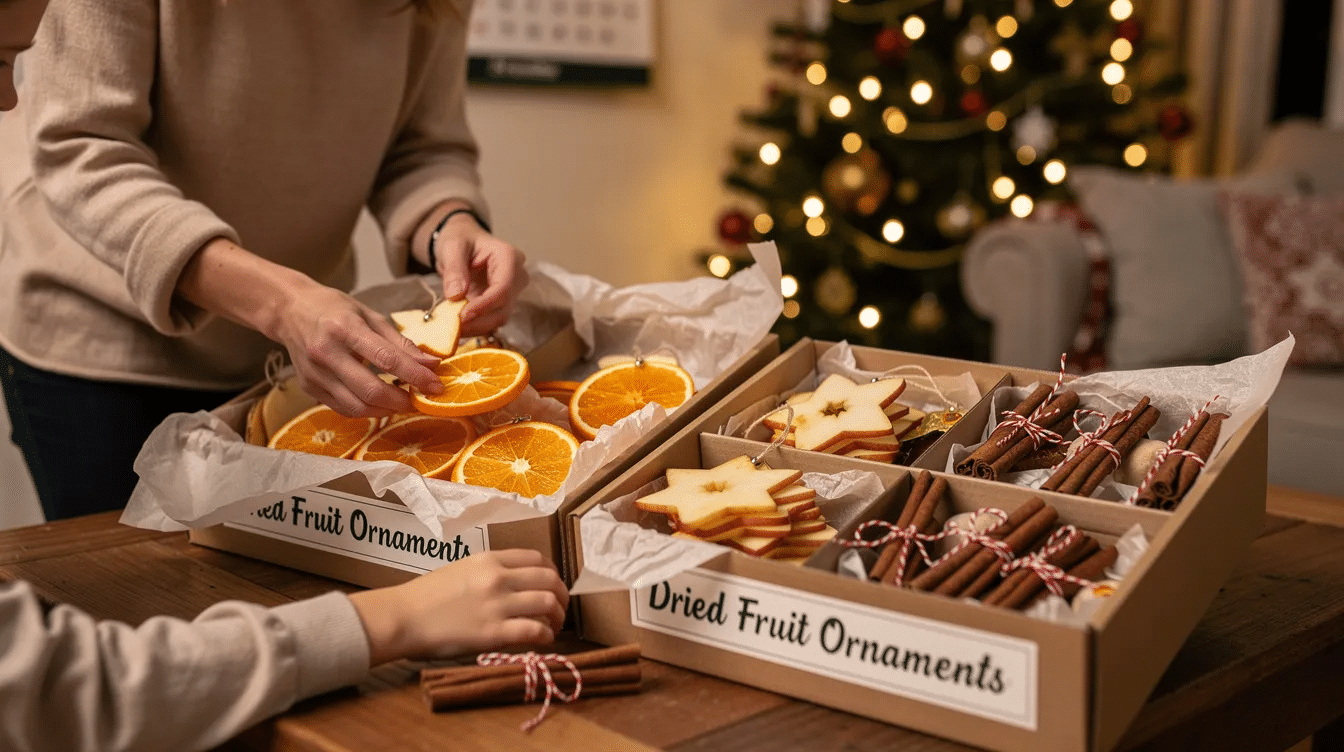
Choose breathable containers – Place in a cardboard box or fabric-lined container, layering with tissue paper to prevent sticking and breakage
Store cool and dry – Keep in a cupboard away from strong light and heat sources to reduce fading
Annual Inspection
Each November or early December, review your ornament collection. Check for signs of mold (white efflorescence signals moisture issues), excessive crumbling, or any wrong details that suggest pests. Discard anything questionable—it’s not worth risking your fresh batch.
FAQ
How long do dried fruit ornaments usually last?
Well-dried, well-stored ornaments often last 1–3 holiday seasons. They gradually darken over time while still looking attractive. After the third year, most crafters prefer to compost them and make a fresh batch.
Can I safely eat the dried fruit after using it as an ornament?
While the ingredients are technically edible, fruit used as decor may collect dust, essential oils, or handling residue not intended for consumption. Treat these as decoration only and save the recipe for actual snacks or cocktails.
What if my slices are still sticky after baking?
Return slightly sticky slices to the oven at 150°F for an additional hour, flipping halfway through. Alternatively, let them air dry on racks for a day or two until they reach that leathery texture. This is common with juicier fruits.
Will dried fruit ornaments attract insects or mold?
Fully dried slices are unlikely to mold or attract pests indoors during winter. However, poorly dried or stored ornaments in humid conditions may develop issues. If you spot mold or notice insects, discard affected pieces immediately—don’t store them with healthy ornaments.
Can I make these ornaments without an oven?
Absolutely. Use a food dehydrator set to 135–145°F for 4–6 hours for reliable results. Air drying near a heat source also works but takes 3–5 days and performs best in dry, low-humidity environments. Plan ahead if you’re going oven-free.
Start with a handful of fresh oranges and lemons this weekend—within an hour, your kitchen will smell amazing, and by evening you’ll have a collection of handmade christmas ornaments ready to decorate your tree. Comment something below if you try this recipe, or share your own notes on what combinations work best. These simple fruit crafts make the holiday season feel genuinely personal.
DannyContent Writer
Hey there, since 2016, my mission has been to provide you with the information and guides you need to make food dehydrating simple and fun. Whether you're a newbie or a seasoned pro, my site offers helpful guides, reviews, and recipes to enhance your dehydrating experience. I take pride in only recommending products I believe in, ensuring my readers' trust. As an affiliate of various programs, including Amazon Associates, your support helps me continue providing quality content. Thanks for stopping by, and happy dehydrating!