We earn a commission if you make a purchase, at no additional cost to you.
09/22/2026 04:39 pm GMT
🍊 Dehydrated Food Info Finder — Temperatures & Drying Times
Choose a category, then pick a food to see its drying temperature and time.
⚠️ Safety Disclaimer: Drying times are estimates and vary based on slice thickness, food moisture content, humidity, and your dehydrator model. Always check for doneness before storing — food should feel dry, leathery, or brittle with no moist spots. Improperly dried food can harbour mould and bacteria. For meat and poultry, follow USDA safe internal temperature guidelines: beef and pork to 160°F (71°C), poultry to 165°F (74°C). Use a food thermometer when in doubt. Store all dehydrated foods in airtight containers in a cool, dark place and discard anything showing moisture, mould, or off odours.
Dried Flowers for Sachets: How to Choose, Dry, and Blend the Perfect Scents
If you have ever opened a drawer and been greeted by a wave of natural fragrance, chances are a dried flower sachet was responsible. These simple, elegant packets of flowers and herbs have been used for centuries-and they remain one of the easiest DIY projects you can tackle at home. In this guide, you will learn exactly which dried flowers for sachets work best, how to dry them properly, and how to blend custom scents for drawers, closets, gifts, and more.
Key Takeaways
Dried flower sachets are small fabric or wax-based packets filled with dried flowers, herbs, and sometimes essential oils, used to scent drawers, wardrobes, wedding venues, and gifts. Sachets can be used as natural home or car fresheners, replacing synthetic plug-ins with something far more appealing.
The top choices for dried flowers in sachets include lavender and rose petals, often combined with jasmine, hibiscus, or immortelle. Pairing these with herbs like mint or rosemary creates longer-lasting, more complex floral scents. Proper drying-hang flowers upside down to dry completely or use a dehydrator at low heat-and completely moisture-free petals are crucial to prevent mold and preserve scent for 6 to 12 months. Adding a few drops of high-quality essential oils (lavender, eucalyptus, or citrus) alongside fixatives like orris root extends and stabilizes the fragrance over time. These sachets can be customized for everyday home fragrance, wedding favors, and seasonal gifts using natural cotton, linen bags, organza pouches, or soy wax tablets.
What Are Dried Flower Sachets and Why Use Them?
Dried flower sachets are small bags or wax tablets filled with dried flowers and herbs, sometimes scented with essential oils. The concept dates back centuries-in 17th-century Europe, embroidered purses and pomanders carried dried herbs to perfume clothes and ward off unpleasant smells. Today, the principle is the same: volatile aromatic compounds released slowly from dried botanicals create a gentle, persistent scent.
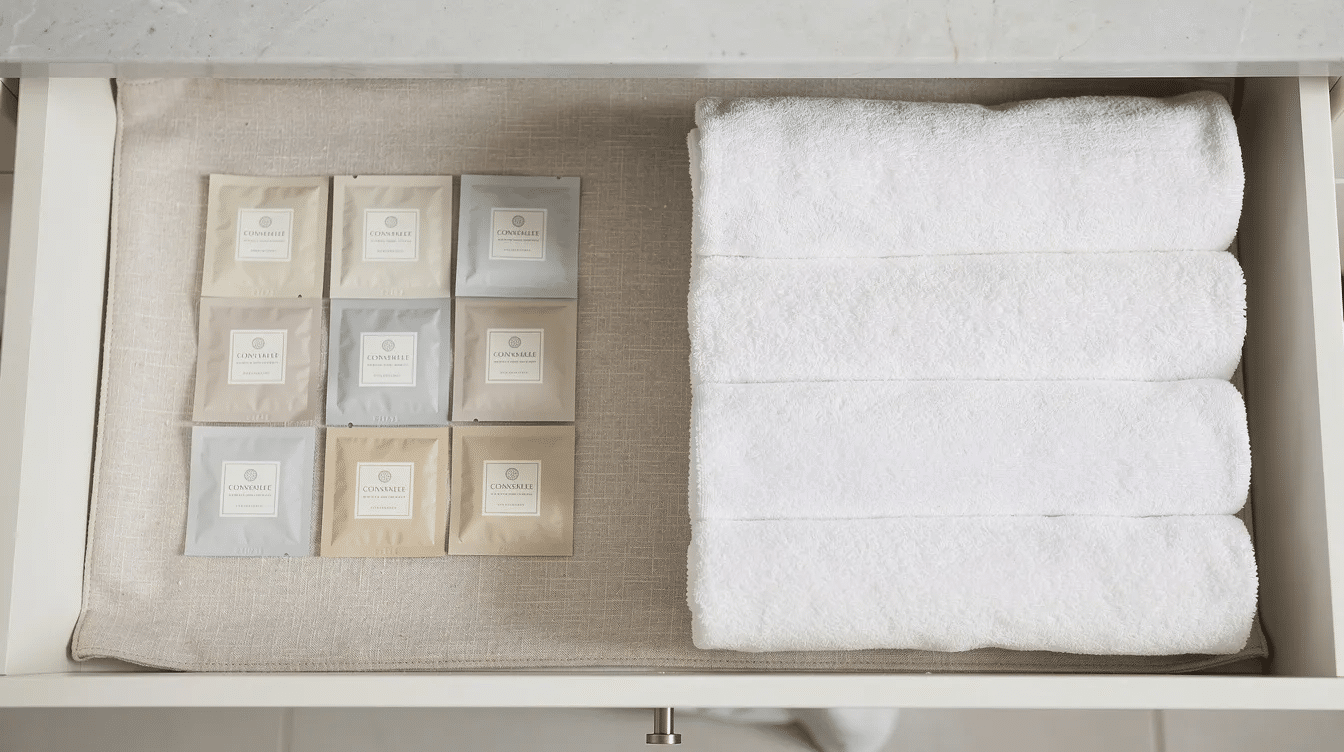
Modern uses go well beyond the linen closet. You can tuck sachets into drawers and closets, slip them inside pillowcases for relaxation, keep luggage or your car pleasantly scented, or add a natural aroma to gift boxes and dried fruit potpourri bowls. Dried flower sachets can freshen up drawers and closets without any electricity, batteries, or waste. Dried flowers can enhance the scent of your home naturally, and sachets make thoughtful homemade gifts for friends and neighbors.
Compared to synthetic air fresheners and plug-ins, sachets produce a lighter, more delicate scent with zero energy use. A well-made sachet typically stays fragrant for around 6 to 12 months depending on the blend and storage conditions, and it can often be revived with a few extra drops of essential oil. Every sachet has three core elements: a dried flower filler, optional herbs and fixatives, and the container-whether a cloth bag, organza pouch, or wax base.
Best Dried Flowers for Sachets (With Specific Examples)
Not all dried flowers hold their fragrance equally well. Flowers should be selected that retain their fragrance after drying, and combining two or three types often creates the most balanced aroma and appearance. Flowers should be harvested on a dry morning after dew has evaporated, ideally at peak bloom. Research on Persian Musk rose shows that mid-May harvests yielded significantly higher essential oil content than later collections.
Here is what each key dried flower contributes:
Lavender (English and lavandin): Lavender is a popular choice for its long-lasting calming fragrance. Dried lavender flowers have a soothing scent, and lavender dries easily and retains its aroma exceptionally well-often for 6 to 12 months. Classic for linen and wardrobe sachets.
Rose petals and rosebuds: Rose petals provide a sweet romantic scent. Dehydrated rose petals made at home have a deep and enchanting fragrance that develops warm, tea-like undertones as it ages. Ideal for wedding favors and romantic gifts.
Jasmine: Jasmine provides a strong uplifting floral scent. Dried jasmine flowers have a sweet and delicate aroma that pairs wonderfully with citrus or sandalwood notes.
Hibiscus: Dried hibiscus flowers can be used in scented sachets, adding vivid red color and a subtle tangy note—great in visual confetti blends and for hibiscus beverages and culinary recipes.
Immortelle / helichrysum: A honeyed, herbal scent known for holding fragrance and shape over time.
Lily of the valley: Dried lily of the valley has a fresh floral aroma, though it is more delicate than lavender or rose.
Peony, lilac, and gardenia: Fragile but beautiful; best used blended with stronger flowers like lavender to prevent the scent from fading too quickly.
Whole buds create stronger scent pockets and release aroma slowly. Petals offer softness and volume, while whole mini-flowers add visual impact in clear sachet bags. When buying rather than harvesting from your own garden, look for pre-dried, craft-grade flowers from reputable sellers-many EU or US suppliers list origin and harvest year (e.g., “Provence lavender, 2025 harvest”) for consistency. You can search Etsy and specialty sellers for packaged options that match your project needs.
Herbs, Fillers, and Fixatives to Boost Your Sachet’s Scent
Herbs generally carry stronger, sharper aromas than many flowers and help sachets stay fragrant longer, especially in closed spaces like drawers. Mix dried flowers and herbs for unique scents by pairing florals with these:
Mint or peppermint: A refreshing, cooling scent for shoe cupboards, cars, or gym bags.
Rosemary and thyme: Clean, camphorous, and slightly woody; good for linen closets and kitchen drawers.
Lemon balm: A bright, lemony note that lifts heavy floral blends such as rose and jasmine.
Sage, basil, and holy basil: Earthy and herbal; pair with lavender for rustic, garden-style sachets.
Eucalyptus and cedar chips: Effective for repelling pests while adding a clean, sharp scent.
Filler materials play an important role too. Dried flower sachets work best when combined with filler materials to help absorb and release scent. Mixing dried flowers with rice helps absorb humidity and adds weight and longevity. Coarse sea salt and cellulose fiber also work well.
Fixatives like orris root powder, ground benzoin, or vetiver root slow the evaporation of volatile compounds. Adding one to two teaspoons per cup of dried flower mix can extend fragrance life by several weeks. Combining petals, herbs, and small fillers creates a balanced texture so sachets sit neatly in pockets, cones, or cotton bags without clumping.
How to Dry Flowers and Herbs Properly for Sachets
Thorough drying is critical to avoid mold. Most flowers and herbs used for sachets are air-dried for one to three weeks, and studies confirm that moisture content should stay below 10–12% for safe, long-lasting results.
The classic air-drying method:
Cut stems on a dry, sunny morning after dew has evaporated.
Strip excess foliage, then tie small bundles of lavender, mint, or immortelle with string or rubber bands.
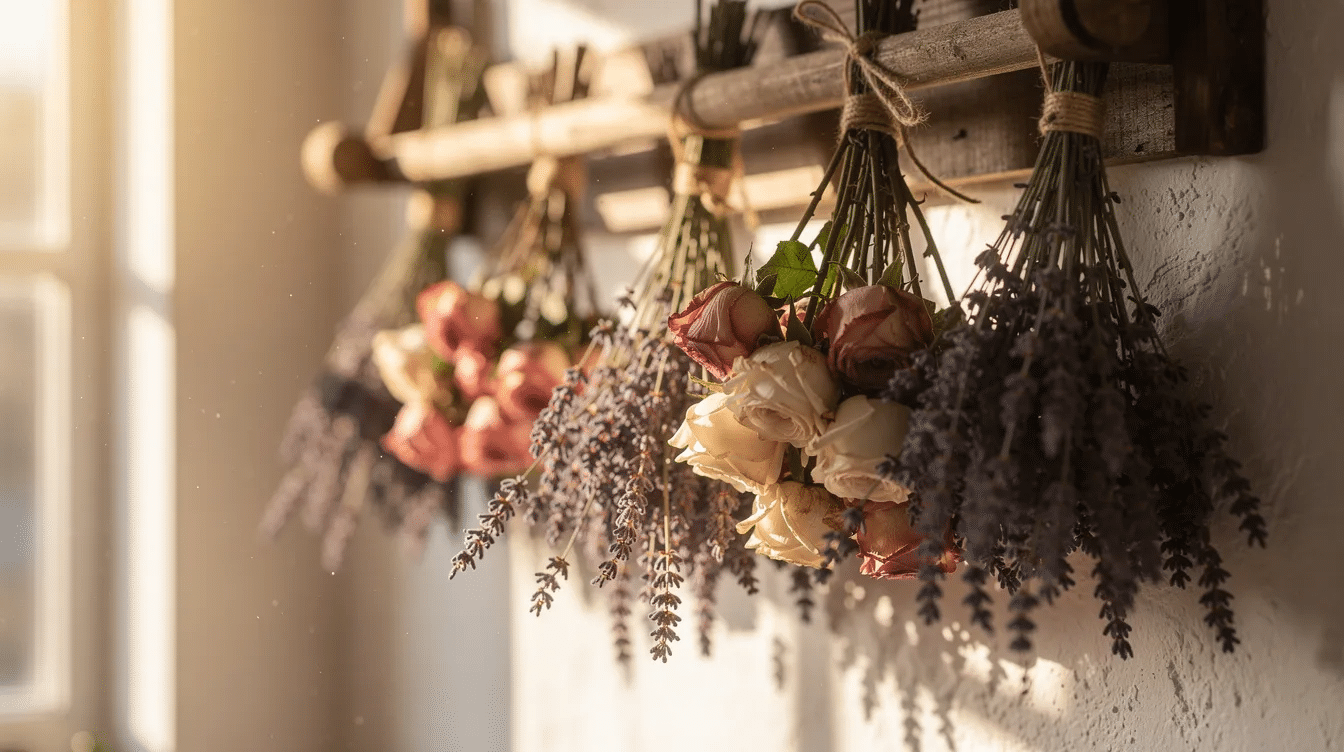
Hang bundles upside down in a dark, well-ventilated room at around 18–24 °C (64–75 °F). An attic, covered porch, or unused spare room works well.
Allow 10–21 days until petals feel papery and stems snap cleanly.
Tray or rack drying for loose petals:
Spread rose petals, jasmine, or hibiscus in a single layer on mesh racks or parchment-lined trays. Place in a warm, dry, shaded area with air circulation and turn gently every day. Avoid direct sunlight, which bleaches colors and burns off aromatic oils. Once completely dry, petals should be removed from the stems and stored separately, or reserved for other crafts such as pressed flower keepsakes made in a book.
Using a dehydrator: Set it to the lowest setting (around 35–40 °C / 95–104 °F) for faster results in humid regions, following the perfect temperature guidelines for drying herbs in a dehydrator. Check every 30–60 minutes to prevent brittleness caused by excess heat.
Once fully dry, store flowers in labeled glass jars or kraft paper bags, away from light and heat. Use within 12–18 months for the best scent.
Step-by-Step: How to Make Dried Flower Sachets at Home
This is a simple, repeatable process. A basic sachet requires only dried flowers, optional herbs, a small cloth or organza bag, and optional essential oil.
Fabric sachet method:
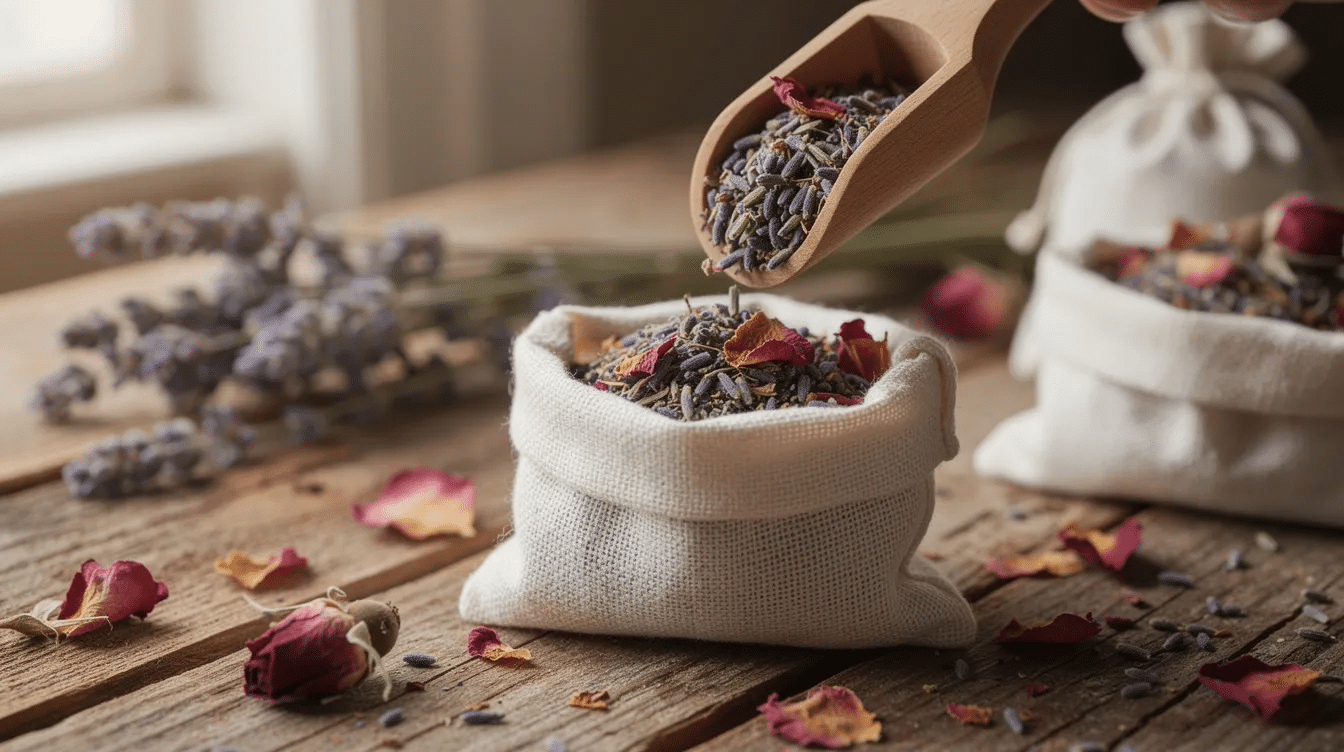
Choose a breathable bag-use muslin bags to create custom sachets, or try cotton, linen, or hemp. Roughly 7–10 cm (3–4 inches) wide for drawer sachets; larger for wardrobes.
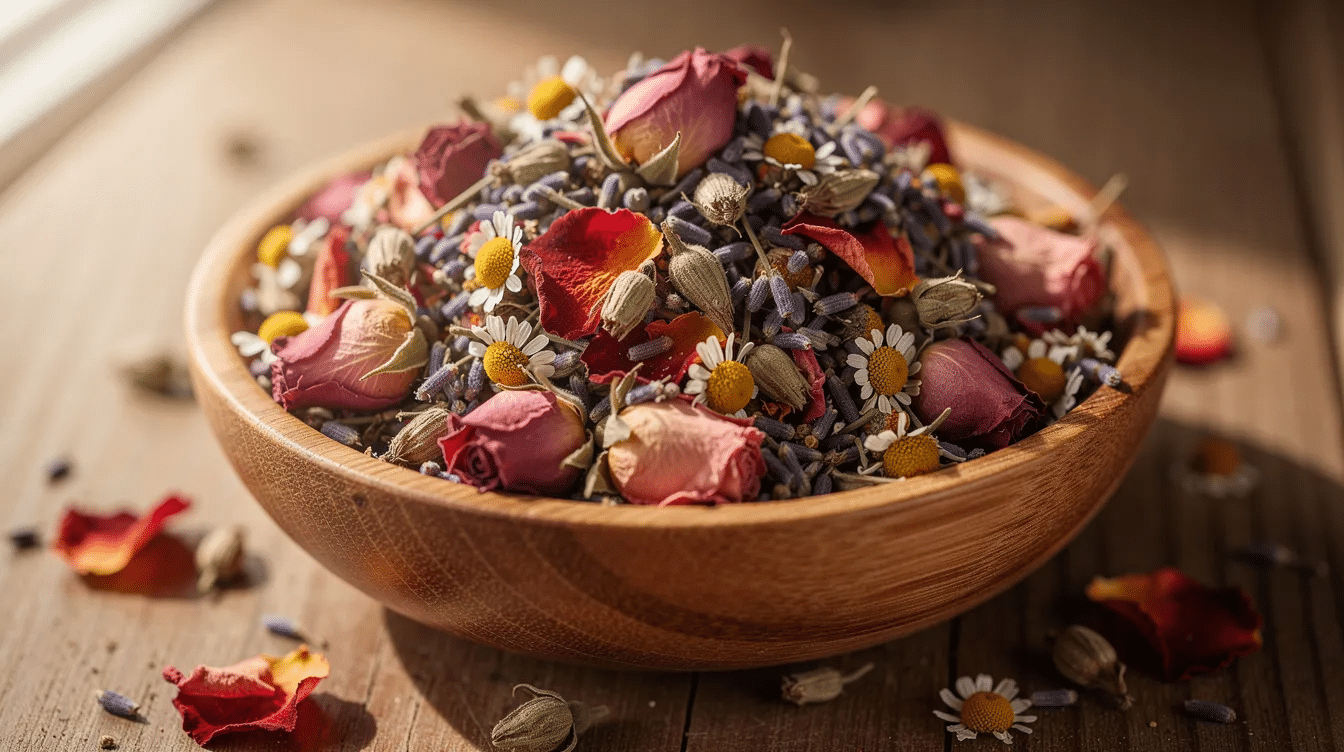
Mix about one cup of dried flowers and herbs in a bowl. A reliable starting blend: 50% lavender buds, 30% rose petals, 20% mint or rosemary. Mixing dried flowers with essential oils enhances the aroma.
Add 5–10 drops of essential oil (lavender, eucalyptus, sweet orange, or a custom blend) and one to two teaspoons of orris root if desired. Stir gently to coat. Add essential oils to enhance sachet fragrance-adding essential oils can prolong the scent of sachets significantly.
Fill bags two-thirds full so they remain flexible. Spoon the mix carefully to keep your workspace clean.
Close using a drawstring, a tight knot, or by stitching the top. Tie with ribbon for a polished look. Gently crush the sachet between your fingers once to activate the aroma.
Wax sachet variation: Melt soy wax or beeswax, add essential oil off the heat, and pour into silicone molds. Sprinkle dried flowers-lavender buds, rose petals, tiny daisies-on top while the wax is still soft. Insert a ribbon or twine loop to hang in closets. Allow to cure 24 hours before use.
Label each sachet with the blend name and date (e.g., “Lavender–Rose Wardrobe Blend, July 2026”) so you can track freshness and pin down your favorite recipes.
Design Ideas and Occasions for Dried Flower Sachets
Beyond everyday drawer fresheners, dried flower sachets inspire creativity across weddings, seasonal décor, and special events.
Weddings and celebrations: Fill small paper cones or organza pouches with biodegradable dried flower confetti-rose petals, lavender, jasmine, and eucalyptus for mixed color. Personalized guest favors with printed tags (names, wedding date, a short quote) make a wonderful impression. For baptisms or religious ceremonies, soft white linen sachets filled with lavender or rosebuds fit the mood.
Home and wardrobe ideas: Rustic cottagecore wardrobe fresheners made from soy wax sachets covered with pressed flowers surely stand out. Minimalist linen sachets work for Scandinavian-style interiors, and similar dried floral touches can elevate a bathroom decorated with dried flowers into a spa-like retreat. Aromatherapy pillow sachets that combine lavender with chamomile—dehydrated chamomile made in a food dehydrator offers a light apple-like scent and is deeply relaxing—support better sleep.
Seasonal and gifting themes: Spring blends with lily petals, peony, mint, and lemon balm create light, refreshing green scents. Autumn and winter blends using rose petals, immortelle, dried orange peel, and cinnamon sticks (or cinnamon pieces) deliver cozy notes, especially when paired with dried Christmas floral arrangements for holiday decor elsewhere in your home. Sets of three coordinating sachets in a recyclable kraft box make an ideal birthday, Mother’s Day, or housewarming gift for friends.
Vary your bag fabric-burlap, lace, hand-embroidered linen-and shapes (hearts, rectangles, mini pillows) to match specific events. Escape the ordinary by experimenting with fun combinations while keeping the core dried flower recipe similar.
Caring for and Refreshing Your Dried Flower Sachets
Even the best-quality dried flowers will slowly lose intensity, but regular care extends their usable life. Sachets can continue to provide a pleasant scent for many months with proper care.
Storage and placement tips:
Keep sachets away from direct sunlight and sources of heat, which fade colors and evaporate essential oils.
Place them where air can circulate gently-on top of folded clothes, not crushed deep under stacks.
Avoid damp spaces; moisture is the enemy of longevity.
How to reactivate scent: Gently squeeze or shake the sachet every few weeks. Scented sachets can be refreshed with a few drops of matching essential oil-add two to four drops directly onto the sachet or into the filler, then let it rest in a closed jar overnight to absorb the fragrance. Top up with a teaspoon of fresh dried flowers if contents have compacted.
When to retire contents: If petals are faded, dusty, or scentless after 12–18 months, empty them into compost (if untreated and plant-based) and fill the bag with a new blend. Reuse sturdy bags by brushing out old petals. Keep strong herbal or essential oil blends out of reach of children and pets, and cancel any assumptions that sachets are edible-label clearly if using kitchen-style ingredients like rose or hibiscus.
FAQ About Dried Flowers for Sachets
Below are answers to common questions that go beyond the main how-to guidance in this article. We hope these help you review your approach and decide on the best settings for your next sachet project.
How long do dried flower sachets stay fragrant?
Most well-made sachets hold a noticeable smell for 6 to 12 months. Dried lavender flowers are popular for sachets because they last on the longer end, while peony or lilac fades faster. After the first few months, the aroma softens but can usually be refreshed several times with additional essential oil before petals are completely spent. Storage matters-a sachet kept in a dark, cool drawer outlasts one left on an open shelf.
Can I use any rose petals or do they need to be organic?
For sachets, organically grown or unsprayed roses are strongly preferred because petals will be handled and kept close to skin and textiles. Florist roses are often treated with preservatives and pesticides. When buying from a store or online, look for clearly labeled organic dried rose petals intended for crafts, tea, or cosmetic use. Don’t forget to check the harvest date for freshness.
Is it necessary to add essential oil to dried flower sachets?
Essential oil is optional. High-quality dried lavender, rose, or immortelle already carry their own scent, but oils can intensify and customize the aroma. Start with 5–10 drops per cup of dried flowers and adjust gradually, avoiding over-saturation that could stain fabric. A few drops of eucalyptus or sweet orange oil can completely transform a basic blend.
Can I make dried flower sachets without sewing?
Absolutely. No-sew options include ready-made cotton or organza drawstring bags, tying small squares of fabric with ribbon, or making wax sachets in silicone molds with a loop for hanging. For quick wedding or party favors, pre-made organza pouches are the fastest route: simply spoon in the dried flower blend, pull the drawstring, and add a paper tag. This is a fun, low-effort project that anyone can tackle, and sharing the results with friends is half the joy.
What should I avoid putting into dried flower sachets?
Avoid plants or foliage that retain moisture (like thick succulent petals), any material recently sprayed with pesticides, and ingredients prone to going rancid-fresh citrus peel or whole nuts unless fully dried. Don’t include edible-looking but unsafe ingredients if children are present. Also keep strongly resinous herbs away from sachets used near sensitive noses to prevent allergic reactions.
DannyContent Writer
Hey there, since 2016, my mission has been to provide you with the information and guides you need to make food dehydrating simple and fun. Whether you're a newbie or a seasoned pro, my site offers helpful guides, reviews, and recipes to enhance your dehydrating experience. I take pride in only recommending products I believe in, ensuring my readers' trust. As an affiliate of various programs, including Amazon Associates, your support helps me continue providing quality content. Thanks for stopping by, and happy dehydrating!