We earn a commission if you make a purchase, at no additional cost to you.
09/22/2026 04:39 pm GMT
🍊 Dehydrated Food Info Finder — Temperatures & Drying Times
Choose a category, then pick a food to see its drying temperature and time.
⚠️ Safety Disclaimer: Drying times are estimates and vary based on slice thickness, food moisture content, humidity, and your dehydrator model. Always check for doneness before storing — food should feel dry, leathery, or brittle with no moist spots. Improperly dried food can harbour mould and bacteria. For meat and poultry, follow USDA safe internal temperature guidelines: beef and pork to 160°F (71°C), poultry to 165°F (74°C). Use a food thermometer when in doubt. Store all dehydrated foods in airtight containers in a cool, dark place and discard anything showing moisture, mould, or off odours.
Dehydrate in Air Fryer Recipes (Beginner Guide + Best Ideas)
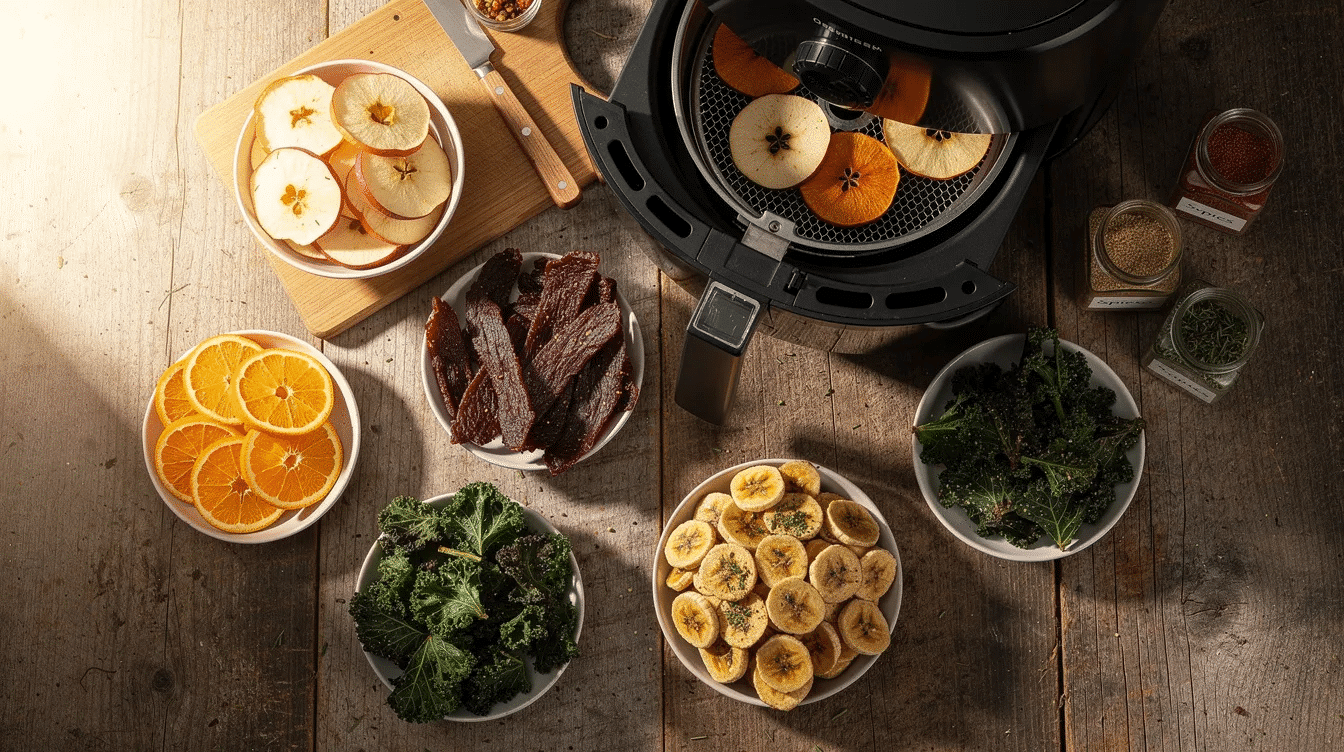
Your air fryer does more than crisp up frozen foods. With the right settings and a bit of patience, it can transform fresh fruit, vegetables, and even meat into shelf-stable snacks that taste great and last for months. This guide covers everything you need to know about dehydrate in air fryer recipes—from basic techniques to specific recipes you can start today.
Higher-moisture foods like strawberries, raspberries, and grape tomatoes: 3–5 hours
Fresh herbs like basil and rosemary: 15–40 minutes
Beef jerky: 2–4 hours at higher temps (160°F–170°F)
Can You Really Dehydrate Food in an Air Fryer?
Yes, and it works surprisingly well. An air fryer’s high-speed convection fan circulates hot air uniformly around food, which is exactly what a food dehydrator does. The main difference is capacity—air fryers handle small batches while dedicated dehydrators process larger harvests, though dehydrating food in an air fryer still offers a surprisingly efficient way to preserve snacks at home.
Key points about air fryer dehydration:
Models with a dedicated dehydrate function typically offer temps as low as 105°F–135°F (40°C–57°C)
Basic models without this mode work fine—just use the lowest manual temperature available
Basket-style air fryers from brands like Ninja Foodi, Cosori, or GoWISE often start at 150°F (65°C)
Oven-style air fryers with multiple racks sometimes access temps around 95°F–135°F
Practical examples of what you can make:
Turn a bag of fall apples into cinnamon air fryer apple chips
Transform summer cherry tomatoes into “sun-dried” tomatoes at a fraction of the time
Dry leftover herbs into concentrated seasonings that stay fresh for months
This general method works for most ingredients. Once you understand the basics, you can adapt timing and temps based on your specific food and preferences.
Step 1 – Prep the food
Wash all produce thoroughly (a 1:10 vinegar-water solution removes pesticides)
Peel, core, or pit as needed
Thinly slice to uniform thickness (1/8–1/4 inch) using a sharp knife or mandoline
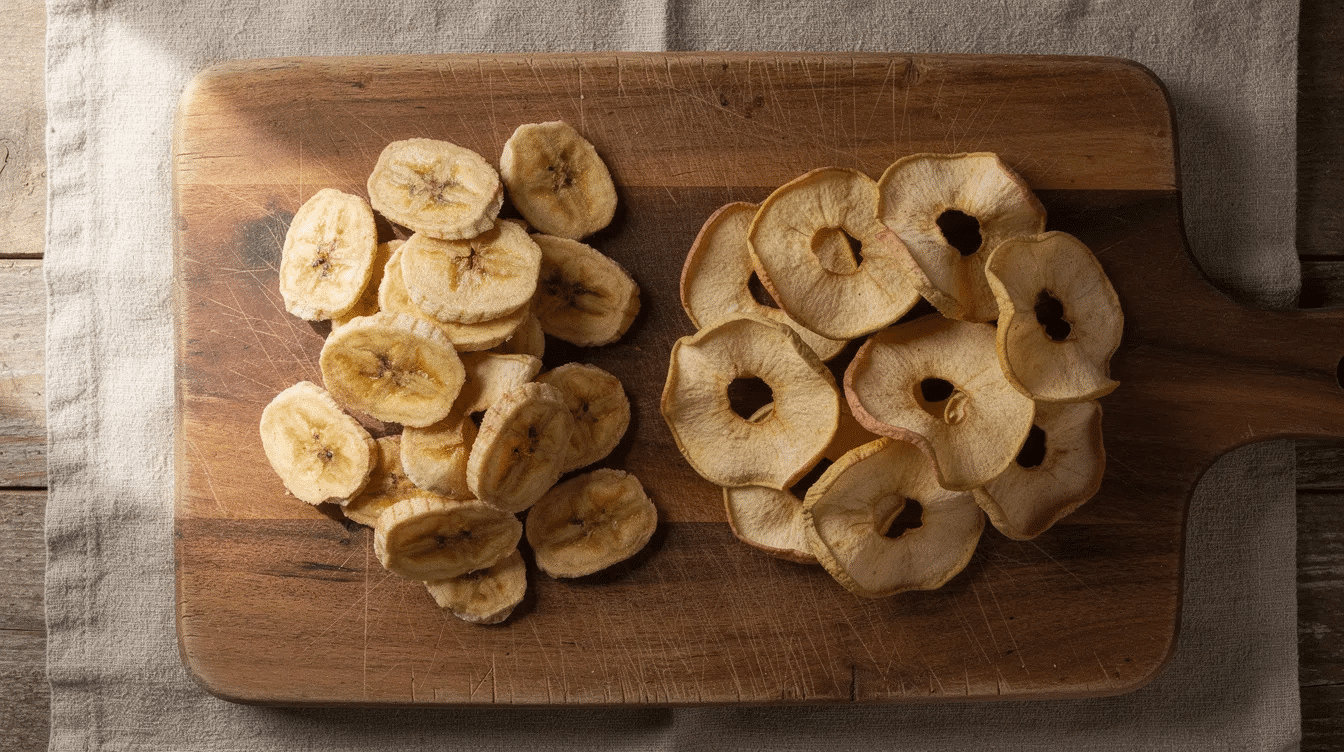
Uniform apple slices or banana rounds ensure everything dries at the same rate
Step 2 – Optional pretreatments
For fruits that brown: Soak in lemon juice solution (1 tbsp lemon juice per 1 cup water) for 5–10 minutes, then pat dry
For root vegetables: Brief blanching helps preserve color
For jerky: Marinate meat 8–24 hours, then pat completely dry before dehydrating
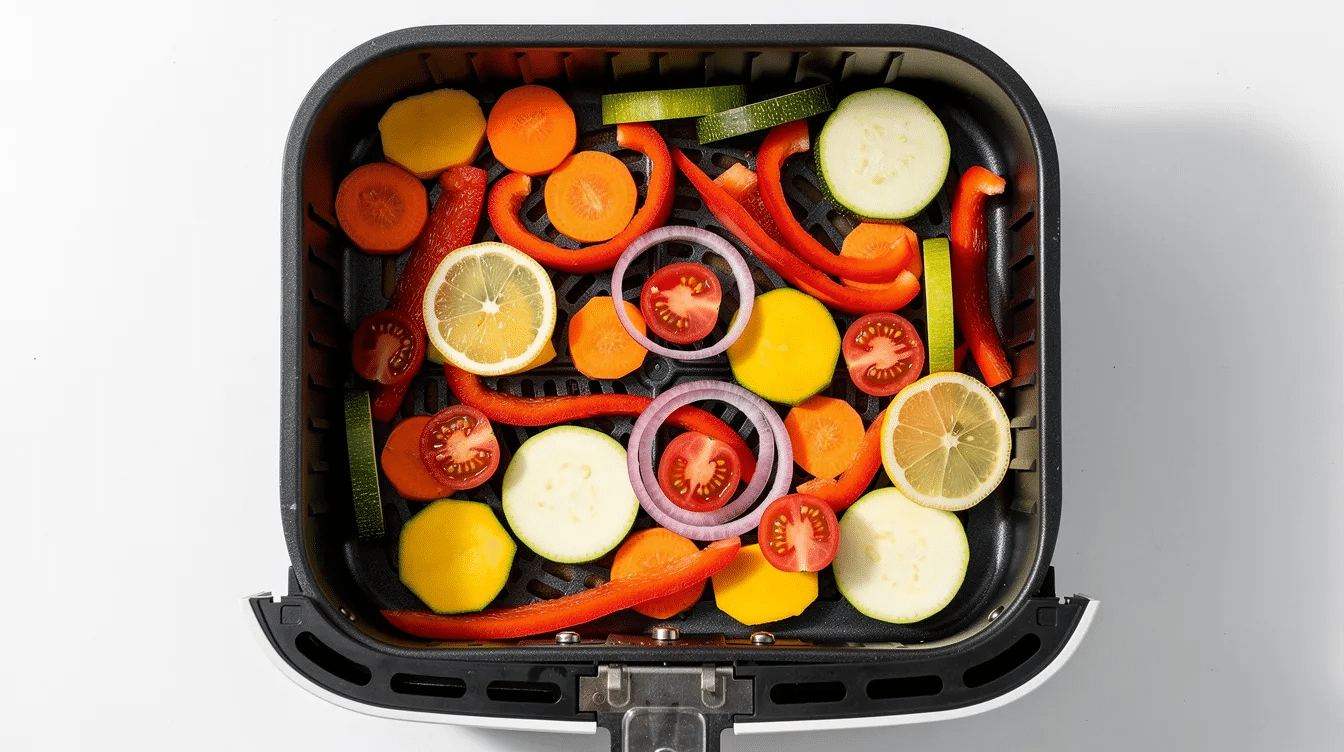
Step 3 – Arrange in the air fryer basket
Lay slices in a single layer with no overlapping
Use mesh liners or additional wire racks if your model supports stacking
Leave gaps between pieces for proper airflow
Step 4 – Set temperature
Target range: 120°F–150°F (50°C–65°C) for most fruits and vegetables
If your air fryer can’t go that low, use the lowest available setting and reduce cooking time
For meat like jerky, use 160°F–170°F (71°C–77°C) for food safety
Step 5 – Time guidelines
Food
Temperature
Time
Thin slices of apple
135°F–150°F
1.5–3 hours
Bananas
135°F–145°F
2–3 hours
Tomatoes
135°F–150°F
3–5 hours
Herbs
120°F–135°F
15–40 minutes
Beef jerky
160°F–170°F
2–4 hours
Step 6 – Check for doneness
Fruit should feel dry and leathery, not sticky—no moisture beads when bent
Vegetables should be crispy or leathery depending on your preference
Jerky should be firm and dry but still bendable, not brittle
Step 7 – Cool and condition
Let everything cool completely on wire racks (30–60 minutes)
For dried fruit, “condition” by placing loosely in glass jars for 4–7 days
Shake jars daily; if condensation appears, return to air fryer for another 30 minutes at 135°F
Air Fryer vs Oven vs Dehydrator
Each option has trade-offs depending on your batch size and what you’re drying.
Air Fryer Pros:
Preheats in 2–3 minutes (vs 10–15 for an oven)
Uses 0.8–1.2 kWh per hour (ovens use 2–3 kWh)
Doesn’t heat up the kitchen—ideal for summer
Perfect for 1–3 trays of snacks
Air Fryer Cons:
Limited to 4–6 quart capacity (2–3 pounds per batch)
Some models don’t go below 150°F
Oven Pros:
Handles large batches on 2–3 baking sheets
You already own one
Oven Cons:
Minimum temp often 170°F–200°F
Needs door propped open 2–4 inches for airflow
Takes 1–2 hours longer and risks case hardening (dry outside, moist inside)
Dehydrator Pros:
5–10 trays for processing 20–30 pounds
Ultra-low temps (95°F–135°F) preserve enzymes
Built-in timers up to 48 hours, making the air fryer vs dehydrator comparison mostly about capacity and how often you preserve large batches.
Dehydrator Cons:
Extra appliance taking 2–3 cubic feet of storage
Single-purpose (unlike your versatile air fryer)
Bottom line: Small apartment or occasional snacking? Stick with your air fryer. Regular garden harvests or preserving 50 pounds of tomatoes? A dedicated dehydrator makes sense.
Best Foods to Dehydrate in an Air Fryer
Use this as an idea list with quick timing notes. Full recipes follow in the next section, but you can also branch out into other foods you can dehydrate like grains, herbs, and additional protein snacks.
Fruits:
Apples (Honeycrisp, Gala, Fuji): 135°F–145°F, 1.5–3 hours; dust with cinnamon
Bananas (slightly underripe): 135°F–145°F, 2–3 hours; try a light salt sprinkle
Mango and pineapple: 140°F, 4–6 hours; add chili-lime seasonings
Strawberries (halved): 135°F, 3–4 hours until wrinkled
Blueberries and raspberries: 135°F, 4–5 hours; poke skins first
Kiwi and oranges: 135°F, 3–4 hours for chewy fruit leather texture
Check every 10 minutes—thin leaves scorch fast; a dedicated guide to drying herbs in an air fryer can help you fine-tune timing for delicate leaves.
Protein Snacks:
Beef or turkey jerky: 165°F–170°F, 2–4 hours; marinate overnight first
Crispy chickpeas: 160°F, 60–90 minutes; stir halfway through
Pet treat idea: Sweet potato chews for dogs—slice 1/4-inch lengthwise, dehydrate 3–4 hours at 135°F–150°F until leathery. Keep moisture under 10% for safety.
Core Dehydrate-in-Air-Fryer Recipes to Include
Here are flagship recipes that make a great snack for any occasion. Each is a delicious, gluten free option that beats store bought alternatives.
Recipe 1: Cinnamon Air Fryer Apple Chips
Ingredients needed:
4 medium firm apples (Gala or Fuji work best)
1 tbsp lemon juice + 4 tbsp water
1 tsp cinnamon
Method:
Core apples and thinly slice to 1/8-inch rounds
Soak in lemon-water mixture for 5 minutes, pat dry
Place in a large bowl, dust with cinnamon, toss to coat
Arrange in single layer in air fryer basket
Dehydrate at 140°F–150°F for 1.5–2 hours, flipping halfway
Let cool completely—they’ll crisp further as they cool
Storage: Airtight container for 1 week. Use as a healthy snack, oatmeal topping, or lunchbox treat.
Dehydrate at 135°F–145°F for 2–3 hours, flipping hourly
Shorter time = chewy; longer time = crispy
Recipe 3: “Sun-Dried” Cherry Tomatoes
If you love these tomatoes, you’ll also enjoy experimenting with what fruit you can dehydrate beyond the basics like apples and bananas.
Ingredients needed:
1 pint cherry or grape tomatoes, halved
1 tsp olive oil
Pinch of salt and Italian herbs
Method:
Toss tomato halves with oil, salt, and herbs
Arrange cut-side up in air fryer basket
Dehydrate at 135°F–150°F for 3–4 hours until shrunken and leathery
Pack in olive oil and refrigerate up to 2 weeks
Recipe 4: Mixed Veggie Chips
Ingredients needed:
1 zucchini, 2 carrots, 1 beet
1 tsp olive oil
Smoked paprika, garlic powder, onion powder, salt
Method:
Mandoline all vegetables to 1/16-inch thickness
Toss in bowl with oil and seasonings
Arrange in single layers (work in small batches)
Dehydrate at 140°F for 2–3 hours, checking frequently
Note: Beets take 30–60 minutes longer than zucchini
Recipe 5: Crispy Chickpea Bites
For a sweeter option to pair with these savory bites, try air-frying and dehydrating figs into chewy snacks using similar low-and-slow settings.
Ingredients needed:
1 can chickpeas, drained and rinsed
1 tsp olive oil
Favorite spice blend (cumin, paprika, or ranch seasonings)
Method:
Pat chickpeas very dry
Toss with oil and seasonings
Spread in air fryer basket
Dehydrate at 160°F–170°F for 60–90 minutes, stirring halfway
Best eaten within 3–5 days for maximum crunch
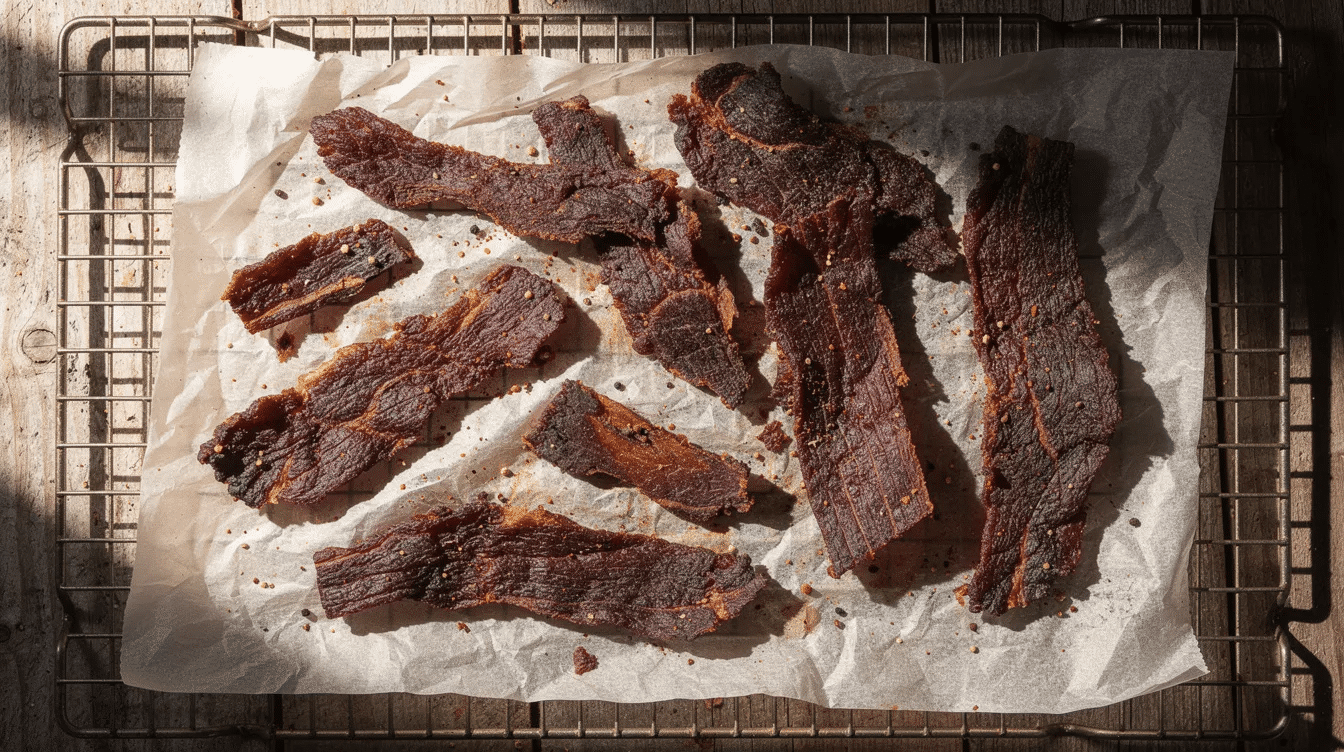
Recipe 6: Simple Beef Jerky
Ingredients needed:
1 lb lean beef (top round), sliced 1/4-inch thick
1/4 cup soy sauce
2 tbsp Worcestershire sauce
Spices to taste
Method:
Marinate meat strips 8–24 hours in fridge
Pat completely dry with paper towels
Arrange in single layer with space between strips
Dehydrate at 165°F–170°F for 2–4 hours
Check internal temperature reaches 160°F for safety
Storage: Airtight container—1–2 weeks room temp, 1–2 months refrigerated. For more detailed guidance on how long beef jerky lasts in the fridge, pay attention to signs of spoilage and best practices like vacuum sealing.
Storage, Shelf Life & Safety
Proper drying and storage transform these recipes into long-lasting snacks worth your effort.
Warm food in sealed containers creates condensation, leading to mold
Conditioning fruit:
Place dried fruit loosely in glass jars (fill only 70%)
Shake daily for 4–7 days to redistribute any remaining moisture
If moisture beads appear, return to air fryer at 135°F for 30 minutes
Storage options:
Mason jars with tight lids
Vacuum-sealed bags (extends life 2x)
Quality zip bags stored in cool, dark cupboards (60°F–70°F ideal)
Freezer storage works for long-term if fully dehydrated
Realistic shelf life:
Item
Room Temperature
Refrigerated
Dehydrated fruit/vegetables
6–12 months
12+ months
Dried herbs
12–18 months
N/A
Jerky
1–2 weeks
1–2 months
Safety reminders:
Never store items that still feel wet or sticky
Discard anything with off smells, visible mold, or color changes
For jerky, an ammonia smell indicates dangerous bacterial growth, and a broader guide to dehydrating in an air fryer can help you troubleshoot other safety and texture issues.
Frequently Asked Questions About Dehydrating in an Air Fryer
“My air fryer doesn’t have a dehydrate button. What temp should I use?” Use your lowest available setting, typically 135°F–150°F. Check food every 15 minutes and adjust time as needed since higher temps dry faster but risk case hardening.
“Why did my fruit turn brown or tough?” Browning usually comes from skipping the lemon juice soak, slicing too thick (over 1/4-inch), or using temps above 160°F. Toughness often means the cooking time went too long.
“Can I dehydrate frozen fruit or veggies?” Yes, but thaw completely and pat very dry first. Excess water content causes steaming instead of drying and can add 1+ hours to your total time.
“How do I make things crispy instead of chewy?” Slice thinner (under 1/8-inch), add 10–15 extra minutes at the end, and ensure pieces cool completely. Some fruits like mango naturally stay chewy due to high pectin content.
“Can I run my air fryer overnight?” Most manufacturers advise against unsupervised overnight use due to fire risk. Air frying and dehydrating work best during the day when you can monitor progress. For very long runs, a dedicated dehydrator with auto-shutoff is safer.
Wrap-Up: Getting the Most from Your Air Fryer Dehydrator Recipes
Start with one easy recipe—cinnamon apple chips or banana chips work perfectly for beginners. You’ll quickly learn how your specific model handles timing and develop confidence to experiment with your favorite foods.
Remember the core principles: low temperature, single layer arrangement, patience during drying, and proper cooling before storage. From there, try mixing spice blends, combining dehydrated fruits into trail mix, or crumbling veggie chips as salad toppers.
Your air fryer works year-round for this: winter citrus chips, spring herbs, summer tomatoes, and fall apples. Each batch reduces food waste and stocks your pantry with a delicious snack that’s healthier and tastier than anything store bought.
DannyContent Writer
Hey there, since 2016, my mission has been to provide you with the information and guides you need to make food dehydrating simple and fun. Whether you're a newbie or a seasoned pro, my site offers helpful guides, reviews, and recipes to enhance your dehydrating experience. I take pride in only recommending products I believe in, ensuring my readers' trust. As an affiliate of various programs, including Amazon Associates, your support helps me continue providing quality content. Thanks for stopping by, and happy dehydrating!