We earn a commission if you make a purchase, at no additional cost to you.
09/22/2026 04:39 pm GMT
🍊 Dehydrated Food Info Finder — Temperatures & Drying Times
Choose a category, then pick a food to see its drying temperature and time.
⚠️ Safety Disclaimer: Drying times are estimates and vary based on slice thickness, food moisture content, humidity, and your dehydrator model. Always check for doneness before storing — food should feel dry, leathery, or brittle with no moist spots. Improperly dried food can harbour mould and bacteria. For meat and poultry, follow USDA safe internal temperature guidelines: beef and pork to 160°F (71°C), poultry to 165°F (74°C). Use a food thermometer when in doubt. Store all dehydrated foods in airtight containers in a cool, dark place and discard anything showing moisture, mould, or off odours.
Long before vacuum-sealed jerky products lined convenience store shelves, Andean herders were perfecting the art of turning raw meat into shelf-stable protein. That tradition, called ch’arki, gave the world both a preservation technique and a word.
Key Takeaways
The English word “jerky” derives from the Quechua word ch’arki, meaning dried meat-a tradition rooted in south america that dates back centuries before Spanish contact.
Ch’arki is a dried, salted meat product from the high altitude andes, typically made from alpaca or llama meat, though beef versions are common today.
Ch’arki reflects centuries of Indigenous ingenuity and adaptation to the Andean environment, using freezing cold nights, strong sun, and salt to preserve lean meat without refrigeration.
Ch’arki is still produced today-Peru produces approximately 450 tons of ch’arki annually-and remains both a nutritious snack option with a long shelf life and a cooking ingredient in traditional stews and soups.
Understanding ch’arki helps explain global dried meat traditions, from modern jerky meat to pemmican, biltong, and brazilian charque.
What Is Ch’arki? (Definition and Origins)
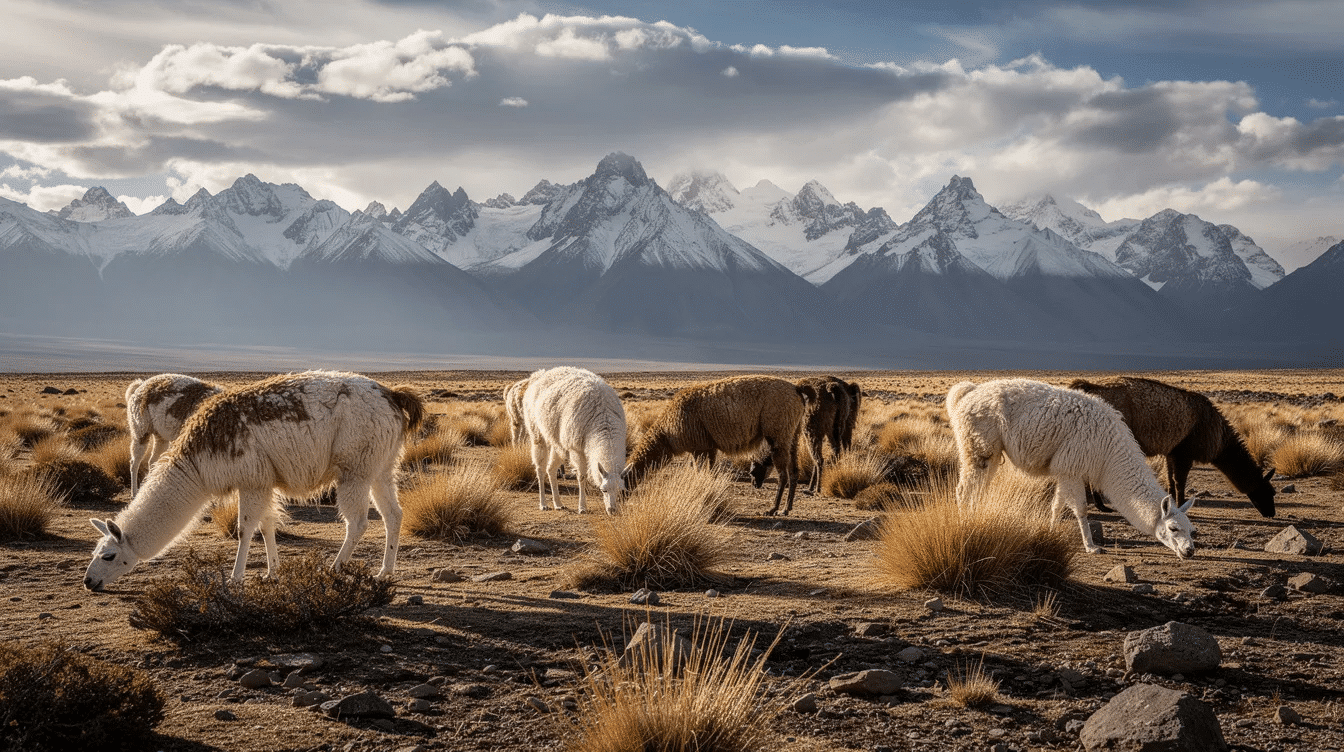
Ch’arki refers to lean, sun-dried, and often salted strips of meat originating from the Andean highlands. The Quechua word literally means “dried meat,” and this term traveled through Spanish as “charqui” before becoming “jerky” in English. Charqui principally consists of camelid meat-llama, alpaca, and alpaca llama cross breeds-though ch’arki can be made from alpaca, llama, or beef depending on the region.
The primary producing areas include highland Peru (Cusco, Puno, Ayacucho), Bolivia, and northern Chile. Peru, often cited as the world’s largest producer of andean charqui, moves hundreds of tons through both rural and urban markets annually. Ch’arki has a rich, savory flavor and is commonly used in regional South American dishes.
What makes ch’arki distinct from other meat products? It is a dried meat product designed for months of storage, not soft snacking. Laboratory analysis of llama ch’arki shows moisture content around 19%, protein exceeding 57%, and fat as low as 3.6%-a remarkably nutrient-dense food. Modern commercial jerky, by contrast, is often flavored with spices and seasoning, kept slightly moist, and eaten straight from the package.
Historical Role of Ch’arki in the Andes
Ch’arki was a vital food source for the Incas, serving both as a staple and a luxurious ration during ceremonies. The Inca Empire used ch’arki as a tax and distributed it through a vast road network, storing large quantities in state granaries called qullqas. The Inca supplied ch’arki to travelers along their road system, making it the first jerky widely used for military and administrative logistics.
Ch’arki was valued for its durability and portability, making it suitable for travelers, mit’a laborers, and soldiers. Jerky is a lightweight and convenient protein source for soldiers-a principle the Inca understood centuries before modern militaries adopted similar rations. Ch’arki was also a luxury food for the Incas during ceremonies and feasts.
Herders in highland communities raised llama and sometimes wild game like guanaco to preserve fresh meat as ch’arki, ensuring food security through dry and cold seasons. The earliest written record of ch’arki dates back to 1653, though the practice is far older. After the Spanish conquest, spanish influence spread the technique into colonial trade networks, and European settlers adapted charqui-style preservation for beef across the continent. This history shaped dried meat culture throughout the world.
Traditional Production: How Ch’arki Is Made
The traditional method of making jerky in the Andes relies on cold dry mountain air, intense sunlight, and coarse salt-no electricity required.
Here’s how the drying process works:
Animal selection: Typically llama, alpaca, or camelid crossbreeds. After the animals are slaughtered, fat is trimmed heavily to reduce fat oxidation during storage.
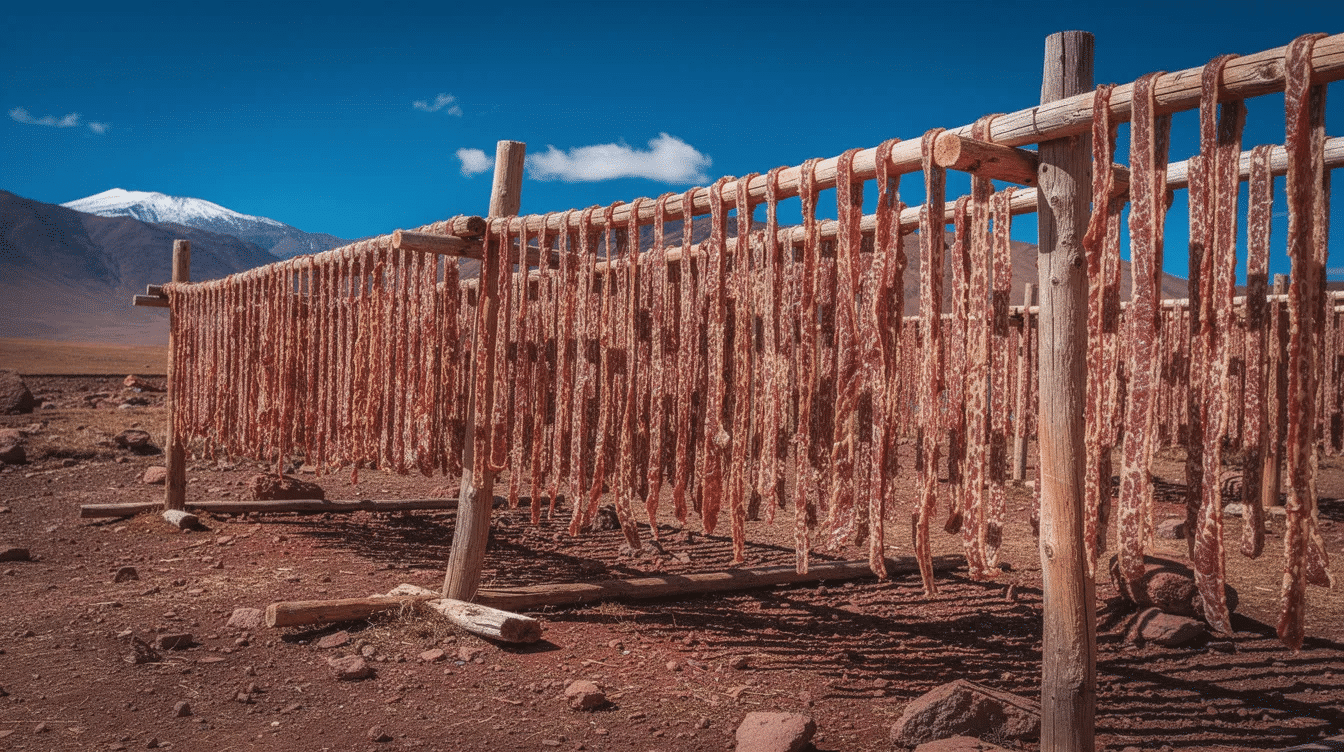
Cutting: Raw meat is sliced into thin strips or slices, often about 5 mm thick. In Puno, meat for ch’arki is often sliced before drying. Some regions leave bone in carcass pieces intact, particularly in Ayacucho.
Salting: Coarse salt is rubbed into the strips. This salting draws moisture out and helps prevent spoilage. Some producers use brine.
Drying: Strips are hung on wooden racks or poles, exposed to the hot sun during the day and cold temperatures at night. This process of alternately drying and freezing in the high altitude andes-often above 3,000 meters-creates a natural freeze-drying effect through sublimation.
Duration: The drying process takes anywhere from 4 to 25 days, depending on thickness, wind, and humidity. Production happens during dry months (May–September in Bolivia’s puna) when conditions are most reliable.
Key variations exist: some low-altitude areas add smoking to compensate for warmer cold nights, and Bolivian charque sometimes includes bone fragments. Jerky is made by drying fresh meat to prevent spoilage-a principle that holds across all these methods, whether traditional freeze-drying in the Andes or controlled dehydrating beef jerky over several hours.
Ch’arki and Food Safety: Why the Method Works
Ch’arki is an early example of systematic food preservation. The science is straightforward: sun drying and salting reduce water activity in the meat so bacteria and molds cannot grow, turning fresh food into a stable salted meat product.
The freeze-drying effect at high altitude is key. Sub-zero nights cause surface freezing, while strong sun drives sublimation during the day. This yields very low moisture content without modern equipment. Ch’arki can be stored for months without refrigeration-jerky has a shelf life of at least 3–4 months, and traditional ch’arki stored in dry Andean conditions can last 6–12 months.
From a nutrition standpoint, dried jerky can have over twice the caloric yield of fresh meat by weight, with protein levels reaching 50–65%, and thoughtfully prepared homemade beef jerky can be a healthy snack when sodium and additives are managed. Iron content in llama ch’arki can reach 6.5 mg per 100 grams, making it a meaningful source of minerals.
For modern home cooks interested in making jerky at home with equipment like a food dehydrator designed for jerky, basic food safety principles apply: use lean cuts, maintain consistent internal temperature during drying, ensure steady airflow, slice uniformly to avoid uneven drying, and store finished product in airtight containers. Compared with softer dried meat snacks, authentic ch’arki is intentionally extremely dry and tough, which significantly lowers food safety risks, though modern makers of beef jerky still need to understand proper storage and shelf life in the fridge.
Culinary Uses: Eating and Cooking With Ch’arki
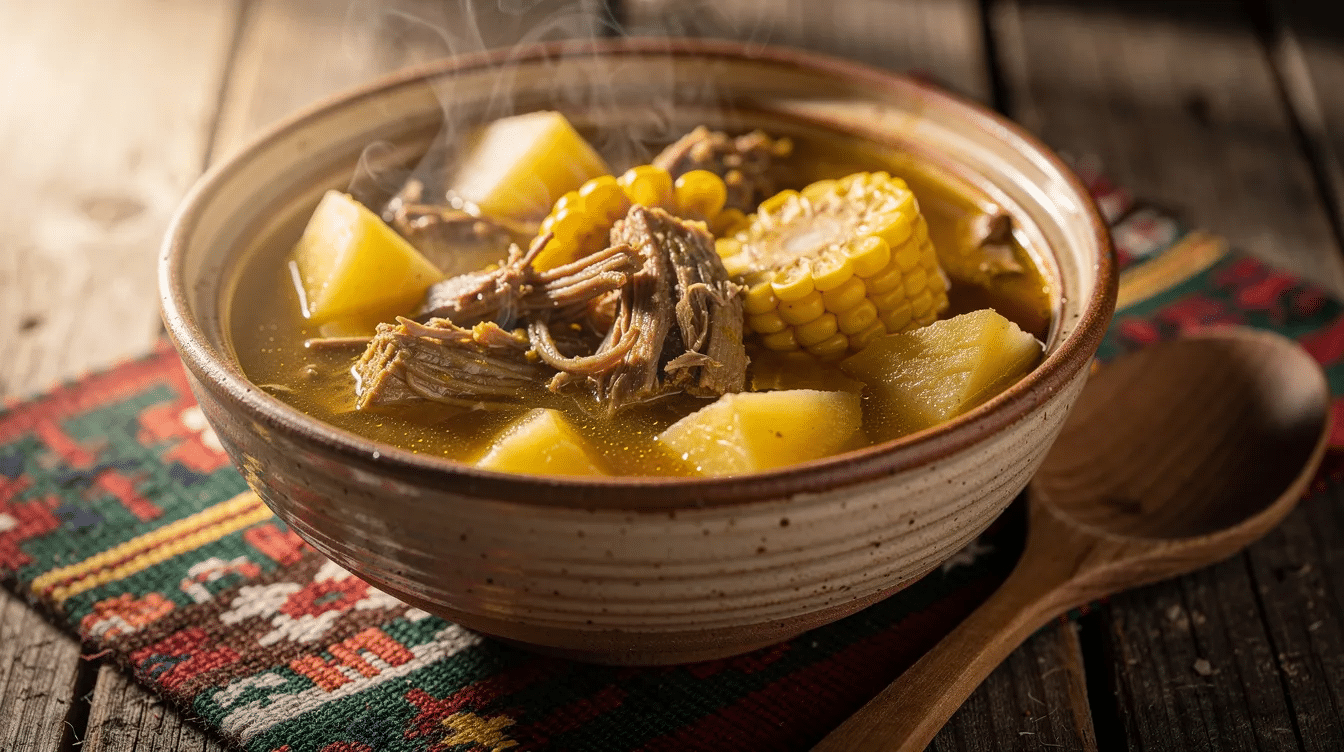
Unlike eating jerky straight from a bag, ch’arki is most often an ingredient. Ch’arki is often rehydrated and cooked into hearty stews and soups, where it provides deep, concentrated flavor and protein.
Classic dishes include:
Olluquito con ch’arki – a traditional Peruvian dish featuring dried meat and the Andean tuber olluco, simmered until tender.
Ch’arki soups – simmered with potatoes, quinoa, or corn for body and nutrition.
Fried ch’arki – pan-seared and served alongside boiled potatoes, mote, or rice.
Ch’arki can be used as a flavoring agent in various dishes due to its concentrated taste. For modern recipes, try shredding rehydrated ch’arki into empanada fillings, grain bowls, or savory broths, or experiment with dehydrator beef jerky recipes for homemade snacks. You can also use turkey or beef in ch’arki-style preparations, choosing the best cuts of meat for jerky to balance leanness and flavor. Adjust salt levels in your cooking since ch’arki itself is quite salty.
Even after soaking, ch’arki remains chewier than typical stewed cured meat-that texture is part of its character, much like how properly sliced meat for jerky influences chew and tenderness. Some people do eat thin pieces as a snack, but most prefer it cooked.
From Ch’arki to “Jerky”: Global Influence and Related Dried Meats
The English word “jerky” was named after ch’arki. Spanish and Portuguese speakers adopted the Quechua word as “charqui” or “charque,” which then shaped colonial food practices. Ch’arki was industrialized in charqueadas in Brazil, where large-scale beef drying operations supplied the colonial economy.
Ch’arki connects to a broader history of meat preservation worldwide. Native Americans developed pemmican-a mixture of dried meat, fat, and berries. Middle Eastern traditions include qawarma. Southern African biltong is air-dried but thicker and less salty. All serve similar purposes: turning fresh meat into compact, durable reserves for travel and survival, a role that the history and evolution of beef jerky also illustrates across many cultures.
Today, the influence is enormous. The global jerky snacks market was valued at $5.66 billion in 2024 and is expected to reach $8.81 billion by 2033, exhibiting a CAGR of 4.79% from 2025 to 2033. North America held over 50% market share in 2024, with U.S. jerky sales reaching $3.29 billion-an increase of 10.4% in 2024. In the United States, ch’arki-inspired jerky products are part of this booming category.
Archaeology and Evidence of Early Meat Preservation
Archaeologists study bones and site patterns to infer where ancient peoples made ch’arki. The “schlep effect” describes how herders left low-value parts (skulls, feet) at high-altitude kill sites while transporting meaty sections-ribs, vertebrae-to processing locations below. Journals like American Antiquity and publications such as JSTOR Daily have explored how differential bone frequencies reveal trade and preservation patterns.
Cut marks and breakage patterns help distinguish butchering for immediate cooking from systematic meat preservation. Evidence from Paracas culture sites (c. 800–200 BCE) and excavations at Chavín de Huántar support the conclusion that ch’arki-style dried meat has been produced in the Andes for many centuries before Spanish contact-though exact dates remain debated.
Modern Ch’arki: Industry, Regulation, and Revival
Ch’arki has transitioned from purely household production to a mix of artisanal and industrial meat products. Peru produces approximately 450 tons of ch’arki annually, with output split between small rural producers and larger processors.
Peru’s Inacal approved technical standards (NTP 201.059) requiring veterinary inspection service oversight at slaughter, controlled drying conditions, clear labeling, and no preservatives except salt. SENASA grants sanitary authorization to processing plants implementing HACCP protocols.
An artisanal revival is underway: urban consumers and tourists seek traditional, minimally processed jerky products marketed alongside heritage foods like quinoa. The tension between tradition-open-air drying, bone-in cuts-and modern food safety standards drives innovation, including solar dryers and vacuum packaging. Ch’arki is celebrated for preserving indigenous culinary heritage in the Andes, and future trends may include geographic indication labeling and ch’arki-inspired premium products for export.
FAQ About Ch’arki
These questions address practical and historical points for readers curious about making, buying, or understanding ch’arki.
Is ch’arki the same thing as modern jerky?
Ch’arki and jerky are related but not identical. Jerky is a broad category of dried meat snacks, while ch’arki is a specific Andean dried meat tradition that gave jerky its name. Ch’arki is typically much drier, saltier, and often intended for cooking or rehydration, whereas many modern jerkies are softer, flavored with marinades, and eaten straight from the package.
Can I safely make ch’arki at home without high-altitude conditions?
While authentic high-altitude freeze-drying is unique to the Andes, home cooks can approximate ch’arki-style dried meat using lean cuts, generous salting, and controlled low-temperature drying in a dehydrator or low oven, or explore variations like an Asian-style jerky recipe with soy and chiles. Keep surfaces clean, maintain steady drying temperatures, avoid thick pieces that dry unevenly, and store finished dried meat in a cool, dry, airtight container.
How long does properly made ch’arki last?
Traditionally prepared ch’arki, fully dried and salted, can remain safe for several months-typically 6 to 12 months when stored in a dry, cool place. Modern commercial products may include “best before” dates, as packaging, fat content, and added flavorings can affect shelf life.
What is the best way to cook with ch’arki?
Soak ch’arki in water or broth to soften it, then simmer in soups, stews, or sauces, just as you might prepare teriyaki beef jerky at home before incorporating it into dishes. Shredded ch’arki works well in fillings for empanadas or stuffed potatoes. Since ch’arki is already quite salty, taste the broth before adding extra salt.
Is ch’arki always made from llama or alpaca, or can it be beef?
Historically, ch’arki was closely tied to llama and alpaca herding. In contemporary markets, beef or mutton versions are widely produced. Camelid ch’arki carries cultural and historical significance, while beef versions reflect changing livestock economies and broader consumer demand.
DannyContent Writer
Hey there, since 2016, my mission has been to provide you with the information and guides you need to make food dehydrating simple and fun. Whether you're a newbie or a seasoned pro, my site offers helpful guides, reviews, and recipes to enhance your dehydrating experience. I take pride in only recommending products I believe in, ensuring my readers' trust. As an affiliate of various programs, including Amazon Associates, your support helps me continue providing quality content. Thanks for stopping by, and happy dehydrating!