We earn a commission if you make a purchase, at no additional cost to you.
09/22/2026 04:39 pm GMT
🍊 Dehydrated Food Info Finder — Temperatures & Drying Times
Choose a category, then pick a food to see its drying temperature and time.
⚠️ Safety Disclaimer: Drying times are estimates and vary based on slice thickness, food moisture content, humidity, and your dehydrator model. Always check for doneness before storing — food should feel dry, leathery, or brittle with no moist spots. Improperly dried food can harbour mould and bacteria. For meat and poultry, follow USDA safe internal temperature guidelines: beef and pork to 160°F (71°C), poultry to 165°F (74°C). Use a food thermometer when in doubt. Store all dehydrated foods in airtight containers in a cool, dark place and discard anything showing moisture, mould, or off odours.
Canning Machine – Find the Perfect Equipment for Home Preservation
Looking for a canning machine that delivers safe, reliable food preservation? Discover water bath canners, pressure canners, and electric models designed for every home preservation need. From small-batch jam making to large-scale vegetable processing with dehydrator machines, our collection covers essential features, safety standards, and trusted brands built for durability.
Find your ideal canning machine and start preserving with confidence today.
Whether you’re preserving high-acid foods or processing low-acid vegetables, there’s a canning machine for every preservation project.
Water Bath Canners
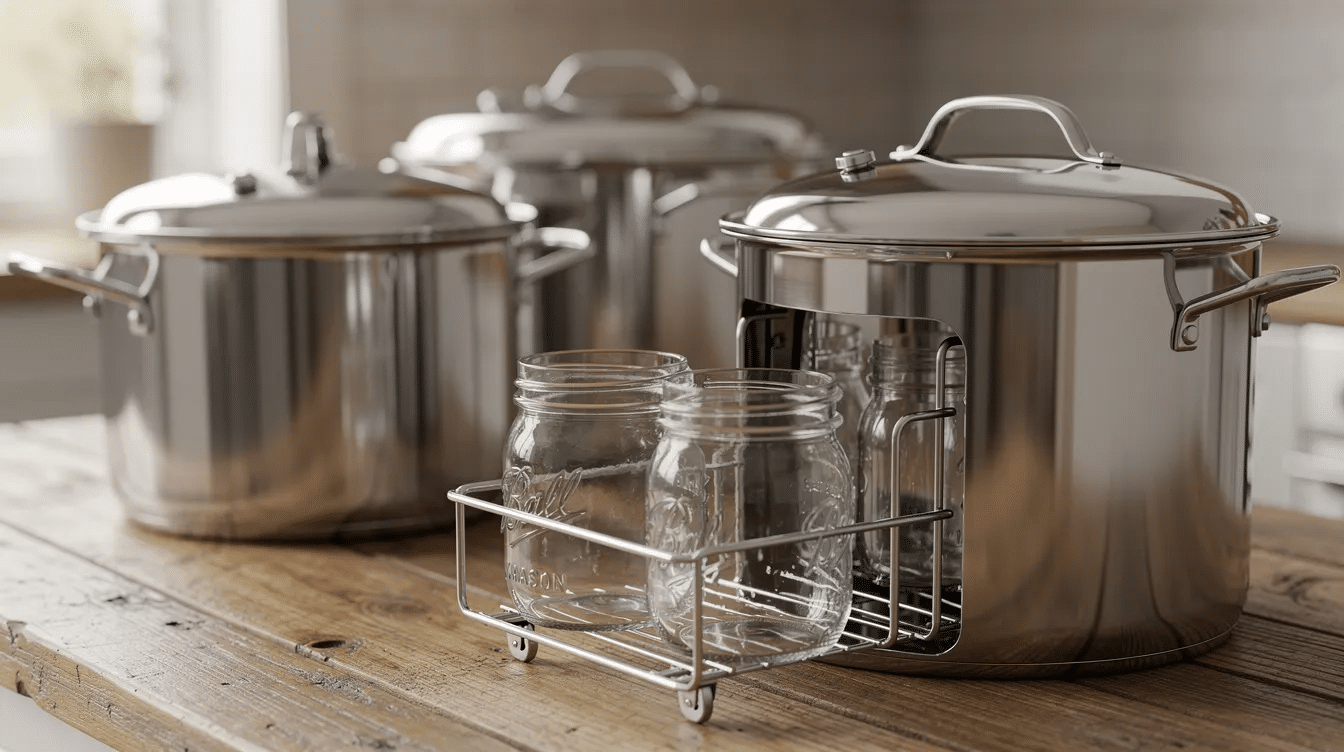
Choose stainless steel or enamel options perfect for jams, jellies, pickles, and other high-acid foods with pH levels of 4.6 or lower. These versatile units use boiling water at 212°F to seal jars safely and protect your preserves for long-term storage.
Capacity ranges from compact 7-quart models ideal for small households to standard 21-quart units that fit seven quart jars per batch. Quality rack systems lift jars off the bottom to prevent hot spots and ensure even heat distribution. Look for glass lids that let you monitor the boiling process and cool-touch handles built for safe handling on gas, electric, or induction stovetops.
Pressure Canners
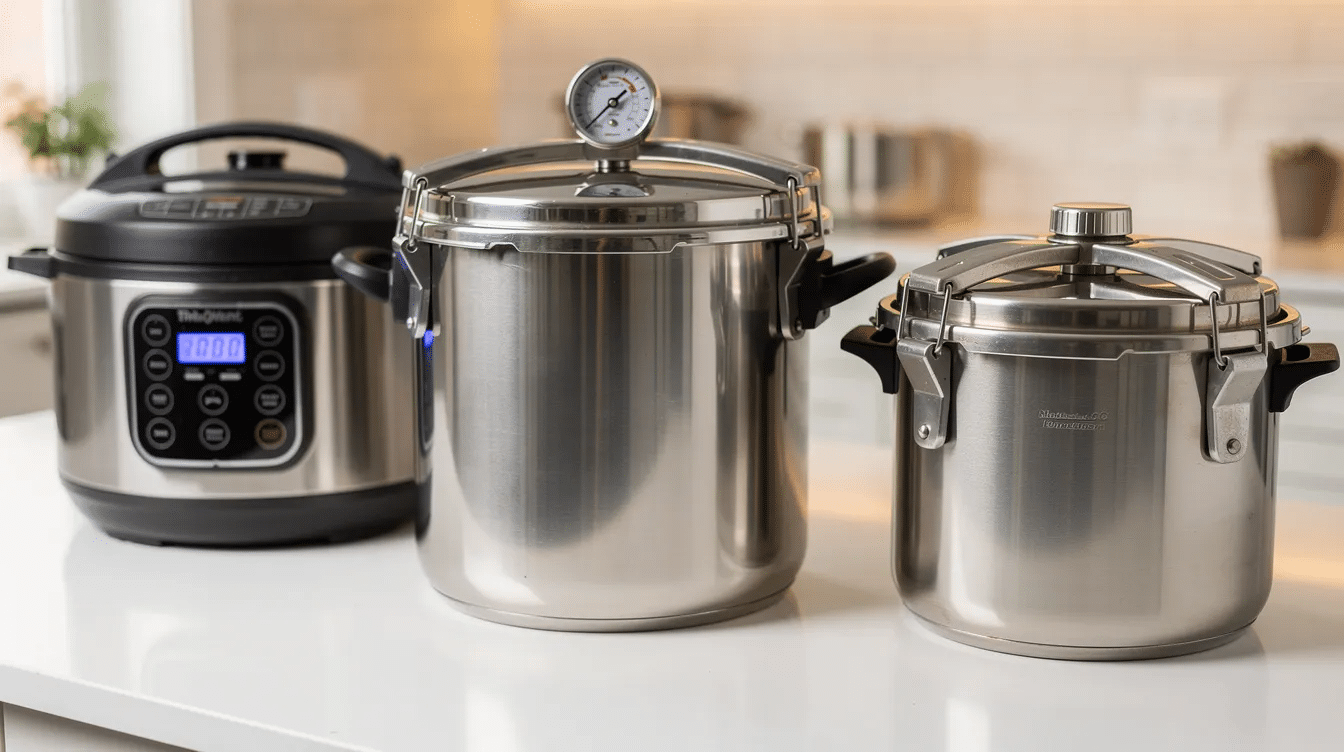
A pressure canner is essential for processing low-acid foods like vegetables, meats, poultry, stock, and complete meals. These units reach temperatures of approximately 240°F at 10-15 psi—the only safe way to destroy harmful Clostridium botulinum spores.
Dial gauge models display internal pressure readings but require regular calibration for accuracy. Weighted gauge canners use a simple weight regulator that maintains pressure automatically—an easy option for beginners. Capacity options range from 10-quart units holding 4 quart jars to large 41-quart models that fit 19 quart jars or 32 pint jars, perfect for bulk preservation sessions.
Safety features include pressure release valves, steam vents for proper air exhaustion, and secure locking lids that protect you throughout the canning process.
Electric Canning Machines
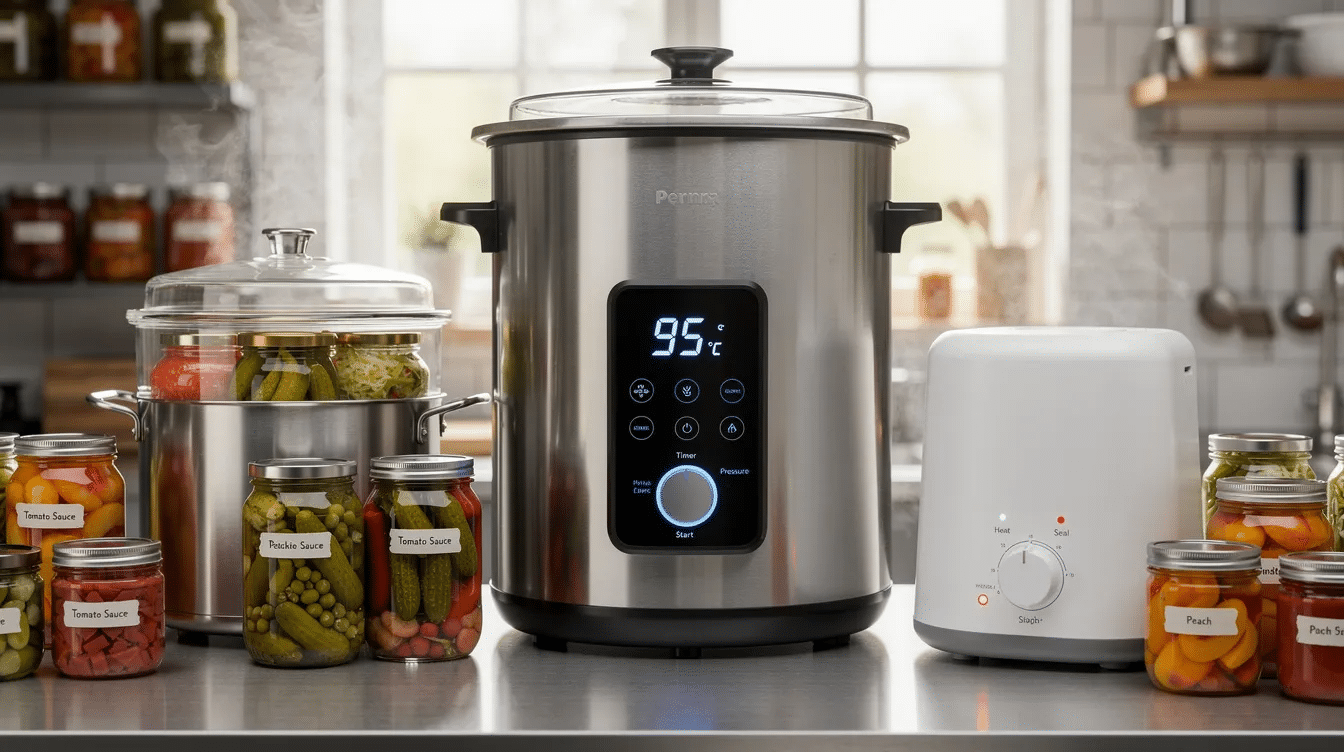
Electric canning machines offer automated temperature control and timer features for streamlined preservation. These space-saving units sit on your countertop and don’t require large burner space—ideal for kitchens where a socket located near your workspace is more convenient than stovetop use.
Multi-function capabilities allow these machines to handle boiling water bath processing, slow cooking, and keeping foods warm. However, current safety considerations mean electric models are best suited for high-acid foods only, as independent verification for low-acid processing remains limited. Manufacturers continue developing improved sensors and power systems, but experienced canners should note these limitations before purchase.
Choose the Right Canning Machine for Your Kitchen Setup
The right canning machine fits your space, cooking style, and preservation goals.
For Small Kitchens and Apartments
Compact 7-12 quart models fit standard stovetops without overwhelming limited counter space. Lightweight designs make storage easy when not in use, and electric options eliminate the need for large burner power. These units handle small batches of jams, pickles, and preserves—perfect when you want to fill just a few jars at the end of a harvest day or supplement canning with a space-saving hanging dehydrator.
For Large Families and Bulk Processing
For high-volume preservation, choose 16+ quart capacity canners designed to process multiple jars per batch. Dual-rack systems let you stack pint and quart jars simultaneously, maximizing each session’s output. Heavy-duty stainless steel construction withstands frequent use and provides the durability families need when preserving produce throughout the growing season.
For Beginner Canners
User-friendly models with clear pressure indicators and straightforward controls make learning safe and easy. Complete starter kits bundle the canner with essential accessories—rack, jar lifter, lids, and detailed instructions. Weighted gauge pressure canners offer a nice balance of simplicity and reliability since they don’t require calibration, helping new preservers build confidence fast.
For Experienced Preservers
Professional-grade features include precision dial gauges, heavy-gauge stainless steel construction, and versatile designs suitable for both water bath and pressure canning methods, similar to the standards used in NSF-certified commercial food dehydrators. Larger capacities and advanced safety systems—like redundant pressure release valves—support ambitious preservation projects. Quality brands in this line offer replacement parts and long-term support, making them a smart investment that will grow with your skills.
Essential Features for Safe Canning
A quality canning machine should meet strict safety standards while delivering consistent results.
Pressure Safety Systems
Pressure release valves and safety locks protect against dangerous over-pressurization. Look for models with overpressure plugs or bursting disks that add another layer of protection. Gauge accuracy matters—dial gauges should maintain readings within ±1 psi, and regular calibration keeps your unit reliable. Some machines feature automatic pressure regulation that simplifies monitoring, especially during longer processing times.
Construction Materials
Stainless steel offers superior durability, corrosion resistance, and even heat distribution compared to aluminum. FDA-approved materials and ASTM F2693-20 compliance indicate quality construction that meets safety standards. Enamel-coated options provide an attractive finish but may chip over time. Consider weight and maintenance requirements—stainless steel is heavier but easier to clean and longer-lasting.
Temperature Control
Consistent heat distribution throughout the canning machine ensures every jar reaches safe processing temperatures. Digital displays offer precise monitoring, while analog thermometers built into lids provide reliable visual confirmation. Automatic shut-off and timer functions on electric models reduce the chance of over-processing, helping protect both food quality and energy cost.
How to Use Your Canning Machine Safely
Proper technique ensures food safety and extends your canning machine’s lifespan.
Water Bath Canning Process
Start by filling jars with prepared high-acid foods, leaving the correct headspace specified in your tested recipe. Place filled jars on the rack, ensuring water covers lids by at least one inch. Bring water to a rolling boil and maintain that temperature for the required processing time—adjusting for altitude if you’re above sea level.
After processing, remove the lid and let jars cool gradually. Check the seal on each lid before moving to storage. Properly sealed jars should be stored in a cool, dry environment away from direct light, and dehydrated ingredients can be kept in Mason jars for long-term freshness.
Pressure Canning Technique
Add the recommended water level (typically 2-3 inches) to your pressure canner before placing filled jars on the rack. Secure the lid and vent steam for approximately 10 minutes to exhaust air—this step is critical since air pockets reduce internal temperature and compromise safety.
Once venting is complete, close the vent to build pressure. Maintain the required pressure (10-15 psi depending on gauge type and altitude) for the full processing time. When finished, turn off heat and allow natural cooling—never force depressurization. Once pressure returns to zero, wait an additional minute before carefully removing the lid.
Shop Canning Machines with Confidence
Explore trusted brands and proven models that deliver safe, reliable food preservation. Choose from water bath canners, pressure canners, and electric models designed for every home preservation need—from hobbyist homebrew projects to serious year-round canning operations.
Your perfect canning machine is ready to help you preserve fresh flavors and stock your pantry with quality homemade goods.
DannyContent Writer
Hey there, since 2016, my mission has been to provide you with the information and guides you need to make food dehydrating simple and fun. Whether you're a newbie or a seasoned pro, my site offers helpful guides, reviews, and recipes to enhance your dehydrating experience. I take pride in only recommending products I believe in, ensuring my readers' trust. As an affiliate of various programs, including Amazon Associates, your support helps me continue providing quality content. Thanks for stopping by, and happy dehydrating!