We earn a commission if you make a purchase, at no additional cost to you.
09/22/2026 04:39 pm GMT
🍊 Dehydrated Food Info Finder — Temperatures & Drying Times
Choose a category, then pick a food to see its drying temperature and time.
⚠️ Safety Disclaimer: Drying times are estimates and vary based on slice thickness, food moisture content, humidity, and your dehydrator model. Always check for doneness before storing — food should feel dry, leathery, or brittle with no moist spots. Improperly dried food can harbour mould and bacteria. For meat and poultry, follow USDA safe internal temperature guidelines: beef and pork to 160°F (71°C), poultry to 165°F (74°C). Use a food thermometer when in doubt. Store all dehydrated foods in airtight containers in a cool, dark place and discard anything showing moisture, mould, or off odours.
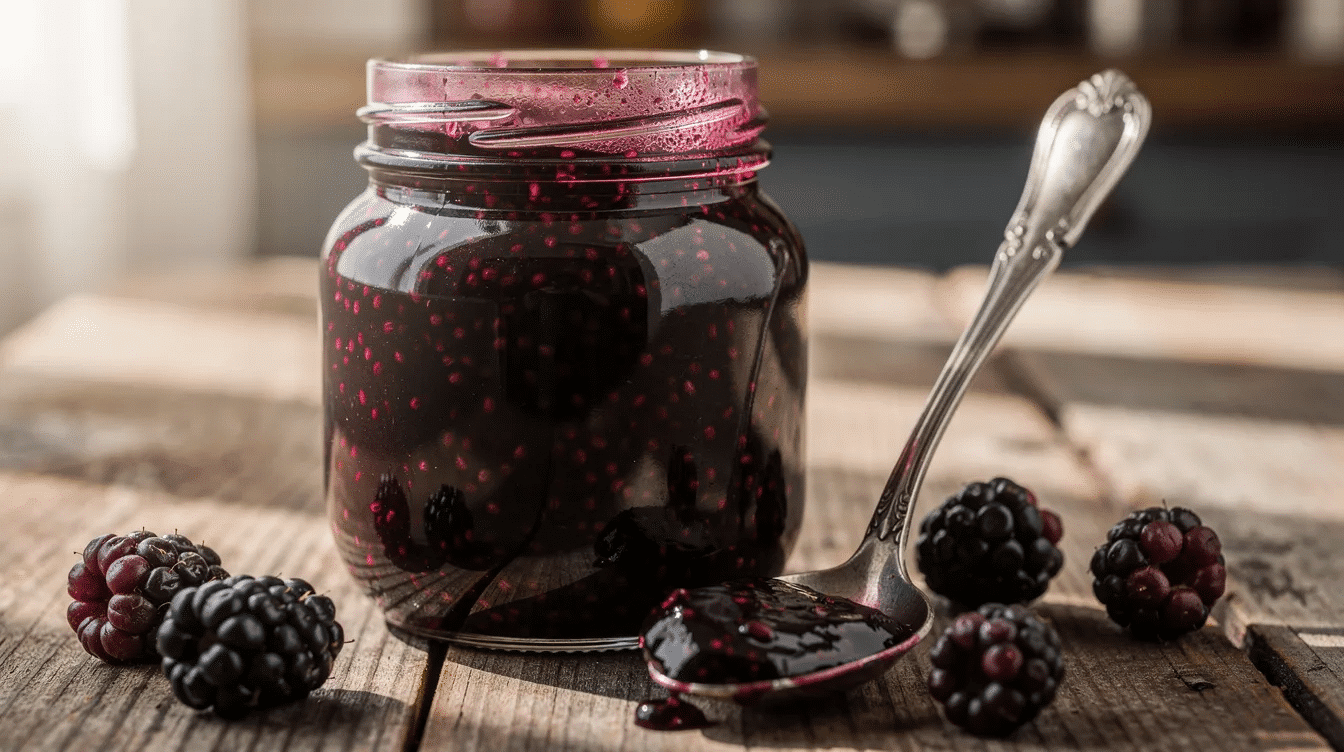
This blackberry jelly jam recipe produces a smooth, seedless spread using either fresh July–August berries or frozen blackberries from grocery stores year-round.
The method combines the clarity of jelly (strained juice) with the fuller flavor of jam, giving you a hybrid “best of both worlds” recipe.
The recipe works with or without added pectin, with clear directions and temperatures (220°F / 104°C at sea level) for a reliable set. For every cup of blackberry juice, add 3/4 cup of sugar for proper setting.
Storage options include refrigerator (3–4 weeks), freezer (up to 6 months), or water bath canned for shelf stable storage lasting 12–18 months. The finished jelly jam is very low in saturated fat, making it a health-conscious choice.
You’ll find step-by-step instructions, canning tips for beginners, and a short FAQ covering sugar levels, frozen berries, and set problems.
Ingredient
Quantity
Notes
Fresh or frozen blackberries
9 cups (about 1.3 kg)
Yields approximately 4 cups strained juice
Water
1 cup
For simmering blackberries
White granulated sugar
3/4 cup per 1 cup juice
About 3 cups total for standard batch
Lemon juice
1–2 tablespoons per 4 cups juice
Prefer bottled for consistent acidity
Commercial pectin (optional)
Follow package directions
Use Sure Jell or low sugar pectin if preferred
Butter (optional)
1 teaspoon
Helps reduce foam during boiling
Vanilla extract (optional)
1/2 teaspoon
Add after cooking for flavor
Lemon zest (optional)
1 strip
Adds brightness to flavor
Introduction: Why Make Blackberry Jelly Jam?
There’s something deeply satisfying about spooning homemade blackberry jelly over hot toast on a cold January morning. That burst of summer fruit—intense, sweet, and slightly tart—transforms an ordinary breakfast into something memorable.
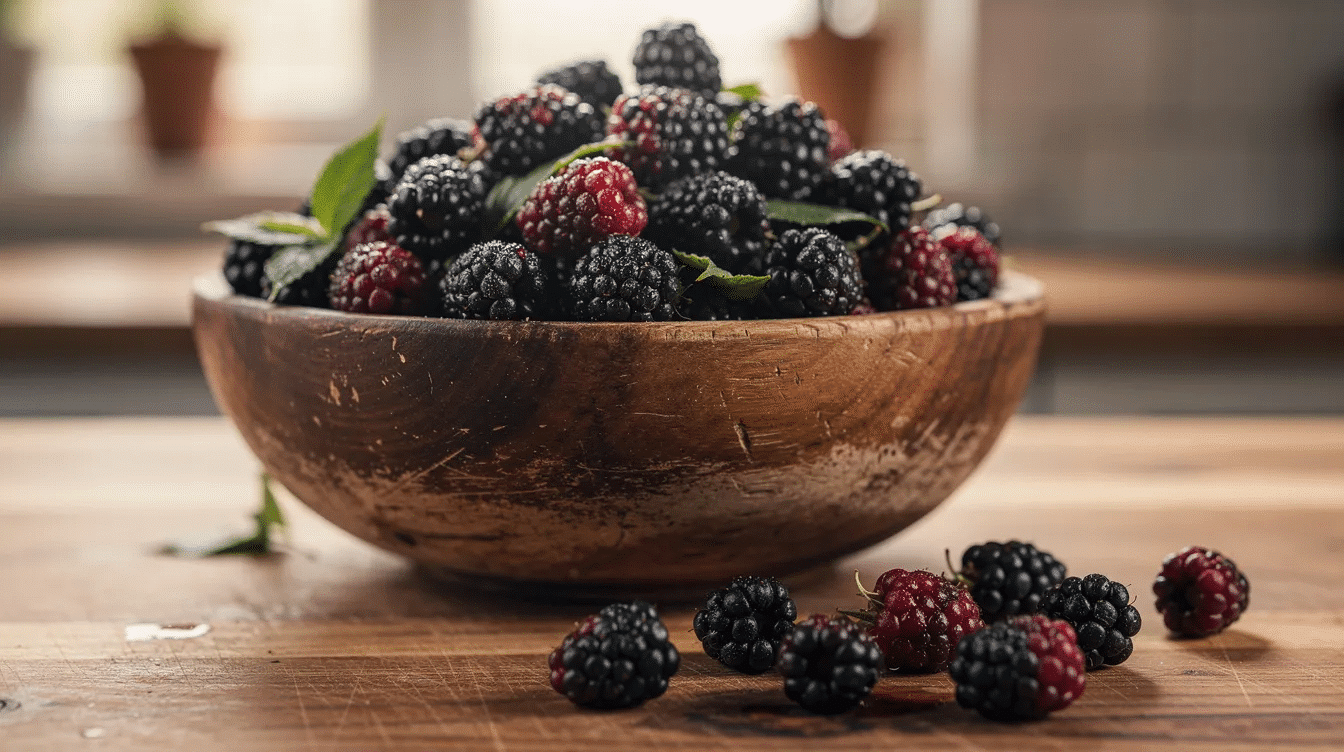
Blackberry season runs from mid-July to late August in most temperate regions, but this blackberry jelly jam recipe lets you capture that flavor for the entire year. Whether you’re working with fresh blackberries picked that morning, dehydrated for long-term storage and blackberry powder, or thawed blackberries from your freezer stash, the process remains straightforward.
So what exactly is “jelly jam”? It’s a smooth, seedless spread made from blackberry juice but cooked to have a slightly fuller, jam-like body. You get the clarity and texture-free smoothness of jelly with the richer mouthfeel that jam lovers appreciate.
If you can bring mixture to a boil and stir a pot, you can make this recipe. No specialized equipment is required beyond basic kitchen tools. The sections that follow cover ingredients, step-by-step cooking, canning process, storage, and troubleshooting.
What’s the Difference Between Blackberry Jelly, Jam, and “Jelly Jam”?
Understanding these three terms helps clarify why this recipe sits in a sweet spot between them.
Blackberry jelly is a clear spread made only from strained blackberry juice, sugar, and sometimes pectin. It contains no seeds, no pulp, and has a light, delicate texture that spreads easily without any grittiness.
Blackberry jam takes a different approach. It includes crushed or chopped fruit along with the juice, which means you get fruit pieces and seeds throughout. The texture is thicker and more rustic.
This blackberry jelly jam recipe uses strained juice for complete smoothness but cooks it to a slightly richer, jam-like consistency. The result is denser than pure jelly while remaining entirely seed-free.
This hybrid style is ideal for people who dislike seeds or have conditions like diverticulitis where small seeds can cause intestinal irritation. You still get that intense blackberry flavor without any texture compromises.
Ingredients for Blackberry Jelly Jam
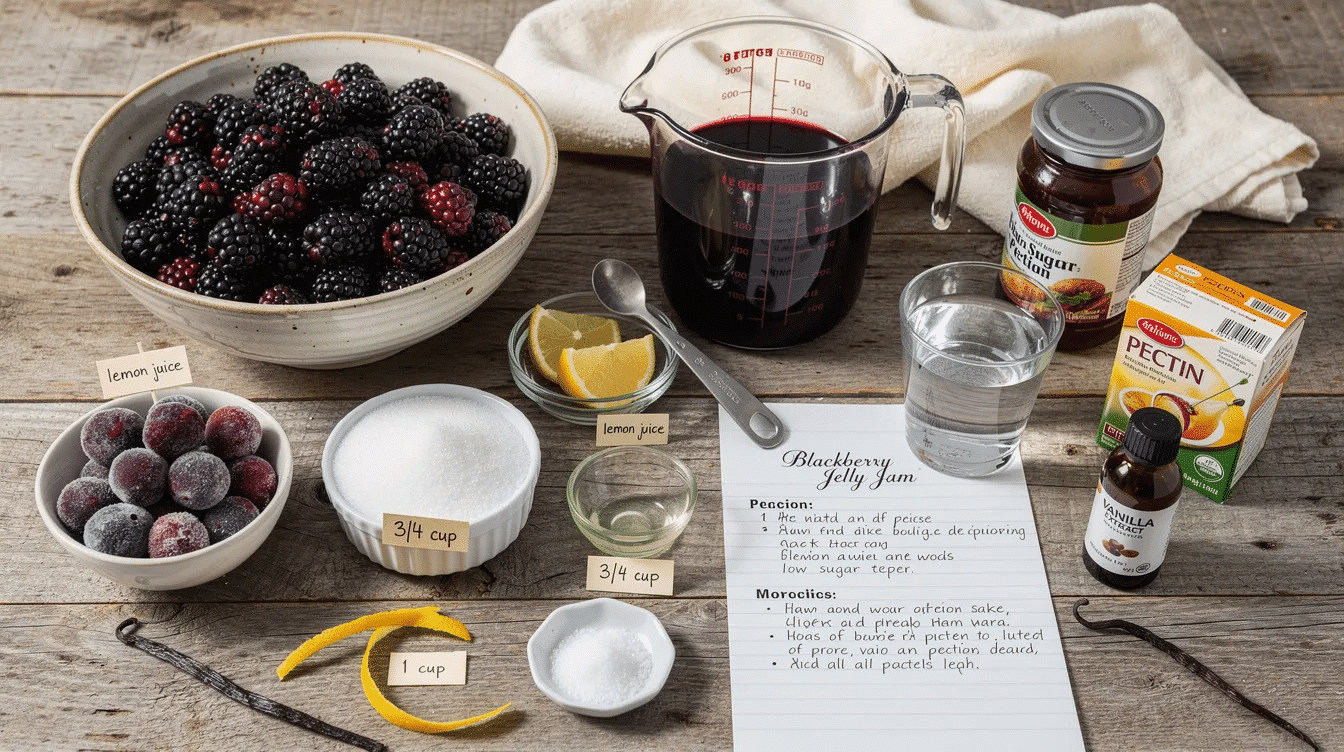
This recipe uses everyday ingredients you likely have on hand, with room for slight customization based on your taste preferences and whether you’re using pectin.
Core ingredients:
Fresh or frozen blackberries: approximately 9 cups (about 1.3 kg) to yield roughly 4 cups strained juice
White granulated sugar: 3/4 cup per 1 cup juice for no-pectin method (about 3 cups of sugar total for a standard batch)
Lemon juice: 1–2 tablespoons per 4 cups juice (bottled preferred for consistent acidity)
Water: 1 cup for simmering berries
Pectin options:
No pectin: relies on natural pectin in blackberries (works well with proper technique)
Commercial pectin like Sure Jell: follow package directions for sugar ratios
Low sugar pectin: allows reduced sugar while maintaining set
Optional additions:
Small pinch of salt
Vanilla bean or 1/2 teaspoon vanilla extract (added after cooking)
Strip of lemon zest for brightness
When using wild blackberries, you may notice they contain more natural pectin than cultivated varieties, which can result in a slightly firmer set. If you have extra fruit beyond what you need for this recipe, you can also explore dehydrating different kinds of fruit to build a varied pantry of preserved ingredients.
Equipment You’ll Need
You don’t need specialized canning equipment unless you plan to make shelf stable jars for long-term pantry storage. Here’s what each approach requires.
For cooking and straining:
Large pot: 6–8 quart heavy-bottomed pot prevents scorching during high heat boiling
Potato masher: for crushing berries (preferred over food processors which can over-pulverize)
Fine mesh strainer, jelly bag, or dampened cheesecloth for straining
Large bowl: heat-safe, for collecting strained blackberry juice
Candy or jelly thermometer: for checking gel point at 220°F
Metal spoon: for skimming foam and testing consistency
Ladle and funnel
For water bath canning (optional):
Half pint jars (8 oz) with two piece lids and bands
Jar lifter
Canning funnel
Deep pot with rack (boiling water canner)
Clean towels
If you’re only storing in the fridge or freezer, skip the canning gear entirely. Clean jars or food-safe containers work perfectly for short-term storage, while Mason jars with airtight seals shine for organizing and protecting long-term dehydrated foods.
Preparing the Blackberries and Extracting Juice
A clear, seedless jelly jam starts with properly extracted juice. This step separates homemade jelly from anything you’d find at grocery stores.
Working with fresh blackberries:
Sort through your berries carefully, removing any stems, leaves, and spoiled fruit. During blackberry season, aim for about 3/4 ripe berries and 1/4 slightly underripe berries—the underripe ones contain more natural pectin for better gelling.
Rinse gently under cool water to preserve the delicate skins.
Working with frozen blackberries:
Frozen berries actually release juice more easily due to ruptured cell walls from ice crystal formation. Use them straight from the freezer or let them thaw first. No recipe adjustments needed, and the same logic applies when dehydrating blueberries for long-term use in baking and snacking.
Extracting the juice:
Place blackberries in a large pot with 1 cup water per 9 cups berries
Bring to a gentle boil over medium-high heat, then reduce to a simmer
Use a potato masher to crush berries as they soften
Simmer 10–15 minutes, stirring frequently, until berries are very soft and have released lots of liquid
Straining for clarity:
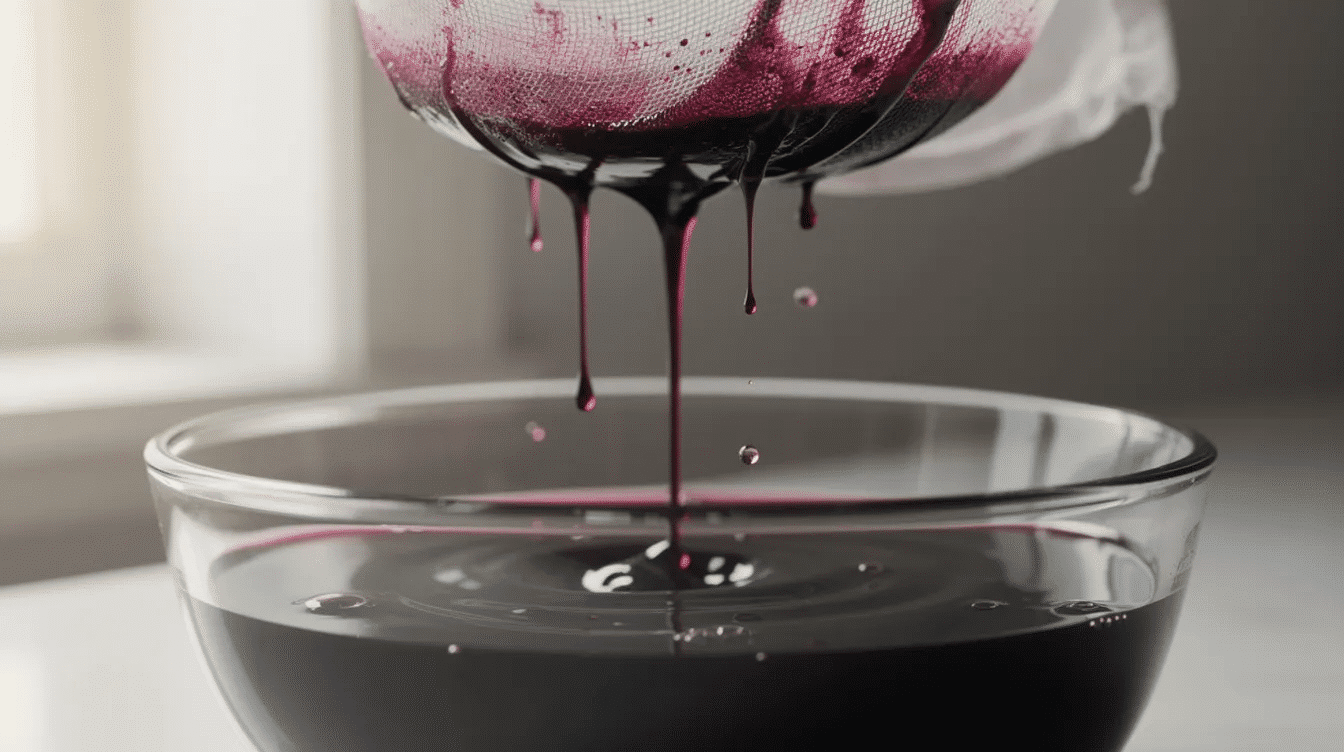
Ladle the hot blackberry pulp into a jelly bag or fine mesh strainer lined with dampened cheesecloth, set over a large bowl. Let gravity do the work.
For the clearest juice, resist the urge to squeeze the bag. Allow it to drip naturally for several hours or overnight.
Squeezing yields more juice but forces tiny particles through, creating cloudiness. Your choice depends on whether you prioritize yield or crystal-clear appearance, just as when dehydrating raspberries into chewy snacks or powder you balance texture and appearance against maximum yield.
Aim for approximately 4 cups of strained blackberry juice for one standard batch.
Preparation involves washing and crushing blackberries, simmering, and canning in sterilized jars.
How to Make Blackberry Jelly Jam (Step-by-Step)
This walkthrough takes you from strained juice to finished jelly jam ready for jars. Work in small batches—no more than 4 cups juice at a time—for the most reliable results.
Step 1: Combine juice and acid
Pour your measured blackberry juice into a large pot. Add 1–2 tablespoons lemon juice per 4 cups. If using pectin, mix dry pectin with a small portion of sugar first, then add to the juice according to package directions.
Step 2: Bring to a boil
Place the pot over high heat. Bring mixture to a vigorous boil, stirring constantly to prevent scorching.
Step 3: Add sugar
Once the mixture reaches a strong boil, add sugar gradually. For no-pectin methods, use 3/4 cup sugar per cup of juice. Stir until completely dissolved—undissolved sugar causes graininess.
Step 4: Reach the rolling boil
Continue cooking over high heat until you achieve a full rolling boil that cannot be stirred down. This aggressive boil is essential for proper gel formation. When making blackberry jelly without pectin, boil the mixture until it reaches gel stage, which occurs at 220°F (104°C) at sea level, or slightly lower at higher elevations (subtract 2°F for every 1,000 feet above sea level).
With pectin: Maintain rolling boil for 1–2 minutes exactly
Without pectin: Continue boiling until mixture approaches 220°F (104°C) at sea level or the adjusted temperature for your elevation.
Step 5: Check for gel point
The gelling point for blackberry jelly at sea level is 220°F. Adjust for altitude by subtracting 2°F for every 1,000 feet of elevation above sea level.
Visual tests also work:
Sheeting test: Dip a cold metal spoon, lift it, and watch the jelly drip. When drops merge and sheet off rather than dripping individually, you’ve reached gel point.
Plate test: Drop a small amount onto a plate that has been placed in the freezer, wait 1–2 minutes, then push with your finger. The jelly should cool quickly and show the finished texture by wrinkling if it’s ready.
Step 6: Remove from heat
Remove from heat immediately once gel stage is reached, ideally when the mixture begins to stop bubbling vigorously, indicating it has reached the proper stage. Overcooking creates a rubbery, overly firm texture that’s difficult to spread.
Skim any foam from the surface for a clearer appearance, though this is purely cosmetic.
How to Can Blackberry Jelly Jam for Long-Term Storage
Canning blackberry jelly is optional but extends shelf life to 12–18 months in the pantry. This boiling water bath method works for high-acid preserves like fruit spreads, similar to how proper storage can give dried cranberries a long, stable shelf life when kept cool, dry, and sealed. While the juice is straining, prepare your water bath canner so it’s ready for processing. Process the filled jars for 10 minutes to ensure they are shelf-stable.
Prepare your jars:
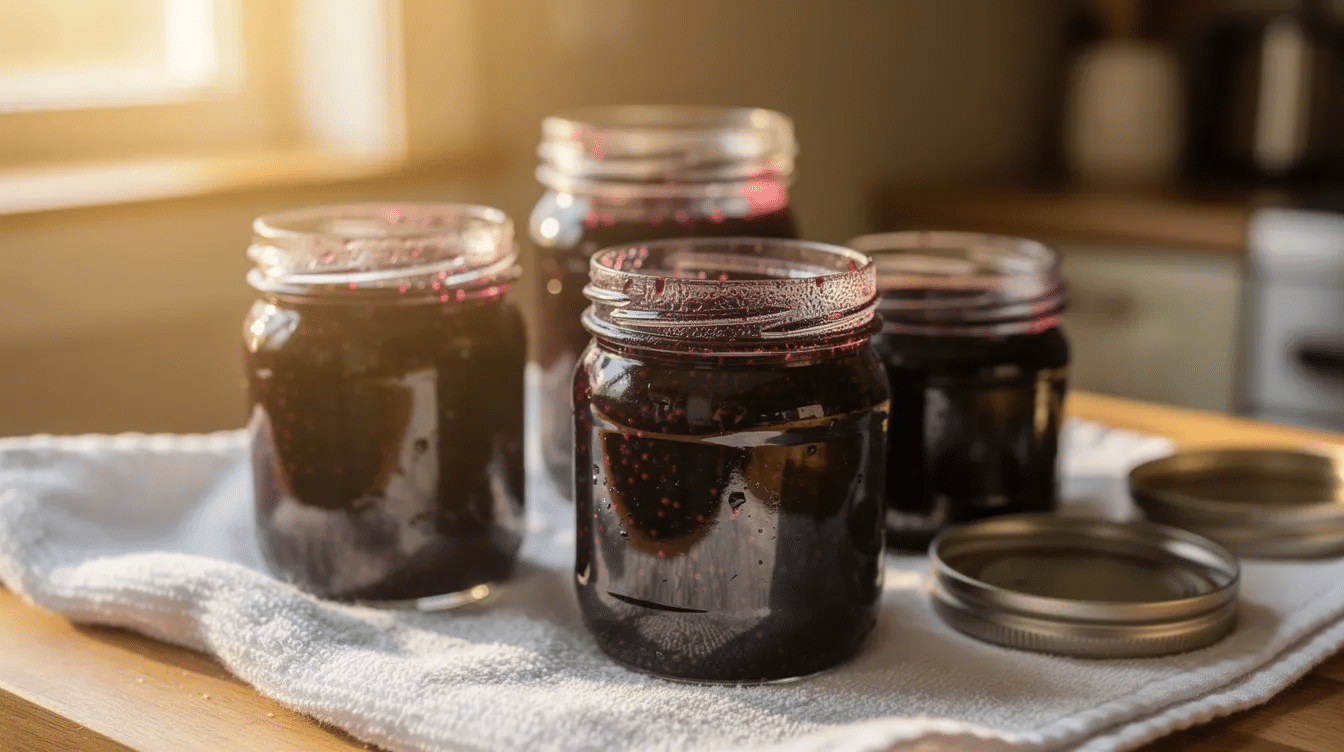
Wash jars in hot soapy water and rinse thoroughly. Keep them hot until filling—either in a 200°F oven or submerged in hot water. This prevents thermal shock when adding hot jam. Always pour the hot blackberry jelly jam into hot jars to ensure proper sealing and preservation.
Examine lids for any defects. Use new lids each time for reliable seals.
Fill the jars:
Working quickly while the jelly jam is still hot, ladle into prepared hot jars using a canning funnel. Leave 1/4-inch headspace at the top—this space allows for expansion and proper vacuum formation.
Jars leaving too little or too much headspace may not seal correctly.
Seal the jars:
Wipe jar rims with a clean, damp cloth to remove any residue that could prevent sealing. Place lids on jars and add bands, tightening to fingertip tightness only. Over-tightening can prevent air from escaping during processing.
Process in boiling water bath:
Place filled jars on a rack in your boiling water canner. Ensure jars are covered by 1–2 inches of boiling water.
Process half pint jars for 10 minutes at sea level
Add 5 minutes for elevations above 1,000 feet
Cool and check seals:
Turn off heat and let jars rest in water for 5 minutes. Carefully lift jars and place on a towel-lined counter. Allow to cool completely undisturbed for 12–24 hours.
Check sealed jars the next day by pressing the center of each lid. Properly sealed lids will be concave and won’t flex when pressed. Any unsealed jars should go directly into the refrigerator and be used within 3–4 weeks.
Storing and Using Your Blackberry Jelly Jam
Your storage method determines how long your homemade blackberry jelly will last, just as proper packaging and temperature control dictate how long homemade beef jerky stays fresh and safe to eat.
Storage timelines:
Method
Duration
Notes
Refrigerator (opened)
3–4 weeks
Standard for all opened jars
Freezer
Up to 6 months
Leave 1-inch headspace for expansion
Canned (unopened)
12–18 months
Store in cool, dark location
Keep unopened canned jars in a cool, dark pantry away from direct sunlight and temperature fluctuations.
Serving suggestions:
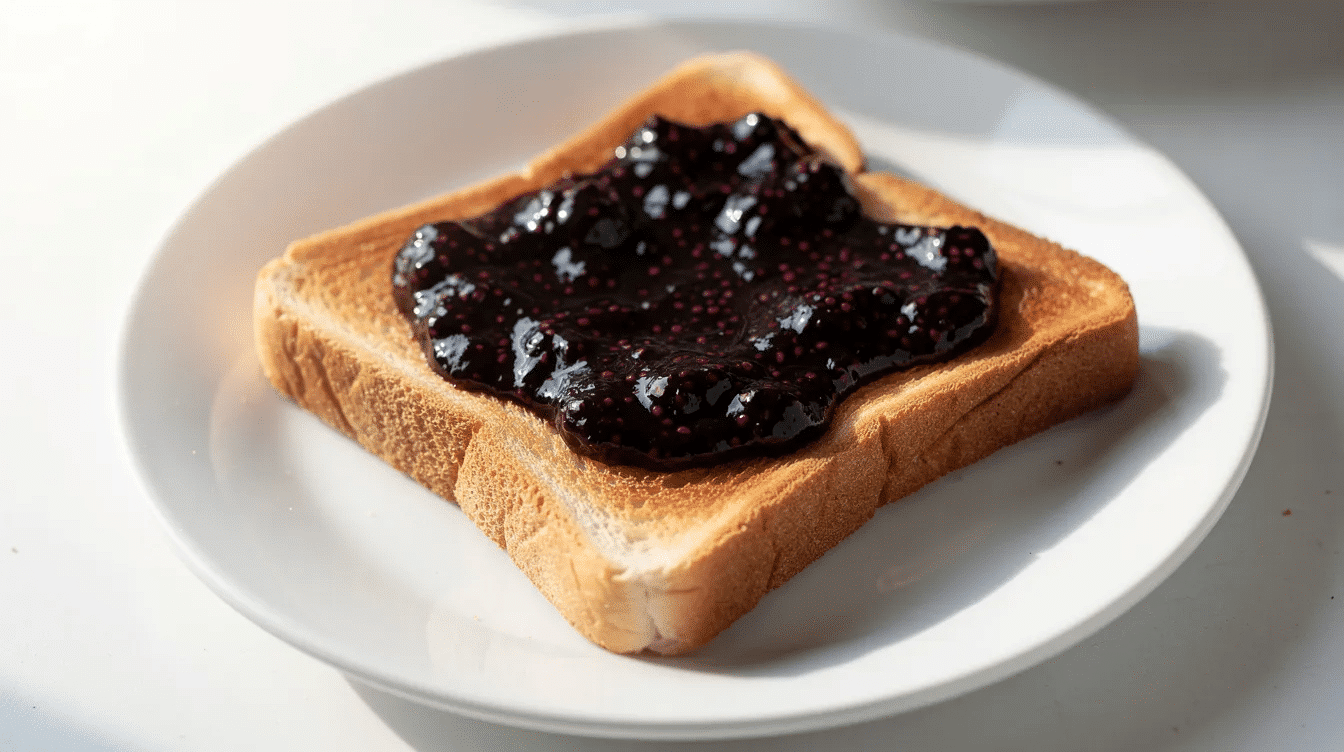
Spread on warm toast, English muffins, or homemade biscuits
Combine with maple syrup for a fruit-forward pancake topping, or serve with crisp freeze dried strawberry pieces for added crunch and flavor contrast
This jelly jam makes a thoughtful homemade gift, especially during December holidays when summer berries feel like a distant memory. A ribbon-tied jar paired with fresh biscuit mix creates a memorable present.
Tips, Variations, and Troubleshooting
Even experienced cooks encounter occasional issues. Here’s how to handle common problems and customize your recipe.
Tips for success:
Cook in small batches (4 cups juice maximum) for even heat distribution
Use a thermometer rather than relying solely on visual tests, especially as a beginner
Stir thoroughly when you add sugar—undissolved granules cause graininess
If jelly jam is too thin:
Wait 24–48 hours before declaring failure. Jelly jam continues setting as it cools completely. If still runny after two days, gently reheat to 220°F with an additional 1/2 teaspoon pectin per cup. Alternatively, embrace the thinner consistency and use it as pancake syrup.
If jelly jam is too firm:
Unfortunately, there’s no fix for overcooked jelly jam. Prevent this by removing from heat immediately at gel point. The recipe turned out rubbery? Use it as a glaze where firmer texture actually helps.
Flavor variations:
Add 1/2 teaspoon vanilla extract after removing from heat
Combine blackberries with raspberries (use 3 cups blackberry to 1 cup raspberry) for a more complex, tart flavor
Stir in a tablespoon of bourbon or Grand Marnier after cooking (for adults only—alcohol won’t fully evaporate)
Low sugar blackberry jelly options:
Standard no-pectin and regular pectin methods require sufficient sugar for both set and preservation. For low sugar blackberry jam, use pectin specifically formulated for reduced sugar recipes (like Pomona’s). These activate with calcium water rather than high sugar content.
Cutting sugar below 50% without specialty pectin results in a loose, syrupy texture and reduced shelf stability.
For more canning recipes and preserving techniques, the National Center for Home Food Preservation provides tested guidelines.
FAQ
Can I use frozen blackberries instead of fresh?
Frozen blackberries work exceptionally well for this blackberry jelly recipe—often better than fresh. The freezing process ruptures cell walls, which means thawed blackberries release juice more readily during cooking.
There’s no need to adjust sugar, lemon juice, or cooking times when substituting frozen for fresh berries. Use them directly from frozen or thaw first; either approach works.
This makes frozen berries a practical choice outside peak season. When fresh blackberries cost two to three times more at grocery stores during winter months, frozen options provide consistent quality and flavor year-round.
Do I have to add commercial pectin?
Added pectin is entirely optional. Blackberries naturally contain enough berries pectin (roughly 0.5–1% in skins and seeds) to gel properly when cooked correctly with sufficient sugar and acid.
Commercial pectin does offer advantages: faster cooking times, slightly firmer and more predictable sets, and often better results for beginners. However, it typically requires following specific sugar ratios printed on the package.
If you’re making homemade jelly for the first time, pick one method—with or without pectin—and follow it closely. Review recipe instructions completely before starting, and don’t mix techniques mid-process.
Why is my blackberry jelly jam cloudy instead of clear?
Cloudiness almost always results from squeezing the jelly bag or strainer during juice extraction. Pressing forces tiny pulp particles through that would otherwise remain trapped.
Other culprits include boiling too vigorously (which incorporates air bubbles) and not skimming foam before jarring.
The good news: cloudy jelly jam tastes identical to clear. It’s purely aesthetic. If crystal clarity matters to you, let gravity drain the juice overnight without any squeezing, and skim foam carefully before filling jars.
What if my jelly jam doesn’t set properly?
First, patience. Homemade jelly can take up to 24–48 hours to reach final firmness as it cools completely. Don’t judge the set while jars are still warm.
If the jelly jam remains too loose after two full days, you have options. Reheat the batch to a full boil, add 1/2 teaspoon pectin per cup, and process again. Or simply use the thinner product as a delicious blackberry syrup over pancakes, waffles, or stirred into sparkling water.
Common causes of soft set include insufficient acid (ensure enough berries were slightly underripe), too much juice dilution from excess water during extraction, or undercooking before reaching 220°F.
Can I make this recipe with less sugar or no sugar at all?
Standard methods—whether using pectin or relying on natural pectin—depend on sugar for both proper gelling and preservation. Sugar dehydrates the mixture to create the gel network and inhibits bacterial growth for shelf stability.
Reducing sugar significantly with regular pectin or no-pectin methods results in a soft, syrupy spread rather than a firm jelly jam.
For genuinely low sugar or no-sugar versions, use pectin specifically designed for that purpose. These products (like Pomona’s Universal Pectin) use calcium rather than sugar to activate gelling.
Avoid substituting artificial sweeteners or stevia unless following a tested recipe formulated for those ingredients. Untested formulations risk both texture failure and potential food safety issues.
DannyContent Writer
Hey there, since 2016, my mission has been to provide you with the information and guides you need to make food dehydrating simple and fun. Whether you're a newbie or a seasoned pro, my site offers helpful guides, reviews, and recipes to enhance your dehydrating experience. I take pride in only recommending products I believe in, ensuring my readers' trust. As an affiliate of various programs, including Amazon Associates, your support helps me continue providing quality content. Thanks for stopping by, and happy dehydrating!