We earn a commission if you make a purchase, at no additional cost to you.
09/22/2026 04:39 pm GMT
🍊 Dehydrated Food Info Finder — Temperatures & Drying Times
Choose a category, then pick a food to see its drying temperature and time.
⚠️ Safety Disclaimer: Drying times are estimates and vary based on slice thickness, food moisture content, humidity, and your dehydrator model. Always check for doneness before storing — food should feel dry, leathery, or brittle with no moist spots. Improperly dried food can harbour mould and bacteria. For meat and poultry, follow USDA safe internal temperature guidelines: beef and pork to 160°F (71°C), poultry to 165°F (74°C). Use a food thermometer when in doubt. Store all dehydrated foods in airtight containers in a cool, dark place and discard anything showing moisture, mould, or off odours.
Best Meat for Jerky Smoker: 7 Top Cuts for Perfect Smoked Jerky
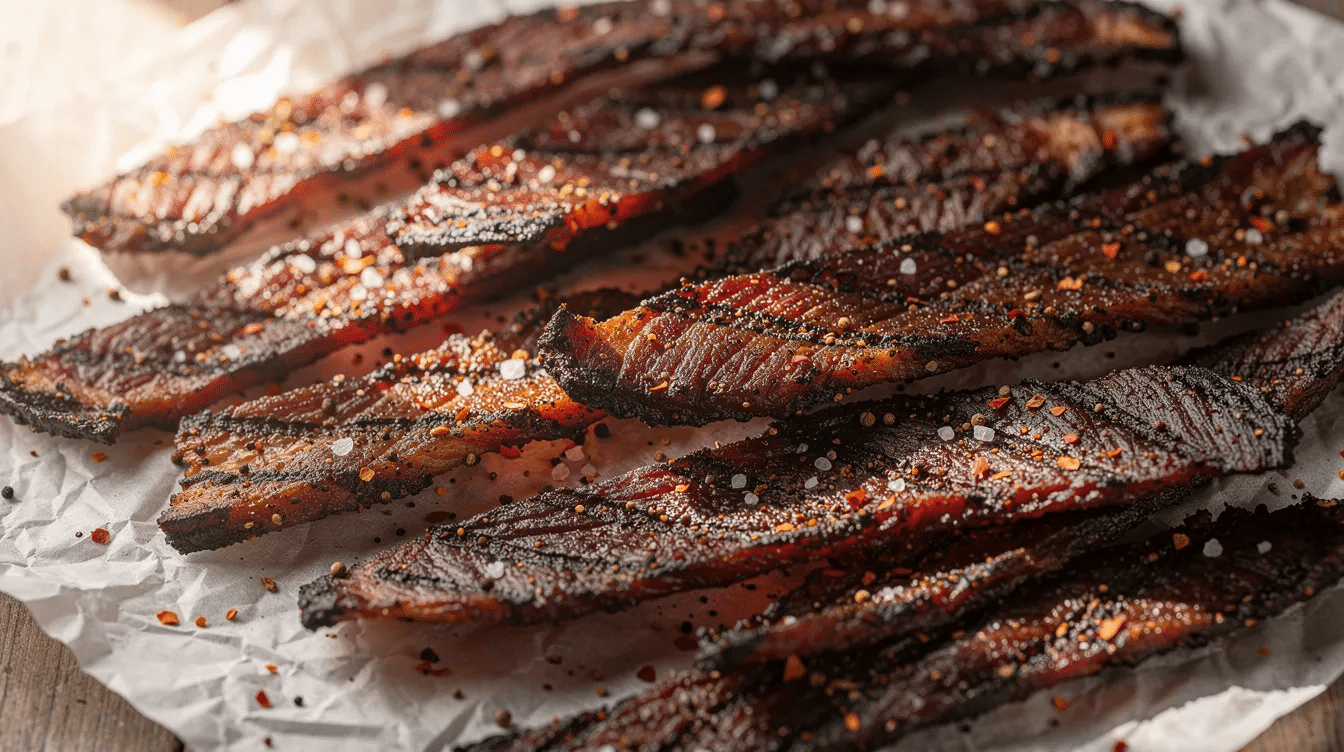
If you’ve ever tasted smoked beef jerky next to a standard dehydrated version, you already know they’re different animals entirely. Smoking doesn’t just dry the meat-it layers in complex smoke flavor, builds a deeper bark, and creates a chew that a countertop dehydrator simply can’t replicate. But here’s the catch: the wrong cut of meat can sabotage the entire process.
The ideal temperature to smoke beef jerky sits between 160°F and 180°F, a range where you’re simultaneously drying, cooking, and infusing flavor. At those temperatures, fat doesn’t render cleanly-it oxidizes. Connective tissue stays tough. And uneven slices mean half your batch is brittle while the other half is still raw in the center.
That’s why meat selection is the single most important decision you’ll make before firing up your smoker. Lean meat with consistent grain, minimal connective tissue, and a structure that absorbs smoke well will outperform a premium steak every time in the jerky making process.
In this guide, we’ll break down the 7 best meat cuts for jerky smoker use, compare them head-to-head, and help you pick the right one based on your experience level, budget, and flavor preferences.
How We Chose the Best Meat for Smoking Jerky
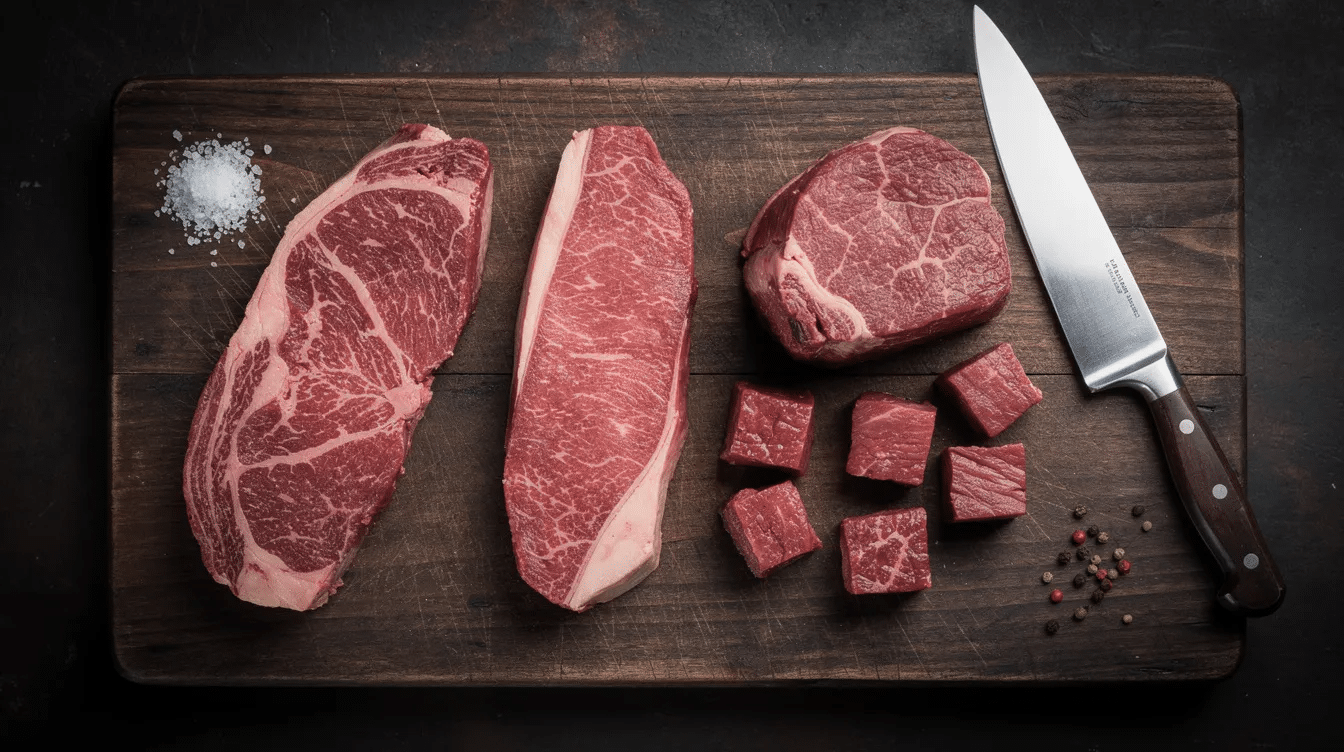
Not every lean cut of beef makes great jerky. We evaluated cuts across seven criteria that matter specifically for smoking meat at low temperatures over long sessions.
Fat Content
Fat in meat can spoil quickly, reducing jerky shelf life significantly. Excess fat in jerky causes rancidity and spoilage, even when everything else is done right. Lean cuts of meat ensure longer-lasting jerky because protein dries and stabilizes, while fat oxidizes. Choosing lean meat is crucial for safe jerky storage-especially if you’re not vacuum-sealing every batch.
For reference, eye of round comes in around 2–4% fat when trimmed, while flank steak can hit 8–10%. That gap matters.
Smoke Absorption
Dense, lean muscle fibers absorb smoke compounds better than fat-marbled or loose-grained cuts. The tighter the grain, the more evenly smoke penetrates the surface and locks in. Cuts with very little fat and minimal moisture barriers let smoke do its job without interference.
Texture After Smoking
Smoking jerky is best done at low temperatures between 150°F and 180°F. Maintaining a low temperature helps effectively remove moisture from jerky without cooking the exterior into a hard shell. At these temps, grain direction and connective tissue dictate whether you end up with tender jerky or something that feels like chewing leather.
Slice meat against the grain for tender jerky texture. That single technique transforms even tougher round cuts into something enjoyable.
Availability and Cost
We prioritized cuts you can actually find. Round cuts and flank steaks are stocked at most grocery chains and big box stores. More unusual options like lifter or blade meat may require a trip to your local butcher.
Slicing Characteristics
Uniform thickness is non-negotiable for even smoking. Cylindrical or flat cuts allow you to get consistent ¼-inch slices, and learning how to slice meat for jerky like a pro makes it much easier to keep those cuts uniform. Irregularly shaped muscles create uneven jerky strips that dry at different rates.
Home-made smoked jerky made from lean cuts typically lasts 1–2 months when stored properly at room temperature. Higher-fat cuts may only last 1–2 weeks without refrigeration. Understanding how long beef jerky really lasts and when it goes bad will help you store it confidently. The leaner the starting meat, the longer your finished jerky stays safe and flavorful.
7 Best Meat Cuts for Jerky Smoker
1. Eye of Round
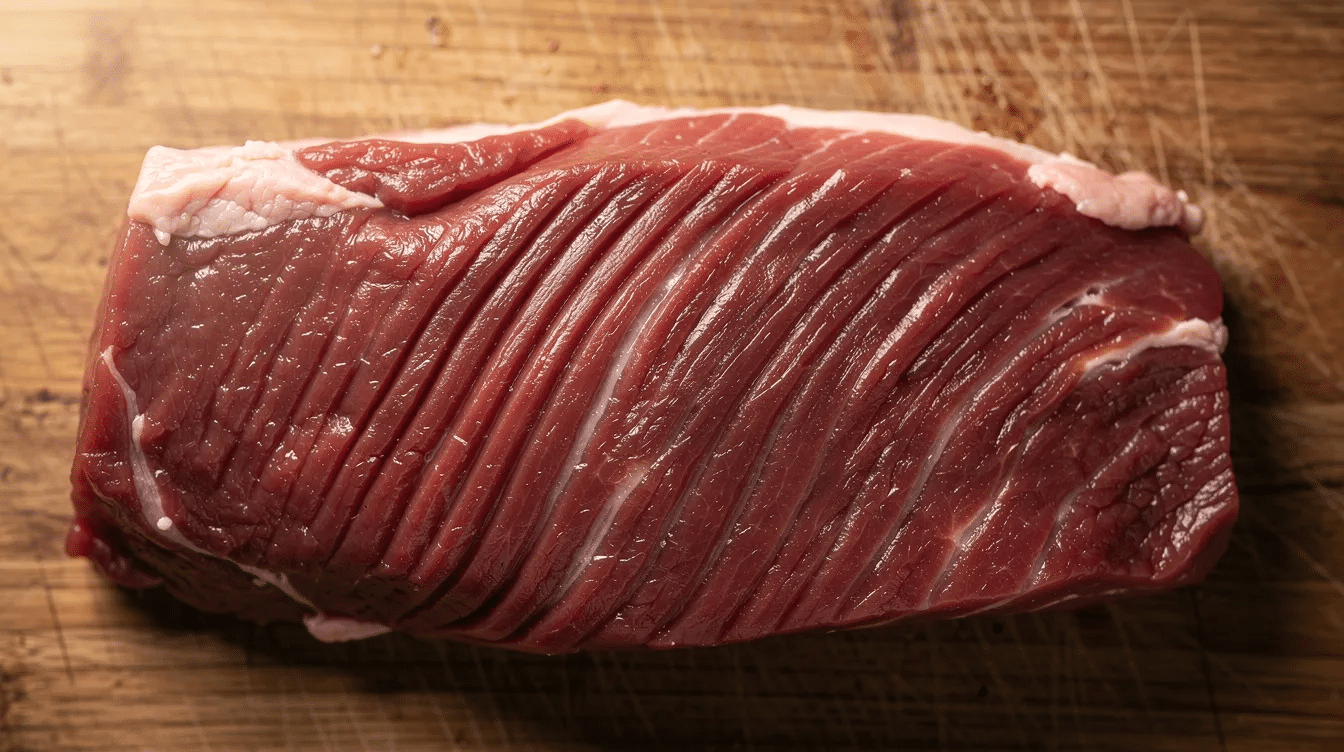
Eye of round is the best cut for beef jerky, and it’s the gold standard for smoking. This beef eye cut is a single oval muscle from the round primal-a cylindrical, compact piece from the upper rear leg of the cow. It has almost no marbling, virtually no fat cap, and a tight, consistent grain that runs straight through the length of the muscle.
If you want to make your own beef jerky with predictable results every time, this is where you start.
Why It Stands Out
Eye of round has a near-perfect lean-to-flavor ratio for smoking. At roughly 2–4% intramuscular fat when trimmed, it dries uniformly without pockets of moisture or grease. The dense muscle fibers absorb smoke exceptionally well, resulting in jerky that carries smoke flavor deep into each strip rather than just on the surface.
Best For
First-time jerky smokers and anyone who wants consistent, repeatable results. Because the shape and grain are so uniform, eye of round eliminates most of the variables that trip up beginners.
Key Strengths
Most predictable drying times of any cut
Easy to slice uniformly against the grain for more tender jerky
Absorbs smoke flavor exceptionally well thanks to tight fiber structure
Minimal fat content means longer storage life
Handles sweet marinades and sticky glazes without falling apart
Freezing the meat for 30 to 60 minutes helps in achieving thin, uniform slices-a tip that works especially well with this cylindrical cut.
Possible Limitations
Less inherent beef flavor than fattier cuts, making it more reliant on your beef jerky marinade or rub
Can become brittle if over-smoked or left in the smoker too long
Strip length is limited by the cylinder diameter, though diagonal cuts help
2. Top Round (London Broil)
Top round is commonly used for making beef jerky, and for good reason. Often marketed as london broil at the meat counter, this large muscle sits adjacent to the eye of round in the round primal. It’s slightly more marbled-around 4–6% fat when trimmed-but still qualifies as a lean cut.
Professional jerky makers gravitate toward top round because of its size. A single round roast can yield a massive batch of jerky strips with minimal waste.
Why It Stands Out
The large, consistent shape of top round makes it ideal for batch smoking. You get long, even strips from a single piece, and the slightly higher fat content compared to eye of round gives the finished jerky a touch more richness without crossing into spoilage territory.
Best For
Large batch smoking and anyone producing jerky for gifting, sharing, or stocking up. If you’re making beef jerky for a group, top round is your workhorse.
Key Strengths
Excellent smoke retention across long smoking sessions
Economical per pound-one of the cheapest round cuts available
Reliable texture when smoked properly at 160–180°F
Widely available at most butchers and grocery stores
Large enough to fill an entire smoker rack in one go
Possible Limitations
Requires careful slicing against the grain for the best texture
Can become tough if over-smoked or cut too thick
More external fat cap trimming needed compared to eye of round
3. Lifter (Blade Meat)
The lifter cut comes from the rib primal and blade region-a less common but highly rewarding choice for smoking. When trimmed properly, this thin, flat cut delivers some of the most intensely beefy smoked jerky you’ll ever taste.
You won’t find this at most grocery chains. Ask your local butcher to cut lifter meat or blade cap for you, and specify that you want it trimmed for jerky.
Why It Stands Out
The flavor enhancement you get when smoking lifter is exceptional. This cut has more inherent beefiness than any of the round cuts, and smoking amplifies that intensity. The thin profile means smoke penetrates quickly and thoroughly.
Best For
Experienced smokers who want a premium flavor profile. If you’ve already mastered eye of round and top round, lifter is your next step up in the jerky making journey.
Key Strengths
Rich, beefy flavor intensified by the smoking process
Naturally tender texture after smoking
Thin, flat shape allows even smoke exposure across the entire strip
Quick smoking time due to natural thinness-saves hours compared to thicker cuts
Creates delicious jerky that stands out from standard round-cut batches
Possible Limitations
Harder to find at regular grocery stores or big box stores
More expensive than round cuts
Higher intramuscular fat requires careful trimming to avoid off-flavors in storage
Smaller individual pieces make large batch consistency challenging
4. Bottom Round
Bottom round comes from the inside leg muscle on the lower portion of the hind leg. It’s the most affordable of the round cuts and the go-to for budget-conscious jerky makers who want to fill their smoker without emptying their wallet.
This cut often gets sold as a pot roast, so look for it in the roast section of your grocery store if you’re exploring what meat to use for beef jerky beyond the usual options.
Why It Stands Out
Bottom round offers the best value for money when smoking large batches. The cut is dense and lean when trimmed, and while it won’t win any tenderness awards, it produces solid smoked beef jerky that holds up well in storage.
Best For
Budget-conscious smokers and beginners practicing their technique. Bottom round is forgiving enough to handle slight temperature swings while you learn to manage your pellet smoker or electric smoker.
Key Strengths
Most affordable of all the round cuts
Good smoke absorption due to dense muscle fibers
Large size perfect for batch smoking-one roast can fill multiple racks
Forgiving for temperature variations during the smoking process
Works well with aggressive marinades that add flavor and help tenderize
Bottom round is the least tender of the round cuts, but it’s still great for jerky. A longer soak in a bold beef jerky marinade with soy sauce, garlic, and black pepper helps soften the fibers significantly.
Possible Limitations
Toughest chew of the round cuts when sliced too thick
Requires longer marinating-at least 12 hours-for acceptable tenderness
Coarser muscle fiber can make chew more laborious
Thicker slices need extended smoking time to dry fully
5. Venison
Venison is exceptionally lean and is one of the best meats for jerky. Wild game meat from deer hindquarters and loin often comes in under 3% fat, making it leaner than even the trimmest beef round cuts. For hunters looking to preserve their harvest, venison jerky is a natural fit for the smoker, much like making elk jerky in a food dehydrator for another lean, wild option.
Why It Stands Out
The natural leanness of venison means smoke flavor adheres intensely to the surface-there’s no fat barrier to buffer or dilute the smokiness. The result is deeply flavored, intensely smoky jerky with a distinctive character you can’t get from beef.
Best For
Hunters who want to use their harvest and anyone seeking a unique, lean jerky option that breaks away from standard beef.
Key Strengths
Extremely lean with minimal fat-often under 3%
Distinctive flavor enhanced and mellowed by smoking
Natural, organic perception for health-conscious eaters
Excellent shelf life when smoked properly due to low fat content
High protein-to-fat ratio makes it one of the most nutritious jerky options
Possible Limitations
Limited availability for consumers who don’t hunt-specialty suppliers can be expensive
Strong game flavor that not everyone enjoys
Variability in meat quality depending on the animal’s age and diet
Wild-harvested game may carry higher bacterial loads due to less controlled initial chilling
Not a direct substitute if your smoked beef jerky recipe is calibrated for beef’s flavor profile
If you’re new to venison jerky, try blending your usual marinade ingredients with a bit of extra sweetness (brown sugar or honey) to balance the gaminess.
6. Sirloin Tip
Sirloin tip-also called round tip or knuckle-sits at the front of the round primal, just below the sirloin. It’s a cut of beef that flies under the radar for jerky but delivers a sweet spot of tenderness and leanness that’s hard to beat.
Sirloin tip is considered a lean, affordable option for jerky, typically coming in at 5–8% fat when well trimmed. The fiber structure is finer than bottom round, which translates to a smoother chew in the finished product.
Why It Stands Out
This cut balances tenderness and smoke absorption better than most. It’s lean enough for long shelf life but has enough structure to create satisfying, chewy jerky strips without being tough. The fine grain absorbs both marinades and smoke evenly.
Best For
Jerky enthusiasts seeking premium texture and flavor without the premium price tag of flank steak. It’s a great middle ground for gift batches or when you want something that will taste great across a wide range of palates.
Key Strengths
Good tenderness relative to other round cuts
Absorbs marinades and smoke well due to fine grain
Consistent texture throughout the muscle-no tough patches or gristly surprises
Less fibrous than bottom round, producing a cleaner bite
Versatile: works for both chewy (with-grain) and tender (against-grain) styles
Possible Limitations
Can be difficult to locate-not every store stocks it separately from top sirloin
Often confused with sirloin steaks, which are fattier, leading to purchasing mistakes
More expensive per pound than bottom round or top round
Requires good trimming to remove any outer muscle fat
7. Flank Steak
Flank steak is known for its deep flavor but requires careful trimming of fat. This flat, wide cut from the abdominal region of the cow has the most pronounced grain of any common jerky cut, a bold mineral-rich flavor, and a reputation as the best meat for flavor-forward smoked jerky.
At 8–10% fat (trimmed), flank sits at the upper end of what’s acceptable for jerky. But the flavor payoff is significant.
Why It Stands Out
Flank steak produces the boldest, most intensely beefy jerky of any standard cut. When smoked, those flavor compounds concentrate and deepen. In blind comparative tests, flank consistently rates highest for raw flavor intensity.
Flank steak should be sliced against the grain for jerky-this is non-negotiable. The long, prominent grain fibers will be impossibly chewy if you slice with the grain.
Best For
Experienced jerky makers wanting maximum flavor impact. If you’ve dialed in your smoker technique and want to produce premium small-batch jerky, flank is the move.
Key Strengths
Intense beef flavor enhanced dramatically by smoking
Premium jerky option-ideal for gifts or special batches
Excellent smoke penetration through the flat muscle structure
Among the most flavorful of all great recipes for homemade jerky
Possible Limitations
Most expensive common option for jerky
Requires careful grain-direction slicing with a very sharp knife
Fat cap on one side must be trimmed thoroughly to prevent spoilage
Higher fat content means shorter shelf life compared to round cuts
Shorter strips unless you use creative diagonal slicing
Quick Comparison of the Best Jerky Smoking Meats
Here’s how each cut stacks up across the criteria that matter most when choosing the best meat for jerky smoker use:
Cut
Fat % (Trimmed)
Flavor
Tenderness
Cost
Best For
Eye of Round
2–4%
Mild
Good
$$
Beginners, consistent results
Top Round
4–6%
Moderate
Good
$
Large batch smoking
Lifter (Blade)
6–10%
Rich
Very Good
$$$
Premium flavor, quick smoking
Bottom Round
3–5%
Mild
Fair
$
Budget-conscious smoking
Venison
<3%
Distinctive
Good
$$–$$$$
Lean, natural jerky
Sirloin Tip
5–8%
Moderate
Very Good
$$
Balanced texture and flavor
Flank Steak
8–10%
Bold
Good (sliced right)
$$$
Maximum flavor intensity
Quick summary:
Eye of Round – Best for beginners and consistent results
Top Round – Best for large batch smoking
Lifter – Best for premium flavor and quick smoking
Bottom Round – Best for budget-conscious smoking
Venison – Best for lean, natural jerky
Sirloin Tip – Best for balanced texture and flavor
Flank Steak – Best for maximum flavor intensity
How to Choose the Right Meat for Your Smoker
Knowing the seven best cuts is step one. Matching the right cut to your situation is where the real gains happen.
Choose Based on Your Experience Level
If you’re new to making jerky in a smoker, start with eye of round or top round. These cuts are forgiving: low fat, simple grain, easy to slice, and widely available. They let you focus on mastering heat control, smoke timing, and slice thickness without worrying about fat rendering or off-flavors.
Once you’ve nailed the basics, expand into flank steak, lifter, or sirloin tip. These cuts demand more precise trimming, tighter temperature control, and a better understanding of how grain direction affects the finished product.
Think of it like cooking steaks: you master a basic ribeye before you attempt dry-aging a tomahawk.
Choose Based on Batch Size
Large batches favor large, uniform cuts. Top round and bottom round are ideal here-one roast can yield dozens of jerky strips with consistent size and grain. Eye of round works too, though the cylindrical shape limits strip length.
For small batches, premium cuts like lifter or sirloin tip shine. You’re paying more per pound, but you don’t need much to fill a single rack.
If you’re considering ny strip steaks or top sirloin for jerky, know that these are generally too fatty and too expensive for efficient batch smoking. They’re better left on the grill.
Choose Based on Smoking Time Available
Smoke beef jerky for 6 to 10 hours until desired dryness is achieved. That’s a wide range, and your cut selection directly affects where in that window you’ll land.
Thinner, flatter cuts like lifter and well-sliced flank steak dry faster-often in 4–6 hours. Thicker round cuts can push toward 8–10 hours, especially if sliced at a full ¼ inch.
Use wire racks to lay out jerky strips in the smoker with space between each piece. Air circulation is as important as smoke exposure-crowded racks create uneven drying no matter what cut you’re using.
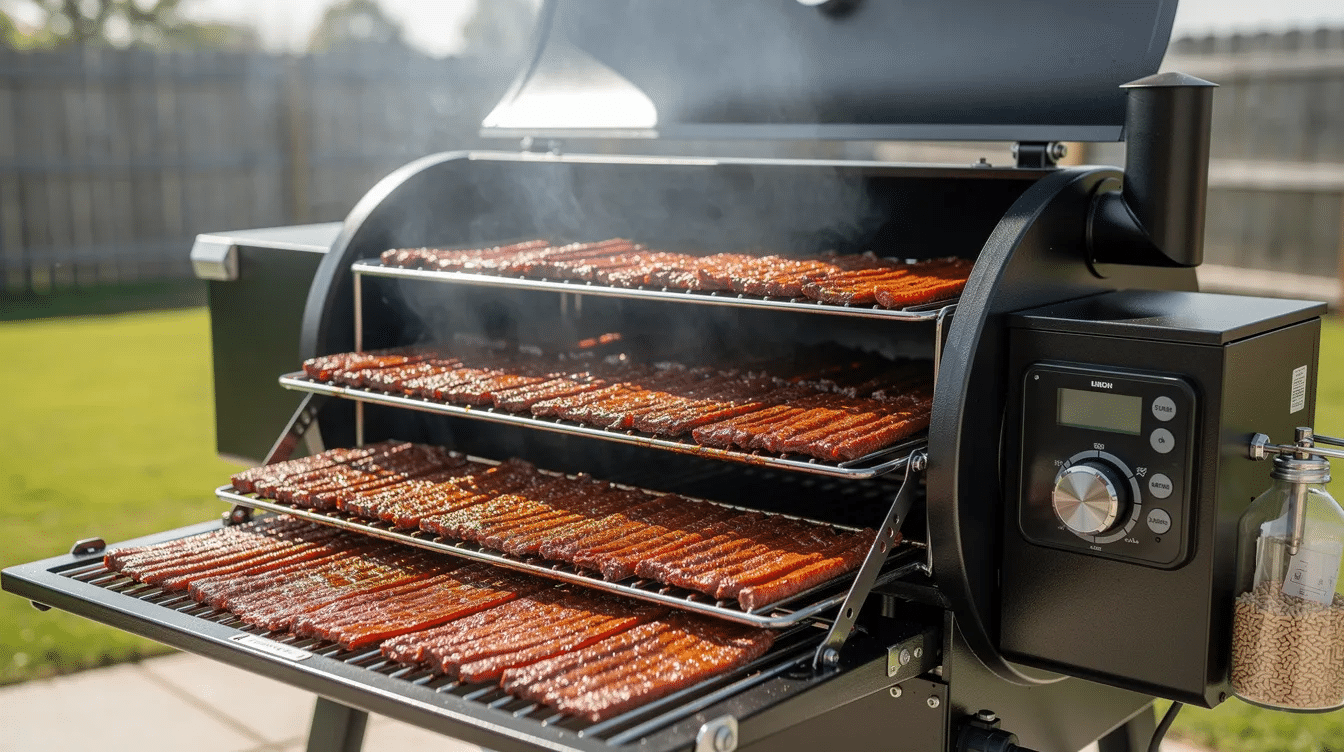
Whether you’re running a pellet smoker, an electric smoker, or a traditional offset, maintaining steady temperature is more critical than the specific heat source. Add wood chips (hickory, mesquite, or applewood) to intensify the smoke profile based on your flavor preference.
Choose Based on Flavor Preferences
For mild, everyday jerky where the marinade and smoke do the talking, eye of round or top round provide the cleanest canvas. Your soy sauce, Worcestershire, and garlic-based marinades will come through loud and clear.
For bold, steak-forward flavor, flank steak delivers in ways no other cut can. Venison offers something completely different-a wild, earthy character that pairs beautifully with juniper, rosemary, or black pepper rubs, and it also shines in a variety of homemade jerky recipes for meat lovers.
Some jerky makers add liquid smoke to their marinade for an extra layer, but when you’re using an actual smoker, this is usually unnecessary and can over-saturate the flavor.
A Note on Other Meats and Methods
While beef dominates the jerky world, it’s worth mentioning alternatives. Pork jerky made from pork tenderloin-a naturally tender cut with very little fat-can produce surprisingly good results in a smoker, though it must reach 165°F internally for safety. Brisket jerky works when you use the flat (leaner portion) and trim the fat cap aggressively, though the outer muscle of a full brisket packer is too fatty for proper jerky. If you’d rather dehydrate than smoke, you can follow step‑by‑step dehydrator jerky recipes for perfect homemade snacks or even branch into making the best elk jerky in a food dehydrator for wild game.
For those who prefer not to slice their own strips, ground meat offers another path. Using a jerky gun, you can extrude seasoned ground beef into uniform strips. Ground beef jerky won’t have the same fibrous chew as whole-muscle jerky, but it’s a legitimate method-especially for those using meat slicers-averse kitchens. If you go this route, choose the leanest ground beef available (90/10 or leaner) and consider adding curing salt to the mix for food safety.
Some people also experiment with making jerky in an air fryer, which can work in a pinch but won’t deliver the same smoke flavor depth as a dedicated smoker, whereas choosing the best food dehydrator for jerky gives you more control over low-and-slow drying.
And while you can certainly review recipe variations online for things like bbq sauce glazed jerky or teriyaki-style batches, paying attention to what temperature to dehydrate your jerky is just as critical as recipe choice-the fundamentals always come back to the cut of meat you start with.
Essential Tips for the Jerky Making Process
Regardless of which cut you choose, these practices apply across the board:
Slicing: Use a very sharp knife or have your butcher slice the meat for you. Partially freeze the meat for 30–60 minutes before slicing-this firms up the muscle just enough to get clean, even cuts. Slice meat against the grain for more tender jerky, or with the grain if you prefer a chewier, more traditional style.
If you don’t have a sharp knife or prefer precision, many butchers will slice to your specifications. Just ask them to butcher slice it at ⅛ to ¼ inch thickness.
Marinating: Marinate meat for at least 12 hours for best flavor. Use a plastic bowl for marinating to avoid chemical reactions with acidic marinade ingredients. Massage the marinade into the meat for even flavor distribution, then cover with plastic wrap and store in the fridge overnight.
When your marinated meat is ready, remove the jerky strips and pat them dry with paper towels. Discard the marinade after soaking to prevent spoilage-never reuse it. Blot away any excess marinade from the surface before placing strips on the smoker racks.
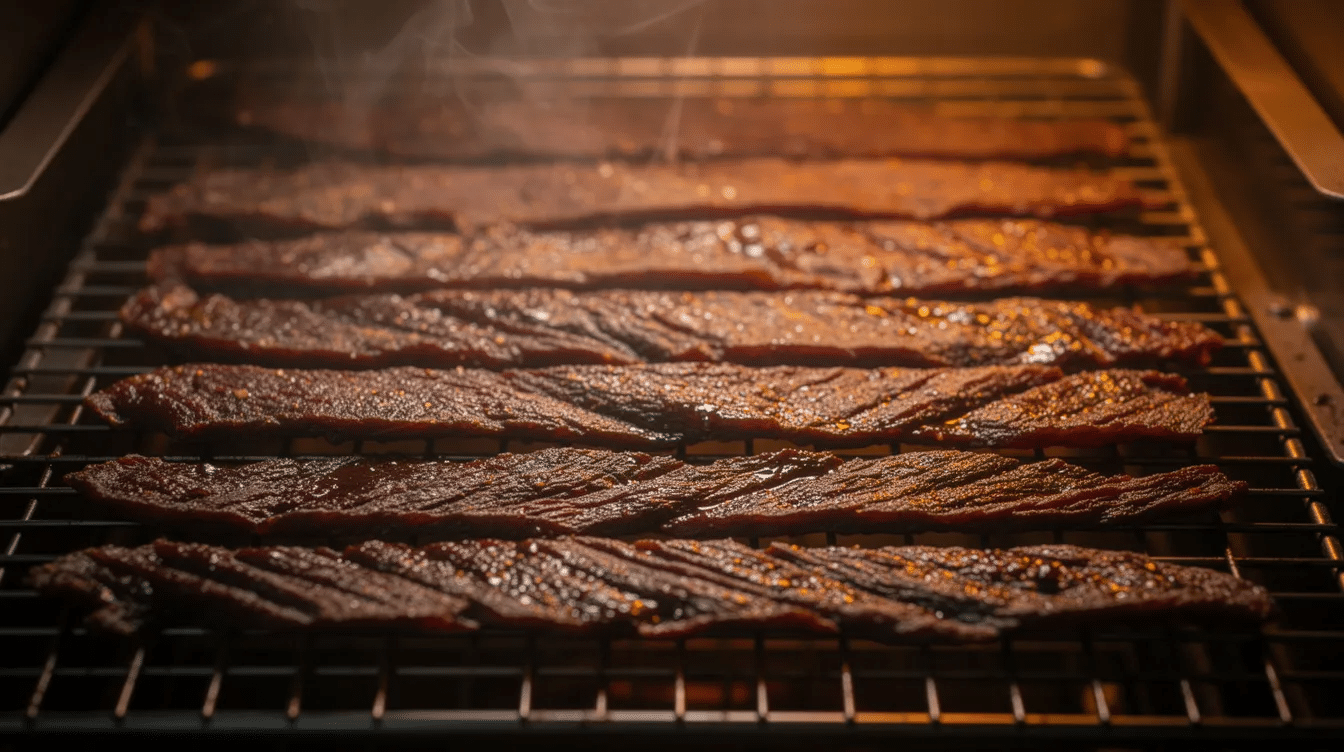
Smoking: The ideal smoking temperature is 160–180°F. Keep it low and steady. The jerky turns from pliable to firm as moisture leaves the muscle. You’ll know it’s done when a strip bends and cracks slightly without breaking in half.
Storage: Once cooled completely, store in airtight containers or vacuum-sealed bags. Properly made homemade jerky from lean cuts lasts 1–2 months at room temperature. Higher-fat cuts should be refrigerated and consumed within 1–2 weeks, and understanding how long beef jerky lasts in the fridge and how to extend its life can help you maximize each batch.
Which Meat Is Best for You?
Still not sure? Here’s the decision simplified:
Choose Eye of Round if you want the most reliable results for smoking. It’s the best meat for beginners, and experienced makers keep coming back to it for its consistency. This single oval muscle delivers every time.
Choose Top Round if you need to smoke large quantities economically. It’s the workhorse of the jerky world and a staple for anyone making jerky regularly.
Choose Lifter if you want premium flavor and have smoking experience. The tender cut rewards skill with rich, complex smoked beef flavor.
Choose Bottom Round if budget is your primary concern. It’s the least tender of the round cuts, but proper marinating and slicing technique make it perfectly viable-and you can’t beat the price.
Choose Venison if you want the leanest, most natural option. Venison jerky is in a category of its own for hunters and wild game enthusiasts.
Choose Sirloin Tip if you want balanced texture without breaking the bank. A reliable middle ground that produces jerky that will taste great for nearly everyone.
Choose Flank Steak if flavor is everything. It demands more attention but rewards you with the most intensely flavored smoked jerky possible.
For those looking at required recipe ratings or community feedback, eye of round and top round consistently top the charts in both home and commercial jerky production, just as certain top‑rated beef jerky brands dominate store shelves. They’re the cuts that have earned their reputation through thousands of batches.
Final Thoughts
Smoking jerky requires lean cuts that absorb smoke well, hold together during hours of low-temperature drying, and deliver a finished product that’s safe to store and satisfying to eat. Every cut on this list meets those criteria, but they each bring something different to the table.
Eye of round remains the best all-around choice for most smokers-whether you’re making your own jerky for the first time or your hundredth. It’s lean, consistent, affordable, and takes on smoke beautifully.
But the best part of making jerky at home is experimentation. Try different cuts. Adjust your marinade. Swap your wood chips. Dial in your smoker’s quirks. The difference between good jerky and delicious jerky often comes down to the small adjustments you make batch after batch.
Proper slicing and temperature control matter just as much as cut selection. Nail those fundamentals first, then let the meat do the rest.
Pick a cut from this list, fire up your smoker, and make your first (or next) batch of smoked beef jerky this weekend. Your future self-snacking on perfectly chewy, smoke-kissed strips-will thank you.
DannyContent Writer
Hey there, since 2016, my mission has been to provide you with the information and guides you need to make food dehydrating simple and fun. Whether you're a newbie or a seasoned pro, my site offers helpful guides, reviews, and recipes to enhance your dehydrating experience. I take pride in only recommending products I believe in, ensuring my readers' trust. As an affiliate of various programs, including Amazon Associates, your support helps me continue providing quality content. Thanks for stopping by, and happy dehydrating!