We earn a commission if you make a purchase, at no additional cost to you.
09/22/2026 04:39 pm GMT
🍊 Dehydrated Food Info Finder — Temperatures & Drying Times
Choose a category, then pick a food to see its drying temperature and time.
⚠️ Safety Disclaimer: Drying times are estimates and vary based on slice thickness, food moisture content, humidity, and your dehydrator model. Always check for doneness before storing — food should feel dry, leathery, or brittle with no moist spots. Improperly dried food can harbour mould and bacteria. For meat and poultry, follow USDA safe internal temperature guidelines: beef and pork to 160°F (71°C), poultry to 165°F (74°C). Use a food thermometer when in doubt. Store all dehydrated foods in airtight containers in a cool, dark place and discard anything showing moisture, mould, or off odours.
When disaster strikes, the last thing you want is to scramble for sustenance. Freeze dried foods have become the cornerstone of smart emergency planning, offering shelf-stable nutrition that can sit in your pantry for decades and be ready to eat in under ten minutes.
Quick Answer: Why Freeze Dried Food Belongs in Your Emergency Plan
Freeze dried foods represent the fastest, most efficient way to build an emergency kit with meals lasting 20 to 30 years. Modern freeze dried meals, fruits, vegetables, and proteins require nothing more than water to transform into complete meals. There’s no chopping, no refrigeration, and no complex cooking involved. You simply add boiling water, wait about 8 to 12 minutes, and eat.
Consider the scenarios that catch families off guard. The Texas winter storms of 2021 left millions without power for days. The 2020 pandemic emptied grocery shelves for weeks as supply chains crumbled. Hurricane Ian in 2022 displaced over 200,000 evacuees along the Gulf and Atlantic coasts. California’s 2020 wildfire season forced 80,000 residents from their homes with almost no notice. In each case, those who had prepared with shelf-stable food fared significantly better than those who hadn’t.
A basic emergency supply should cover 2,000 to 2,600 calories per adult per day for at least seven days. Freeze dried meals efficiently deliver 200 to 600 calories per serving, with a single pouch or can often providing multiple servings. Unlike canned goods weighing one to two pounds per meal equivalent, freeze dried pouches tip the scales at just four to eight ounces. This makes them ideal for 72-hour go-bags, vehicle kits, and home storage alike. Store them below 76°F in a cool, dark, dry place, and they’ll maintain their integrity for decades.
Freeze Dried Food 101
The freeze drying process begins by rapidly frozen food being placed under deep vacuum conditions. During this phase, ice crystals convert directly to water vapor through sublimation, bypassing the liquid phase entirely. This removes 95 to 99% of moisture while preserving the cell structure, original texture, vibrant colors, and up to 97% of nutrients like vitamins A, C, and B-complex.
This technology differs dramatically from standard dehydration, which applies heat up to 140°F to evaporate moisture. Heat-based drying often toughens foods, degrades flavors through Maillard reactions, and diminishes heat-sensitive nutrients by 30 to 50%. Dehydrated food typically lasts 5 to 10 years, while freeze dried foods can maintain quality for 25 to 30 years under proper storage.
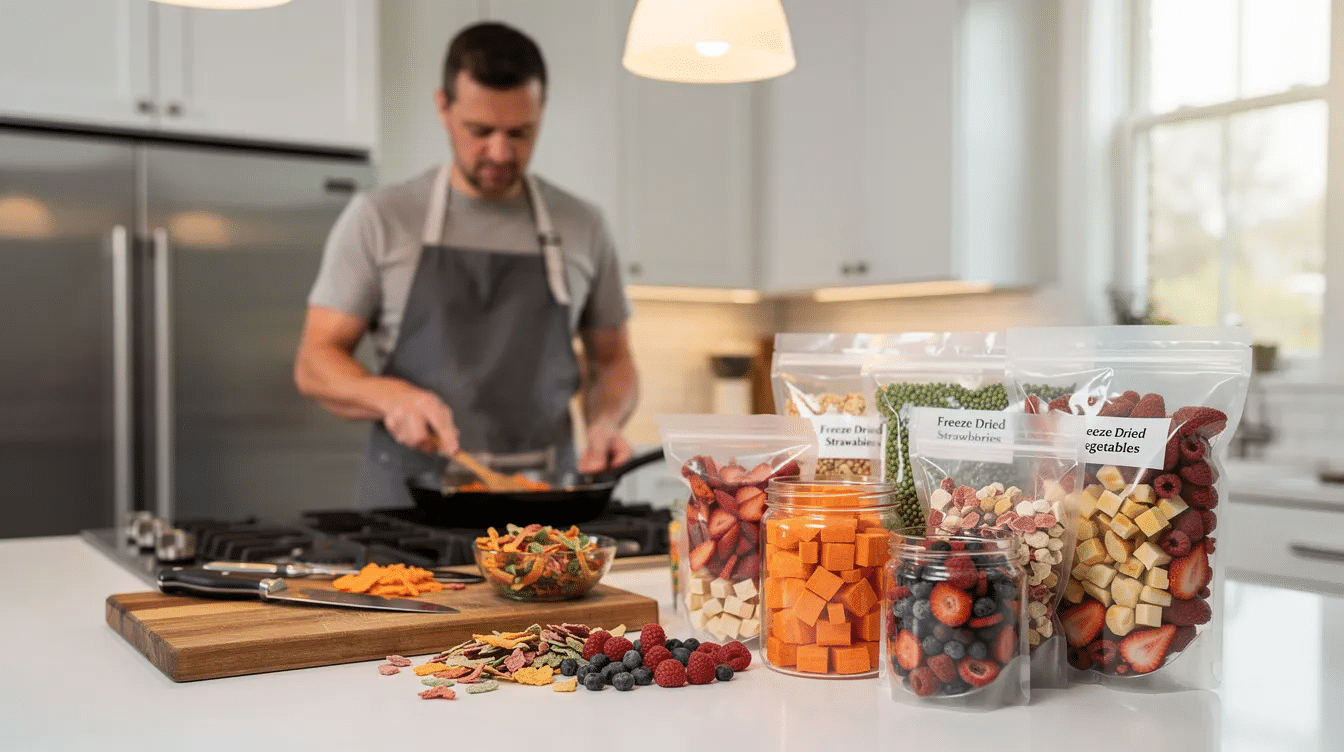
What do people commonly buy? The most popular freeze dried meals include beef stroganoff, chicken alfredo pasta, scrambled eggs with bacon, and hearty soups. For produce, freeze dried fruits like strawberries, blueberries, and bananas retain their flavor remarkably well. Freeze dried vegetables including green beans, corn, peas, and carrots rehydrate to near-fresh quality. Dairy products such as shredded cheese and yogurt bites round out popular selections. Most commercial emergency products are packaged as just add water meals, while bulk ingredients like plain chicken or mixed vegetables serve as recipe bases requiring additional cooking.
Why Freeze Dried Foods Are Ideal for Emergencies
Emergency situations demand food that works when infrastructure fails. Whether you’re facing coastal storms, West Coast or Alaskan earthquakes, sudden job loss, or supply chain disruptions like the 2021 Suez Canal blockage, freeze dried foods provide lightweight, nutrient-dense solutions requiring minimal resources during chaos.
The extended shelf life makes these products exceptional for long term preparedness. Many sealed pouches and #10 cans are rated for 20 to 30 years when stored at or below 72 to 76°F, away from light and moisture. This dramatically outpaces canned goods at 2 to 5 years and dehydrated items at 10 to 15 years. For emergency food supply planning, this longevity means less rotation, less waste, and more peace of mind.
Convenience shines during actual emergencies. These dried meals are fully cooked before packaging. During power outages or evacuations, you only need water and a basic heat source. A camp stove, Sterno can, or small propane burner handles everything. If you can heat water, you can prepare full meals. Portability matters too. A 72-hour kit’s worth of freeze dried pouches weighs under five pounds versus twenty or more for equivalent canned goods.
Modern freeze dried meals deliver balanced macros with approximately 40-50% carbs, 20-30% proteins, and 20-30% fats, plus veggies and dairy. Beyond nutrition, freeze dried fruits and yogurt bites boost morale by providing delicious comfort foods when stress runs high. These small touches matter when everything else feels uncertain.
Short-Term vs Long-Term Storage Planning
Effective food storage layers short-term accessibility with long-term reserves. Your short-term pantry covers 3 to 14 days with items you’d use anyway. Your long-term reserve extends from 3 to 12 months or longer, representing your true emergency buffer.
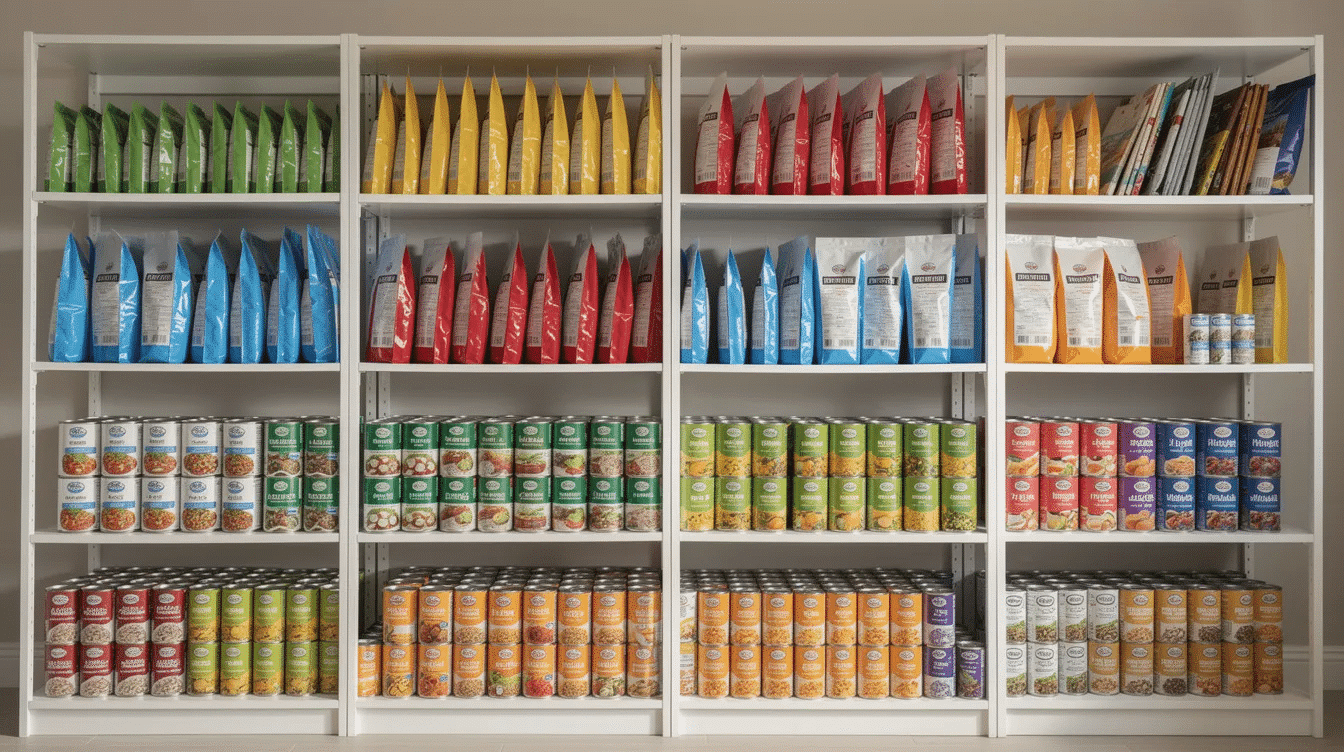
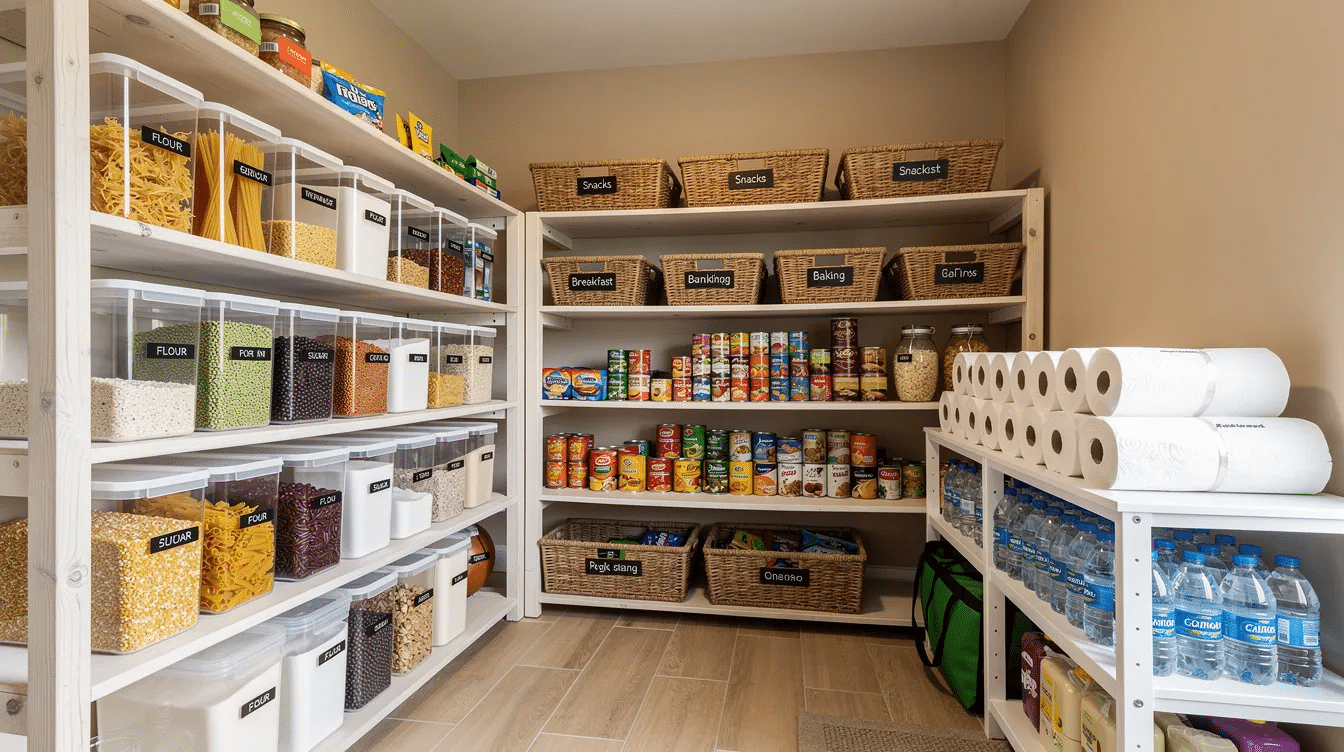
For short-term storage, maintain a mix of regular pantry items alongside freeze dried options and the best foods to dehydrate for long-term storage. Rice delivers roughly 3,600 calories per pound dry. Pasta, canned beans at 380 calories per 15-ounce can, and canned soups provide variety. Add 6 to 12 freeze dried pouches for quick, no-refrigeration meals during power outages when cooking canned goods becomes challenging. FEMA recommends at least 3 days of food per person, but experienced preppers suggest aiming for 7 to 14 days, especially for urban families dependent on external supply chains.
Long term storage shifts focus to #10 cans yielding 25 to 50 servings each, multi-bucket kits with 60 to 1,080 servings, and bulk staples. Oatmeal provides roughly 1,500 calories per pound. Beans deliver 1,400 calories per pound. Mixed vegetables and proteins like diced chicken round out the selection. You can even freeze dry food without a machine to supplement commercial options. The beauty of long-term freeze dried products lies in minimal rotation requirements. Unopened cans last 20 or more years, while opened contents should be used within 6 to 12 months or repackaged with oxygen absorbers.
A concrete example helps illustrate planning. A family of four building a 30-day freeze dried meal base might target 120 entrée servings at roughly 500 calories each. Layer this with 20 pounds of rice providing over 100,000 calories, 10 #10 cans of vegetables, and supplemental canned proteins. Initial investment runs $500 to $800 but amortizes to roughly $0.50 per day over decades.
How to Prepare Freeze Dried Meals Step-by-Step
The rehydration process for most freeze dried meals follows a simple sequence that becomes second nature with practice.
First, check the label for specifics. Most pouches require 1 to 2 cups of water per serving with a stand time of 8 to 12 minutes. Labels vary by manufacturer and meal density, so read before proceeding.
Second, remove any oxygen absorber packet from the pouch or can before adding water. These silica-based packets prevent oxidation during storage but are not edible. Set them aside immediately.
Third, bring water to a rolling boil if possible. Boiling water accelerates rehydration through increased kinetic energy. However, room-temperature or cold water works if heat isn’t available. Expect rehydration times to double, extending to 15 to 25 minutes with cool water.
Fourth, add water slowly while stirring to eliminate dry pockets. Make sure all food contacts the liquid. Seal the pouch or cover your bowl to trap steam and heat, which speeds the process.
Fifth, wait the full specified time. Stir once halfway through. Check the texture after the timer ends. If the food remains firm or chalky, add a small amount of additional water and wait another 2 to 3 minutes. Too much water creates soggy results, so add conservatively.
Concrete examples help calibrate expectations. A typical beef lasagna pouch using approximately 1.5 cups boiling water rehydrates in about 9 minutes. Dense protein entrees like chili mac may need closer to 12 minutes. Mountain House and similar brands provide specific instructions optimized for their formulations.
For snacks, freeze dried fruits like strawberries and blueberries can be enjoyed straight from the pack without rehydration. Many freeze dried vegetables eat dry or need only a brief soak in cool water for use in oatmeal, trail mix, and salads. This flexibility makes them ideal for both emergency situations and everyday convenience.
Using Freeze Dried Ingredients in Everyday Cooking
Freeze dried foods belong in regular cooking routines, not just emergency situations. Using them daily reduces waste, saves money, and ensures your family stays familiar with the taste and preparation methods.
The basic method for ingredients involves a simple pre-soak. Place vegetables or proteins in warm water for 5 to 15 minutes, drain excess liquid, then cook as you would with fresh or thawed items. The process lets you fully rehydrate ingredients to approximate their original texture before incorporating them into dishes.
Consider these practical applications. Toss rehydrated peas and carrots into weeknight soups for an instant veggie boost. Add diced freeze dried chicken to casseroles for protein without defrosting delays. Mix freeze dried berries into pancake batter or yogurt for fresh-like bursts without seasonal costs, and experiment with what foods can be dehydrated for delicious snacks and meals to expand your pantry options.
A 20-minute chicken and rice skillet comes together quickly. Soak rehydrated chicken 10 to 15 minutes while preparing instant rice, then sauté together with broth, garlic powder, and Italian seasonings. For breakfast, a scramble with freeze dried eggs and sausage rehydrates in 10 minutes before frying with onions. If you also store jerky or other dried proteins, know how long dehydrated meat will last so you can rotate it alongside your freeze dried items. Fruit crumbles layer soaked strawberries or peaches under oats, butter, and a pinch of salt for a satisfying dessert.
Enhance flavor with pantry staples. Garlic powder, onion powder, Italian seasoning, hot sauce, bouillon cubes, and various seasonings elevate the base taste of many freeze dried meals. If you also preserve food by drying, a food dehydration chart helps you hit the right times and temperatures for consistent flavor. This regular rotation keeps your long-term food storage fresh while ensuring leftovers and recipes remain familiar to everyone in your household.
Building Your “Be Prepared” Freeze Dried Pantry
Assembling a freeze dried pantry works best in budget-friendly stages rather than one overwhelming purchase.
Stage 1 covers your first week of preparedness. Start with 12 to 18 individual meal pouches covering breakfasts like oatmeal and eggs, plus lunches and dinners featuring pasta dishes and stews. Add 2 to 3 fruit pouches and 2 vegetable pouches. This starter approach costs $100 to $200 and covers roughly 2,000 calories daily for seven days for a solo adult or small household.
Stage 2 expands your base during the first month. Add #10 cans of staples including instant rice at 50 servings per can, potato flakes for energy-dense meals, and mixed vegetables at 25 servings per can. Include at least one protein can such as diced chicken or beef crumbles providing 15 to 20 servings. This stage adds roughly $300 while building toward 30,000 stored calories.
Stage 3 targets a 30-day reserve per person over 3 to 6 months. Focus on 90 to 120 entrée servings mixing savory dishes and breakfasts at 400 to 500 calories each. Add sides like mashed potatoes and snacks including yogurt bites and hot cocoa for morale. Calculate needs at 2,000 to 2,600 calories per adult and 1,500 to 1,800 per child daily, checking labels carefully for calories per serving.
Balance variety across categories. Aim for roughly 40% entrees, 30% staples, 20% produce, and 10% comfort items like baked goods and desserts. This mix prevents menu fatigue while ensuring nutritious meals remain available throughout any extended emergency.
Storage Conditions and Shelf Life
Proper food storage conditions unlock the 20 to 30 year shelf life ratings that make freeze dried foods exceptional for long term storage.
Three factors determine longevity. Temperature should stay cool, ideally 50 to 70°F. Darkness matters because UV light degrades lipids and vitamins over time. Humidity must remain low, meaning no damp basements where moisture can compromise packaging seals. Research suggests 72°F represents the optimal storage temperature, with every 10°F drop potentially doubling product life according to food science models.
Temperature swings present the biggest threat. Garages and attics reaching 90 to 110°F during summer months can halve shelf life even with containers remaining sealed. Interior closets, basement corners with dehumidifiers, and climate-controlled spaces work far better than outdoor storage areas, especially if you also dry foods in a food dehydrator instead of an oven and want your preserved items to last.
Packaging types vary in protection. Steel #10 cans with nitrogen flushing provide maximum protection. Mylar pouches with oxygen absorbers reducing O2 to below 0.1% offer excellent portability. Plastic buckets serve as outer protection for pouches or cans, simplifying stacking and organization, while similar packaging strategies also benefit dehydrating food for lightweight, space-saving storage.
Label every container with purchase date and a clearly visible best-by date. Unopened cans and pouches can sit for decades. Opened containers require use within weeks to 12 months depending on humidity and how well you reseal them. First in, first out rotation keeps your emergency food supply fresh.
Safety, Nutrition, and Best Practices
While freeze drying extends shelf life dramatically, it doesn’t sterilize food. Safe handling and preparation practices still matter.
Keep dried foods dry until use. Once moisture returns during the rehydration process, any surviving microorganisms can become active again. This concern applies particularly to meats and dairy products. Always use clean utensils and safe water. If water quality is questionable, boil it first. Bring rehydrated meats, poultry, and eggs to safe internal temperatures of 165°F if further cooking is required.
Nutrition remains a strength of freeze dried foods. The process preserves 90 to 97% of vitamins and minerals compared to canning’s 50 to 70% retention. However, variety still matters for a balanced diet. Check labels for sodium content, which can run 1,000 to 2,000mg per serving in some prepared meals. Watch for common allergens including milk, soy, wheat, and nuts.
Test meals with your family before emergencies occur. Children and older adults sometimes reject unfamiliar textures or flavors. Familiarity increases consumption by roughly 40% during actual crises according to preparedness research. Make freeze dried ingredients part of regular life so emergency use feels normal rather than stressful.
Final Thoughts: Making “Be Prepared” a Habit, Not a Panic
A modest $200 to $500 investment in freeze dried meals, fruits, vegetables, and meats creates a multi-decade safety net for your household. This pack of nutritious meals requires minimal rotation, minimal space, and minimal ongoing attention.
Start small. Add one extra pouch per grocery trip or purchase a single starter kit. Build gradually toward multi-week resilience without straining your budget. Remember that freeze dried food serves double duty, supporting both emergencies and everyday conveniences like busy weeknights and outdoor adventures.
Take action this week. Inventory your current pantry, identify gaps in your emergency preparedness, and choose your first set of freeze dried items to add. The energy you invest now pays dividends when life throws unexpected challenges your way. Being prepared isn’t about panic. It’s about having the stuff you need when you need it most.
DannyContent Writer
Hey there, since 2016, my mission has been to provide you with the information and guides you need to make food dehydrating simple and fun. Whether you're a newbie or a seasoned pro, my site offers helpful guides, reviews, and recipes to enhance your dehydrating experience. I take pride in only recommending products I believe in, ensuring my readers' trust. As an affiliate of various programs, including Amazon Associates, your support helps me continue providing quality content. Thanks for stopping by, and happy dehydrating!