We earn a commission if you make a purchase, at no additional cost to you.
09/22/2026 04:39 pm GMT
🍊 Dehydrated Food Info Finder — Temperatures & Drying Times
Choose a category, then pick a food to see its drying temperature and time.
⚠️ Safety Disclaimer: Drying times are estimates and vary based on slice thickness, food moisture content, humidity, and your dehydrator model. Always check for doneness before storing — food should feel dry, leathery, or brittle with no moist spots. Improperly dried food can harbour mould and bacteria. For meat and poultry, follow USDA safe internal temperature guidelines: beef and pork to 160°F (71°C), poultry to 165°F (74°C). Use a food thermometer when in doubt. Store all dehydrated foods in airtight containers in a cool, dark place and discard anything showing moisture, mould, or off odours.
Freeze dried fruit is one of the most practical natural ingredients a baker can keep on hand. It delivers intense, concentrated flavor and vivid color to everything from cupcakes to croissants, all without making your batter soggy. Whether you use it as crunchy pieces, fine powder, or rehydrated fruit, it opens up possibilities that fresh fruit and frozen fruit simply can’t match. Below is everything you need to know about baking freeze dried fruit into your favorite recipes.
Key Takeaways
Freeze dried fruit is real fruit with virtually all moisture removed, so it adds bold fruit flavor and natural color to cakes, cookies, and breakfast breads without disrupting liquid ratios in your batter.
You can use freeze dried fruits as whole pieces, crumbs, or freeze dried fruit powder to control both texture and flavor strength. A small amount of freeze dried fruit goes much further than fresh.
Freeze dried fruit works better than most traditional dried fruit or dehydrated fruit for delicate bakes because it is completely dry, very light, and can be used in powdered or chopped forms.
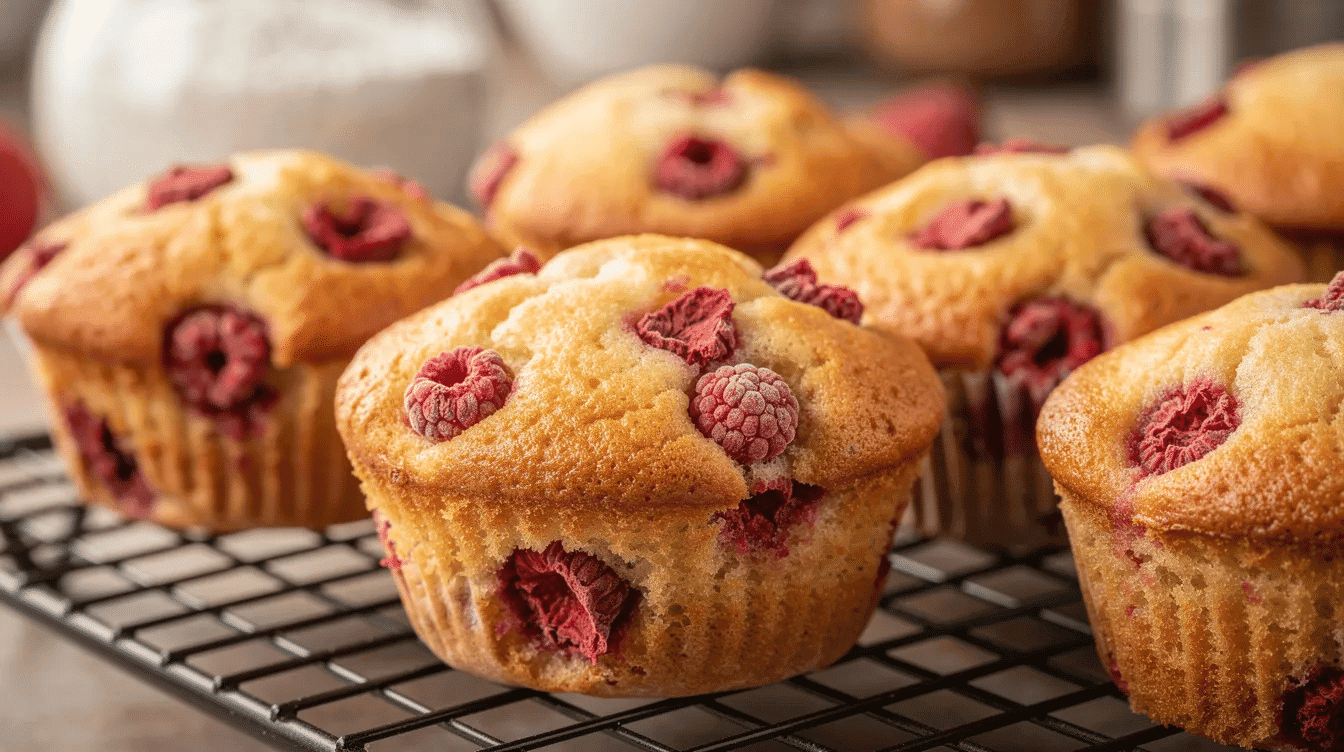
Common options like freeze dried raspberries, freeze dried mango, freeze dried strawberries, and blueberries can be stirred into cake batter, folded into buttercream, or sprinkled on top as a garnish.
What Is Freeze Dried Fruit (and How Is It Different from Dried Fruit)?
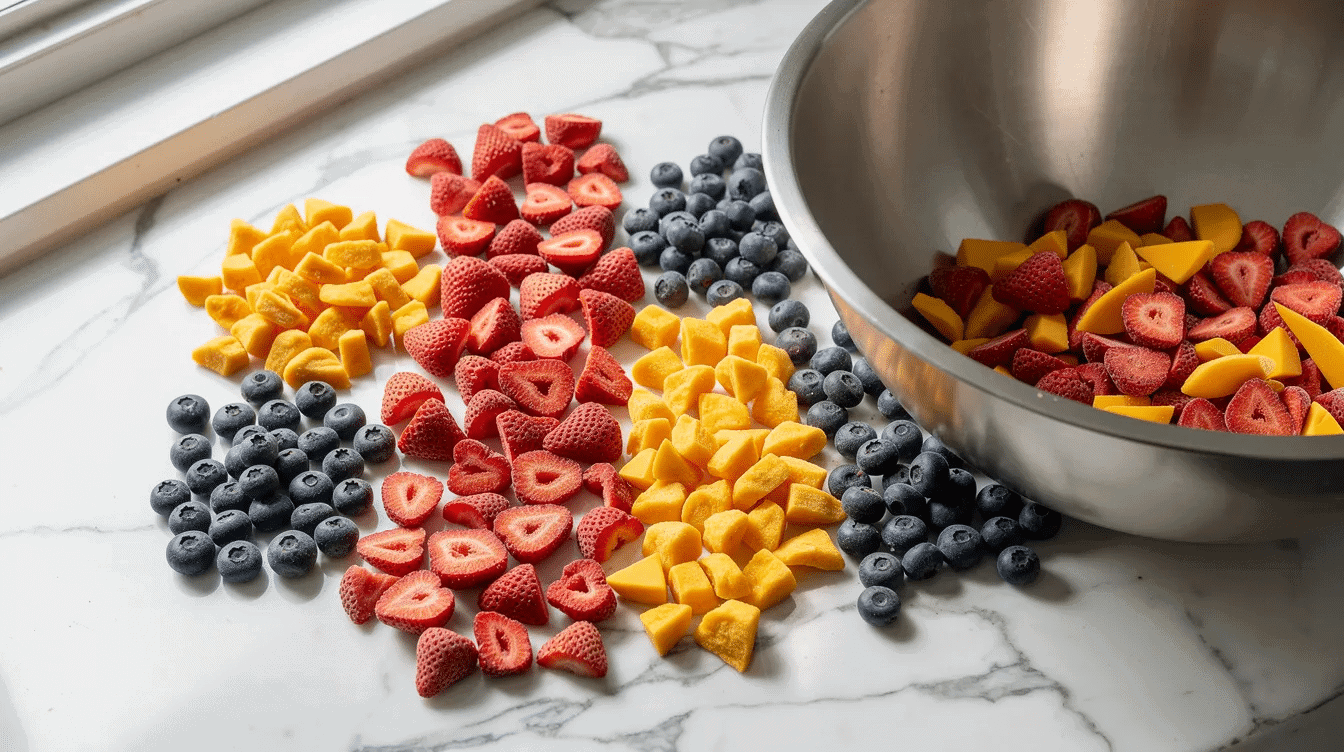
Freeze dried fruit starts as fresh fruit that is frozen, then placed in a vacuum chamber where the freeze drying process causes ice to turn directly into water vapor, skipping the liquid phase entirely. The result is a crisp, airy piece of fruit with a long shelf life and a moisture content of roughly 1–5%.
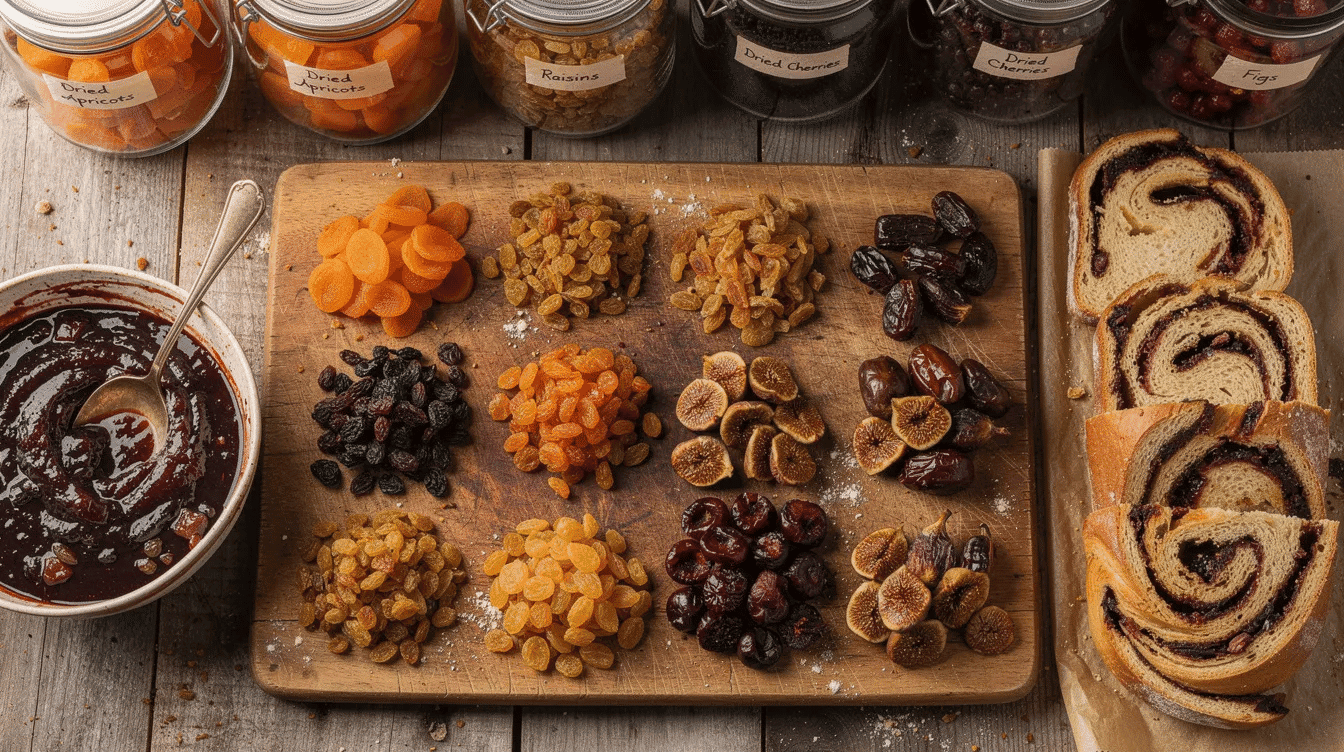
Traditional dried fruit – think raisins, dried mango, or dried strawberries – is made through a dehydration process that uses heated air over long periods, the same basic approach you’ll see in many home dehydrator fruit recipes. That method still leaves 10–20% moisture behind, producing a chewy, dense texture. Because freeze dried fruit contains virtually no free water, it weighs far less than fresh berries or dehydrated fruit and delivers a more concentrated, bright flavor that’s critical for accurate measuring and recipe testing.
Freeze dried fruits typically contain no added sugar, oils, or preservatives, unlike some packaged dried fruit, which is often chosen for its dry-fruit health and nutrition benefits. That makes them ideal for clean-label baking with natural ingredients. Freeze dried fruit also retains most original vitamins and minerals, with some studies reporting up to 97% nutrient retention compared to 60–75% for heat-dehydrated alternatives, a contrast that’s similar to what you see when you look at how nutrients change in dehydrated fruits.
In 2026, home bakers can find freeze dried food in the grocery snack aisle, health food stores, and from online bulk suppliers, often marketed as healthy freeze-dried fruit snacks. Common formats include slices, chopped pieces, and powders.
Why Use Freeze Dried Fruit in Baking Instead of Fresh or Dehydrated?
Moisture control is one of the biggest challenges in baking. Fresh fruit is roughly 70–90% water, and that liquid releases during baking, leading to gummy centers, soggy crumb, or collapsed layers. Freeze dried fruit lets you add flavor without throwing off the liquid balance. Using freeze dried fruit in recipes typically requires no alteration of liquid ratios at all.
Unlike fresh fruit, freeze dried pieces stay dry inside your dough or batter, keeping crumbs light and even. Fresh berries and stone fruit are unpredictable – their juice output varies batch to batch. Freeze dried versions remove that guesswork entirely. And unlike many dehydrated fruit pieces, freeze dried fruit doesn’t need long soaking or chopping to avoid dense, chewy pockets, which is especially helpful for cookies, macarons, and airy sponges.
Freeze dried fruit retains color and flavor during baking, so muffins and cakes stay vibrantly speckled without artificial coloring. It delivers concentrated flavor and vibrant color that stays stable from batch to batch – ideal for both home bakers and small bakery production, and it’s also one of the most useful ingredients when you’re planning dried fruit for long term storage. Freeze dried fruit also allows for better control over texture in baking, because you decide exactly how much crunch, color, or fruity flavor ends up in each bite.
Choosing the Right Freeze Dried Fruit Format (Pieces, Slices, and Powders)
The same fruit – say, strawberries or mango – can behave very differently depending on whether you use whole slices, chopped pieces, or finely ground freeze dried fruit powder.
Format
Best For
Key Benefit
Whole slices
Toppings, garnishes, layered bakes
Whole slices of freeze dried fruit provide strong visual appeal
Chopped/crushed pieces
Muffins, scones, cookies, granola bars
Crushed freeze dried fruit adds texture to muffins and cookies
Powder
Sponges, macarons, frostings, glazes
Fruit powders are ideal for flavoring sponges and frostings
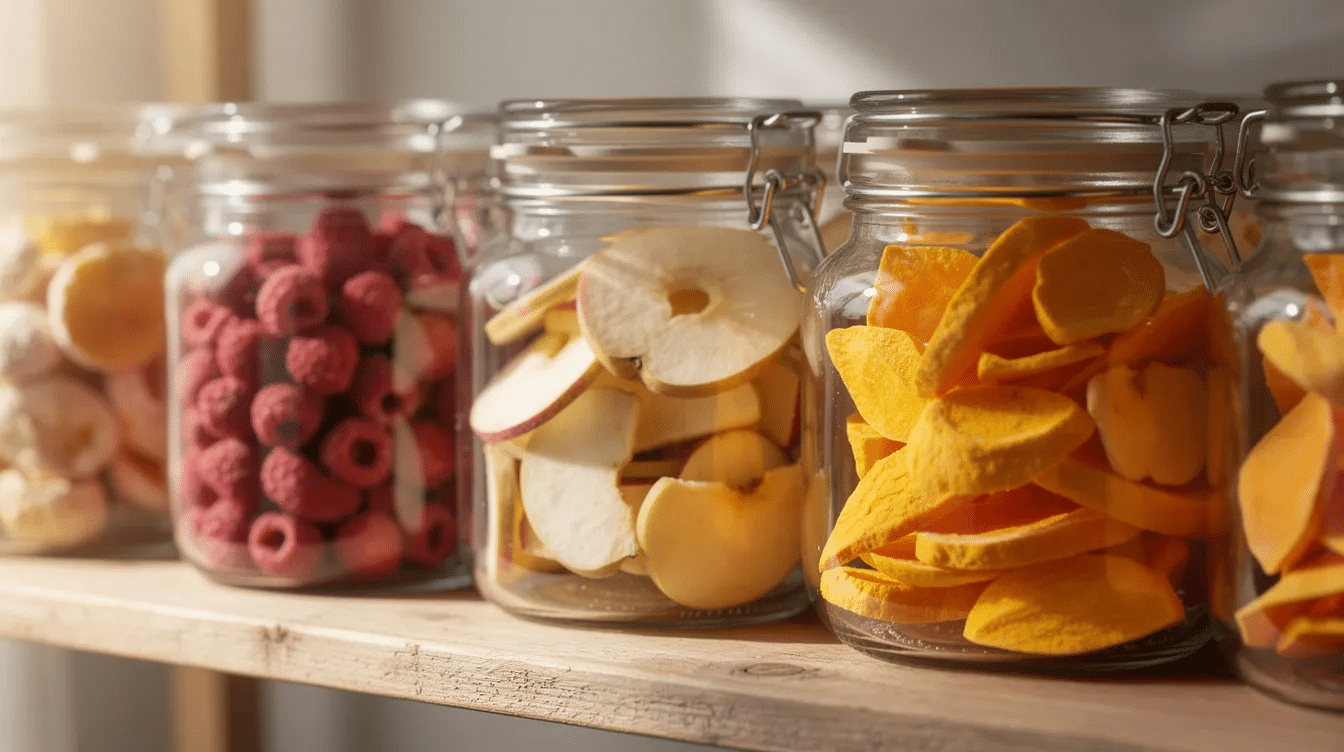
Whole or sliced fruits – like freeze dried strawberries or apple rings – work best where you want recognizable pieces. Whole freeze dried fruit works well in muffins and cookies where visible fruit adds both taste and visual appeal.
Chopped or crushed pieces distribute flavor and pockets of crunch throughout a dough. Think blueberry muffins, quick breads, or chocolate chip cookies with berry crunch alongside the chocolate chips.
Freeze dried fruit powder distributes evenly into dry ingredients, tinting batters, meringues, and buttercream with uniform color. Grinding freeze dried fruit creates a powder for mixing into frostings or batters. Freeze dried fruit can be used as whole pieces or powders – and you can make your own powder at home with a food processor or mortar and pestle, then sift out seeds for a smooth finish.
How to Add Freeze Dried Fruit to Cakes, Cupcakes, Cookies, and Bars
Most standard recipes can accept freeze dried fruit without major formula changes because it adds almost no extra moisture. But quantities should stay moderate – the flavor is concentrated, and acidic fruits like strawberries may require careful measurements to prevent baking issues such as overly tangy crumb.
Muffins or cupcakes (12-cup batch): 10–20 g (about ⅓–¾ cup loosely packed) of freeze dried berries or chopped pieces
8-inch cake layer: 2–3 tablespoons of fruit powder (~15–30 g)
1 cup of glaze: 2–3 tablespoons of powder
To fold pieces into cake batter or cookie dough, add them at the very end on low speed or by hand, just as your recipe calls for with chocolate chips. Chopped pieces of freeze dried fruit can be folded into batters without sinking, and gentle handling keeps them from shattering into dust.
For powder, whisk it with flour, cocoa, or other dry ingredients so it distributes evenly and doesn’t clump when liquid is added. Freeze dried fruit works well in cookies, cakes, muffins, and frostings – and it can create vibrant color in baked goods without a drop of food dye.
Pairing ideas to try:
Freeze dried mango with white chocolate chips in blondies
Freeze dried raspberries in shortbread
Strawberry powder in vanilla cupcakes
Freeze dried cranberries in oatmeal cookies
Using Freeze Dried Fruit Powder in Frostings, Icings, and Macarons
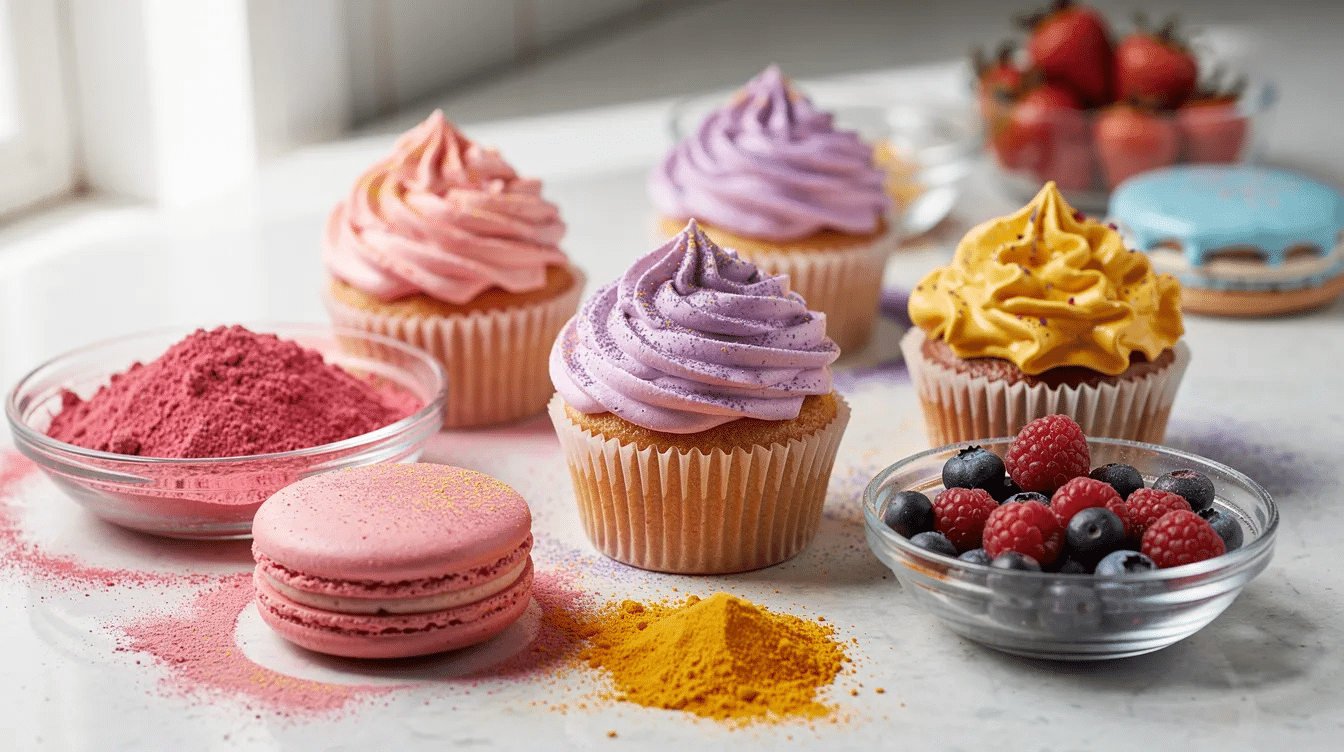
Freeze dried fruit powder is one of the easiest ways to add real fruit flavor and color to buttercream, cream cheese frosting, whipped cream, and glazes without splitting the mixture. Fruit powder can flavor sponges and frostings alike, giving you natural tint and taste in one ingredient.
How to make it at home: Blitz freeze dried fruit – such as raspberries, freeze dried strawberries, or blueberries – in a food processor until fine. Sift through a mesh strainer to remove seeds or larger bits for ultra-smooth finishes. This is especially important for raspberry powder, which can carry gritty seeds.
Starting ratios: Add 1–2 tablespoons of finely sifted powder per 250 g of buttercream. Taste and increase gradually so the fruit’s acidity doesn’t make the frosting too sharp. Combining freeze dried fruit with confectioners’ sugar creates a colorful finishing powder you can dust over baked goods for extra visual appeal.
For macarons, meringues, and royal icing, mix fruit powder with the dry ingredients – almond flour, icing sugar – rather than adding it to the whipped egg whites. This preserves structure while delivering even color.
Color and flavor pairings:
Strawberry powder for naturally pink birthday cake frosting
Freeze dried mango powder for pale yellow tropical Swiss meringue buttercream
Raspberry powder for a vibrant glaze on lemon loaf
Rehydrating Freeze Dried Fruit for Fillings, Swirls, and Soft Textures
Most baking applications rely on freeze dried fruit staying dry and crisp, but some recipes – pie fillings, cheesecake swirls, compotes – benefit from rehydrated fruit with a softer bite, especially if you’re starting with homemade freeze dried strawberries or similar fruits.
Simple rehydration method:
Combine freeze dried fruit with warm water, juice, or a sugar syrup (roughly equal parts fruit and liquid by volume) in a small bowl.
Let sit 5–15 minutes until softened.
Drain excess liquid if needed, or reserve it for the recipe.
Rehydrated freeze dried fruit can be used in fillings and sauces. Rehydrated freeze dried raspberries or blueberries fold into cream cheese mixtures, pastry creams, or yogurt-based fillings without the unpredictable water release you get from frozen fruit or fresh berries.
You can deliberately control moisture by using more or less liquid in the soak – just plump enough for cinnamon rolls or swirl breads without flooding the dough. For example, rehydrate freeze dried mango for a tropical swirl in pound cake, or soften freeze dried strawberries for a quick compote layer in a 9-inch cheesecake. If the recipe calls for thickening, add a small amount of cornstarch to the rehydrated fruit mixture. Avoid letting hot water sit too long, as over-soaking can make pieces mushy.
Practical Tips for Measuring, Mixing, and Storing Freeze Dried Fruits
Because freeze dried fruit is very light and fragile, accurate measuring and careful handling make a real difference to flavor strength and texture in finished baked goods.
Weigh, don’t just scoop. Use a digital scale when possible. A cup of whole slices, crushed crumbs, or powder can all have very different actual amounts of fruit solids.
Store smart. Keep freeze dried fruits in an airtight container or well-sealed bags with minimal air, stored in a cool, dry place – a cool space like a cupboard away from steam. When stored properly, the nutritional value and crunch stay intact for months. Desiccant packs can help keep freeze dried fruit dry inside airtight storage containers for dried fruits.
Re-crisp if needed. If fruit softens from humidity, spread it on a baking sheet in a low oven (around 80–90 °C / 175–195 °F) for 10–15 minutes, then cool completely before using to maintain quality.
Grind fresh. Powder loses aromatic potency quickly due to higher exposed surface area, so grind smaller batches as needed for maximum aroma.
Seal immediately. After measuring, seal any leftover fruit right away. This preserves shelf life and keeps texture crisp.
Flavor Ideas and Recipe Inspiration with Freeze Dried Fruits
This section gives you concrete pairing ideas rather than full recipes, so you can start experimenting with your favorite fruits right away.
Berry-centric ideas:
Freeze dried raspberries folded into lemon loaf cakes
Strawberry powder in Valentine’s Day sugar cookies
Mixed berry pieces in breakfast muffins
Blueberry powder marbled into cheesecake batter
Tropical combinations:
Freeze dried mango and white chocolate chip cookies
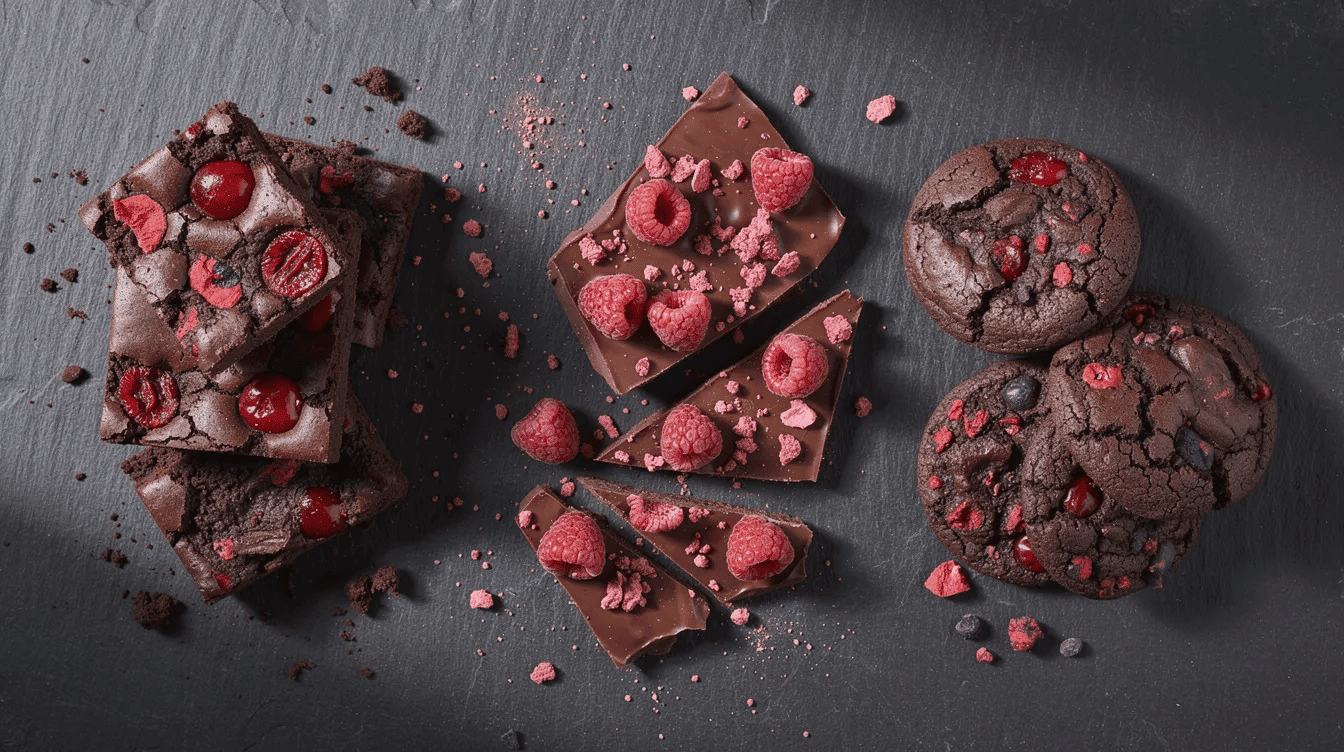
Dark chocolate brownies with pockets of freeze dried cherries
Milk chocolate bark scattered with freeze dried raspberries
Double chocolate cookies with berry crunch instead of only chocolate chips
Beyond desserts:
Oat bars and homemade muesli cookies with freeze dried freeze dried berries
Breakfast breads with swirled berry powder
Granola loaded with freeze dried fruit for sweet crunch and nutrients, or paired with a dried fruit subscription box to keep your pantry stocked with new flavors
A small amount of freeze dried fruit – sometimes just a tablespoon of powder – transforms an ordinary recipe into something that tastes and looks like it came straight from the produce section of a specialty bakery.
FAQ: Freeze Dried Fruit in Baking
These questions cover practical issues not fully addressed above, aimed at both beginners and experienced recipe developers.
Can I swap fresh fruit for freeze dried fruit 1:1 in recipes?
A direct 1:1 swap by volume or weight rarely works because fresh fruit contains a lot of water, while freeze dried is almost completely dry. Replacing fresh strawberries with the same weight of freeze dried strawberries would leave your batter far too dry. Instead, use freeze dried fruit mainly as a flavor booster, or start with about one-third to one-half of the fresh fruit weight in freeze dried and add extra liquid if the recipe needs it. Test small batches when adapting family recipes, especially pies, cobblers, and cakes that rely on fruit juices to set properly.
Is freeze dried fruit healthier than regular dried fruit?
Both freeze dried and dehydrated fruit begin as real fruit, but freeze drying preserves more heat-sensitive original vitamins and keeps the color closer to fresh. Many commercial dried fruits are sweetened or treated with oils, whereas plain freeze dried fruits are often just fruit with no added sugar, making it easier to track ingredients in your baked goods. That said, the “healthier” choice also depends on how much sugar and fat is in the overall recipe, not just which fruit format you use.
Why did my freeze dried fruit turn chewy in storage or on a cake?
Freeze dried fruit naturally absorbs moisture from the air, from buttercream, and from high-humidity environments. Over time, that softens it from crisp to leathery. Add decorative pieces to cupcakes, cookies, or brownie tops as close to serving time as possible, and store finished items in cool, dry conditions. If crisp texture is essential – for chocolate bark or snack mixes – store those items in an airtight container with a small food-safe desiccant packet.
Can I use freeze dried fruit in bread dough or laminated pastries?
Yes. Freeze dried fruit can be used in enriched yeasted doughs and laminated doughs, but it works best in powdered or finely chopped form so it doesn’t tear the gluten network or dough layers. Powders can be mixed with flour for swirled or speckled croissants, brioche buns, and Danish pastries, while small pieces work best pressed gently into the surface or rolled into layers. Avoid adding large, sharp slices directly into laminated layers – they can puncture the dough and allow butter to leak during baking.
How long does opened freeze dried fruit last for baking use?
Opened freeze dried fruit lasts several months to a year when stored airtight, away from heat and humidity. Texture and aroma are best within the first 4–8 weeks. Label containers with the opening date, regularly check for off odors or discoloration, and discard any fruit that smells stale or clumps badly. Fruit powder loses potency faster than whole pieces because of its higher exposed surface area, so grinding smaller batches as needed is the best way to keep fruity flavor at its peak.
DannyContent Writer
Hey there, since 2016, my mission has been to provide you with the information and guides you need to make food dehydrating simple and fun. Whether you're a newbie or a seasoned pro, my site offers helpful guides, reviews, and recipes to enhance your dehydrating experience. I take pride in only recommending products I believe in, ensuring my readers' trust. As an affiliate of various programs, including Amazon Associates, your support helps me continue providing quality content. Thanks for stopping by, and happy dehydrating!