We earn a commission if you make a purchase, at no additional cost to you.
09/22/2026 04:39 pm GMT
🍊 Dehydrated Food Info Finder — Temperatures & Drying Times
Choose a category, then pick a food to see its drying temperature and time.
⚠️ Safety Disclaimer: Drying times are estimates and vary based on slice thickness, food moisture content, humidity, and your dehydrator model. Always check for doneness before storing — food should feel dry, leathery, or brittle with no moist spots. Improperly dried food can harbour mould and bacteria. For meat and poultry, follow USDA safe internal temperature guidelines: beef and pork to 160°F (71°C), poultry to 165°F (74°C). Use a food thermometer when in doubt. Store all dehydrated foods in airtight containers in a cool, dark place and discard anything showing moisture, mould, or off odours.
How to Dehydrate Frozen Strawberries (So They Don’t Turn to Mush)
If you have a freezer full of frozen strawberries and limited cold-storage space, dehydrating them into shelf stable dried fruit is one of the smartest moves you can make. The challenge is that frozen berries release extra liquid as they warm, turning to mush if you don’t handle them correctly. This guide walks you through the entire process, from choosing the right bag to storing the best dried strawberries you’ve ever made.
Key Takeaways
You can dehydrate frozen strawberries directly from the freezer without fully thawing. Keeping them partially frozen while slicing and loading dehydrator trays prevents mushy texture.
Set your food dehydrator to about 125–135°F (52–57°C). Expect drying times of 8–14 hours depending on slice thickness and excess moisture.
Conditioning dehydrated strawberries in glass jars for 7–10 days after drying is essential. It equalizes moisture across pieces and prevents mold during long-term food storage.
Properly stored dehydrated strawberries and strawberry powder can last over 6 months, often 6–12 months or more. They work perfectly as a delicious snack, in trail mix, baked goods, smoothies, or stirred into morning oatmeal.
Dehydrating removes 85–95% of moisture from food, concentrating flavor and natural sweetness without adding sugar.
Why Dehydrate Frozen Strawberries Instead of Fresh?
Many home cooks have large bags of frozen strawberries purchased during strawberry season or picked up from warehouse stores. Turning them into shelf stable dried fruit frees up freezer space and protects against power outages.
Frozen berries are typically cheaper than fresh fruit bought off-season, with warehouse-club bags running roughly $3–$6 per pound. Commercial IQF (individually quick frozen) strawberries are usually picked as ripe strawberries at peak sweetness, so dehydrated fruit made from frozen often tastes better than dried versions of bland, off-season fresh strawberries. If you’re starting with fresh berries instead, you can follow a dedicated guide on how to dehydrate strawberries in a dehydrator for best results.
Buying commercial freeze dried strawberries is convenient, but expensive. Dehydrating at home with a basic food dehydrator is far more affordable, though the result is chewier rather than crispy. Frozen strawberries often turn out chewy and less crisp compared to fresh strawberries, but the concentrated sweetness more than makes up for it. And unlike frozen berries that occupy freezer real estate and risk freezer burn, dehydrated foods sit quietly in a pantry cupboard for months.
Best Types of Frozen Strawberries to Dehydrate
Not every bag of frozen strawberries behaves the same on dehydrator trays. Understanding the differences saves you hours of frustration.
IQF whole strawberries have intact skin and take the longest to dry (often 12–14+ hours when sliced). They hold their shape well.
Pre-sliced frozen strawberries or strawberry slices dry faster because more surface area is exposed. These are the most convenient option.
Frozen pieces or chunks vary in size, so drying can be uneven unless you trim thicker slices in half.
Choose unsweetened, no-syrup frozen strawberries. Added sugar syrups slow dehydrating and leave sticky, unevenly dried fruit. If your bag contains syrup, rinse the berries quickly under cold water and pat them with a paper towel.
Both store-bought and home-frozen fresh berries from local farms work. Home-frozen berries may clump together; break them apart while still frozen. Avoid heavily frost-burned bags, since that excess ice extends drying time and dilutes flavor. Once you’re comfortable with strawberries, you can expand into other kinds of fruit to dehydrate using the same basic techniques.
Before preparation, wash strawberries thoroughly. You can use a 2:1 water to vinegar solution for washing to remove surface residues, then rinse under cold water and drain.
Primary tool: A stackable or cabinet-style food dehydrator with an adjustable thermostat (95–160°F / 35–71°C). Dehydrators cost about $35 to $600 depending on size and features.
Tray liners: Dehydrating frozen strawberries requires specialized tray liners due to excess juice. Use mesh screens or non-stick silicone mat liners to keep small pieces from falling through and catch drips. You can also use parchment paper or wax paper cut to fit.
No dehydrator? Try oven drying: set your oven to its lowest temperature (usually 170°F), prop the door open slightly with a wooden spoon, and place strawberry slices on a baking sheet lined with parchment paper or aluminum foil on a wire rack. An air fryer at 135–160°F also works, though capacity is limited.
Cutting tools: A sharp knife (chef’s or serrated) and a stable cutting board. A mushroom slicer or mandoline slicer can help produce uniform slices, but handle carefully with firm-frozen berries.
Storage supplies: Airtight glass jars, an airtight mason jar, vacuum sealing bags, or mylar bags with oxygen absorbers. A mason jar works perfectly for conditioning.
Step-by-Step: How to Dehydrate Frozen Strawberries
This is the core process for turning a 16 oz (450 g) or 2 lb (907 g) bag of frozen berries into dehydrated strawberries.
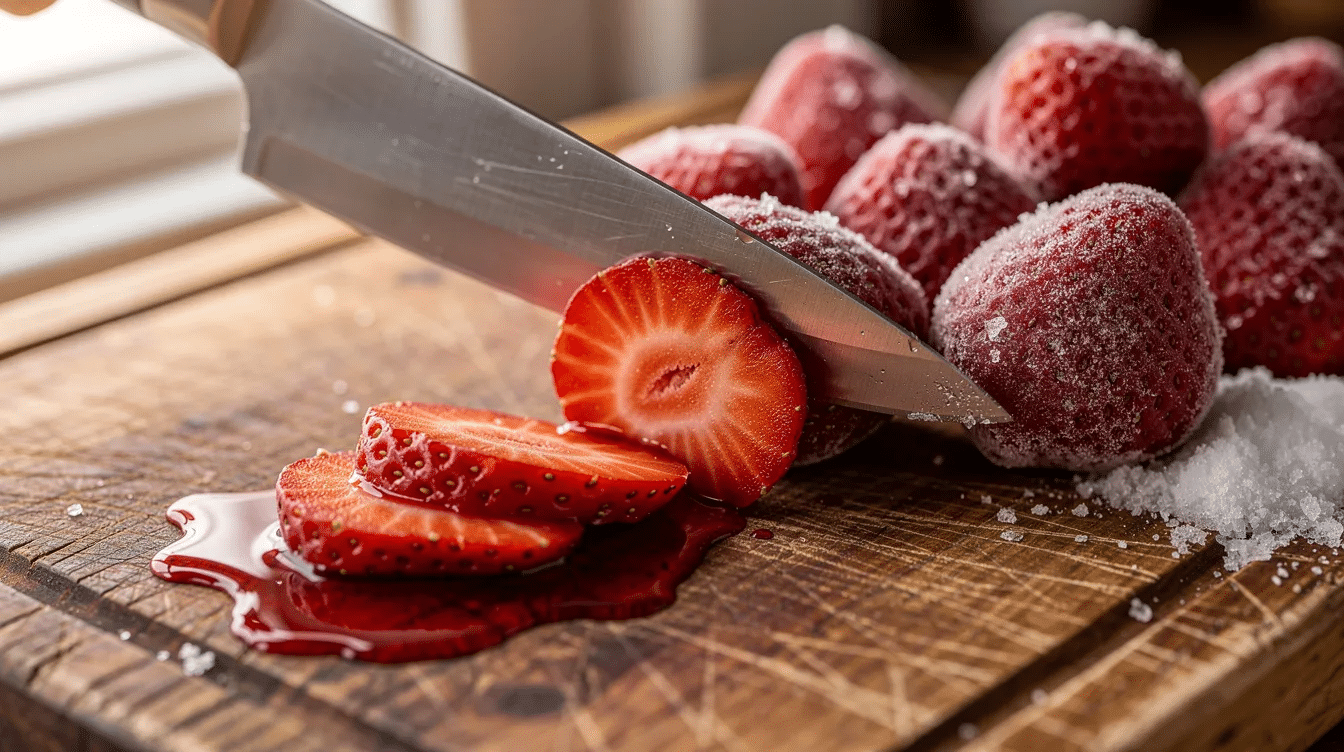
1. Partial thaw only. Remove the bag from the freezer and let it sit at room temperature for just 5–10 minutes. You want pieces loose enough to separate, but still icy and firm. Do not let them thaw completely.
2. Break apart and discard ice. Break apart any clumps while the fruit is still mostly frozen. Discard large ice chunks that would melt and add too much moisture to the trays.
3. Hull and slice the strawberries. For whole strawberries, hull them by removing the green tops with a sharp knife or paring knife. Then slice strawberries into uniform pieces, about 1/4 inch thick. Slice lengthwise while berries are still firm. For pre-sliced frozen strawberries, check thickness and trim any thicker slices in half. Uniform slices ensure even drying; aim for the same thickness across the batch.
Thin slices (1/4 inch) dry faster and more evenly. Thicker slices produce chewier results but take significantly longer.
4. Blot excess liquid. Pat strawberry slices dry with a paper towel to remove excess moisture from the surface. This step is more critical for frozen fruit than fresh.
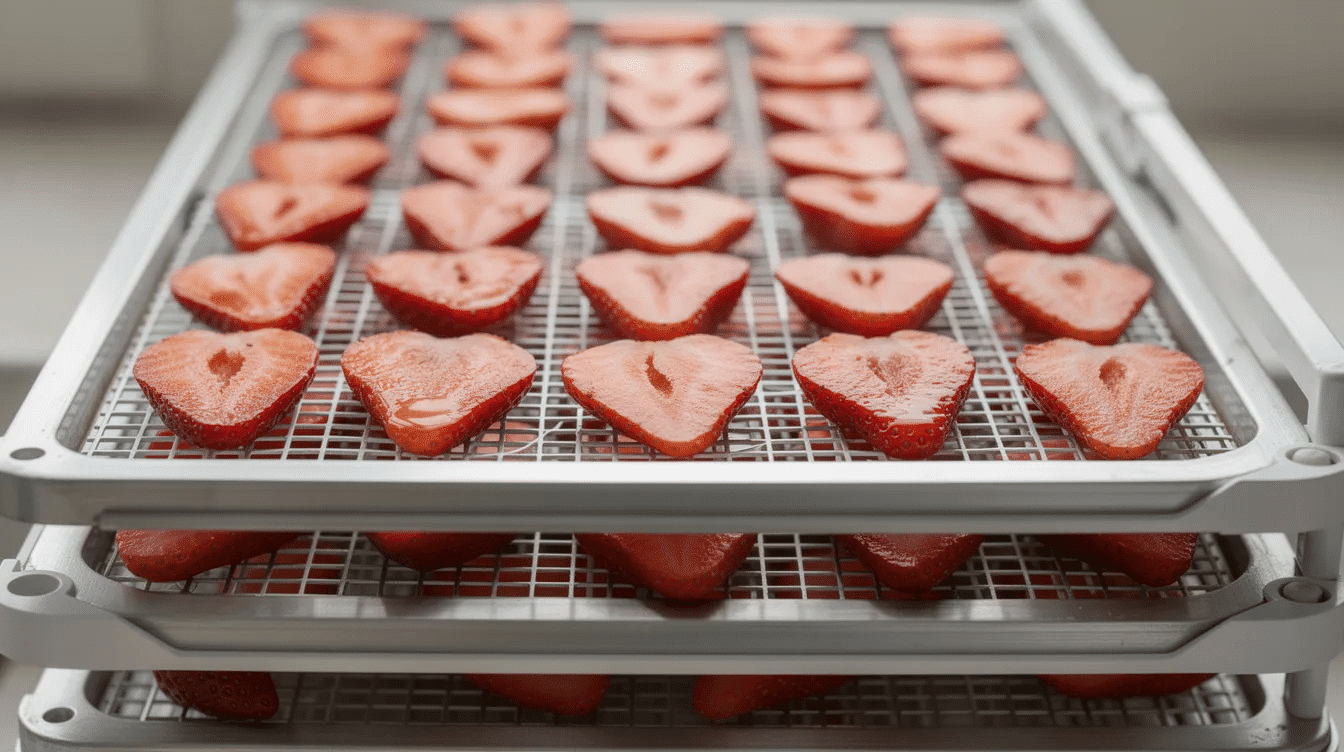
5. Place strawberries on trays. Arrange the slices in a single layer on dehydrator trays, leaving small gaps between pieces for airflow. Do not stack or overlap. Place strawberries cut-side up for better moisture release.
6. Set temperature and dry. The ideal drying temperature for strawberries is between 130°F and 140°F. Use a dehydrator set to 135°F/57°C for best results. Dehydrate strawberries for 6–10 hours depending on thickness, though frozen sliced strawberries often need 8–14 hours total. Rotate trays every 2–3 hours and begin checking for doneness around hour 6–8.
7. Check for doneness. Properly dried strawberries should feel leathery or nearly crisp with no internal moisture. Tear a piece in half: there should be no visible moisture inside. Thicker pieces may feel slightly pliable, but should not be sticky or wet.
8. Cool completely. Let the dehydrated berries cool on the trays for at least a half hour (30–60 minutes) before transferring to jars. Moving warm fruit into containers traps steam and causes condensation.
Special Considerations When Dehydrating Frozen (Not Fresh) Strawberries
Frozen berries behave differently than fresh or frozen strawberries that have never been frozen. The cellular damage from ice crystal formation causes strawberries to release significantly more liquid as they warm. Studies show that relative cell membrane leakage increases roughly 40% in frozen samples versus fresh, meaning more free water seeps out during drying.
Keep berries partially frozen while slicing and loading trays to minimize juice loss. This is the single most important difference between drying fresh or frozen strawberries. If you let them sit on the counter too long, you’ll end up with pools of red liquid on your trays instead of clean slices.
Thawed strawberries release more liquid than fresh strawberries during dehydrating, so expect frozen fruit to take 1–3 hours longer to dry completely than equivalent fresh fruit. Plan accordingly.
To prevent overheating, avoid higher temperatures, as this can cause case hardening, where the outside dries into a rigid shell while the inside stays wet. Dehydrate strawberries at 125°F/52°C to prevent browning if you notice darkening edges. Dehydrating frozen strawberries takes longer than fresh strawberries due to extra moisture, so patience is essential.
Color may be slightly darker than dehydrated fresh fruit, but flavor remains excellent.
Dehydrated vs. Freeze Dried Strawberries: What’s the Difference?
Many readers see freeze dried strawberries in cereals and wonder how their home-dried strawberry chips compare. The two are fundamentally different processes.
Feature
Dehydrated Strawberries
Freeze Dried Strawberries
Moisture removed
85–95%
Up to 99%
Final moisture content
About 20%
~1–2%
Texture
Chewy, leathery
Light, crispy
Equipment cost
$35–$600
$2,000–$8,000
Shelf life
6–12 months (pantry)
20–25 years (ideal)
Best uses
Trail mix, baking, snacking
Instant meals, decorations, powders
Dehydrated strawberries have a moisture content of about 20%, producing that familiar chewy dried fruit texture. Freeze drying removes up to 99% of moisture from food through sublimation under vacuum, creating ultra-light, crisp pieces. Freeze dried food lasts longer than dehydrated food by a wide margin; if you’re interested in that crunchy texture, learn how to make freeze dried strawberries at home.
Home freeze-drying equipment costs about $2,000 to $8,000, making it impractical for most households. A food dehydrator delivers great results at a fraction of the price.
When a recipe calls for freeze dried food, you can sometimes substitute dehydrated berries if you adjust liquid amounts and accept a chewier texture. However, for strawberry chips that need to be crisp or for powders that must dissolve instantly, freeze dried is the better choice.
Conditioning, Cooling, and Safe Storage
Most failures with dehydrated fruit happen after drying. Hidden pockets of moisture lead to mold, and poor storage shortens shelf life dramatically. Paying attention to conditioning and storage also helps you get the most from dehydrated strawberries as a safe, healthy snack.
The conditioning process: Condition dried strawberries for 7–10 days before long-term storage. Once slices are completely dry and fully cooled to room temperature, loosely pack them into clean glass jars, filling about two-thirds full. Seal the jars.
Conditioning equalizes moisture in dehydrated strawberries. Some pieces retain slightly more water than others; conditioning lets that moisture redistribute evenly. It also prevents mold in dehydrated strawberries during storage by revealing any pieces that weren’t dried enough.
Each day, shake the jar and check for signs of condensation on the glass or clumping. If you see any visible moisture on the inside of the jar, return the fruit to dehydrator trays and dry for 1–2 more hours. Conditioning takes about 7–10 days for moisture to equalize across pieces of varying thickness.
Storage: After conditioning, store dehydrated strawberries in an airtight container. Dried strawberries can be stored in airtight containers such as a sterilized airtight container, an air tight container like a mason jar, or vacuum-sealed bags. Use oxygen absorbers to extend shelf life of dried strawberries. Keep stored strawberries in a cool, dark place at 60–75°F (15–24°C). To store dried strawberries effectively, vacuum sealing combined with oxygen absorbers provides the longest shelf life.
Dried strawberries can last over 6 months when stored properly, with best quality holding for 6–12 months at typical pantry temperatures. Label each container with the contents and date (e.g., “Strawberries – frozen, dehydrated March 2026”).
How to Make Strawberry Powder from Dehydrated Frozen Strawberries
Strawberry powder is one of the most versatile products you can make from dehydrated fruit, and it pairs perfectly with other dehydrated fruit snack recipes when you want variety.
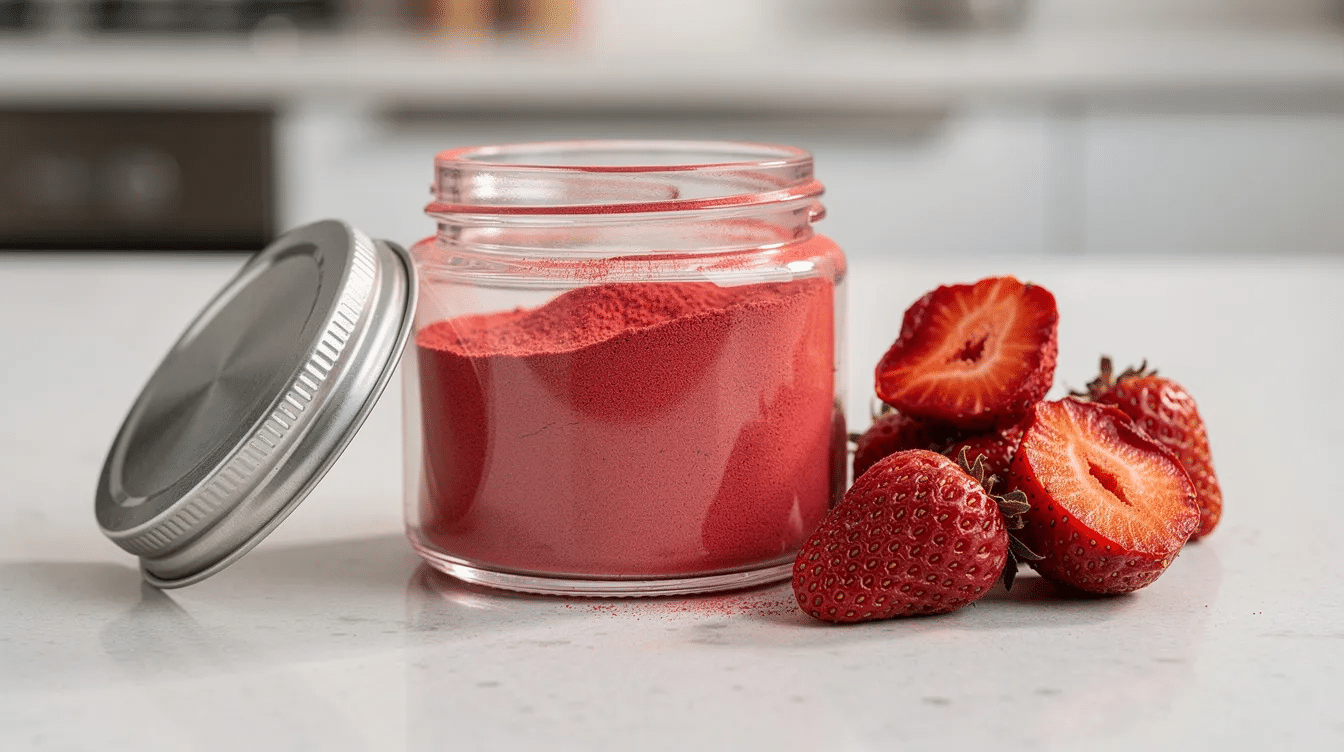
The berries must be very dry and brittle before grinding. If slices still bend, return them to the dehydrator at 125–135°F (52–57°C) until they snap cleanly when broken. Leathery strawberry chips won’t grind into fine powder.
Grinding steps:
Place cooled, fully dried strawberry chips into a high-speed blender, spice grinder, or food processor.
Pulse in short bursts until a fine, bright red strawberry powder forms. Process in small batches to avoid heat buildup.
Sift through a fine mesh strainer if you want ultra-smooth powder; re-grind any larger pieces.
Optionally, spread the powder thinly on a parchment-lined baking sheet and return it to a warm (turned-off) oven or dehydrator for 15–30 minutes. This drives off any residual moisture and prevents clumping.
Store strawberry powder in small airtight jars (a glass jar with a tight lid works well) in a cool, dark place. Include a food-safe desiccant packet for extra protection.
Usage ideas:
Stir into yogurt, morning oatmeal, or pancake batter
Whisk into buttercream frosting or whipped cream for natural pink color
Blend into protein shakes and smoothies
Dust on top of baked goods for strawberry flavor and color
How to Use Dehydrated Strawberries and Strawberry Pieces
Dehydrated strawberries are a convenient, shelf stable pantry ingredient with dozens of uses. They’re part of a bigger picture of how dehydration affects nutrients in foods and why dried ingredients are so useful in home cooking.
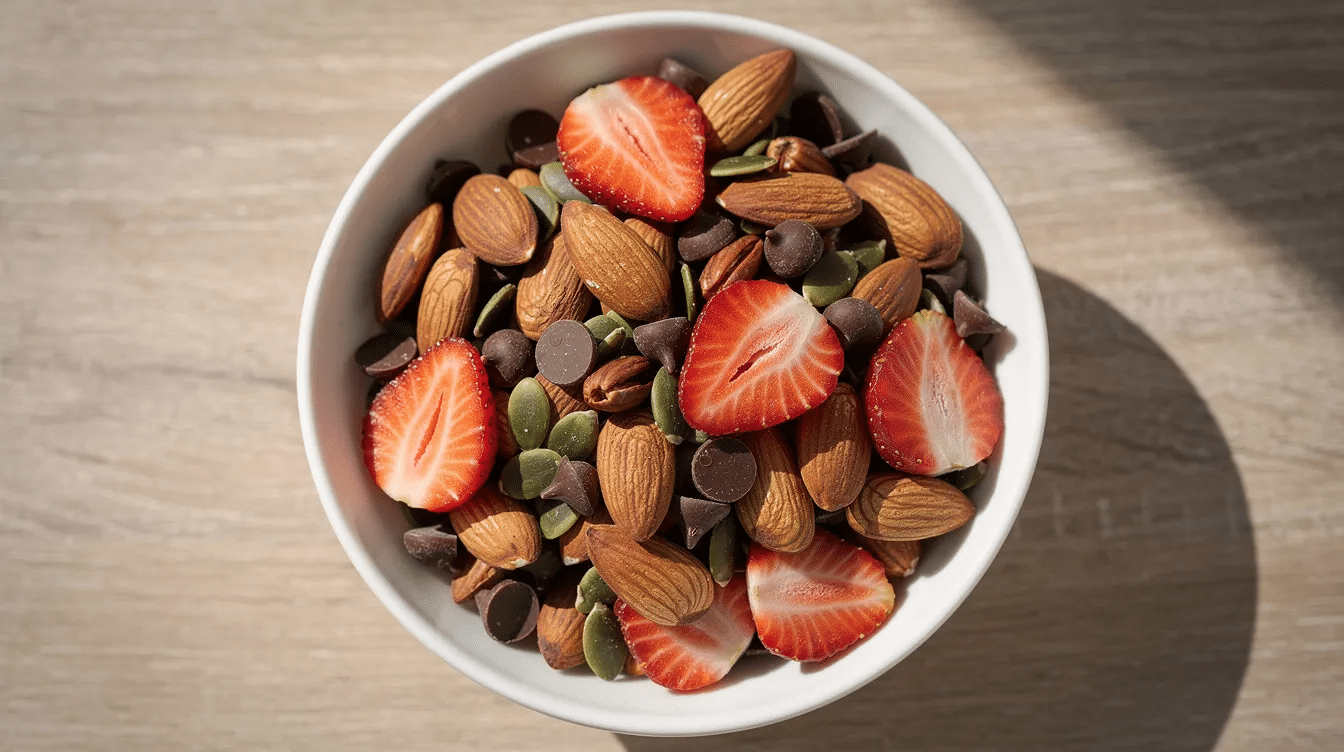
Snacking: Eat plain as chewy fruit candy, pack into lunchboxes, or combine with nuts, seeds, frozen blueberries (also dehydrated), and dark chocolate chips in a homemade trail mix. You can mix in other fruits and other dehydrated berries for variety.
Breakfast: Add dried fruit to granola, cold cereal, overnight oats, or smoothie bowls. Dried strawberries soften slightly in milk or yogurt, giving you bursts of concentrated flavor in your morning oatmeal.
Baking: Fold chopped dehydrated strawberries into muffins, quick breads, scones, cookies, or granola bars. For a softer texture, soak briefly in warm water or juice before adding to batter. They work beautifully in baked goods. Always review recipe instructions and any required recipe ratings for baking adjustments when substituting dried food for fresh.
Beverages: Steep dehydrated strawberries in hot tea, lemonade, or infused water. Grind to powder for flavoring lattes and homemade strawberry milk. A squeeze of lemon juice brightens the flavor.
Creative uses: Toss chopped dried berries into salads with goat cheese and nuts, use them as cheesecake garnish, or blend into fruit leather. Check out other recipes that call for dehydrated berries as inspiration.
Troubleshooting Common Problems When Dehydrating Frozen Strawberries
Frozen strawberries can be trickier than fresh, but most issues have simple fixes. Here are some helpful tips for the most common problems.
Mushy or collapsing berries: This happens when you let them thaw too long before loading trays. Slice and place strawberries while still firm-frozen. Lower the dehydrator to the lowest temperature around 125°F/52°C if the exterior is drying too fast.
Sticky or tacky after 12–14 hours: Check your dehydrator’s temperature accuracy with an oven thermometer. Continue drying at 135°F/57°C until the surface feels dry and leathery with no sticky spots. Too much moisture remaining is the most common cause.
Darkened or browned edges: Usually from too-high heat or oven hot spots. Lower the temperature, rotate trays more frequently, and use parchment-lined baking sheets in ovens. Whole strawberries with more exposed flesh are particularly susceptible.
Uneven drying (some pieces crisp, others soft): Cut more uniform slices, cluster similar sizes on the same trays, and remove finished pieces as they dry completely while letting thicker ones continue.
Mold during storage: Any visible fuzz or off smells mean the batch wasn’t fully dried or properly conditioned. Discard the entire container of moldy fruit. Required fields are marked clearly in the conditioning process: shake daily, check for condensation, and be more conservative with drying time next batch. Dehydrated strawberries should have about 20% moisture content; any higher invites spoilage.
Nutrition & Cost Benefits of Dehydrating Frozen Strawberries
Dehydrated strawberries remain a nutrient-dense dried food that delivers real value compared to store-bought snacks. If you’re curious about the bigger picture, you can look at how many nutrients are lost in dehydrated fruits overall.
Key nutrients that survive: Vitamin C is partially reduced during drying but still present in meaningful amounts. Fiber, manganese, potassium, and anthocyanins (the antioxidants responsible for that deep red color) hold up well at moderate drying temperatures, which fits with the broader nutritional value of dehydrated foods for better health.
Calorie concentration: Removing water concentrates natural sugars and calories per cup, but no sugar is added. This makes dehydrated strawberries a better alternative to many commercial fruit snacks loaded with corn syrup.
Cost comparison: A 3 lb bag of frozen strawberries from a U.S. warehouse club costs roughly $6–$9 in 2025–2026. That same weight of branded dehydrated berries or sliced strawberries from a specialty retailer can run $15–$25 or more. Drying at home cuts costs by half or more.
Reducing food waste: Frozen berries nearing their best-by dates or showing early signs of freezer burn can be rescued by drying. Instead of tossing a bag of forgotten fruit, you get months of shelf life from the same berries, along with all the usual benefits of dehydrating food for storage and convenience.
Start with a small batch to find your preferred texture and slice thickness, then scale up to full dehydrator loads.
FAQ
Below are answers to common questions about dehydrating frozen strawberries that weren’t fully covered above.
Can I dehydrate frozen strawberries without thawing them first?
Yes. Dehydrating frozen strawberries works best when berries are only partially thawed-just enough to slice the strawberries and separate pieces, but still icy and firm. Placing fully frozen sliced strawberries directly on trays is safe; the dehydrator will gently thaw and then dry them. However, slicing whole solid-frozen berries is difficult unless they were pre-sliced before freezing.
Do I need to pre-treat frozen strawberries with lemon juice before drying?
Pre-treatment with lemon juice is optional. Frozen berries typically retain good color, especially if they were frozen while fresh. A quick dip in a mild lemon juice and water solution can slightly improve brightness in very pale or older strawberries, but it isn’t required for safety or preservation.
How do I rehydrate dehydrated strawberries from frozen fruit?
Combine roughly equal parts dried strawberries and warm water in a bowl. Let them stand for 15–30 minutes until plump, then drain any excess liquid. Use rehydrated strawberries in pancakes, muffins, sauces, or stirred into yogurt where a softer, almost-fresh texture is desirable.
Can I mix other frozen berries with strawberries in the same dehydrator batch?
You can dry mixed frozen berries-like strawberries, frozen blueberries, and raspberries-together, but each fruit may finish at a different time. Place different fruit types on separate dehydrator trays and remove each tray as that fruit reaches the desired dryness. Don’t try to force everything to dry completely at once.
Is there a difference in drying time between organic and conventional frozen strawberries?
Organic versus conventional doesn’t significantly affect dehydrating time. Slice the strawberries to the same thickness, and the drying behavior will be nearly identical. Temperature, slice thickness, and initial moisture content matter far more than how the berries were grown. Check doneness by feel and appearance rather than relying only on a timer.
DannyContent Writer
Hey there, since 2016, my mission has been to provide you with the information and guides you need to make food dehydrating simple and fun. Whether you're a newbie or a seasoned pro, my site offers helpful guides, reviews, and recipes to enhance your dehydrating experience. I take pride in only recommending products I believe in, ensuring my readers' trust. As an affiliate of various programs, including Amazon Associates, your support helps me continue providing quality content. Thanks for stopping by, and happy dehydrating!