We earn a commission if you make a purchase, at no additional cost to you.
09/22/2026 04:39 pm GMT
🍊 Dehydrated Food Info Finder — Temperatures & Drying Times
Choose a category, then pick a food to see its drying temperature and time.
⚠️ Safety Disclaimer: Drying times are estimates and vary based on slice thickness, food moisture content, humidity, and your dehydrator model. Always check for doneness before storing — food should feel dry, leathery, or brittle with no moist spots. Improperly dried food can harbour mould and bacteria. For meat and poultry, follow USDA safe internal temperature guidelines: beef and pork to 160°F (71°C), poultry to 165°F (74°C). Use a food thermometer when in doubt. Store all dehydrated foods in airtight containers in a cool, dark place and discard anything showing moisture, mould, or off odours.
Edible Dehydrated Oranges: How to Make, Use, and Store Dried Orange Slices
There is something deeply satisfying about turning a bag of fresh oranges into a stash of golden, fragrant slices that will last for months. Edible dehydrated oranges are one of the simplest preserving projects you can take on at home, and the results pull double duty as a snack, a cocktail garnish, a tea infusion, and even a piece of christmas decor. This guide walks you through every step, from choosing the right fruit to troubleshooting common problems.
Key Takeaways
Edible dehydrated oranges are simply thin, seedless orange slices slowly dried at low temperature until chewy or crisp, with no added sugar or preservatives.
You can dehydrate orange slices in a dedicated dehydrator at about 135°F (57°C) for 3–7 hours or make oven dried orange slices at 170–200°F (75–95°C) for 3–5 hours, flipping periodically.
Properly dried oranges keep their bright color, intense citrus aroma, and can last 1 to 3 years when stored properly in airtight jars in a cool, dark cupboard.
Dehydrated oranges are fully edible and versatile: use them as a snack, in hot tea and cocktails, on a charcuterie board, on cakes, or as christmas ornaments and garlands.
Below you will find step-by-step instructions for choosing oranges, slicing, drying, storage, and creative uses, along with a simple dried oranges recipe.
What Are Edible Dehydrated Oranges?
Edible dehydrated oranges are slices of fresh oranges with moisture removed through sustained low heat and airflow. Fresh oranges consist of 80 to 90 percent water, and the drying process pulls most of that out, leaving a concentrated, shelf-stable citrus slice that retains aroma, color, and much of the fruit’s natural flavor.
You will see these referred to as dehydrated orange slices, dried orange slices, or oven dried orange slices. The terms overlap, but “dehydrated” usually implies a dedicated dehydrator set to a low temperature, while “oven dried” means the slices went through a conventional oven at a slightly higher setting. The end product is similar either way.
Good edible dried oranges contain only oranges. Dried oranges are dehydrated without added sweeteners, oils, or preservatives, so always check ingredients if you are buying them. The whole slice – peel, pith, and flesh – is technically edible. The drying process keeps the structural fiber of the orange intact, and you get a chewy-to-crisp disc that works as both food and décor. Compared to frozen segments, marmalades, or candied slices, dehydrated slices are the least processed and lowest in added sugar. The same basic method works for lemons, limes, blood oranges, and other citrus fruits, and you can follow easy steps for perfectly dried citrus slices to adapt this process beyond oranges, but oranges offer the best balance of sweetness and versatility.
Dried Oranges vs. Candied Oranges (and Other Citrus Preserves)
Understanding the difference between dried and candied oranges helps you pick the right product for the job.
Dried orange slices are thin slices dried at low temperature with no added sugar. They taste tart to mildly bitter because the peel and pith stay on. They shine as garnishes, floating in tea, in simmer pot blends, and on a charcuterie board. Dehydrated oranges change in texture and caloric density compared to fresh fruit – they are more calorie- and sugar-dense per bite because the water is gone, but the sugars are entirely natural.
Candied oranges are simmered in sugar syrup before drying. They come out glossy, soft, and very sweet. Candied oranges are sweet and suitable for snacking, desserts, and cheese boards, but they carry a significant load of refined sugar.
Other options include marmalade (great for toast), frozen zest (convenient for baking), and jam. Each has its place. Marmalade and jam require cooking with sugar; frozen zest needs freezer space. Dehydrated slices win when you want long shelf life, portability, and visual appeal without any additives.
On the nutrition side, dehydrated oranges can provide concentrated natural sugars and carbohydrates, making them a quick energy source for active individuals. They retain fiber almost completely, while candied versions bury that fiber under added sugar. As with other dried fruits, nutrients in dehydrated fruits shift during processing: Vitamin C degrades with higher temperatures and longer drying times, so dehydrated slices preserve more of it than candied slices that undergo prolonged boiling.
Choosing the Best Oranges for Dehydrating
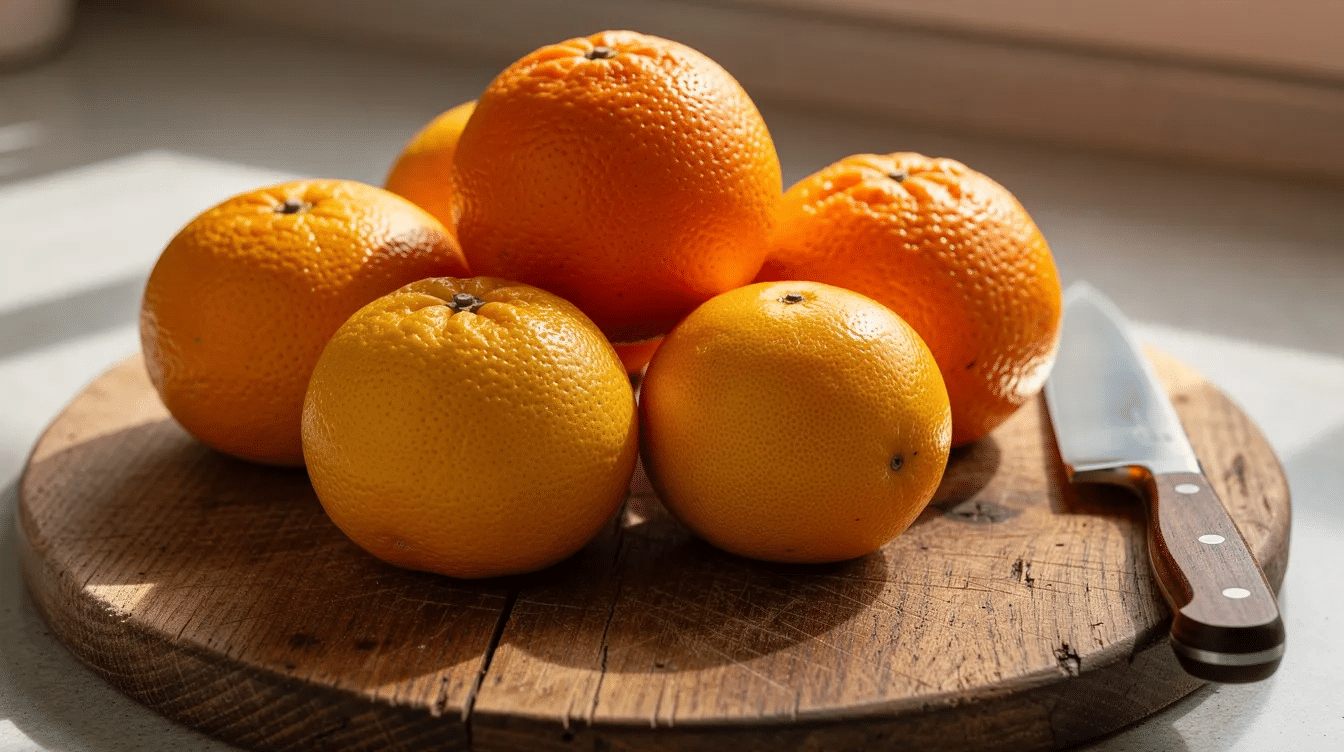
Quality dehydrated oranges start with firm oranges that slice cleanly and dry evenly. Here is what to look for.
Recommended varieties and how they behave when dried:
Navel and Valencia oranges produce classic, moderately sweet dried oranges with good peel thickness.
Cara Cara oranges give you salmon-pink flesh and a subtle berry-like flavor that looks striking once dried.
Blood oranges deliver deep red, dramatic slices ideal for cocktails and winter décor, thanks to anthocyanin pigments in the flesh.
Organic or unwaxed fruit is preferred for edible dehydrated oranges, especially when the peel will be eaten or steeped in iced tea, mulled wine, or a simmer pot. Wax coatings and pesticide residues do not dry off – they stay on the slice.
Selection tips:
Choose oranges that feel heavy for their size; that weight means juice.
Avoid fruit with soft spots, mold, or sunken areas.
Look for smooth, tight skin rather than leathery rinds.
Even slicing and good prep are key to evenly dehydrated orange slices that look attractive and dry at the same rate.
Start by rinsing each orange under cool running water. Gently scrub the peel with a brush, especially if the fruit is not organic. Then pat completely dry with a paper towel before slicing.
Slice oranges ⅛” to ¼” thick for even drying. A thickness of about ¼ inch (6 mm) produces chewy slices, while ⅛ inch (3 mm) yields crisp, almost translucent discs. Consistency matters more than the exact measurement – if half your slices are thin and half are thick, they will finish drying hours apart.
For tools, a sharp knife works fine and gives good control for beginners. A mandoline slicer is faster and produces uniform thickness across dozens of slices, but always use the hand guard or a cut-resistant glove for safety.
Discard or repurpose the end pieces that are mostly rind and little flesh; they tend to dry bitter. Zest those ends or juice them for another recipe. After slicing, blot freshly cut slices with a paper towel to remove surface juice, which helps speed drying. Pick out seeds with the tip of a knife or a toothpick so your finished dehydrated oranges are seedless and better suited for garnishes and crafts.
Dehydrator Method: How to Dehydrate Orange Slices at Low Temperature
A food dehydrator is ideal for this project: very low temperature, consistent air circulation, and mostly hands-off drying that preserves color and flavor.
Set your dehydrator to the “fruit” setting, usually around 135°F (57°C). Dehydrate oranges at 135°F in a dehydrator for the best balance of speed and quality. Some models only go down to 140°F, which is still acceptable but may slightly darken the peel.
Arrange prepared orange slices in a single layer on dehydrator trays without overlapping. Leave a small gap between slices so air moves freely around each one. Slide the trays in, set the temperature, and start the timer.
Check after about two hours. Total drying time typically runs 3–7 hours depending on slice thickness, juiciness, and your machine. Rotate trays from top to bottom and flip slices at least once during drying for perfectly even dried oranges.
Doneness tests:
Slices should feel dry to the touch, not sticky.
No visible beads of moisture remain.
When bent while still warm, a properly dried slice will be leathery and pliable (for a chewier result) or will snap cleanly (for a crisper result).
If some slices dry much faster than others, remove them early and let the rest continue. If centers stay soft, run an extra hour at the same low temperature rather than increasing heat, which risks browning and flavor loss.
Oven Method: Easy Oven Dried Orange Slices at Home
Making your own dried orange slices in the oven is accessible in any kitchen – no dehydrator required. It works well for first-time home cooks and anyone who wants to bake a single batch without buying new equipment.
Preheat the oven to its lowest temperature, usually 170–200°F (about 75–95°C). Use convection mode if available to mimic dehydrator airflow. Higher temperatures will start to cook and brown the slices rather than gently dehydrate them. You can oven-dry oranges at 200°F for 3 to 4 hours for most standard-thickness slices.
Line a baking sheet with parchment paper or set metal cooling racks over rimmed pans for better air circulation underneath. Arrange orange slices in a single layer with no overlap. Optionally, sprinkle a light dusting of sugar, cinnamon, or cardamom on a few slices if you are making edible garnishes for desserts or cocktails.
Flip orange slices every hour for even drying. Total bake time runs 3–5 hours depending on thickness and your oven. Crack the oven door slightly with a wooden spoon if moisture builds up or if the oven cannot go below 200°F.
Visual cues of doneness for oven dried orange slices:
Edges look slightly curled and dry.
Centers are no longer glossy or wet.
Slices feel firm and leathery, not squishy.
Watch closely in the last 30–45 minutes to avoid browning. Remove any slices that darken too quickly – they will taste burnt or overly bitter.
Simple Dried Oranges Recipe (Dehydrator or Oven)
Here is a concise, all-in-one dried oranges recipe you can follow in either a dehydrator or an oven. Review recipe steps before starting so everything moves smoothly.
Ingredients and yield:
4–6 medium oranges (about 2–2.5 lb / 900–1150 g)
Optional: 1–2 tablespoons sugar and a pinch of cinnamon or cardamom
Yields approximately 40–60 dried orange slices depending on thickness
Prep: Wash, dry, and slice oranges ⅛–¼ inch thick. Pat slices dry and remove seeds. If desired, toss a portion of slices lightly in sugar and spices for dessert or cocktail garnishes.
Dehydrator path: Set to 135°F. Arrange slices in a single layer on trays. Dry for 3–7 hours, flipping once or twice. Rotate trays halfway through.
Oven path: Preheat to 170–200°F. Place slices on parchment paper-lined pans or racks. Bake for 3–5 hours, flipping a few times and rotating pans for even results.
Cooling and conditioning: Let slices cool completely on racks. Loosely pack them in a jar for 3–5 days, shaking once daily to distribute any remaining moisture. If condensation appears on the glass, return slices to the dehydrator or oven to dry longer.
Double or triple this recipe in winter when oranges are cheapest. Set aside separate batches for snacking, beverages, and craft uses. Dehydrated orange slices are lightweight and portable, making them an easy addition to a gift basket or lunchbox. Serving size is important to avoid overconsumption of dehydrated oranges, since the concentrated sugars add up faster than you might expect, even though dehydrated citrus fruits offer several surprising health and practical benefits. Required recipe ratings and a quick comment something below help other readers find this guide – feel free to share your results.
Creative Uses for Dehydrated Orange Slices
Once you learn how to dehydrate orange slices, you can use them year-round in both food and non-food projects. A dedicated guide on how to dehydrate oranges in a food dehydrator can help you refine your technique. Dried oranges are often used as garnishes or decorations, but the list of possibilities goes much further.
Float a slice as a garnish for cocktails, mocktails, and sparkling water – especially winter drinks like mulled wine, old fashioneds, and gin & tonic.
Steep in hot tea or fruit-based tisanes with cinnamon sticks for a simple homemade citrus tea. A slice also works beautifully in a glass of iced tea.
Arrange on a charcuterie board for color, aroma, and a tangy bite between rich cheeses and cured meats.
Use as cake decoration, top cupcakes, or layer onto desserts and spice cakes. Dried orange slices are perfect for topping desserts where you want visual impact and flavor in one move.
Dehydrated oranges offer a quick energy source for active individuals, so they also work as a portable snack on hikes or long drives.
Craft and décor uses:
String dried orange slices into garlands for a christmas tree or winter mantel.
Tie them with twine or ribbon to create christmas ornaments.
Mix into potpourri with cloves, star anise, and cinnamon sticks. Dried oranges can be added to potpourri for fragrance that lasts weeks.
Drop slices into a simmer pot on the stove for natural, essential oil-like aroma without synthetic sprays. They can be used in simmer pots for added aroma throughout your home.
Decorate holiday wreaths or embed slices in homemade candles.
Use the brightest, most evenly dried slices for eating and drinks. Reserve slightly darker or imperfect ones for a simmer pot, wreaths, or table scatter. Even decorative dried oranges are organic material and may eventually mold in very humid conditions – replace décor pieces annually or when they look faded or soft.
Storage, Shelf Life, and Safety for Dried Oranges
Correct storage is what turns a weekend drying project into a pantry staple that lasts through multiple seasons.
An airtight container like a mason jar with a screw-top or clamp lid is ideal for edible slices.
Metal tins with tight-fitting lids work well for craft-only slices.
Heavy zip-top bags with as much air pressed out as possible serve as a backup.
Storage conditions: Keep dried orange slices in a cool, dark, dry cupboard, away from direct sunlight and heat sources like an oven or radiator. Avoid the refrigerator unless your climate is extremely humid – condensation can reintroduce moisture.
If slices feel soft, sticky, or bend like fresh fruit, they were under-dried.
Discard any pieces with visible mold, off smells, or a sour, musty scent.
In humid climates, use smaller jars and keep craft slices separate from edible ones.
For very long storage (over a year), drop a food-safe desiccant packet into each jar of edible dehydrated oranges to help keep them crisp, especially if you open the jar frequently.
Troubleshooting Common Problems with Dehydrated Oranges
A few common mistakes – overly thick slices, high oven heat, or rushing the process – cause most issues with dried oranges.
Uneven drying: Usually caused by slices of different thickness, crowded trays, or poor airflow. Fix this by slicing as uniformly as possible, leaving space between slices, and rotating trays during drying.
Browning or burnt edges: Happens when the oven runs too hot, slices sit too close to heating elements, or sugar on the surface caramelizes. Keep your oven at or below 200°F, use middle racks, and check frequently after the two-hour mark. Remove fully dry slices as you go.
Sticky or under-dried slices: Return them to the dehydrator or oven for an extra 30–60 minutes at low temperature. If you are using your oven for this step, a broader guide to dehydrating fruit in the oven can help you fine-tune temperature and timing. Cool again and re-check before sealing in any jar or airtight container.
Bitterness: Some bitterness is natural from the peel and pith. Choosing sweeter varieties like Cara Cara or blood oranges helps. Slicing thinner also reduces the pith-to-flesh ratio. If slices are too bitter to enjoy as a snack, sprinkle lightly with sugar or reserve them for cooking, beverages, or décor.
Mold in storage: Almost always caused by incomplete drying or trapped moisture. Discard affected slices. For future batches, dry longer and condition slices in loosely covered jars for several days before final sealing. This conditioning step lets any hidden moisture redistribute so you can catch it early.
FAQ: Edible Dehydrated Oranges
Below are answers to common questions not fully covered in the sections above, including safety, equipment alternatives, and nutrition.
Are dehydrated orange slices actually good to eat, or are they just for decoration?
Properly made dehydrated oranges are completely edible and can be eaten like any other dried fruits, though the peel and pith add a slightly bitter, marmalade-like flavor. Many people prefer to nibble around the peel or use slices mostly to flavor hot drinks and then discard the spent peel. For snacking, thinner slices from sweeter varieties like Cara Cara or navel oranges are most enjoyable. Thicker, darker slices are better reserved for christmas ornaments, potpourri, or a simmer pot. Ingredients should be checked for added sugar or preservatives in any store-bought dehydrated oranges to make sure you are getting a pure product.
Can I dehydrate orange slices in an air fryer instead of a dehydrator or oven?
Yes, you can use an air fryer if it has a low-temperature “dehydrate” setting around 135–160°F (57–70°C). Arrange orange slices in a single layer on the basket or a perforated tray and dry for 2–4 hours, checking and flipping periodically. For a broader overview of technique and temperature ranges, see how to dehydrate food in an air fryer. Watch closely near the end because air fryers run hotter and with stronger airflow than dedicated dehydrators. Capacity is limited and slices may dry less evenly, so this method works best for test batches or occasional use rather than a large seasonal run.
How do I keep oven dried orange slices from sticking to the pan?
Sugar and juice can glue slices to bare metal, so lining trays with parchment paper or a silicone baking mat is the simplest solution. Using a metal rack set over a baking sheet also works well because hot air circulates under the slices and they do not sit in pooled juice. Gently loosen slices with a thin spatula halfway through the bake to prevent stubborn sticking, especially at the upper end of the temperature range. This also gives you a chance to store any fully dried slices early.
Can I use dehydrated oranges as Christmas ornaments every year, or do I need to replace them?
Dried orange slices used as christmas ornaments and garlands are organic material and will eventually fade, become brittle, or attract moisture and mold in damp climates. Replace decorative slices every one to two holiday seasons for the best color and safety. Store them in a dry, sealed box between seasons on the tree. If slices ever feel soft, smell off, or show spots, discard and replace them with a fresh batch.
Is there a nutritional benefit to using dehydrated orange slices in tea or water?
Dehydrated oranges retain many core nutrients from fresh oranges, including flavonoids and polyphenols, though vitamin C is heat-sensitive and water-soluble, often retained at lower levels in dehydrated fruit. Steeping a slice in hot water or tea infuses flavor and some soluble compounds but will not deliver the same vitamin boost as eating fresh oranges. Fresh oranges help with hydration due to their high water content, while dehydrated oranges are rich in concentrated fiber and natural sugars. The main benefits of dried slices in beverages are convenience, reduced waste, and natural citrus flavor year-round without needing fresh fruit on hand. If you enjoy them, you might also like similar snacks like homemade dehydrated apple slices, which follow many of the same principles. Look for products with zero saturated fat, monounsaturated fat, and polyunsaturated fat listed – a clean label confirms you are getting pure dried fruit with no added oils.
DannyContent Writer
Hey there, since 2016, my mission has been to provide you with the information and guides you need to make food dehydrating simple and fun. Whether you're a newbie or a seasoned pro, my site offers helpful guides, reviews, and recipes to enhance your dehydrating experience. I take pride in only recommending products I believe in, ensuring my readers' trust. As an affiliate of various programs, including Amazon Associates, your support helps me continue providing quality content. Thanks for stopping by, and happy dehydrating!