We earn a commission if you make a purchase, at no additional cost to you.
09/22/2026 04:39 pm GMT
🍊 Dehydrated Food Info Finder — Temperatures & Drying Times
Choose a category, then pick a food to see its drying temperature and time.
⚠️ Safety Disclaimer: Drying times are estimates and vary based on slice thickness, food moisture content, humidity, and your dehydrator model. Always check for doneness before storing — food should feel dry, leathery, or brittle with no moist spots. Improperly dried food can harbour mould and bacteria. For meat and poultry, follow USDA safe internal temperature guidelines: beef and pork to 160°F (71°C), poultry to 165°F (74°C). Use a food thermometer when in doubt. Store all dehydrated foods in airtight containers in a cool, dark place and discard anything showing moisture, mould, or off odours.
Does Dried Fruit Have More Sugar? A Clear Guide to What You’re Really Eating
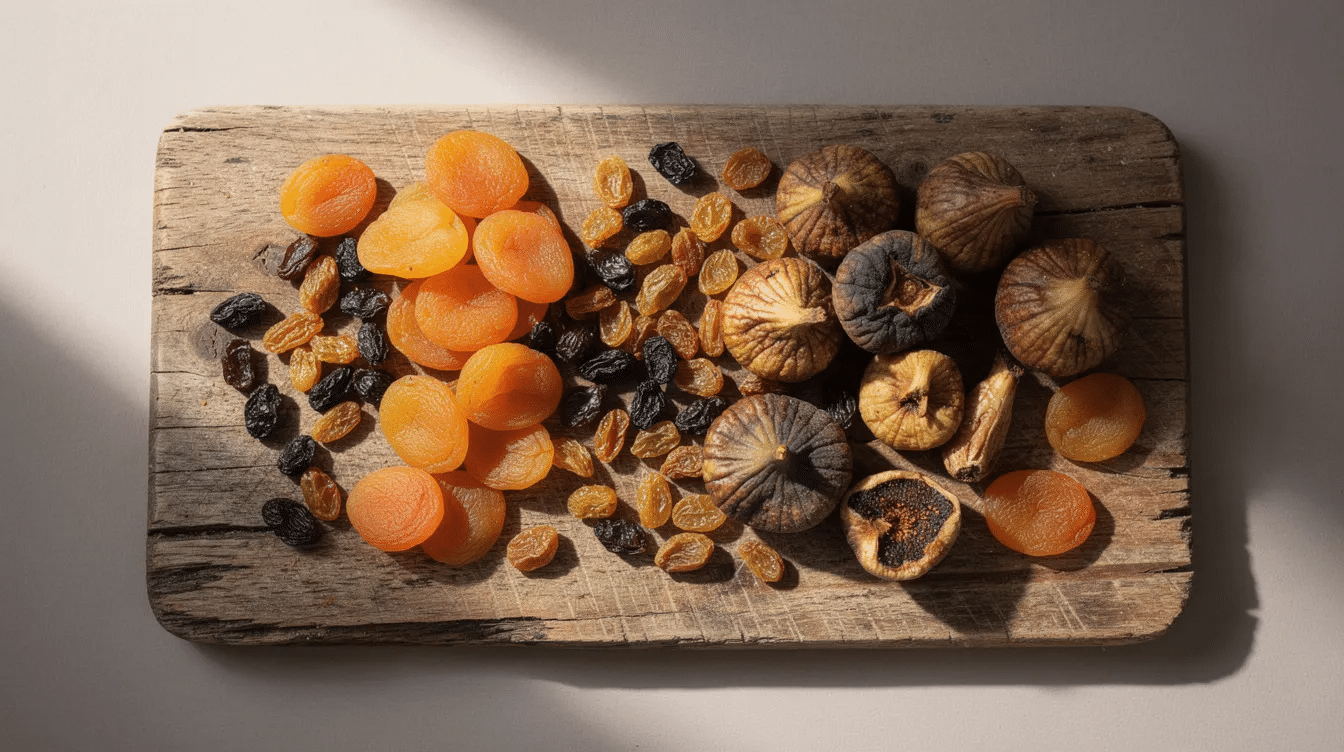
Dried fruit is a go-to snack for long trips, trail mix, and baked goods. But does dried fruit have more sugar than its fresh counterparts? The short answer: yes, per bite. The drying process removes water content, leaving all the sugar and calories packed into a smaller package. Here is what that means for your diet and blood sugar levels.
Key Takeaways
A quarter cup of raisins contains roughly the same amount of sugar and calories as one cup of fresh grapes, because removing water from fruit concentrates its natural sugars and calories into a much smaller serving size.
Plain dried fruits like raisins, dried apricots, and dried apples contain only natural sugars. Sweetened products like many dried cranberries and dried bananas chips can have 20+ grams of added sugar per serving.
Dried fruit can spike blood sugar levels more than fresh fruit, especially when eaten alone and in large portions.
You do not need to avoid dried fruit entirely. Choose unsweetened options, keep portion sizes to about a quarter cup, and pair with protein or healthy fat to slow digestion.
What Happens to Sugar When Fruit Is Dried?
Fresh fruit is about 70% to 90% water. During the drying process, whether by sun-drying, oven heat, or mechanical dehydrators, that water content is removed until roughly 15% moisture remains. The fruit shrinks, but all the sugar stays. No new sugar is created; the same amount of sugar is just concentrated into a much smaller volume.
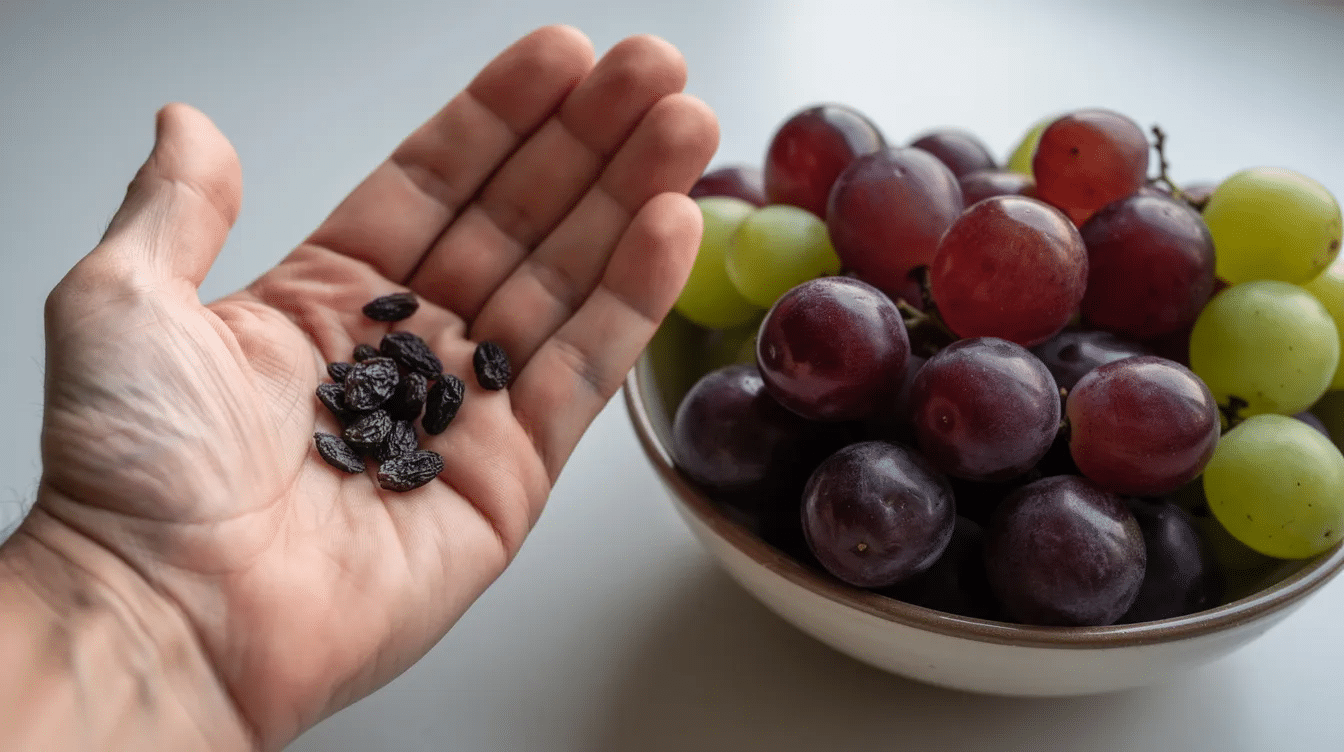
Consider this: one cup of seedless grapes (about 151 g) contains around 23 g of natural sugars. A quarter cup of raisins (about 40 g) contains around 29 g. One-quarter cup of raisins equals one cup of grapes in carbs, yet the raisins fit in your palm. That is the core issue with dried fruit: a serving of dried fruit is usually much smaller than a serving of fresh fruit, but it can pack as much sugar as a large bowl of fresh fruit.
The numbers hold across the board. 100 grams of dried apple contains 57 grams of sugar, compared to about 10 g in 100 g of a fresh apple. Dried fruits have a higher sugar content than fresh fruits; common varieties like raisins, dried apricots, dates, figs, and dried cherries typically contain 38–66% sugar by weight, and 100 grams of dried fruit can contain over 50% sugar by weight. Fiber, minerals, and many vitamins are also concentrated, but the body still processes the higher sugar load. Dried fruit is calorie-dense due to concentrated sugars; dried apples clock in at about 246 kcal per 100 g versus 52 kcal for fresh. Dried fruit is more calorie-dense than fresh fruit across every comparison.
Natural Sugar vs. Added Sugar in Dried Fruits
Natural sugars in dried fruit (fructose, glucose, sucrose) come from the original fresh fruit. Added sugar is extra sucrose, corn syrup, fruit juice concentrate, or honey applied during processing to improve taste and shelf life. The distinction matters for your calorie intake and health concerns.
Many dried cranberries are heavily sweetened. A 40 g serving of one popular brand lists 28 g total sugars, with 27 g of that being added sugar. Some dried fruits contain added sugars, increasing calorie content well beyond what the fruit alone would provide. Dried mango, certain dried cherries, and banana chips often carry sugar added during processing. “Yogurt-covered” dried fruit is closer to candy than fruit.
To spot added sugar, check the nutrition facts panel. Compare “Total Sugars” to “Added Sugars.” If those numbers are close, most of the sugar was put there by the manufacturer. Scan the ingredient list for words like “cane sugar,” “corn syrup,” or “fruit juice concentrate.” Unsweetened dried apricots typically show 0 g added sugar and about 15–17 g total sugar per quarter cup. Sweetened dried cranberries often show 8–12 g or more of added sugar in the same amount. Choosing unsweetened dried fruits, plain raisins, or pure dates helps reduce excess sugar while preserving nutrient content.
How Dried Fruit Affects Blood Sugar
Because dried fruit delivers concentrated sugars in small portions, it can raise blood sugar faster and higher than the same amount of fresh fruit. Fresh fruit supports hydration due to its high water content, which also slows digestion. Dried fruit can lead to quicker blood sugar spikes than fresh fruit, a concern for people with insulin resistance or diabetes.
The glycemic index measures how fast a food raises blood sugar on a scale to 100. Glycemic load factors in both the GI and the portion eaten. Since raisins are simply dried grapes, dried fruits have a low to moderate glycemic index: dried apricots score about 42, raisins about 55, and sultanas about 51 in controlled feeding trials. Those are lower than white bread (GI ~71). But glycemic load climbs with portion sizes. A handful of dates or a large serving of sweetened dried cranberries can still trigger rapid spikes in blood sugar levels.
Fiber and organic acids in dried fruit blunt the spike somewhat. Pairing dried fruit with protein or healthy fats slows absorption further. A few practical strategies: mix raisins with almonds in trail mix, stir a few dried cherries into Greek yogurt, or eat a small portion of apricots alongside cheese. Avoid eating dried fruit on an empty stomach if you are watching blood sugar. Small portions paired with other foods produce a more gradual glucose response than a large handful eaten alone.
Comparing Sugar in Popular Dried Fruits
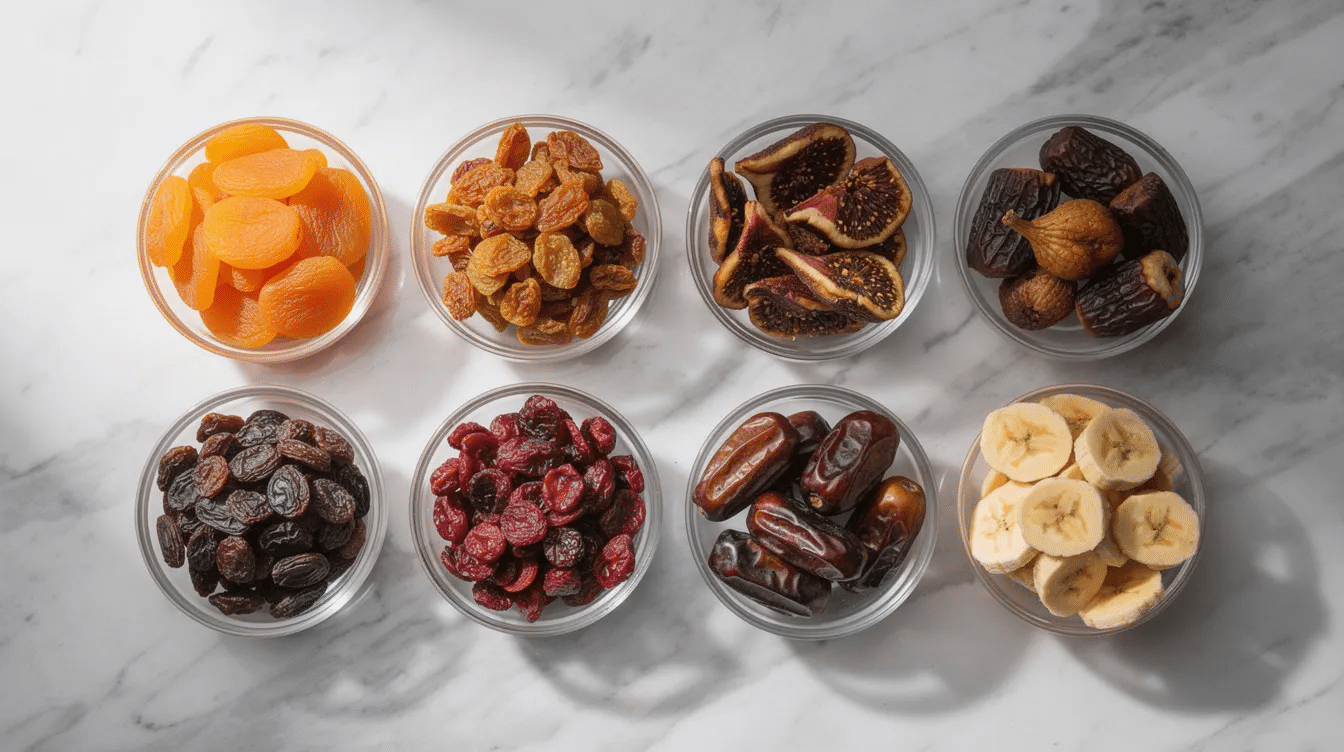
Sugar content varies across traditional dried fruits, even among the top 10 dried fruits for optimal health. Here are approximate values per quarter-cup (about 40 g) serving, based on common USDA data:
Raisins: around 21–29 g sugar, almost entirely natural. A small 1-ounce portion of raisins contains 84 calories, mostly from sugar. No added sugar in plain versions.
Dried apricots: about 15–17 g sugar per quarter cup. Unsulfured, unsweetened versions sit at the lower end.
Dried apples: roughly 13–18 g sugar. Many commercial “apple rings” are dusted with cinnamon sugar, pushing the number higher.
Dried bananas: chewy unsweetened slices carry about 15–20 g natural sugar per small handful. Fried banana chips often contain added sugar and oil.
Dried cherries and dried cranberries: often 20–26 g total sugar per quarter cup, with significant amounts of that being added sugar. Fresh cherries are tart; manufacturers compensate with sweeteners.
Dried mango and other tropical fruit varieties land in a similar range, often with sugar added to enhance flavor, though dried mango also offers notable health benefits when eaten in moderation. The takeaway: sugar and calories add up fast beyond a quarter to a third cup. Even a nutritious snack becomes a sugar-heavy one when portions grow. Dried fruit can contain up to 57 grams of sugar per 100 grams depending on the type.
Health Benefits of Eating Dried Fruit (Despite the Sugar)
Dried fruit can be a nutritious snack when consumed in moderate portions, even though some nutrients are partially lost in dehydrated fruits. Plain dried fruits still belong in a healthy diet for several reasons.
Dietary fiber is concentrated alongside sugar. Raisins, prunes, dried figs, and dried apples provide fiber that supports digestive health and a more gradual release of sugar into the bloodstream, especially when combined in a homemade dried fruit and nut mix. A 40 g serving of dried fruit provides about 10% of daily fiber needs.
Dried fruit contains potassium, iron, magnesium, and calcium. Raisins are high in fiber, potassium, and plant compounds. Dried apricots deliver more nutrients per gram than fresh counterparts because the water content removed leaves behind a concentrated source of minerals. Citrus fruits can also be dehydrated, and dehydrated citrus fruits offer additional immune and antioxidant benefits when used wisely. Dried fruit can contain up to 3.5 times the nutrients of fresh fruit by weight, though heat sensitive vitamins like vitamin c degrade during the drying method. The antioxidant content remains strong; dried fruit is rich in antioxidants, especially polyphenols, which contribute to reduced oxidative stress and may help lower blood pressure.
Observational research shows that people who eat dried fruit in moderation tend to have higher diet quality scores with more fiber and more nutrients. Eating dried fruit as part of a healthy snack beats candy or ultra-processed sweets because it still delivers fiber, many vitamins, and additional benefits. Fresh fruit is the first choice for year round hydration and volume, but dried fruit fills a practical gap on long trips, in baked goods, and as a concentrated source of energy.
How Much Dried Fruit Is Too Much? Practical Portion and Usage Tips
Most adults can enjoy dried fruit without problems, but portion control is crucial with dried fruit due to its calorie density. Think of it as a concentrated food, not a free snack.
Start with about 2 tablespoons to a quarter cup of plain dried fruit per sitting. That counts as roughly one serving of fruit. Visual equivalents: a small cupped handful of raisins, about 6–8 dried apricot halves, or 1–2 Medjool dates. For children, cut that in half.
Use dried fruit as an accent:
Sprinkle a tablespoon of dried cranberries over salad
Mix a few dried cherries into oatmeal or yogurt
Add a few dried bananas slices to homemade trail mix
Toss some raisins into baked goods instead of chocolate chips
Pair with protein or healthy fats (nuts, seeds, cheese, nut butter) to slow digestion and reduce blood sugar spikes. You can also make your own dried fruit at home with a dehydrator to control the drying process and avoid added sweeteners, or focus on specific options like nutrient-dense dried mango. Dried fruit should be consumed in moderation to avoid gastrointestinal distress; too much fiber at once can cause bloating. If you have diabetes or prediabetes, track your blood sugar response to different dried fruits and adjust portion sizes based on those readings. Monitor your calorie intake and keep the same amount consistent from day to day.
Choosing Better Dried Fruit Products at the Store
A few label-reading habits make a real difference.
Prioritize products where the ingredient list shows only the fruit and possibly water. If sugar, syrups, or sweeteners appear among the first ingredients, the sugar content is inflated beyond what the fruit naturally contains. Look for “unsweetened” raisins, dried apricots, dried apples, and dried cherries, or even consider freeze-dried fruits as a healthy snacking option. Many dried fruits labeled “sweetened” or “candied” carry excess sugar. For dried cranberries, “reduced sugar” or juice-sweetened versions are often the best available option.
Brightly colored dried apricots and dried apples may contain sulfites as preservatives. Sulfites in dried fruit can cause adverse effects in sensitive individuals, particularly those with asthma. Look for “unsulfured” versions, which tend to be browner but free of that preservative. The shelf life may be slightly shorter.
Avoid confusing chewy dried fruits with crunchy banana chips or “fruit snacks.” Those products are often fried, coated with oil, or infused with sweeteners. They are calorie dense foods closer to candy than fruit. If you like variety but want control over portions, a curated dried fruit subscription box can offer pre-selected, portionable options. Pre-portion dried fruits into small containers at home instead of eating straight from a large bag; this single habit prevents most overeating.
FAQ: Common Questions About Dried Fruit and Sugar
Below are answers to practical questions about dried fruit and sugar intake not fully covered above.
Is dried fruit worse for you than candy?
Plain dried fruit delivers fiber, potassium, iron, and polyphenols. Candy delivers sugar with minimal nutrient content. That said, the sugar content per serving can overlap: sweetened dried cranberries carry 27 g added sugar in a 40 g serving, comparable to many candies. The difference is that dried fruit still provides dietary fiber and more nutrients. Choose unsweetened options and keep portions at a quarter cup or less. Treat candy as an occasional indulgence with less nutritional value.
Can I eat dried fruit every day if I’m trying to lose weight?
Yes, if you keep portions small and track total daily calories. A tablespoon mixed into oatmeal or yogurt adds flavor without adding significant calories. Fresh fruit is more filling per serving because of its water content, so prioritize it for volume and satiety. Reserve dried fruit for flavor, convenience, and situations where fresh fruit is unavailable. Avoiding weight gain from dried fruit comes down to measurement, not elimination.
Is freeze dried fruit lower in sugar than regular dried fruit?
Freeze dried fruit removes moisture through freezing and vacuum instead of heat, which preserves some heat sensitive vitamins better. But the natural sugars per gram remain just as concentrated. The light, airy texture of freeze dried fruit makes portion sizes feel deceptively small; people often eat more grams than intended. Check the nutrition facts for added sugar and weigh or measure portions rather than eating directly from the bag. Traditional dried fruits and freeze dried fruit are comparable in sugar content gram for gram.
Should people with diabetes avoid dried fruit completely?
Many diabetes dietary guidelines allow small portions of plain dried fruit. The key is counting carbohydrates and monitoring your blood sugar response. Start with 1–2 tablespoons, choose unsweetened options (plain raisins, unsulfured dried apricots), and pair with protein or healthy fats to minimize rapid spikes. Some people find that certain dried fruits produce smaller glucose rises than others, so testing with a glucose monitor helps. Individualized medical advice from a healthcare provider or registered dietitian is essential for specific serving recommendations. You do not need to avoid dried fruit completely; you need to measure it carefully.
DannyContent Writer
Hey there, since 2016, my mission has been to provide you with the information and guides you need to make food dehydrating simple and fun. Whether you're a newbie or a seasoned pro, my site offers helpful guides, reviews, and recipes to enhance your dehydrating experience. I take pride in only recommending products I believe in, ensuring my readers' trust. As an affiliate of various programs, including Amazon Associates, your support helps me continue providing quality content. Thanks for stopping by, and happy dehydrating!