Looking for your American Harvester dehydrator manual? You’re not alone. Many owners of these reliable food dryers need documentation for setup, temperature settings, or troubleshooting. This guide will help you find the right manual and understand what’s inside it.
Quick Answer: Where to Find Your American Harvest / NESCO Dehydrator Manual
American Harvest dehydrators are now manufactured and sold under the NESCO brand. If you’re searching for documentation, you’ll typically find manuals labeled “Nesco/American Harvest” rather than just “American Harvest.”
Common models include: Snackmaster Pro FD-50, Snackmaster Express FD-60, FD-75PR, FD-80, FD-1018A, and older stackable “American Harvest” units from the 1990s and 2000s
Official download location: Free PDF manuals are available from the official NESCO website under the “Owners Manuals” or “Dehydrators” category
Can’t find your exact model? Use a “family” manual that covers multiple similar FD-series models manufactured after approximately 1990
Alternative sources: Check archive sites, community forums, or contact NESCO customer service directly if the specific model number isn’t listed online
Understanding American Harvest & NESCO Dehydrators
American Harvest branded dehydrators produced from the late 1980s through the 2000s came from the same manufacturer that now sells under the NESCO and Nesco American Harvest names. This means your older unit is fully supported by current documentation.
Manual titles vary: You may encounter titles like “Nesco/American Harvest Dehydrator Use and Care Manual” or “Snackmaster Dehydrator Instructions” even if your unit displays “American Harvest” on the lid
Snackmaster line: This refers to the popular FD-series models including FD-30, FD-50, FD-60, FD-75PR, FD-80, and FD-1010
Core design: All models share similar operating principles—stackable trays, top or base-mounted fan, and temperature dial
FD-series: The model designation system used across most Nesco American Harvest dehydrators
Wattage range: Typically 500–1000 watts depending on model and capacity
Temperature range: Usually adjustable from 95–160°F in 5°F increments on most units
Manual compatibility: A 2013 revision date on a manual can still apply to many older American Harvest dehydrators with similar specifications
Locating the Correct Manual by Model Number
Proper identification starts with the model number printed on the bottom or side of the power unit, or on the product label near the cord.
Look for designations like “FD-50 Snackmaster Pro,” “FD-61 Snackmaster Express,” “FD-75PR Snackmaster Pro,” or “FD-80 Snackmaster” stamped on the base or motor housing
Some early American Harvest units list only “Snackmaster Dehydrator” and wattage (e.g., 500W or 700W)—these can typically use the general “Dehydrator Manual – Nesco/American Harvest” covering multiple models
Check both the dehydrator itself and any original packaging for the full model and revision letters (e.g., FD-50, FD-50T, FD-50T2)
If the exact model is not found, match by features: analog dial vs. digital display, fixed vs. adjustable thermostat, and number of trays supported
Contact NESCO customer support at their 800 customer care line if you cannot find a matching manual online
What the American Harvest Dehydrator Manual Typically Covers
Once you download your manual, here’s what you can expect to find inside these comprehensive guides.
Important Safeguards: UL-style safety rules including do not immerse the power head, unplug when not in use, keep away from children, and operate on a stable heat-resistant surface
Parts Identification: Diagrams showing the power unit, trays, fruit roll sheets, and optional accessories
Assembly Instructions: Step-by-step guidance for stacking trays and positioning the unit
Dehydrating Basics: Introduction to food-drying history, benefits over sun-drying, and advantages vs. conventional ovens (more precise temperatures, better flavor retention), much like a beginner-friendly guide to using a food dehydrator
Food Preparation Charts: Temperature and time guidelines—typically 90–95°F for herbs, 125–135°F for fruits, 135–145°F for vegetables, and 155–160°F for meats and jerky, similar to what you’d see in a detailed food dehydration chart guide
Operating Guide: Instructions for loading trays, setting temperature, and monitoring progress
Nutrient retention notes: Many manuals include information on vitamin preservation, case hardening prevention, and avoiding off-flavors from mixing between trays
Basic Operating Instructions for Snackmaster / American Harvest Dehydrators
This section summarizes the step-by-step operating guidance commonly found in the official manual for models like FD-50 Snackmaster Pro and FD-75PR, and closely matches a detailed guide to using a Nesco food dehydrator.
Pre-use preparation: Remove all packaging, separate trays, wash trays and fruit-roll sheets in warm soapy water, rinse thoroughly, and air dry before first use
Positioning: Place the dehydrator on a level countertop at least 2–3 inches away from walls or cabinets in a room where it can run continuously for 6–24 hours
Food preparation: Wash, peel if necessary, slice evenly (often 1/4 inch for fruit, 1/8–1/4 inch for jerky), and pat dry before loading
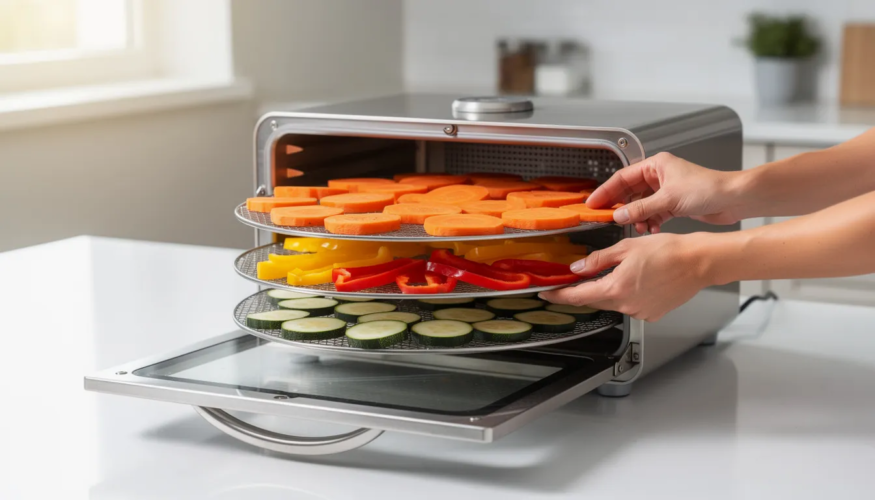
Loading trays: Arrange food in a single layer on each tray, avoid overlapping pieces, and use at least four trays even if partially empty to maintain proper airflow in stackable models
Setting temperature: Use the adjustable thermostat dial (typically 95–160°F) or digital controls to choose a temperature appropriate to the food category
During operation: The manual advises against adding food mid-cycle, moving the unit while running, or covering vents to keep drying time predictable
Completion: Check food texture rather than relying solely on time; properly dried foods should be leathery or crisp depending on the item
Food Preparation & Drying Guidelines
American Harvest manuals devote several pages to food preparation, blanching, marinating, and recommended slice thickness. Here’s what you need to know to dehydrate food successfully.
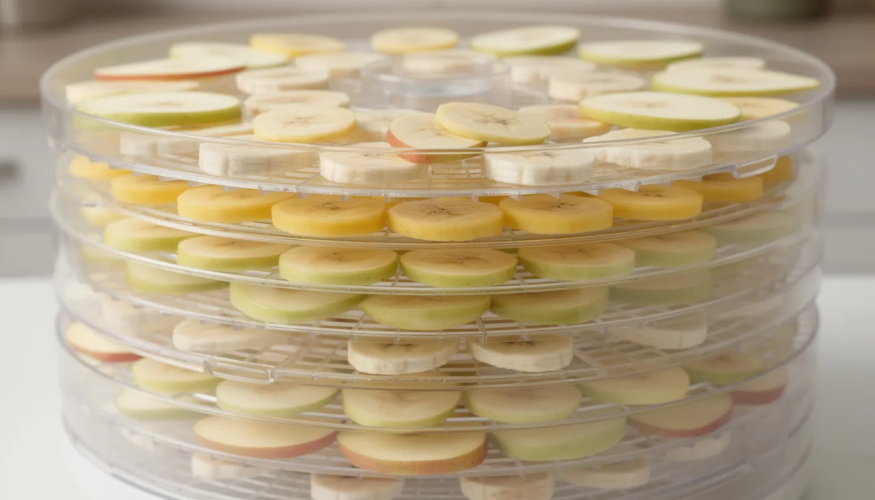
Fruits (apples, bananas, berries, tomatoes): Use ripe, unblemished produce and slice uniformly; pre-treat light-colored fruits like apples and pears in an ascorbic acid or citrus solution to reduce browning; typical drying time is 6–8 hours for banana chips and 10–18 hours for tomato halves
Vegetables (carrots, peppers, onions): Many vegetables benefit from blanching before drying; slice to consistent thickness for even results; dry at 135–145°F
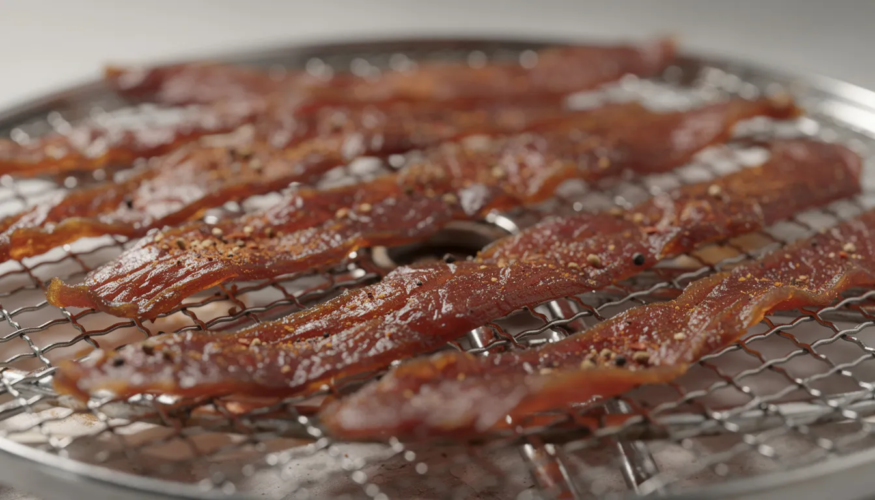
Meats and jerky (beef, venison, poultry): Use lean cuts, trim all visible fat, marinate under refrigeration, and always dry at the highest setting (around 160°F) for food safety; typical jerky requires 4–15 hours depending on thickness, following best practices for dehydrating meat in a food dehydrator
Herbs (basil, parsley, oregano): Dry at lowest temperatures (90–95°F) to preserve volatile oils; most herbs complete in 4–6 hours
Specialty items (fruit roll-ups, leathers): Use fruit roll sheets, puree fruits with honey if desired, and dry at 135°F for 4–6 hours; dedicated models like the Nesco Jerky Xpress have their own jerky-focused operating instructions you can follow for similar projects
Safety warning: American Harvest manuals warn against using raw eggs in homemade yogurt or jerky recipes without proper pasteurization and emphasize following USDA guidelines for meat and poultry, which is especially important when selecting the best food dehydrator for jerky
Texture testing: Always check texture rather than relying solely on time—properly dried foods should bend without breaking (jerky) or be pliable to crisp (fruits)
Cleaning, Maintenance, and Storage
This section mirrors the “Cleaning & Maintenance” and “Storage” chapters found in a typical Nesco/American Harvest use and care manual.
Before cleaning: Always unplug the dehydrator and let it cool completely before cleaning any part of the unit
Trays and sheets: Stackable plastic trays can be washed in warm soapy water or placed on the top rack of a dishwasher; avoid using the heated drying cycle to prevent warping
Avoid abrasives: Abrasive pads and harsh chemical cleaners are discouraged as they can scratch the plastic mesh or solid sheets
Power head care: The power head or base containing the motor and heating element should be wiped with a slightly damp cloth only—it should never be immersed in water
Periodic inspection: Check vents for dust buildup, inspect cords for damage, and do not operate the unit with a cracked tray or damaged base
Storage: Store the dehydrator covered or in its original box to protect from dust and kitchen grease when not in use for extended periods
True maintenance tip: Replace worn or warped trays promptly to maintain proper airflow and drying performance, and address any uneven drying or noise using a guide to common food dehydrator issues
Troubleshooting Common Dehydrator Issues
American Harvest manuals typically conclude with a simple troubleshooting guide addressing common concerns about drying time, texture, and noise.
Food taking too long to dry: Check slice thickness for uniformity, reduce tray loading density, verify room temperature and humidity levels, and ensure all vents are unobstructed; high humidity can extend drying time by 20–50%
Uneven drying between trays: Rotate trays every few hours on older models without a patented airflow system; ensure all pieces are similar in size and thickness
Off-odors or flavors: Do not mix strong-smelling foods (onions, garlic, fish) with delicate fruits or herbs in the same session; manuals warn that flavor transfer can occur even on separate trays
Unit not turning on: Ensure the dehydrator is plugged directly into a wall outlet rather than an overloaded power strip; check that the outlet works and the unit is not on a switched circuit
Excessive noise: Some fan noise is normal; unusual sounds may indicate debris in the fan housing or motor issues requiring service, especially if drying times or temperatures no longer match typical Nesco American Harvest dehydrator guidelines
Professional repairs: Manuals recommend contacting customer service or an authorized service center for motor, cord, or thermostat repairs rather than attempting self-repair
Safety, Warranty, and Contact Information
This final section summarizes the safety disclaimers and warranty information typically found in the official manual.
Key safety practices: Do not use outdoors, do not operate near water or flammable materials, supervise use around children, and unplug by pulling the plug—not the cord
Operating precautions: Keep the dehydrator away from walls and heat sources; restricted airflow can cause overheating or extended drying times
Warranty coverage: Many Nesco/American Harvest dehydrators include a limited warranty (often 1 year from date of purchase) covering defects in materials and workmanship but excluding misuse, commercial use, or unauthorized modifications
Customer support: Manuals provide a toll-free customer care number (such as 1-800-288-4545) and sometimes a mailing address for obtaining replacement parts like trays, solid sheets for fruit leathers, and clean-a-screen inserts
Replacement parts: Original accessories can be ordered directly from NESCO or authorized retailers
Printed manuals: Owners may be able to order original printed manuals for a small fee, similar to how NESCO offers hardcopy documentation for roaster ovens and other appliances
Registration: Some manuals encourage product registration for warranty purposes and to receive updates about new accessories or recipes
With your American Harvester dehydrator manual in hand, you’ll have everything you need to preserve fruits, vegetables, jerky, and more with confidence. Download your manual from the official NESCO website today and start making the most of your food dehydrator.
DannyContent Writer
Hey there, since 2016, my mission has been to provide you with the information and guides you need to make food dehydrating simple and fun. Whether you're a newbie or a seasoned pro, my site offers helpful guides, reviews, and recipes to enhance your dehydrating experience. I take pride in only recommending products I believe in, ensuring my readers' trust. As an affiliate of various programs, including Amazon Associates, your support helps me continue providing quality content. Thanks for stopping by, and happy dehydrating!