We earn a commission if you make a purchase, at no additional cost to you.
09/22/2026 04:39 pm GMT
🍊 Dehydrated Food Info Finder — Temperatures & Drying Times
Choose a category, then pick a food to see its drying temperature and time.
⚠️ Safety Disclaimer: Drying times are estimates and vary based on slice thickness, food moisture content, humidity, and your dehydrator model. Always check for doneness before storing — food should feel dry, leathery, or brittle with no moist spots. Improperly dried food can harbour mould and bacteria. For meat and poultry, follow USDA safe internal temperature guidelines: beef and pork to 160°F (71°C), poultry to 165°F (74°C). Use a food thermometer when in doubt. Store all dehydrated foods in airtight containers in a cool, dark place and discard anything showing moisture, mould, or off odours.
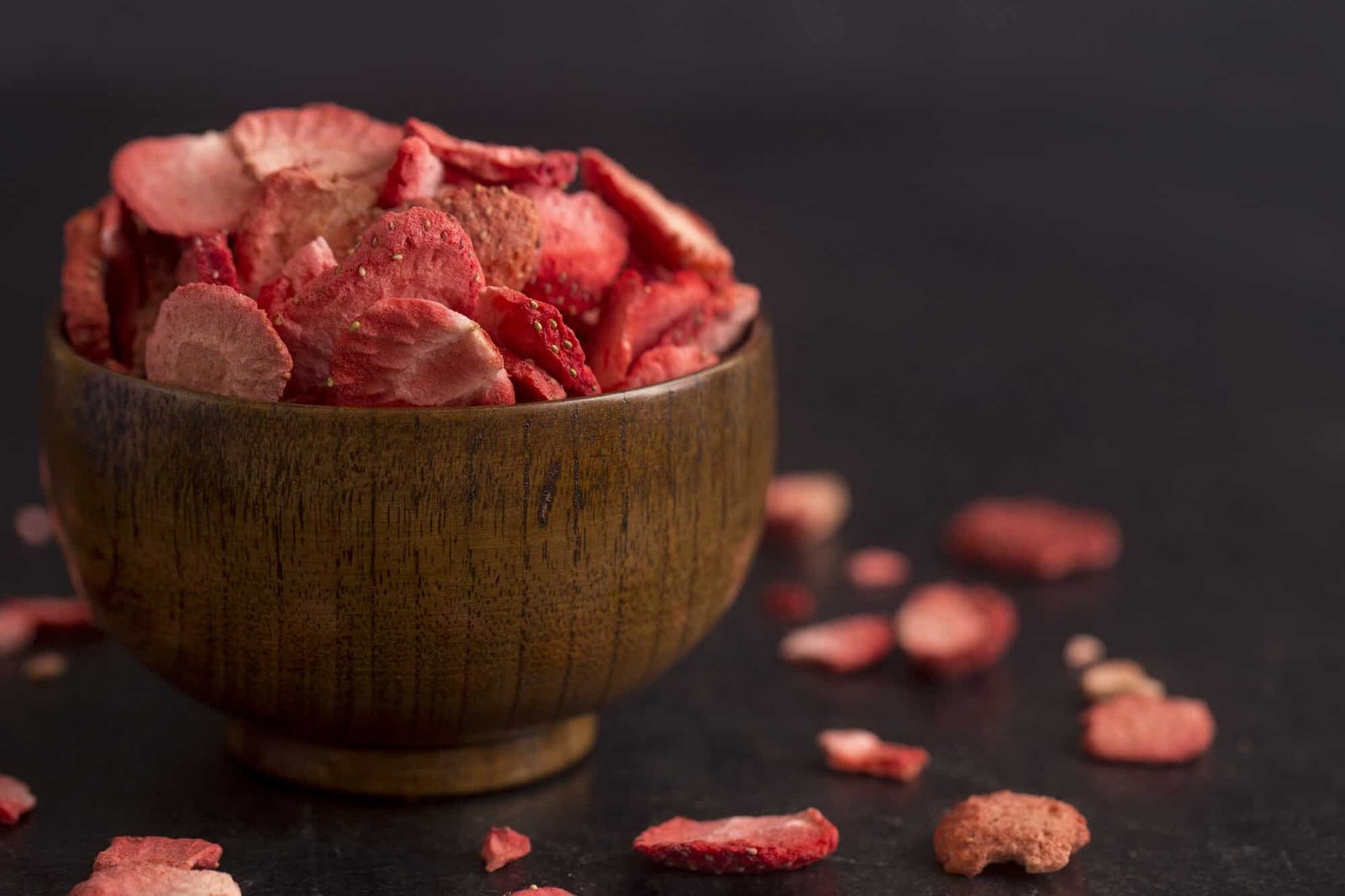
Dehydrated strawberries in a wooden bowl, ideal for healthy snacks and food preservation.
Benefits of dehydrating food is to preserve nutritional value and extend shelf life. This retains vitamins and minerals and is a healthy alternative to chemically preserved snacks. Dehydrated foods are light, easy to store and you have a constant supply of healthy options all year round, no additives.
While the benefits of dehydrated foods are many, the process is actually very simple to do at home. It involves removing the moisture from the food item and results in food items that can last for up to 30 years.
While the extended shelf life of dehydrated foods is well worth the celebration alone, they’re also healthy and the process is free from chemicals!
If you’re looking to explore the many advantages of food dehydration, you’re going to want to read this. We’re uncovering the seven most significant health benefits of dehydrating food and why you should try it for yourself.
Dehydrating food means removing the moisture from food. This preserves the food and makes it last longer without going bad. By removing moisture, natural flavors become more concentrated and can create a concentrated flavor in some foods, especially produce. By removing the water content we can prevent mold and bacteria growth and the food is safe to eat.
2. A Little History
Dehydrating food is one of the oldest form of food preservation. People have been doing this for centuries even before refrigerators were invented. Ancient civilizations used the sun and wind to dry foods so they would have food to eat when fresh produce was not available, relying on sun drying in low humidity conditions and air drying as traditional methods, with air drying requiring no special equipment.
3. Why Dehydrating Food is Important
Dehydrating food is important because it retains the nutritional value of the food. When done right, dried foods retain most nutrients, with minerals and fat-soluble compounds like beta carotene holding up well, though water-soluble vitamins such as Vitamin C and b vitamins can decline if exposed to high heat. Plus dehydrated foods have a longer shelf life so you can store them for months or even years and still get the nutritional benefits of food dehydration, especially since fresh produce can lose up to 50% of nutrients within days, making dried foods compare well with their fresh counterparts over time.
Dehydrating Food Benefits
1. Retains Nutritional Content of Food
Did you know that dehydrating food can retain almost 100 percent of the nutritional content?
While many other food preservation methods strip the food of its nutrition, the process of dehydration does not do so. An electric dehydrator helps preserve vitamins and minerals through controlled food drying that removes moisture without heavily processing the food. Good models typically run between 90°F and 170°F, use consistent 360-degree airflow, and include multiple trays so food products dry evenly.
This means you can rest assured that the food you’re dehydrating today will be just as nutritious when it comes time for consumption!
Based on your location, not all fruits and vegetables are available throughout the year. Even if your location does produce a wide array of fresh produce, there’s no denying that certain months are better than others in terms of quality.
With dehydrating these healthy foods at their prime, you are able to enjoy these fruits all year. You can also dehydrate fresh herbs to have a bountiful selection throughout the year, and dried food made from fruits and fresh vegetables keeps much of its dietary fiber content, which can support digestion. This means more healthy food and herbs in your pantry at all times!
3. Maximizes Freshness
When you dehydrate food, you are extending the shelf life and freshness of the food item.
If a food item is close to its expiry, dehydrating it is a practical way of preserving food before spoilage sets in. This helps to ensure that you avoid wasting the food item and also consuming it while it’s still fresh.
4. Low Risk of Bacteria
In the process of dehydrating a food item, about 75 percent of the water is removed from the item.
As you remove the moisture from food items, the possibility of bacteria growing on that item is reduced. For better food safety, the drying process should be even, with uniform slices no thicker than 1/4-inch. The more moisture present in your food, the higher the possibility it will be contaminated.
Let’s consider that bacteria need water to grow. So, when you remove this moisture from your food, you’re minimizing the chances of bacteria growing in the first place.
That being said, it’s always better to over-dry than to under-dry during the process, since proper drying helps lower microbial risk and the chance of foodborne illness.
5. Provides for Healthy Snacks
Dehydrating your own food provides for multiple healthy snack opportunities.
A simple homemade example is apple chips, which dehydrate in 8–10 hours at 140°F and make an easy, nutrient-dense snack.
From dehydrating fruit and vegetables to lean meats such as chicken and fish, dehydrating your food can be a fabulous method of ensuring that you are eating healthy.
This is especially the case for those that rely on dehydrated foods such as campers or astronauts. In these events, dehydrated food is making up the bulk of their consumption. For this reason, it’s essential to have dehydrated foods that are both filling and nutritious.
It’s also worth noting that a significant amount of dehydrated food examples are plant-based and vegan-friendly, though dried fruit can have more calories by weight once water is removed, so portion size still matters. Some nutritious examples are:
Commercially produced dehydrated food often contains added chemicals.
For example, commercially dried fruits are often produced with added sugar and sulfites. While this does help to extend the shelf life, these additives are not always beneficial to our help, and some people use citric acid instead to help preserve color and flavor during the drying process.
This is something that is totally avoidable when choosing to dehydrate your own food. When you dehydrate your food, you are in control of what is and what is not added to your food.
Because dehydrating your foot is simply removing the moisture from the food item, you are not adding any nasty chemicals to the food.
7. It’s a Health Conscious Alternative
For moments that rely on the ease of dehydrated foods, the commercial options available are not always healthy. These are moments such as camping, traveling, or even emergencies where traditional food is not available, and homemade dried foods are a light weight option that is easy to pack and store.
Dehydrating your own food gives you the power to ensure that you are eating healthy even it’s not easy to do so. These are times where dehydrated fruits and vegetables will come in handy as opposed to excessively sugary, salted or commercial alternatives, though because they contain less water than fresh food, you still need to keep up your daily water intake.
As we have mentioned, commercially produced dehydrated foods lack the same nutritional control that personally dehydrated foods possess.
Dehydrating food keeps almost all the nutrients of fresh food. So your dried fruits and vegetables are as healthy as when they were fresh. The dehydration process only removes water, not the vitamins and minerals. Some studies also suggest dried fruits may offer added health benefits, including a lower risk of certain cancers.
Longer Shelf Life
Dehydrated foods can last for months to a year if stored properly. So you have healthy snacks ready whenever you need them without worrying they will go bad soon. Just store them in airtight containers in a cool, dark place.
By dehydrating food you can save items that would go to waste. This works across several methods, so if you have extra fruits or vegetables, drying them will preserve them for later use and reduce the food you throw away. This is a great way to make the most out of your grocery shopping.
Best Foods to Dehydrate
Fruits and Vegetables
Dehydrating fruits and vegetables is the way to enjoy them all year round. You can start with fresh fruit like dry apples and bananas for sweet snacks, or carrots and broccoli for savory dishes. Leafy greens like kale and spinach also dehydrate well, perfect for adding to soups or smoothies. The dehydration process retains the nutritional value of these foods so you get the vitamins and minerals without the water content. Plus they have longer shelf life so you can store them easily.
Grains and legumes like rice, beans, lentils and pasta can also be dehydrated. This makes them easy to store and quick to cook when needed. By dehydrating these foods you can reduce their moisture content which extends their shelf life. They are perfect for making ready to eat meals that only need boiling water to cook. These are among many foods that can be turned into shelf-stable food products for quick meals, including backpacking or when you need a quick meal option.
Dehydrating Food for Specific Needs
For Backpacking and Camping
Dehydrated food is perfect for outdoor adventures like backpacking and camping. It’s lightweight and compact so you can carry it in your backpack. You can enjoy nutritious meals without the hassle of heavy and bulky food, especially when you use a backpacking dehydrator to make trail-ready meals at home before your trip. Plus dehydrated foods are shelf stable so you don’t need to worry about refrigeration.
If you have special diet, dehydrated foods can be a perfect fit. They have gluten free, vegan and low carb options so you can stick to your diet without compromise. You can easily make dried fruits, vegetables and other snacks that fit your nutritional needs and lifestyle.
Apple Cinnamon Quinoa Porridge: Start your day with a warm bowl of apple cinnamon quinoa porridge. Rehydrate dried apples and mix with cooked quinoa, a sprinkle of cinnamon and a splash of milk or your favorite milk alternative. This is a fiber and flavor packed breakfast to start your day.
Strawberry Oatmeal: Have a sweet and fruity breakfast with strawberry oatmeal. Rehydrate dried strawberries and mix with oats, a drizzle of honey and a pinch of salt. Cook until creamy and you have breakfast in minutes.
2. Dinner Recipes
Tortilla Soup: For a cozy dinner try tortilla soup. Rehydrate dried vegetables like tomatoes and peppers then simmer with broth, spices and corn tortillas. Top with avocado and cheese for a easy and satisfying meal.
Pasta Primavera: Make a colorful pasta primavera using dehydrated vegetables. Rehydrate a mix of dried veggies like bell peppers, zucchini and carrots to add extra nutrients to the dish or even a pasta sauce without much extra prep. Toss with your favorite pasta, olive oil and parmesan cheese for a fresh dinner.
3. Snack and Dessert Recipes
Beef Jerky: Make your own beef jerky for a protein snack. Use lean cuts of beef, season with your favorite spices and dehydrate until chewy. Perfect for on-the-go snacking or a quick protein boost during the day.
Fruit Leathers: Satisfy your sweet tooth with homemade fruit leathers. Puree your favorite dried fruits, spread the mixture thinly on parchment paper so it does not stick, and dehydrate until it becomes chewy and fruity. These are a healthy alternative to sugary candies.
Medication Interference with Dehydrated Foods
When using dehydrated foods as part of your diet, be aware of any medication interference. Dehydrated foods retain most of their nutrients but can sometimes affect how medications work in your body.
Potassium Levels: Dehydrated fruits like bananas and apricots are high in potassium. If you’re taking medications that affect potassium levels like blood pressure medications or diuretics, monitor your intake to avoid complications.
Fiber Content: The high fiber content in dried vegetables and fruits can affect absorption of certain medications. Consume these foods at a different time than your medication to ensure optimal absorption.
Blood Sugar Levels: Dried fruits have concentrated sugar content which can affect blood sugar levels. If you’re on medication for diabetes, be mindful of portion sizes and monitor your blood sugar levels.
If you’ve contemplated entering the world of dehydrated foods, there is no better time than now!
With such a push for healthy and natural food, dehydrating your own food has never been more popular. It allows you to have total control of your food and ensure that no pesky chemicals are involved in the process.
With these benefits, it’s clear that dehydrating your food has countless nutritional advantages. As compared to other methods of food preservation, it’s safe to say that the process of dehydration provides the most health benefits.
Whether you’re planning a camping trip or just looking to better your supply of healthy food, choosing to dehydrate your food is always worthwhile. The process is simple, fast, and affordable, with drying methods ranging from oven drying to electric machines depending on your budget. Oven drying is typically done around 140°F (60°C), while an electric dehydrator offers more control and can cost anywhere from $50 to $1,000. Freeze drying and solar drying are alternatives, and each dehydration method affects nutrients and texture differently.
Yes dehydrating food is good for you, as it retains most nutrients and offers a healthy, preservative-free way to enjoy foods with a longer shelf life when the general rule is to use safe temperatures and proper storage. There are also other methods, such as air drying, which uses no special equipment, but the drying method you choose affects safety and nutrient retention.
DannyContent Writer
Hey there, since 2016, my mission has been to provide you with the information and guides you need to make food dehydrating simple and fun. Whether you're a newbie or a seasoned pro, my site offers helpful guides, reviews, and recipes to enhance your dehydrating experience. I take pride in only recommending products I believe in, ensuring my readers' trust. As an affiliate of various programs, including Amazon Associates, your support helps me continue providing quality content. Thanks for stopping by, and happy dehydrating!