Vegetable leather.
Ever heard of it and thought – what even is that?
It might sound fancy, but trust me, it’s anything but complicated.
Think of fruit roll-ups, but healthier, and even better, you can make these at home.
No fillers. No nonsense. Just vegetables packed into a chewy, flavorful treat.
Today, you’ll learn exactly how to make it step by step.
Grab some veggies and get ready to Discover Delicious Vegetable Leather.
What is Vegetable Leather?
Vegetable leather is like a smoothie turned into a chewy snack.
You puree veggies, dry them, and voila – you’ve got a portable, nutrient-packed treat.
It’s a great way to sneak more fiber into your day.
Got veggie skeptics in your house? This is how you win them over.
And here’s the cool part – it’s made with whatever’s in your fridge.
That half-eaten bag of spinach? The slightly wrinkly carrots? Use them all up.
No waste, no guilt.
Why Make Your Own?
Making your own vegetable leather has some serious perks.
- Save money – Store-bought snacks can cost a fortune. This? Pennies compared to that.
- Control sugar – Add sweetness if you want, or skip it altogether.
- Sneak in veggies – Even picky eaters can’t resist these.
Plus, it’s fun. You’re like a scientist in the kitchen.
Mix, match, experiment. Endless possibilities.
How to Make Vegetable Leather
Vegetable leather isn’t anything complicated, but it does take a little planning.
Here’s how I do it.
Preparing the Mixture
Step one. Pick your veggies.
Anything goes, but here are some top picks.
- Sweet potatoes – Sweet, creamy, and easy to work with.
- Carrots – Naturally sweet and great for a base.
- Pumpkin – Pumpkin spice, anyone?
- Beets – Vibrant, earthy, and rich in antioxidants.
Wash everything thoroughly.
- Peel, seed, and chop your veggies so they cook easily.
- Got greens like spinach or kale? Use those fresh – no cooking required.
Pre-cooking is key for tougher veggies like sweet potatoes or beets.
- Steam or boil until soft.
- Then toss everything into the blender.
Add a splash of lemon juice. Think of it as a shield – it stops your veggies from turning weird colors.
A dash of honey or sugar? Totally optional.
Blend it all until it’s smoothie-smooth.
Drying the Leather
This is where the magic happens.
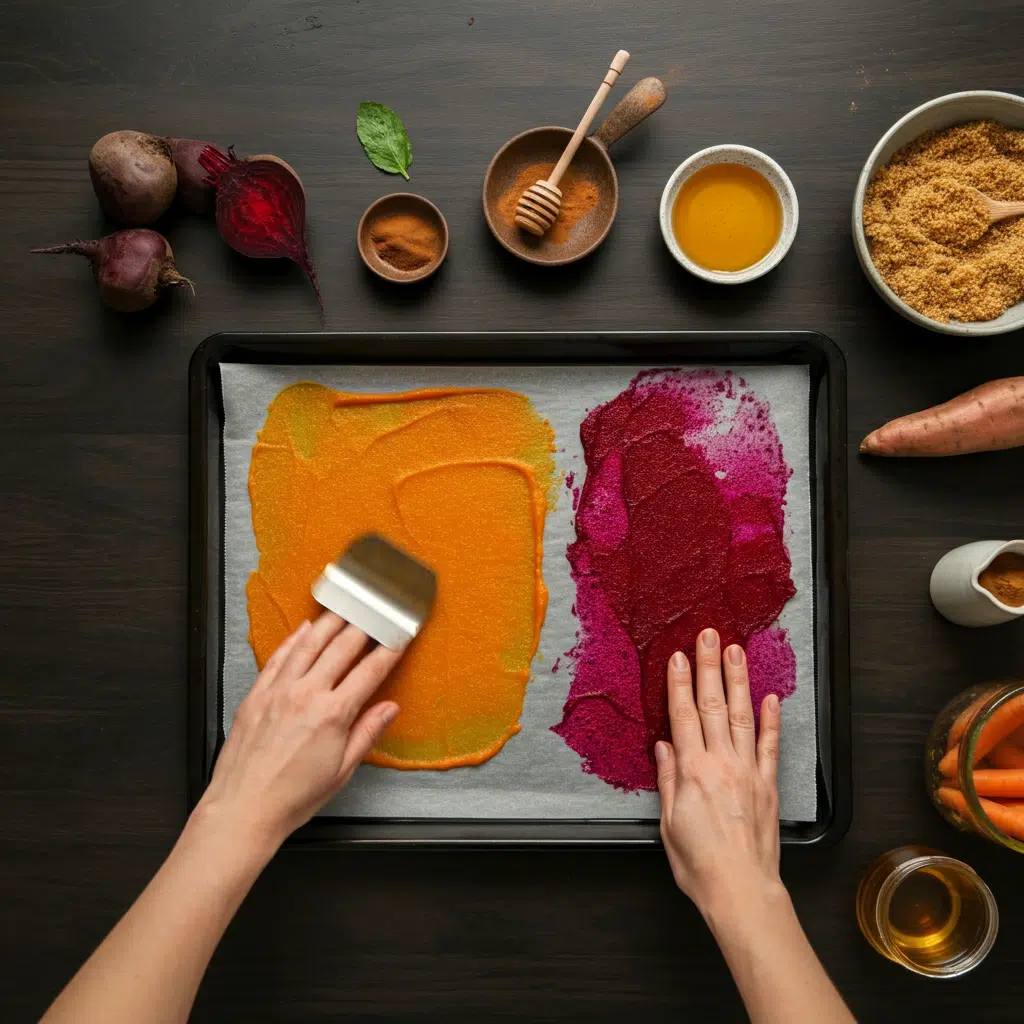
Spread your puree thinly, like frosting, onto a baking sheet lined with parchment paper.
Low and slow is your mantra.
- If you’re using an oven, go as low as 140°F (60°C).
- A dehydrator? Even better.
It’s like drying out a puddle into a soft, edible masterpiece.
Check on it every couple of hours.
Touch it. Feel it. You want it dry but still flexible, like leather.
Secret Tips for Success
Recipes and Variations
Here’s where you get to play.
You can stick to straight veggies, or mix and match for crazy-good flavor combos.
Mixed Veggie Leather
This is my go-to.
- Cook a medley of veggies like carrots, beets, and sweet potatoes.
- Puree it all, season with a touch of honey and ginger, then spread.
The result? Sweet, savory, and super satisfying.
Pumpkin Spice Leather
This one screams fall vibes.
- Puree cooked pumpkin with a sprinkle of cinnamon, nutmeg, and cloves.
- Add a drizzle of honey for sweetness.
It’s dessert meets snack.
Sweet Beet Leather
Beets bring the color, antioxidants, and earthy goodness.
- Cook, puree, and smooth them out with a little beetroot tea or lemon juice.
- Add honey if you want it a little sweeter.
Why Vegetable Leather is a Nutrient Powerhouse
Here’s the kicker. This isn’t just a snack; it’s nutrition gold.
Packed with vitamins, antioxidants, and fiber, it’s like you’re eating a multivitamin.
Beets, for example, are loaded with iron and can help lower blood pressure.
Sweet potatoes? They’re bursting with vitamin A.
And carrots bring the beta-carotene for healthy eyes.
You’re not just feeding your cravings – you’re fueling your immune system.
Storing Your Homemade Snacks
Finished your leathers? Time to store them right.
- Roll them up with parchment paper.
- Slide them into a food-safe plastic bag or jar.
- Store them in the fridge or a cool pantry for up to 4 months.
They’ll be ready whenever you need a quick grab-and-go snack.
How to Enjoy Veggie Leather
You’ve made it, but now what?
Snack Time
Cut your leathers into strips, roll them up, and eat them as-is.
They’re chewy, sweet, and ridiculously tasty.
Recipe Add-ons
Feeling fancy?
And they make perfect gifts, too.
Wrap them in cute paper or jars, and you’ve got a homemade surprise.
Real Talk
Here’s what I love most about making veggie leather.
It’s cooking, but also creating.
You take something simple – leftover veggies – and turn it into something exciting.
It’s tasty, cheap, and good for your body.
Plus, there’s something satisfying about making your own snacks.
No store could sell you this level of care and flavor.
Closing Thoughts
Start experimenting.
You’ve got the blueprint for making vegetable leather your new favorite snack.
From pumpkins to beets, the flavor possibilities are endless.
It’s time to clean out that fridge and turn those forgotten veggies into stars.
Grab what you’ve got, follow the steps, and enjoy your new snack obsession.
Discover Delicious Veggie Leather, and make every bite count.
Hey there, since 2016, my mission has been to provide you with the information and guides you need to make food dehydrating simple and fun. Whether you're a newbie or a seasoned pro, my site offers helpful guides, reviews, and recipes to enhance your dehydrating experience. I take pride in only recommending products I believe in, ensuring my readers' trust. As an affiliate of various programs, including Amazon Associates, your support helps me continue providing quality content. Thanks for stopping by, and happy dehydrating!