If you’re processing seasonal fruits at scale, you already know the challenge: fresh produce doesn’t wait. An industrial fruit dryer machine transforms that race against spoilage into a controlled production system. With global demand for natural fruit snacks climbing steadily through 2024, food processing plants and fruit farms are investing in high-capacity drying systems more than ever before.
An industrial fruit dryer machine is specialized commercial food dehydrator equipment designed to remove moisture from large quantities of fruit under precise temperature and airflow conditions. These systems enable processors to convert perishable harvests into shelf-stable products with consistent quality.
Unlike a basic food dehydrator you might use at home, industrial units handle serious volume, far beyond compact units like the Elite Gourmet EFD308 dehydrator designed for household batches. We’re talking about batch capacities ranging from 50 kg for smaller operations up to over 2,000 kg per cycle for large-scale factories. The temperature range typically sits between 40°C and 80°C for most fruits—low enough to preserve food and protect heat-sensitive vitamins, yet efficient enough to complete drying within practical timeframes.
These machines use either hot air convection or advanced heat pump technology to create controlled environments where moisture migrates out of the fruit steadily and evenly. The drying chamber maintains consistent conditions across multiple tiers of trays, ensuring that whether you’re processing apples, mangoes, bananas, or berries, every piece reaches target moisture content.
The core benefits that drive commercial investment include:
Extended shelf life of 6-18 months compared to days or weeks for fresh produce
Reduced waste from seasonal harvest surpluses that would otherwise spoil
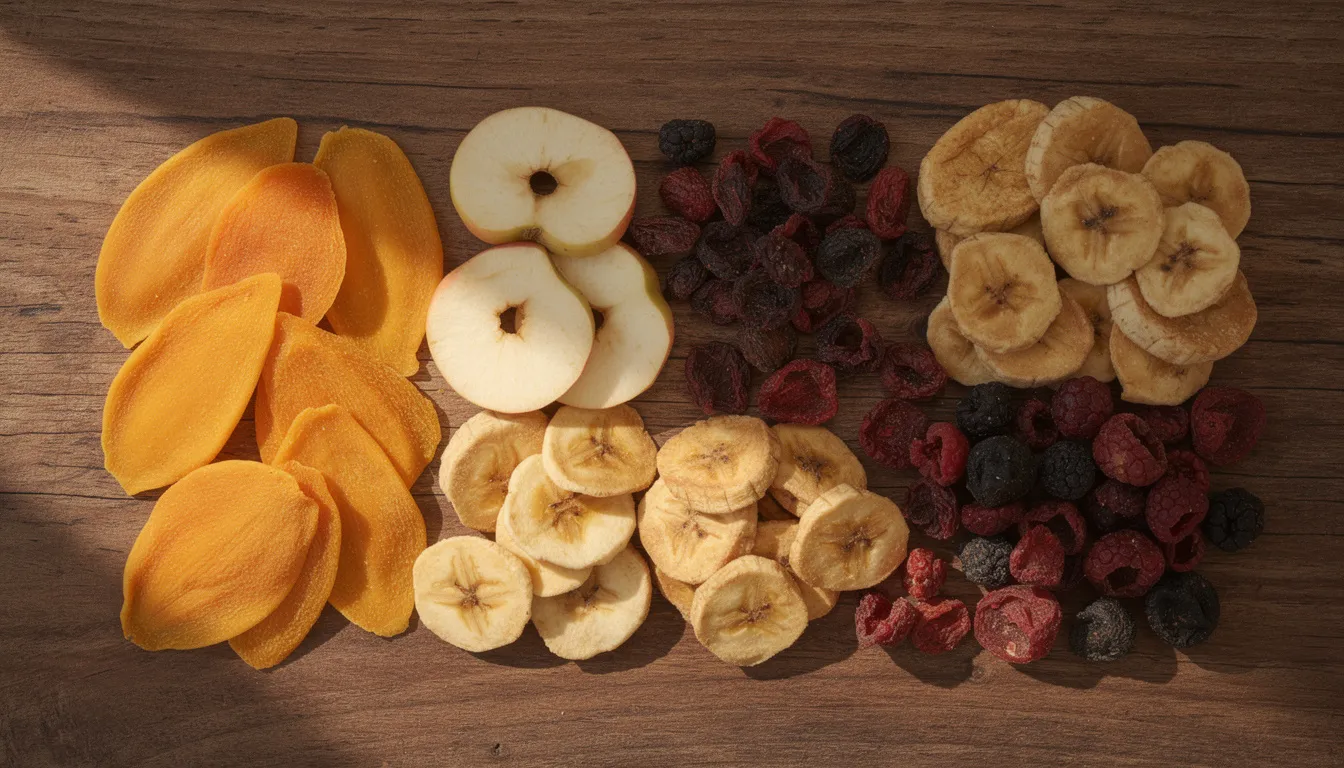
Higher-value end products like dried mango slices, apple chips, and banana chips commanding premium prices
The difference between industrial fruit dryers and household units comes down to scale, automation, and continuous operation capability. A small home dehydrator machine might handle a few kilograms over 12-24 hours. An industrial dryer machine runs 24/7 with programmable controls, processing tons of fruit per week without constant manual supervision.
How an Industrial Fruit Dryer Machine Works
The working principle centers on controlled hot air circulation. Heated air flows through the drying chamber, picks up moisture from the fruit surfaces, and exits through exhaust vents—carrying water vapor away while fresh dry air enters continuously. This drying process runs for several hours until the fruit reaches its target moisture level.
Here’s the step-by-step sequence for a typical batch:
Loading phase: Operators place uniformly sliced fruit onto mesh trays or perforated racks, then wheel trolleys into the chamber. Proper spacing between slices ensures air reaches all surfaces.
Temperature and time settings: The control panel receives parameters based on the specific fruit type and slice thickness. Modern units store programmable recipes for different products.
Warm-up phase: The chamber rises to the set temperature while fans begin circulating air. Moisture starts leaving the fruit surface.
Constant-rate drying: The main drying period where moisture migrates steadily from the fruit interior to the surface, then evaporates into the airstream. This phase consumes most of the total drying time.
Falling-rate phase: As internal moisture decreases, the drying rate slows. Temperature or airflow may adjust automatically to complete drying without over-processing.
Cooling and unloading: The system cools dried product before removal to prevent condensation. Operators unload finished batches and begin the next cycle.
Typical drying times vary by fruit type and preparation, but the underlying need for uniform airflow and temperature control applies from compact units such as the Waring dehydrator for perfect drying results up to large industrial chambers. Apple slices at 55-65°C generally require 6-10 hours, and selecting from the best apples for dehydrating helps standardize texture and flavor outcomes. Mango slices at 55-60°C need 8-14 hours depending on thickness. Banana pieces at 50-60°C can take 10-16 hours due to their higher initial moisture and sugar content.
Uniform airflow prevents common quality problems. Without even air distribution, you end up with overdried edges and underdried centers—products that fail quality checks. Industrial designs use either horizontal airflow across trays or vertical flow through perforated surfaces to ensure all pieces experience similar conditions throughout the drying process.
Modern industrial units include PLC control panels with digital sensors, data logging, and programmable recipes for different fruits and slice thicknesses, features that differ substantially from models offered by many best food dehydrator companies aimed at home or small-scale users. These features reduce operator error and deliver repeatable results batch after batch.
Main Types of Industrial Fruit Dryer Machines
Industrial dryers differ by airflow design, heat source, and loading system. Your choice directly affects energy cost, throughput, and suitability for specific fruits. Understanding the main types helps you match equipment to your production goals.
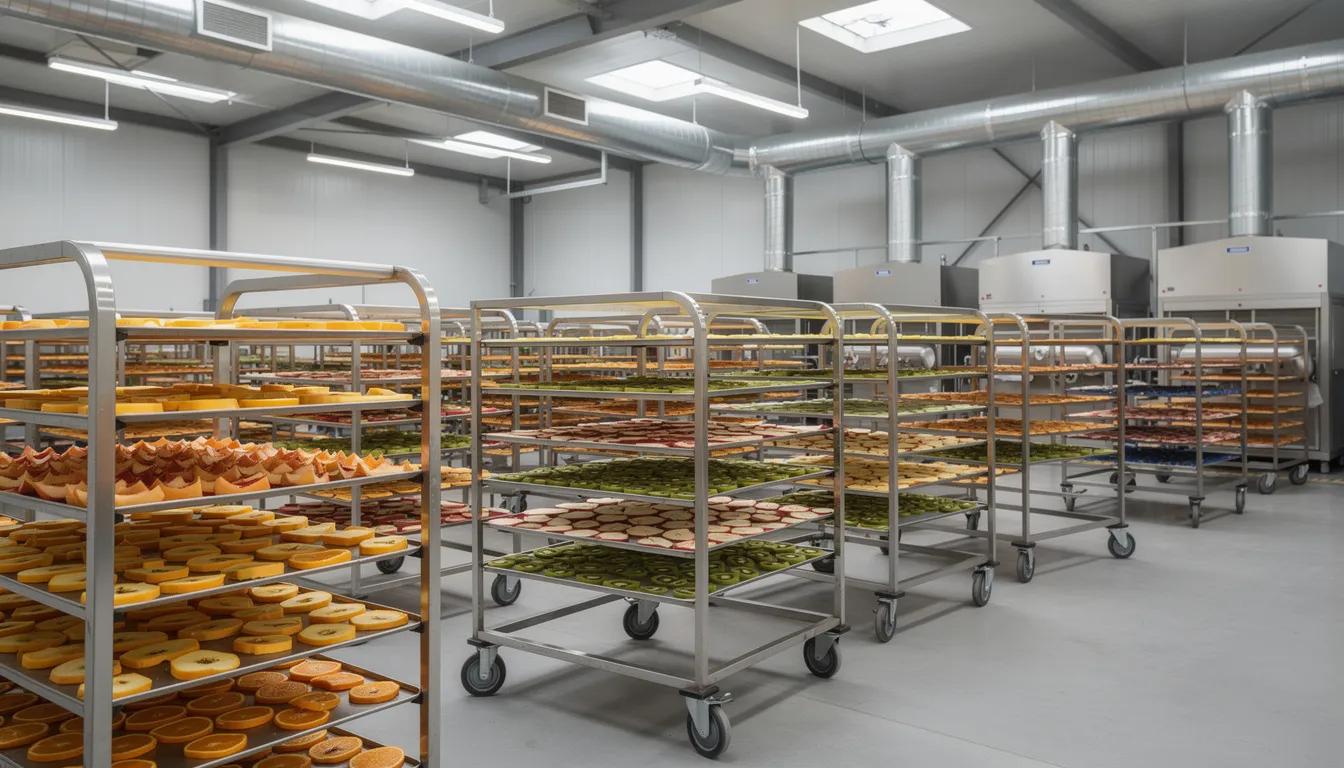
Tray dryers use multi-layer trays mounted on wheeled trolleys that roll into a cabinet-style drying chamber. This batch-based approach works well for operations processing mixed seasonal fruits, smaller volumes, or multiple product types on different schedules. Tray dryers offer flexibility—you can run apples one day and switch to mushrooms or herbs the next without reconfiguring the line.
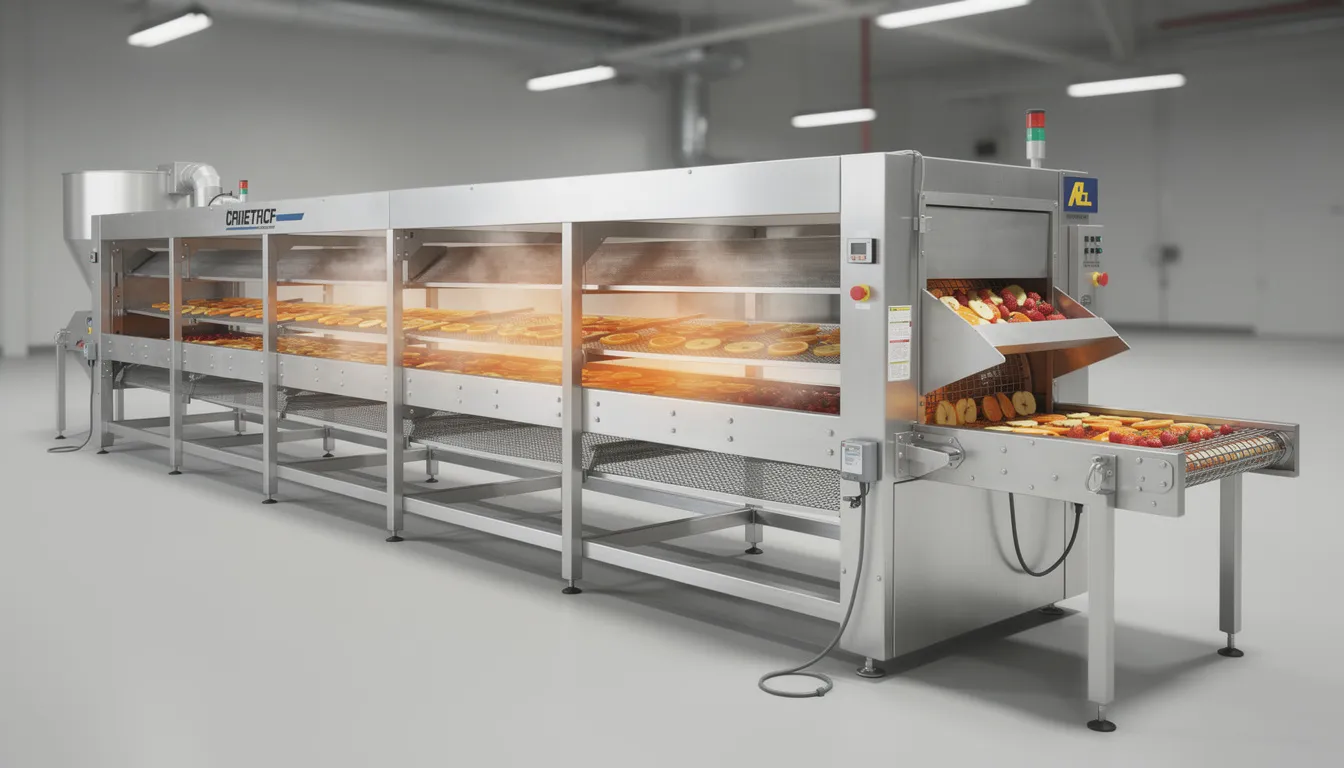
Continuous conveyor dryers move product through the machine on a belt system, entering wet at one end and exiting dried at the other. These suit large plants running standardized products like apple chips and banana chips in high volumes. The continuous flow eliminates loading and unloading downtime, maximizing productivity for operations focused on one or two main products.
Heat pump dryers represent the efficiency-focused end of the market. They use refrigeration cycle technology to extract moisture while recovering and recycling heat energy. Operating at lower temperatures (often 40-60°C), heat pump units preserve color, flavor, and vitamins better than higher-temperature alternatives. They’re particularly suitable for delicate fruits like strawberries, blueberries, and other berries, as well as organic products where quality commands premium prices.
Tunnel dryers handle large volumes of simple products in a semi-continuous flow. Product moves through a long tunnel on trolleys or conveyors, encountering different temperature zones as it progresses. These work well for high-throughput operations processing commodities like dried citrus peels or standard apple rings.
Energy options include electric heating, natural gas, steam from existing boiler systems, or combined heat pump with electric backup, and many buyers evaluate these choices as part of a broader guide to choosing the best industrial food dehydrator. Electric dominates in Europe due to grid availability and environmental regulations. Gas remains common in North America for its lower operating cost in many regions. Heat pump systems are gaining ground globally as electricity prices fluctuate and efficiency becomes a competitive advantage.
Key Technical Specifications to Consider
Buyers comparing industrial fruit dryer machines in 2024 typically evaluate capacity, temperature control precision, energy consumption, and construction materials. Getting these specifications right means equipment that matches your production needs rather than an expensive mismatch.
Batch or hourly capacity sets the baseline for what you can produce. Small plants often work with 100-500 kg per batch, running 2-3 cycles daily. Larger factories need 1-3 tons per hour throughput from continuous systems. Calculate your required capacity from daily fresh fruit input, accounting for moisture loss—typically 70-85% of fresh weight becomes water that leaves during drying.
Temperature range and precision directly affect product quality. Most fruit processing happens between 50-75°C, but your equipment should offer a wider range for flexibility. Precision matters too—look for systems maintaining ±1-2°C consistency across the drying chamber. Uneven temperature creates uneven product, leading to sorting losses and customer complaints.
Humidity and exhaust control allows optimization for different fruits. Adjustable exhaust vents or variable-speed exhaust fans let operators balance moisture removal rate against energy consumption. Some advanced units include dehumidifiers that remove moisture from circulating air, particularly in heat pump designs.
Construction materials deserve careful attention. Food-grade stainless steel—typically SUS304 grade—should cover all surfaces contacting product or humid air. This includes chamber walls, trays, trolley frames, and door interiors. Stainless steel resists corrosion from acidic fruits like pineapple, oranges, and citrus varieties while meeting hygiene standards for commercial food processing. The material also withstands daily cleaning with standard food industry chemicals.
Power ratings range widely based on capacity and design, so understanding the best dehydrator wattage for your needs is essential when estimating both drying speed and operating cost. Compact tray dryers start around 10 kW. Mid-size commercial units run 30-50 kW. Large industrial installations reach 80-150 kW or more. However, raw power tells only part of the story—energy efficiency measured in kWh per kilogram of dried fruit reveals actual operating cost. Heat pump dryers often achieve 50-70% energy savings compared to conventional hot air systems of similar capacity, addressing many operators’ concerns about whether food dehydrators are expensive to run.
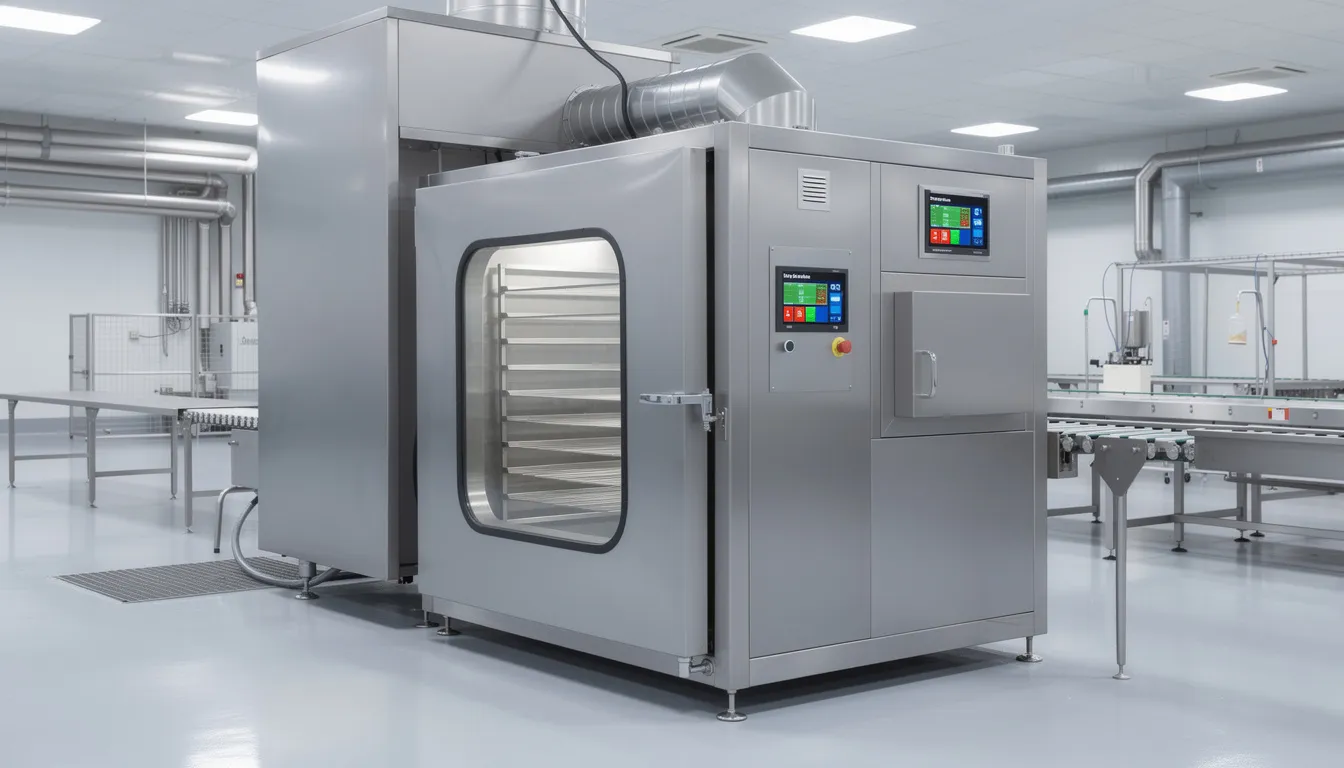
Control panel features have advanced significantly. Current generation equipment typically includes touch screen interfaces, data logging for every batch, recipe storage for different fruits, and remote monitoring capability. IoT connectivity introduced widely after 2020 enables real-time alerts for temperature deviations, predictive maintenance based on sensor data, and production tracking accessible from office computers or mobile devices.
Applications: Fruits and Products You Can Dry
Industrial fruit dryer machines serve fruit processors, snack manufacturers, farm cooperatives, and ingredient suppliers worldwide. The versatility of modern equipment handles everything from common fruits to specialty products demanding precise drying conditions.
Commonly processed fruits include apples, mangoes, bananas, strawberries, blueberries, apricots, pineapples, kiwi, oranges and other citrus slices, and fruit peels destined for tea blending—essentially most of the fruit you can dehydrate in a commercial environment. Each fruit brings different moisture content, sugar levels, and texture characteristics that influence optimal drying parameters.
Retail snack products represent a major market segment, with processors developing a wide range of dehydrated fruit recipes for delicious snacks tailored to consumer preferences. Apple chips, banana chips, and dried mango slices packaged for direct consumer sale require consistent appearance, texture, and taste. The drying process must preserve natural flavor without additives or preservatives while achieving the crispy or chewy texture that customers expect from a verified purchase.
Breakfast cereal and granola ingredients absorb large volumes of dried fruit. Processors supply food manufacturers with dried berries, apple pieces, and tropical fruit bits that maintain quality through further processing and extended storage. These industrial customers demand consistent specifications and reliable supply.
Bakery inclusions include dried fruits destined for breads, muffins, cookies, and other baked goods. These products often require specific moisture content and piece sizes to perform properly in commercial bakery equipment without burning or remaining too hard.
Fruit powders start as dried slices that undergo milling into fine powders used in smoothie mixes, nutritional supplements, and food flavoring. Complete drying to very low moisture levels enables successful milling without clumping.
Slice thickness, pre-treatment, and recipe formulation all influence drying time and final texture. Thinner slices dry faster but may become too crispy for some applications. Pre-treatments like citric acid dipping prevent browning on light-colored fruits like apples and pears. Sugar-free recipes dry differently than sugared versions due to water activity differences.
Consider a mid-size European fruit farm that installed a 500 kg/batch dryer to handle their 2023-2024 apple harvest surplus. Rather than selling excess fresh apples at depressed peak-season prices, they now dry fruits into premium rings sold through regional retailers and online marketplaces at substantially higher margins. The equipment paid for itself within two seasons while reducing post-harvest waste to near zero.
Benefits of Using an Industrial Fruit Dryer (Business Perspective)
Beyond technical capabilities, industrial drying equipment delivers measurable business advantages that justify the investment. Understanding these benefits helps build the case for procurement decisions.
Reduced post-harvest losses translate directly to improved margins. Fresh fruits spoil rapidly—sometimes within days of harvest for delicate varieties. Every kilogram that rots represents lost revenue and wasted growing investment. Drying captures that value, converting perishable inventory into shelf-stable products that sell on your timeline rather than nature’s.
Price stabilization across seasons changes the economics of fruit farming and processing. Fresh fruit prices often collapse during peak harvest when supply overwhelms demand, then spike during off-seasons when supply tightens. Dried products stored properly maintain consistent value year-round, allowing sellers to negotiate better contracts and avoid fire-sale pricing during harvest gluts.
Value addition creates significant margin improvement. The price difference between fresh and dried mango or apple on wholesale markets reflects substantial markup—dried products command premium pricing per kilogram of original fruit equivalent. This value creation rewards processors who invest in quality drying and packaging operations.
Logistics advantages extend throughout the supply chain. Dried fruits weigh 70-85% less than fresh equivalents and occupy far less volume. Shipping costs drop proportionally. Storage requires less space and simpler conditions—no refrigeration needed for properly dried and packaged product. These factors make export economically viable for operations that couldn’t justify fresh fruit shipping costs, opening international markets in 2024-2025.
Extended shelf life of 6-18 months in proper packaging enables business relationships that fresh produce cannot support. Retail chains require reliable, scheduled deliveries. Online marketplaces expect products available year-round. Food manufacturers need consistent ingredient supply for production planning. Industrial drying capability positions processors to serve these demanding customers and secure long-term contracts.
Choosing the Right Industrial Fruit Dryer for Your Facility
Before contacting equipment sellers, define your production plan clearly. Know your target daily tonnage, the fruit varieties you’ll process, and the end products you intend to sell. This groundwork prevents expensive mismatches between equipment capability and operational needs.
Capacity planning starts with your fresh fruit input volumes. Calculate how many kilograms of fresh material you need to process daily during peak season. Factor in moisture loss—fruit typically loses 70-85% of weight during drying, so 1,000 kg of fresh apples yields roughly 150-300 kg of dried product. Select batch size and daily cycle count to meet throughput requirements with some margin for growth.
Footprint and installation require realistic assessment. Industrial dryers need adequate floor space, ceiling height for ventilation, and clearance around the unit for loading, maintenance, and airflow. Verify your facility can deliver required electrical power—check both total load and connection type. Plan exhaust routing to exterior vents. Consider how equipment placement affects overall material flow through your processing operation.
Hygiene and cleaning accessibility matters for daily operation. Examine how easily trays remove for washing. Check that interior surfaces present smooth stainless steel without crevices where food residue accumulates. Verify drain systems handle washdown water. Confirm compatibility with cleaning chemicals standard in your industry. Equipment that’s difficult to clean properly becomes a contamination risk and a compliance liability.
Before committing to a purchase, ask potential suppliers these critical questions: What service and spare parts support exists in your country? What is typical lead time for replacement components? What warranty coverage applies and under what conditions? Can you speak with reference customers running similar production? What training and installation support comes with purchase? What are actual energy consumption figures from comparable installations?
Operational Tips: Getting the Best Drying Results
Equipment capability means nothing without proper operation. How you run your industrial fruit dryer machine directly affects color, flavor, texture, and yield of finished products.
Pre-treatment best practices begin before fruit reaches the dryer. Thorough washing removes surface contamination. Sorting eliminates damaged or unripe pieces that compromise batch quality. Uniform slicing thickness—typically 4-6 mm for apple rings—ensures even drying throughout each batch. Optional treatments like blanching or anti-browning dips (ascorbic acid, citric acid solutions) preserve appearance on susceptible fruits.
Loading technique influences drying uniformity. Avoid over-stacking trays, which blocks airflow to interior layers. Maintain gaps between slices so air contacts all surfaces. In dryers using horizontal airflow, position denser or wetter fruits where airflow first enters, placing drier or thinner slices downstream. Consistent loading patterns across batches produce consistent results.
Moisture monitoring determines when drying is complete. Simple weight-loss calculation—comparing wet loading weight to current weight—provides rough guidance. Basic moisture meters offer more precision for verifying target achievement. Final moisture content typically falls between 10-18% depending on product type, customer specifications, and regulatory requirements. Under-drying creates spoilage risk; over-drying wastes energy and degrades texture.
Packaging immediately after cooling protects your investment in drying. Once product cools to ambient temperature, exposure to humid air begins rehydration. Pack promptly into moisture-proof bags. Consider oxygen absorbers for sensitive products like dried berries that oxidize and discolor. Apply clear labeling showing production date, batch number, and product specifications. These practices maintain quality through storage and distribution while supporting traceability requirements.
Energy Efficiency and Environmental Considerations
Energy cost became impossible to ignore after electricity and gas price spikes in 2022-2023. For operations running dryers continuously, energy often represents the largest variable cost after raw materials.
Modern heat pump dryers and well-insulated drying chambers substantially reduce consumption compared to older designs. Where conventional hot air units might use 1.5-2.0 kWh per kilogram of water removed, efficient heat pump systems achieve 0.5-0.8 kWh—cutting energy cost by 50% or more. The closed-loop design recovers heat from exhaust air, recycling energy that open systems simply waste to atmosphere.
Heat recovery systems capture warm exhaust and transfer that energy to incoming air, reducing the load on primary heaters. Variable-speed fans adjust airflow based on actual conditions rather than running full speed constantly. Intelligent controls respond to real-time humidity readings inside the chamber, modulating power consumption to match actual drying requirements rather than maintaining maximum output regardless of need.
Environmental impact extends beyond operating cost. Lower energy consumption means reduced CO₂ emissions, particularly when electricity comes from renewable sources. Industrial drying also replaces wasteful practices like open-sun drying—common in some regions—which exposes product to contamination from dust, insects, and weather while producing inconsistent quality, issues that careful guides to the best fruits for sun-drying still have to manage in non-industrial setups.
Consider processors who switched from traditional fossil-fuel dryers to efficient industrial heat pump units. Reports indicate energy use per kilogram of dried fruit dropping by 40-60%, with corresponding reductions in carbon footprint. These improvements satisfy both financial objectives and growing customer expectations for sustainable sourcing.
Safety, Hygiene, and Compliance
Industrial fruit dryers operating in food plants must comply with food safety standards including HACCP requirements and regional regulations like EU food hygiene rules or FDA expectations in the United States. Equipment design either supports or undermines your compliance efforts.
Food-safe construction details matter during equipment selection. Stainless steel interior surfaces resist corrosion and clean thoroughly. Food-grade seals on doors and access panels prevent contamination while maintaining chamber conditions. Smooth surfaces without exposed fasteners, painted areas, or porous materials in product zones eliminate harborage points for bacteria. Easy-access panels enable thorough cleaning of all areas contacting product or humid air.
Built-in safety features protect both personnel and product. Over-temperature protection prevents runaway heating that could damage product or create fire risk. Emergency stop buttons provide immediate shutdown capability. Door interlocks halt operation when chambers open unexpectedly. Alarms alert operators to abnormal conditions like fan failure, blocked airflow, or sensor malfunction.
Documentation and record-keeping support traceability requirements from auditors and customers. Log temperatures and times for every batch. Record lot numbers linking finished products to raw material sources. Maintain calibration records for sensors and controls. This documentation demonstrates due diligence during inspections and enables rapid response if quality issues arise requiring product recalls.
Regular maintenance schedules prevent breakdowns and ensure consistent performance. Clean filters on specified intervals to maintain airflow. Inspect fans and motors for wear. Calibrate temperature and humidity sensors against reference standards. Replace seals and gaskets before they fail. Preventive maintenance costs less than emergency repairs and avoids production interruptions that disappoint customers and damage business relationships.
Summary
Industrial fruit dryer machines transform the economics of fruit processing by converting perishable harvests into stable, profitable products with extended shelf life. Whether you’re a farm cooperative handling seasonal surplus or a food manufacturer requiring year-round ingredient supply, the right drying equipment opens market opportunities unavailable to fresh produce operations.
The key decision points come down to matching equipment to your specific situation: capacity aligned with production volumes, dryer type suited to your fruit varieties and product goals, energy efficiency that controls operating costs, and hygiene design that supports food safety compliance. Heat pump technology offers compelling advantages for efficiency and delicate fruit quality, while conventional hot air systems provide proven reliability at lower initial investment.
Global demand for natural fruit snacks continues growing as consumers seek healthy alternatives to processed snacks. Dried fruits, vegetables, and herbs serve expanding markets from retail packaged goods to food service ingredients to pet treats. Investing in the right industrial drying technology positions processors to capture this demand through 2024-2030 and beyond, delivering the productivity and product quality that customers and business success require.
DannyContent Writer
Hey there, since 2016, my mission has been to provide you with the information and guides you need to make food dehydrating simple and fun. Whether you're a newbie or a seasoned pro, my site offers helpful guides, reviews, and recipes to enhance your dehydrating experience. I take pride in only recommending products I believe in, ensuring my readers' trust. As an affiliate of various programs, including Amazon Associates, your support helps me continue providing quality content. Thanks for stopping by, and happy dehydrating!