We earn a commission if you make a purchase, at no additional cost to you.
09/22/2026 04:39 pm GMT
🍊 Dehydrated Food Info Finder — Temperatures & Drying Times
Choose a category, then pick a food to see its drying temperature and time.
⚠️ Safety Disclaimer: Drying times are estimates and vary based on slice thickness, food moisture content, humidity, and your dehydrator model. Always check for doneness before storing — food should feel dry, leathery, or brittle with no moist spots. Improperly dried food can harbour mould and bacteria. For meat and poultry, follow USDA safe internal temperature guidelines: beef and pork to 160°F (71°C), poultry to 165°F (74°C). Use a food thermometer when in doubt. Store all dehydrated foods in airtight containers in a cool, dark place and discard anything showing moisture, mould, or off odours.
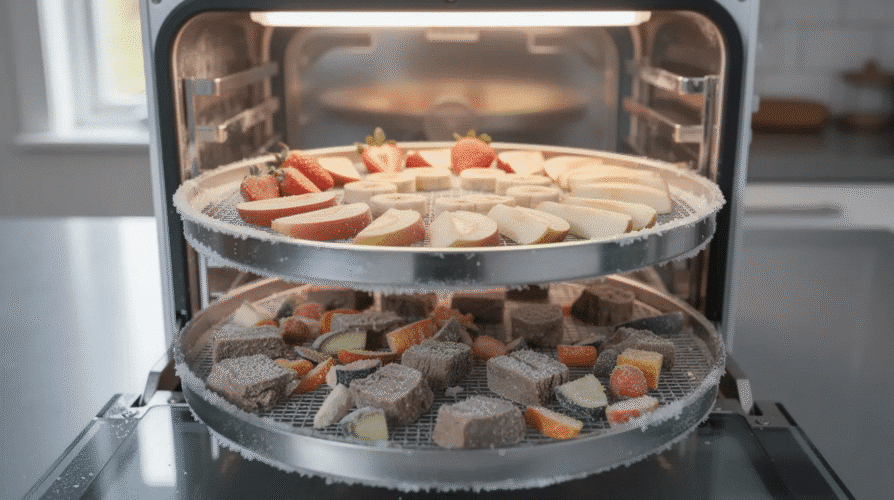
Freeze-drying food is an innovative preservation method that works by first freezing the food, then lowering the surrounding pressure so the ice inside it turns directly into vapor instead of liquid, removing moisture while helping preserve flavor and nutrients.
For home cooks, food preservation enthusiasts, and anyone curious about better long-term food storage, understanding this process can help you keep food shelf-stable for longer, support healthy eating, and reduce waste. In this article, we explore the science behind freeze-drying, including pre-freezing, primary and secondary drying, the main benefits, practical home uses and tips, how to choose a freeze-dryer, and the potential drawbacks such as cost and energy use.
Understanding Freeze-Drying
Freeze-drying, also known as lyophilization, is a method of preserving food that involves removing its water content.
This process is achieved by freezing the food and then reducing the surrounding pressure to allow the frozen water in the food to sublimate directly from the solid phase to the gas phase, offering a different approach to long-term storage than dehydrating frozen vegetables.
The Basics of Freeze-Drying
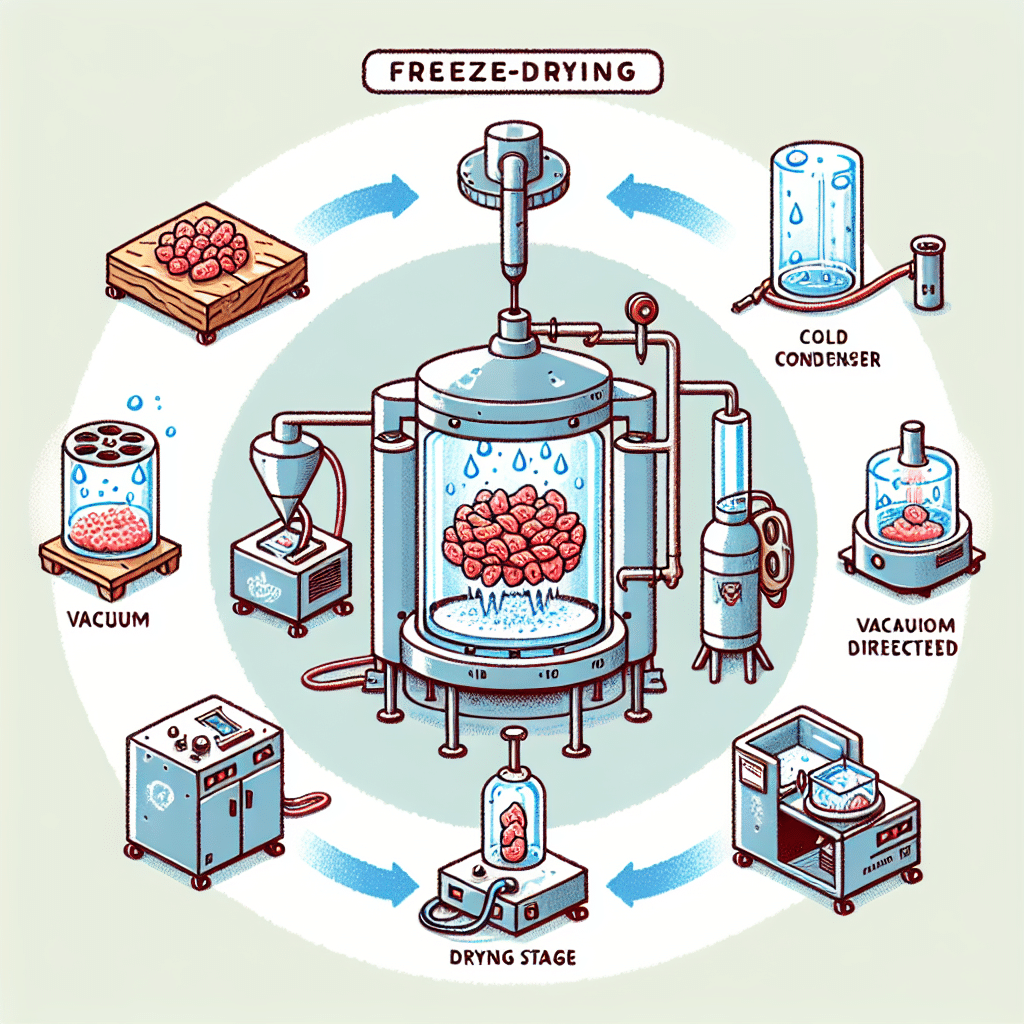
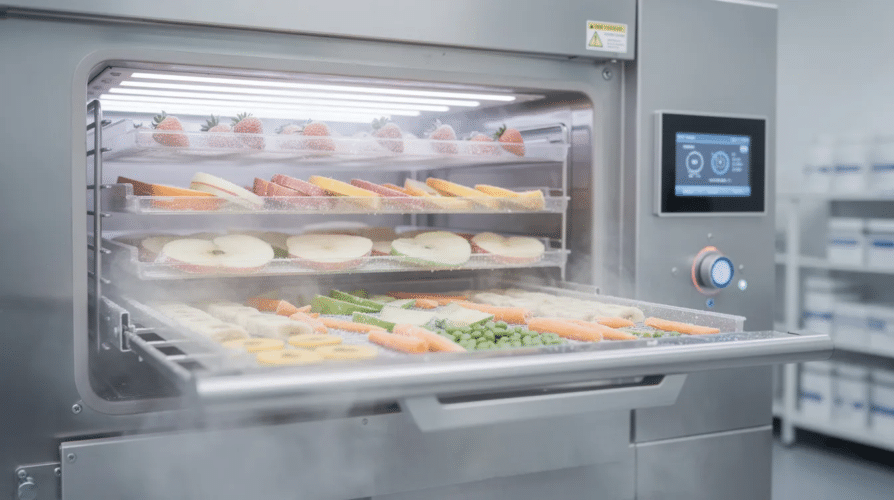
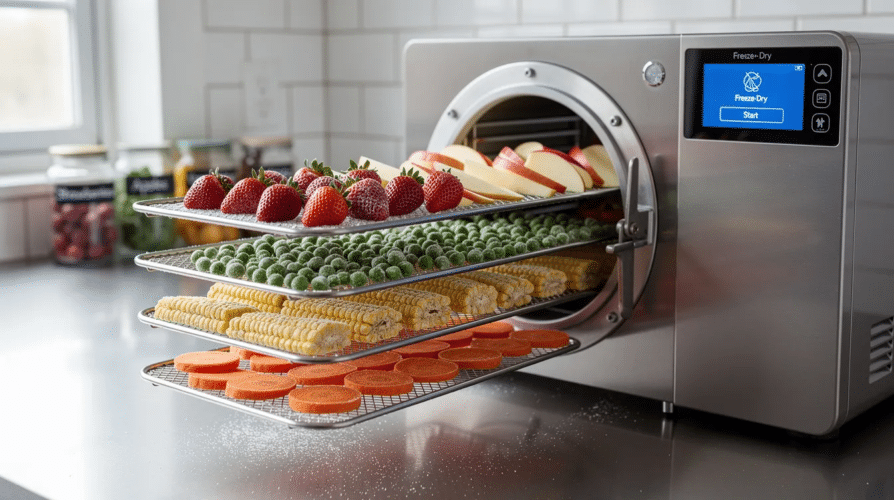
The freeze-drying process is carried out in a machine called a freeze-dryer.
This appliance consists of a vacuum chamber, a condenser, and a refrigeration system.
The Science Behind Sublimation
Sublimation is a fascinating scientific phenomenon.
It’s the transition of a substance directly from a solid state, like ice, to a gas state by a phase transition, without entering the liquid state. This is the core principle that makes freeze-drying possible.
The Freeze-Drying Process
The freeze-drying process is a meticulous one, involving three main stages: pre-freezing, primary drying (sublimation), and secondary drying (desorption).
Each stage plays a crucial role in ensuring the quality and longevity of the freeze-dried food.
Pre-Freezing Stage
The pre-freezing stage involves the freezing phase, where the food is brought to a very low temperature, typically around -30 to -50 °F, below its triple point.
Controlling this step helps form suitable ice crystals throughout the frozen material and avoid concentration gradients. This ensures that sublimation, rather than melting, occurs in the following stage.
Primary Drying (Sublimation) Stage
In the primary drying phase, a vacuum pump lowers vacuum pressure in the freeze dryer chamber while heat energy is supplied to encourage sublimation.
This means the ice in the food directly converts into water vapor, leaving the food dry. At this stage, about 95% of the water in the material is removed.
Careful control of product temperature and shelf temperature helps facilitate sublimation so too much heat does not cause melt back.
Secondary Drying (Adsorption) Stage
Desorption
The secondary drying phase, or desorption drying, removes residual bound moisture from the freeze dried material.
The temperature is raised carefully to a product-specific maximum temperature to drive off water bound to the food and reduce residual moisture to about 1-5%, with many products ending around 1-4%.
Proper processing conditions help create a stable freeze dried product.
Benefits of Freeze-Drying Food
Freeze-drying food offers numerous benefits, making it a popular choice for food preservation and preserving food while producing high quality food.
Unlike drying with hot air, comparing food dehydrators and freeze-dryers shows that freeze drying preserves more volatile aroma compounds and minimizes nonenzymic browning reactions in food.
From nutritional preservation to extended shelf life, the advantages are significant, and the result is often lightweight freeze-dried and dried fruits for long term storage and other food products that are easier to store and transport.
Nutritional Preservation
One of the key benefits of freeze-drying is the preservation of nutrients.
Unlike other methods, freeze-drying maintains the nutritional content of the food, ensuring you get the most out of your meals. This low temperature process also helps preserve cell walls and other structural properties in sensitive foods.
Shelf Life and Storage
Freeze-dried foods boast an impressive shelf life, and properly sealed products can last up to 25 years.
They are also typically very low in moisture, with water activity around 0.08 to 0.330, and their porous structure helps them rehydrate quickly, similar to how properly stored dehydrated food lasts for years.
Freeze-drying does not kill illness-causing microorganisms, so improper storage can allow pathogens to grow, and proper packaging is essential for food safety.
Home Freeze-Drying: Practical Uses and Tips
Freeze-drying at home opens up a world of culinary possibilities.
From preserving seasonal produce to creating unique dishes, the applications are vast and varied, and you can even explore freeze drying food without a machine.
Incorporating Freeze-Dried Ingredients in Cooking
Freeze-dried ingredients can add a new dimension to your cooking.
Choosing the right freeze-dryer for your needs is crucial, and many people find that freeze drying cookbooks help them get the most from their equipment.
Consider factors like capacity, ease of use, and the ability to control temperature for efficient operation, especially if you plan to make specific treats like freeze dried strawberries at home.
Potential Drawbacks and Considerations
While freeze-drying offers many benefits, it’s important to consider potential drawbacks.
These include the initial cost of the appliance and the space it requires in your kitchen.
Cost and Energy Consumption
Freeze-drying is energy-intensive in food processing, which can increase operational costs. It can also cost about five times more than conventional drying, so some home preservers start with easy projects to make with a food dehydrator before investing in a freeze-dryer.
Also, home freeze-dryers, while smaller than commercial units, can still be a significant investment.
Conclusion: Is Freeze-Drying Right for You?
Understanding how freeze-drying works can help you decide if it’s right for your kitchen. Consider the benefits, drawbacks, and your personal cooking goals. With the right knowledge, you can make an informed decision and potentially add a new dimension to your culinary creations.
DannyContent Writer
Hey there, since 2016, my mission has been to provide you with the information and guides you need to make food dehydrating simple and fun. Whether you're a newbie or a seasoned pro, my site offers helpful guides, reviews, and recipes to enhance your dehydrating experience. I take pride in only recommending products I believe in, ensuring my readers' trust. As an affiliate of various programs, including Amazon Associates, your support helps me continue providing quality content. Thanks for stopping by, and happy dehydrating!