We earn a commission if you make a purchase, at no additional cost to you.
09/22/2026 04:39 pm GMT
🍊 Dehydrated Food Info Finder — Temperatures & Drying Times
Choose a category, then pick a food to see its drying temperature and time.
⚠️ Safety Disclaimer: Drying times are estimates and vary based on slice thickness, food moisture content, humidity, and your dehydrator model. Always check for doneness before storing — food should feel dry, leathery, or brittle with no moist spots. Improperly dried food can harbour mould and bacteria. For meat and poultry, follow USDA safe internal temperature guidelines: beef and pork to 160°F (71°C), poultry to 165°F (74°C). Use a food thermometer when in doubt. Store all dehydrated foods in airtight containers in a cool, dark place and discard anything showing moisture, mould, or off odours.
How to Dehydrate Peppers in a Ninja Foodi (Bell & Chili Peppers)
If you’ve ever found yourself with so many peppers from a garden haul or a farmers’ market run, learning how to dehydrate peppers in a Ninja Foodi is one of the smartest preservation moves you can make. The Ninja Foodi’s built-in dehydrate function turns fresh peppers into shelf stable ingredients that stay flavorful for months-or even years-with almost no effort once you know the basics.
Key Takeaways
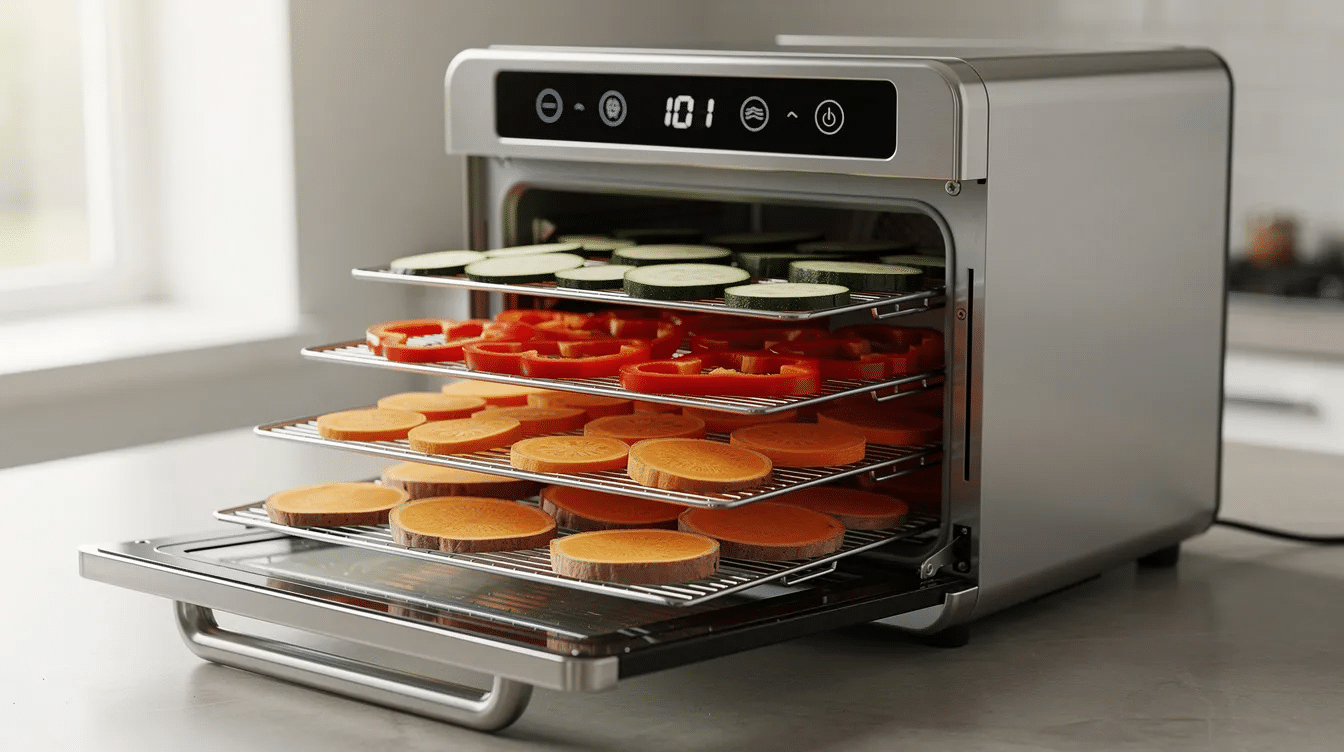
The Ninja Foodi’s dedicated dehydrate mode and low-temp air fryer settings make it straightforward to dry both bell peppers and chili peppers at home without needing a separate food dehydrator. If your ninja foodi has a dehydrator setting, you already have everything you need to get started.
Set the temperature between 125–135°F (52–57°C). Dehydration time can range from 6 to 12 hours depending on pepper thickness-thin chilis finish faster, thick bell pepper strips take longer.
Properly dried peppers should be brittle or leathery with no visible moisture. When stored in an airtight container away from light, they can last 1–2 years or more.
One pound of fresh peppers yields about four ounces dried, so expect significant shrinkage-but a massive boost in concentrated flavor.
Compared to a traditional food dehydrator or the basic air fryer method, the Ninja Foodi offers precise low temperatures and dehydrator trays or racks for consistent airflow, with less babysitting than an oven.
Why Dehydrate Peppers in a Ninja Foodi?
Whether you grow your own or buy in bulk, fresh peppers have a short refrigerator life. Dehydrating preserves peppers for long-term storage, letting you enjoy summer harvests well into winter. Instead of watching them wilt in the crisper drawer, you turn them into a compact, versatile pantry staple.
The ninja air fryer doubles as a dehydrator, so you can dehydrate food without cluttering your counter with another appliance. The built-in fan and precise temperature control give more consistent results than trying to air dry on a windowsill or propping an oven door open for hours.
Dehydrating enhances flavor and spiciness in cooking. As moisture leaves, sugars and capsaicinoids concentrate-dehydrated bell peppers become slightly sweet and earthy, while dried chili peppers pack a noticeably sharper heat. You can toss them into soups, stews, salads, spice blends, or grind them into powder for your spice cabinet. The possibilities grow the moment you learn how to dehydrate peppers properly.
Types of Peppers You Can Dehydrate in a Ninja Foodi
Almost any pepper can be dehydrated in a Ninja Foodi, as long as it’s fresh and free of soft spots or mold. Here’s what to expect from different varieties.
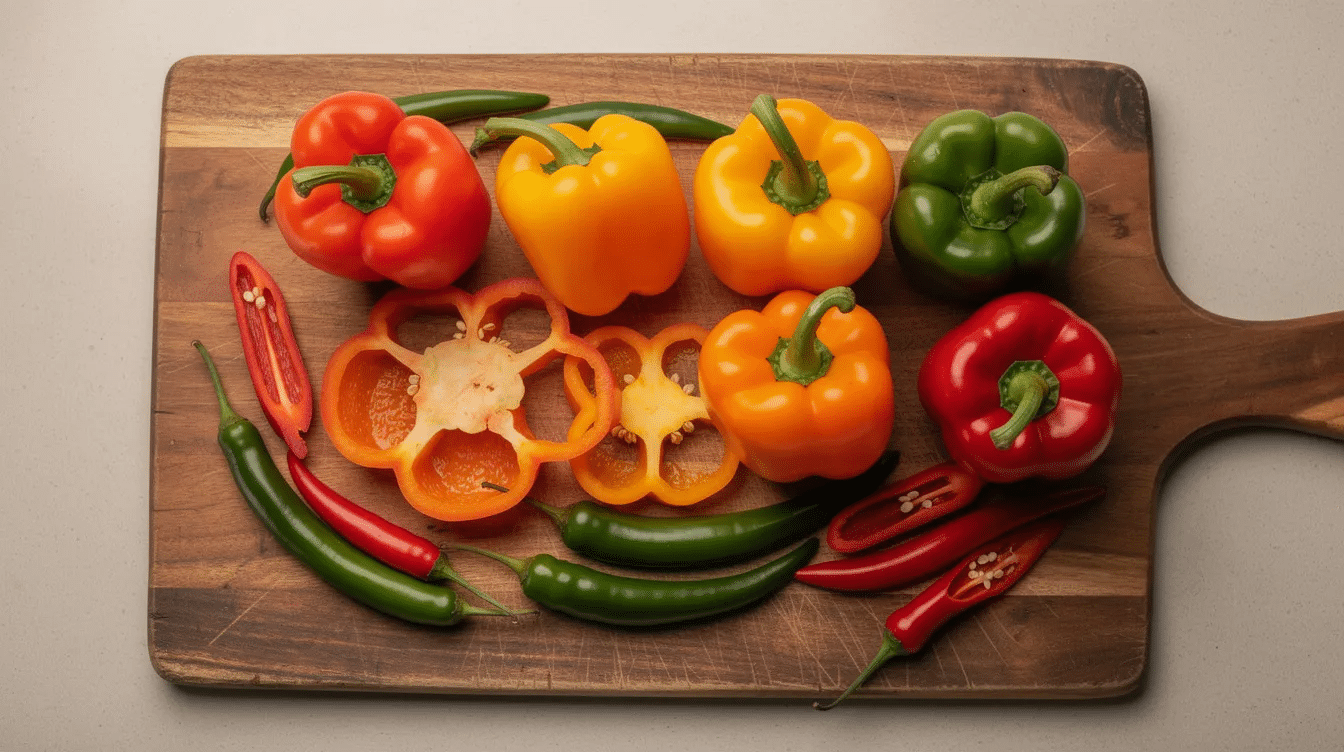
Bell peppers (green, red, yellow, orange) have thick, dense walls with moisture content around 90–94%. That means longer drying times, but the payoff is a mild, slightly sweet dried pepper perfect for soups, pasta dishes, and backpacking meals. One bell pepper yields about 1/2 cup of dehydrated pieces.
Medium-heat chili peppers like jalapenos, serranos, cayenne, Fresno, and Thai chiles have thinner walls and smaller volume, so they lose moisture faster. Slice them into rings or lengthwise halves, and you’ll shave hours off the dehydrating process, especially if you follow dedicated guides on how to dehydrate serrano peppers for best flavor.
Very hot peppers-habanero, scotch bonnet peppers, ghost peppers, and Carolina Reapers-can absolutely be dehydrated, but they demand extra respect. Wear gloves, run ventilation, and keep these on separate dehydrator trays from sweet varieties to avoid cross-contamination of heat.
Mixed batches work fine as long as you keep hot peppers away from bell peppers on different tray levels.
Preparing Bell Peppers and Chili Peppers for Dehydration
Good preparation speeds up the dehydrating process and ensures even drying. Rushing this step is the fastest route to unevenly dried, partially spoiled peppers.
Washing and drying: Wash and dry fresh peppers before dehydrating them. Run them under cool water, scrub off any dirt, and pat completely dry with clean kitchen towels. Residual surface moisture creates steam inside the unit and slows everything down.
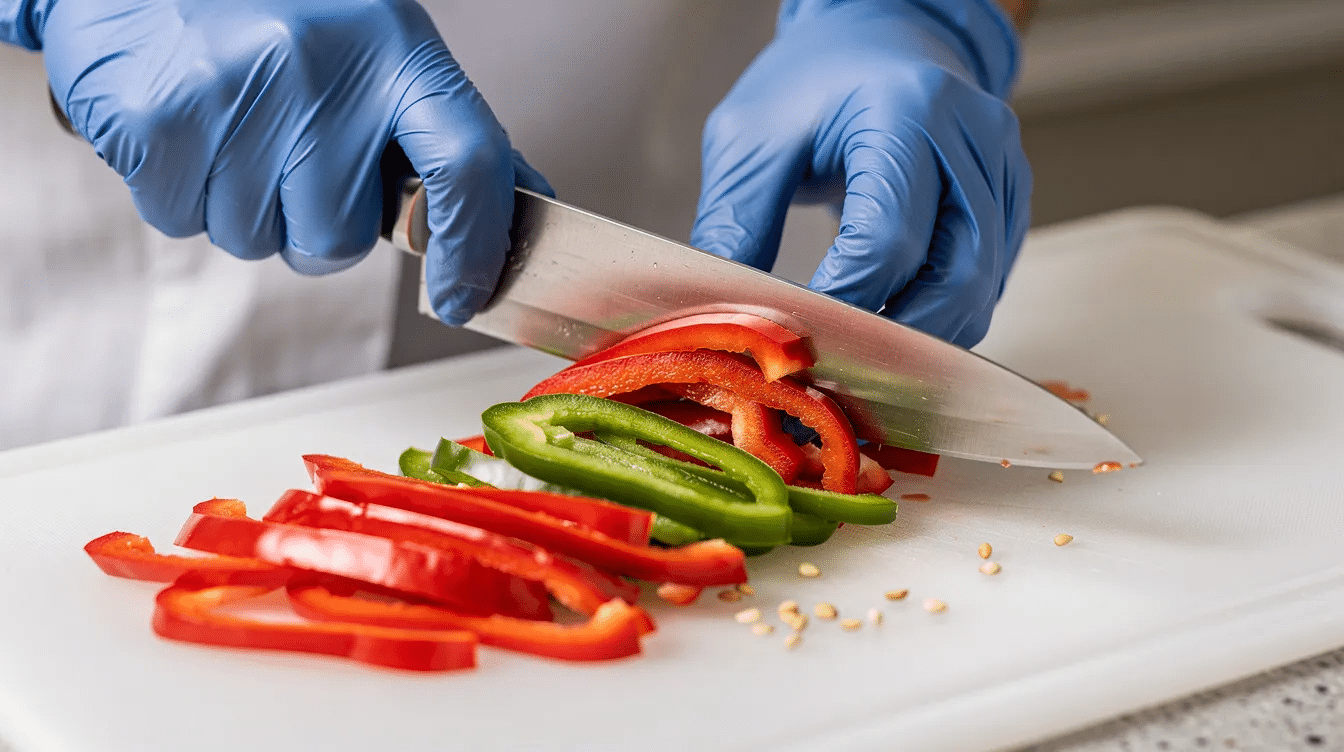
Cutting bell peppers: Slice off the top, pull out the core, ribs, and seeds, then cut into uniform strips or small pieces. Slice peppers into uniform 1/4-inch strips or rings for even drying. Thinner cuts mean faster results; thicker pieces hold up better for rehydrating in recipes later, similar to the approach used when dehydrating bell peppers in a food dehydrator.
Cutting chili peppers: Remove stems, then slice lengthwise or into rings. Leave the seeds in for more spice, or remove them if you prefer a milder result. For chilis like serranos or cayenne, thin strips or halves work well and mirror the prep steps you’d use when dehydrating jalapeno peppers in a dehydrator.
Safety gear: Wear gloves when working with jalapenos and anything hotter. Capsaicin transfers easily to skin and lingers, so avoid touching your face. Clean your cutting board, knife, and hands with dish soap immediately after handling hot peppers.
Uniform size matters more than exact shape-pieces that are roughly the same thickness will finish drying at the same time on each dehydrator tray.
How to Dehydrate Peppers in a Ninja Foodi: Step‑by‑Step
Preheat the Ninja Foodi if your model recommends it. Select the dehydrate function on the control panel.
Set the temperature.Dehydrate bell peppers at 125°F for 6–10 hours. Dehydrate jalapenos at 130°F for 2–12 hours. For most other chili peppers, 130–135°F works well. You can dehydrate peppers at a temperature of 135°F to 140°F if you want faster results, though lower temps preserve more color and nutrients.
Arrange peppers in a single layer on dehydrator trays or the reversible rack. Leave enough space between pieces so air circulates freely-overlapping slows drying and creates damp spots.
Set the timer for 6 hours as a starting point. After the 4-hour mark, check progress every 1–2 hours. Rotate trays, shuffle pieces gently, and pull out any thin peppers that have already finished.
If your model only has an air fryer mode with a lowest temperature floor around 150°F, use that setting, check peppers frequently, and consider cracking the lid slightly between cycles to release excess heat.
Approximate total times: 5–8 hours for thin chili peppers like cayenne or serrano, and 8–12 hours for thick bell peppers or large jalapenos, similar to the guidance for time to dehydrate jalapenos in a traditional dehydrator. Humidity and batch size both affect duration-a humid kitchen on a rainy day will add time.
How to Tell When Your Peppers Are Fully Dehydrated
Texture test: Let a few pieces cool to room temperature, then bend them. Check for doneness by ensuring the peppers are completely brittle-thin chilis should snap cleanly. Thicker bell pepper slices should be hard and rigid, with no moisture beads when you squeeze them.
Visual test: Color should deepen and look uniform. No glossy, wet-looking, or translucent spots. Pieces should feel noticeably lighter and slightly papery.
Jar test: Place a cooled sample in a small glass jar and seal it overnight. If condensation appears on the glass by morning, the batch needs more time in the Ninja Foodi.
Slightly leathery bell pepper strips are acceptable if you plan to use them within a couple of months. For long-term pantry storage, aim for fully dry, brittle pieces. Any signs of softness, stickiness, or off smell after cooling mean you should either re-dry or discard rather than risk spoilage.
Conditioning and Storing Dehydrated Bell Peppers and Chili Peppers
Conditioning is the step most beginners skip-and it’s the one that prevents hidden moisture from ruining an otherwise perfect batch. This process equalizes moisture across all pieces before you commit to long-term storage.
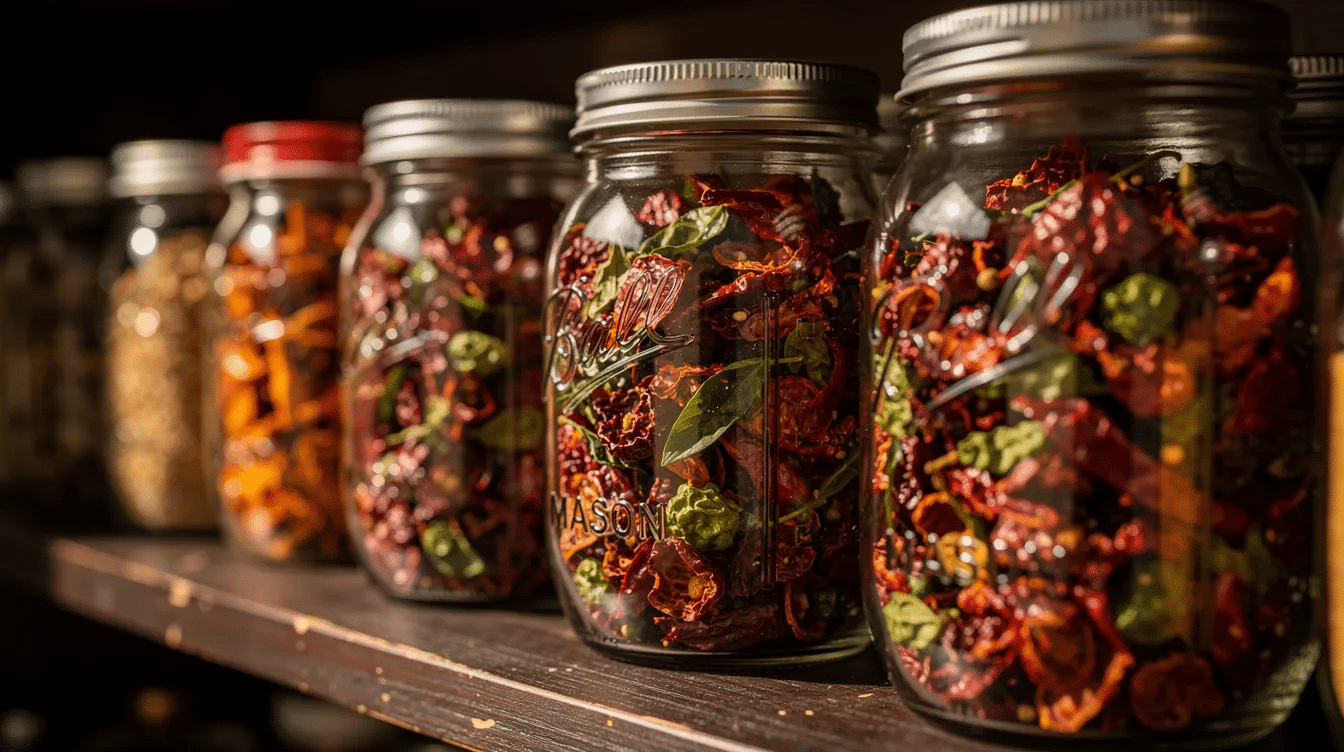
How to condition: Place cooled dehydrated peppers in clean glass jars, filling each about two-thirds full. Shake the jar once a day for 7 days. Watch for condensation on the glass or any soft, sticky pieces. If moisture appears, return those peppers to the Ninja Foodi for additional drying and restart the conditioning week.
Best storage methods: If you also use a standalone dehydrator, general principles from how to dry peppers in a dehydrator apply here as well.
Store dried peppers in an airtight container-glass jars, vacuum-sealed bags, or mylar bags with oxygen absorbers all work well, and stackable Ninja Foodi dehydrator racks make it easier to dry larger batches before storage.
Using a desiccant packet in storage can help absorb residual moisture and add an extra safety margin.
Vacuum sealing extends the shelf life of dried peppers significantly, especially for bulk batches.
Keep dried peppers in a cool, dark place like a pantry or cupboard, away from the stove and direct sunlight.
Shelf life: Dried peppers begin to lose potency after 6–12 months, though they remain safe to eat much longer. Dried peppers can last for many years when stored properly-and with vacuum sealing and cool storage, dried peppers can last indefinitely if stored properly. Label every container with the pepper type, date, and heat level so you don’t accidentally dump ghost pepper powder into a recipe calling for sweet paprika.
Safety Tips When Dehydrating Hot Chili Peppers in a Ninja Foodi
Dehydrating hot chili peppers like jalapenos, serranos, or habaneros can release capsaicin vapor into your kitchen air. This isn’t dangerous in small quantities, but it can irritate eyes, throat, and lungs-especially with super-hot varieties.
Wear gloves when handling hot peppers to protect your skin. Disposable nitrile gloves work best. Wash knives, cutting boards, and the air fryer basket with soap immediately after use.
Run the Ninja Foodi in a well-ventilated area. Open a window, turn on a range hood, or set up near a fan that pushes air away from your cooking space.
Never put your face directly over the lid or vent while the dehydrator or air fryer is running with hot peppers inside-the concentrated capsaicin in the airstream can hit hard.
When you grind dried peppers into flakes or powder, use a sealed spice grinder or coffee grinder. For super-hot varieties, wear a mask and goggles. This isn’t overkill-it’s common sense once you’ve learned the hard way.
Clearly label every jar. Mixing up chilis with dehydrated bell peppers in your spice cabinet is a mistake you only want to make once.
How to Use Dehydrated Peppers (Whole, Flakes, and Powder)
Once you dehydrate peppers in the Ninja Foodi, you unlock three main forms: dried pieces, flakes, and powder. Each has its own sweet spot in cooking.
Rehydrating for recipes: Rehydrate dried peppers by soaking in hot water for 5–10 minutes. Rehydrated peppers resemble their original size after soaking and work perfectly in soups, stews, chili, casseroles, and other sauces. Dried peppers can also be used directly in liquid-heavy recipes without rehydration-just toss them into a simmering sauce or soup and they’ll soften as they cook. Rehydrating is recommended for drier recipes like bread or cornbread batter where there isn’t enough liquid to soften the pieces.
Making pepper flakes: Crush dried chili peppers in a mortar and pestle, or pulse in a spice grinder for a coarser texture. Sprinkle them on pizza, eggs, roasted vegetables, or stir into olive oil for a spicy finishing drizzle. Mix with salt and sugar for a custom rub.
Making pepper powder: Dehydrated peppers can be ground into spice powders using a clean coffee grinder or high-speed blender. Blitz dehydrated bell peppers into a fine powder for homemade “mock paprika,” or grind cayenne for a staple that belongs in every spice cabinet. Store powder in small jars so you open and expose it to air less frequently.
Quick recipe ideas: Add bell pepper powder to omelets, roast chicken rubs, or tomatoes-based hot sauce. Use jalapeño flakes in cornbread or chop dried mixed peppers into backpacking meals, instant ramen, or salads. Feel free to review recipe ideas in your favorite cooking communities for more inspiration.
Alternative Methods: Air Fryer, Oven, and Air Drying Compared to Ninja Foodi
While the Ninja Foodi is the focus here, you may be curious how other methods stack up. Here’s a quick comparison for anyone deciding between approaches.
Standard air fryer: A basic air fryer without a dehydrate mode can work for small batches. Use the lowest temperature available, line the air fryer basket with parchment paper, spread peppers in a single layer, and check often. Air fry bell peppers at the lowest temperature for 45–60 minutes per cycle, repeating as needed. The airflow tends to be more aggressive, so there’s a higher risk of cooking instead of drying, though models with dedicated settings, like the Gourmia 6-quart digital air fryer with dehydrating capabilities, provide more control.
Oven method: Set your oven to the lowest temperature-often 170–190°F. Oven-dry peppers at 175°F for up to 12 hours. Prop the oven door slightly open with a wooden spoon for ventilation, place peppers on wire racks over baking sheets, and rotate occasionally. Energy use is higher and results are less even than a dedicated dehydrator setting, but you can still get good results by following detailed guides on how to dry peppers in the oven.
Air drying / sun drying: You can air dry peppers by stringing them up in a dry place with good airflow, but this takes days to weeks and depends entirely on climate. Avoid direct sunlight for extended periods, as it degrades color. Risk of mold and contamination from insects is significantly higher than controlled thermal drying, and some pepper types, like banana peppers dehydrated for long-term storage, tend to do better with oven or dehydrator methods than simple air drying.
Why Ninja Foodi wins for most home cooks: Accurate low temperatures closer to 125–135°F, a built-in fan for consistent airflow, and stackable dehydrator trays or rack options mean less monitoring and more predictable results. If you already own one, there’s little reason to invest in a separate dehydrator machine before you’ve maxed out what your Foodi can do.
FAQ: Dehydrating Peppers in a Ninja Foodi
These questions cover common situations not fully addressed above. If you have additional questions, comment something below and we’ll update this section. Note that required recipe ratings and nutrition calories will vary based on how you use your dried peppers in final dishes.
Can I dehydrate frozen peppers in a Ninja Foodi?
Yes. Thaw frozen peppers completely first, then pat them thoroughly dry with towels to remove excess ice and moisture. Frozen peppers have a softer texture, so they may dry a bit faster but will shrink more and look more wrinkled than fresh peppers. Keep the same temperature range (125–135°F) and check for dryness frequently toward the end of the cycle.
Do I need special Ninja Foodi dehydrator trays?
Many Ninja Foodi models come with a reversible rack that works for small batches, but stackable dehydrator trays maximize capacity and airflow. Food-safe mesh liners prevent small pieces from falling through. If you don’t have dedicated trays, you can still dehydrate peppers in a single layer on the included rack, working in multiple batches until you’ve processed all your vegetables.
Why are my peppers turning brown instead of staying bright red or green?
Browning usually means the temperature is too high or drying time has gone too long, which slightly cooks the peppers instead of gently drying them. Verify that the Ninja Foodi is set to 125–135°F and not a higher air fryer setting. Avoid overcrowding so air circulates properly. Slightly darker dried peppers are still safe to use and store, though flavor and color may be less vibrant.
Can I mix different kinds of peppers in the same Ninja Foodi batch?
You can mix bell peppers and mild chilis in one batch if you separate them on different levels and accept a bit of flavor transfer. Avoid mixing extremely spicy hot peppers with sweet bell peppers on the same trays-capsaicin oils spread easily and will make everything spicy. If you prefer to keep flavors clean, run separate batches for very hot varieties. This also makes it easier to grind each type into distinct spice blends or other foods later.
Do dehydrated peppers need to be refrigerated or frozen?
Fully dried, conditioned peppers stored in airtight containers in a cool, dark place do not need refrigeration or freezing. They’re shelf stable at room temperature. Refrigeration or freezing can extend shelf life even further, but the main risk is moisture exposure when you open containers in a humid kitchen. Keep everyday jars in the pantry and reserve bulk storage-like vacuum-sealed bags-in a cooler location if desired.
DannyContent Writer
Hey there, since 2016, my mission has been to provide you with the information and guides you need to make food dehydrating simple and fun. Whether you're a newbie or a seasoned pro, my site offers helpful guides, reviews, and recipes to enhance your dehydrating experience. I take pride in only recommending products I believe in, ensuring my readers' trust. As an affiliate of various programs, including Amazon Associates, your support helps me continue providing quality content. Thanks for stopping by, and happy dehydrating!